Category Archives: Prayer

Clearing A Path

March 15, 2023

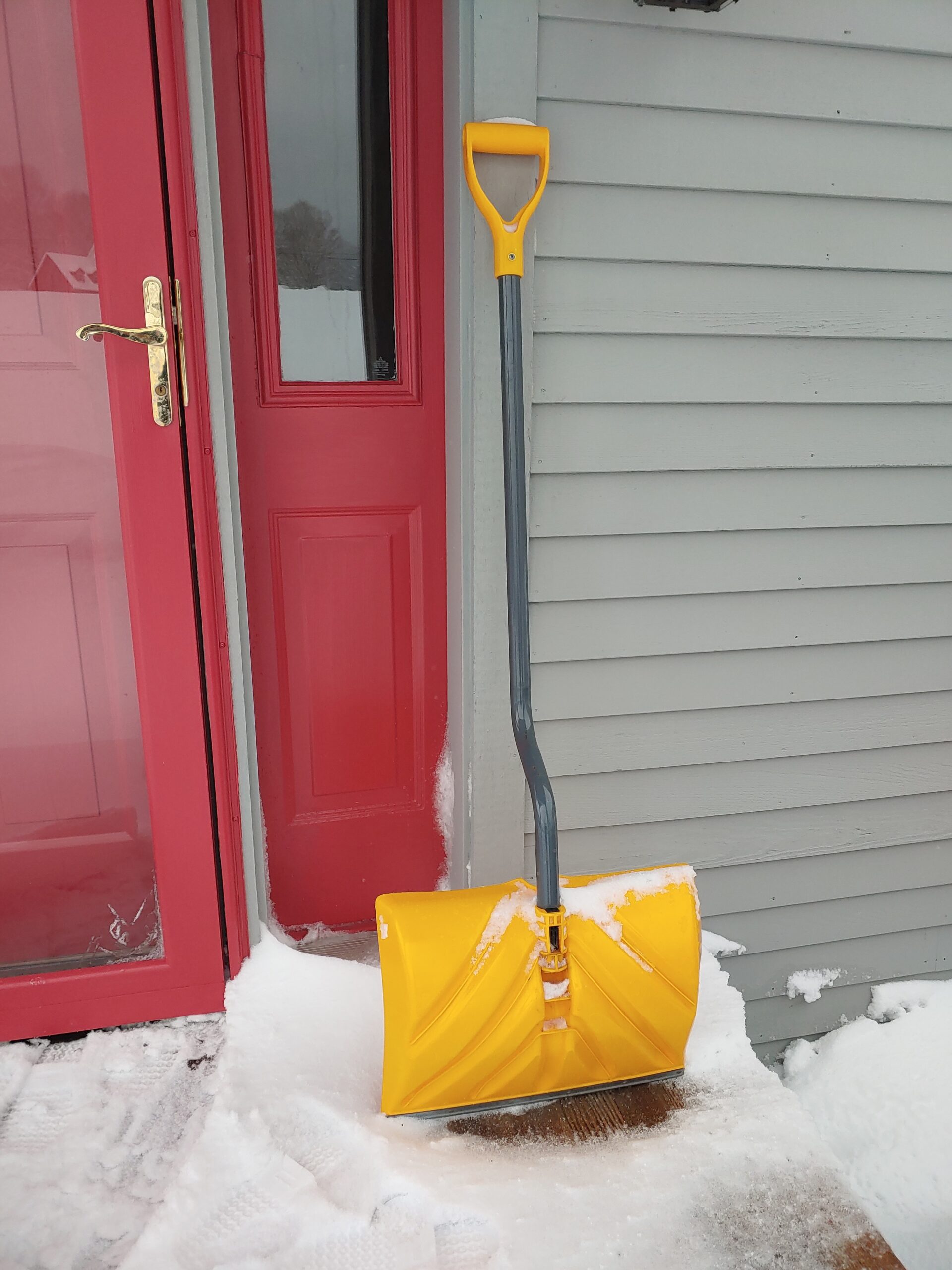
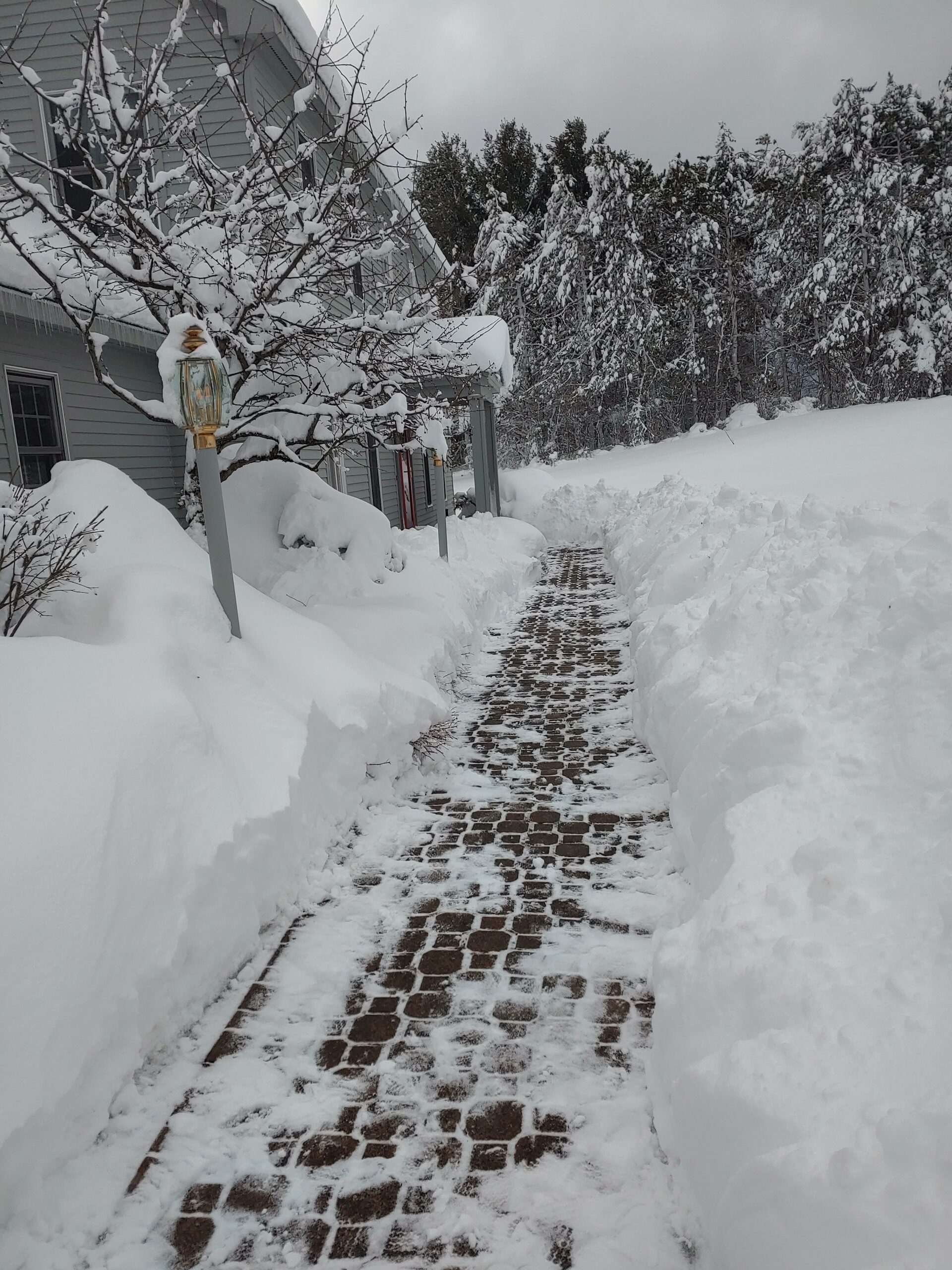
It took almost two days for the storm to wind down to a few floating flakes. Twelve hours into it, I took a shovel to the four inches of snow piled up on the front porch and the ten inches on the walkway. When another half a foot accumulated a few hours later, my husband cleared the porch and walk. The next morning, the walk was buried in another foot of snow. I pushed through the snow blocking the door and went out for round three of shoveling.

It took a lot of bending and heavy lifting to clear a path the first time, and all that work disappeared as the snow continued to fall. All that was accomplished with three rounds of shoveling was the restoration of a way in and out of the house. Such work is usually only noticed when it hasn’t been done, and the path is blocked.

I experience centering prayer in much the same way – a lot of work without much in the way of discernible accomplishment. But it keeps the way clear, getting me beyond my own small internal world and allowing me to welcome others into it. And that is no small thing…
The Path Through

Letting go of what doesn’t matter: some tangible gain for my every effort.

Loving what does: anything that gets me beyond my own small world – and allows others into it.
Indwelling

Grant us, therefore, gracious Lord, so to eat the flesh of thy dear Son Jesus Christ, and to drink his blood, that we may evermore dwell in him, and he in us.

[For full prayer, click Humble Access above.]

Exactly what are we doing when we take part in communion/eucharist/mass? Remembering, honoring, participating in Jesus’ last meal with his disciples? Are the bread/wafers and wine/grape juice symbolic, connecting us to something larger? Do these common elements somehow change into the body and blood of Christ? Our answers to such questions depend on our particular traditions and our life experience. There is no single correct answer because there is no single way to experience communion with God and with the people who join with us in this sacred act.

It matters how we approach the bread and wine, but not because our theology needs to be affirmed or corrected. It matters because we are seeking something much bigger than a correct understanding. We are seeking what God in Christ offers: living in the love of God, and the love of God living within us.

Indwelling – God in us and us in God – is the point. The theological particulars of how we understand this can provide a doorway into this indwelling, or they can be a wall that keeps us out.

Property Values

But thou art the same Lord whose property is always to have mercy.

[For full prayer, click Humble Access above.]

Years ago, at the end of a delightful meal in the company and home of people I had just met, the conversation turned to the story of the neighbor across the street. At the end of a nasty divorce, the man of the house left and the woman and her two children remained. To keep up with expenses, the now single mom had brought her sister in to live with her. A few minutes were spent discussing how hard it was for single parents to make ends meet, and how important it was for children to remain in their homes when possible.

An abrupt end to the whole conversation arrived when my hostess said, “It’s too bad they’ll have to move, but it’s against the home owner’s association policy to have two heads of household in the same home. The rules protect our property values.” For her the matter was settled. There could be no exceptions to the rules, no matter how those rules might cause additional damage to an already stressful situation. Property values were at stake.

It’s easy to judge my hostess for her lack of compassion and questionable values. Still, I wonder how my own past thoughts and decisions would have been different if the property I most valued was mercy?

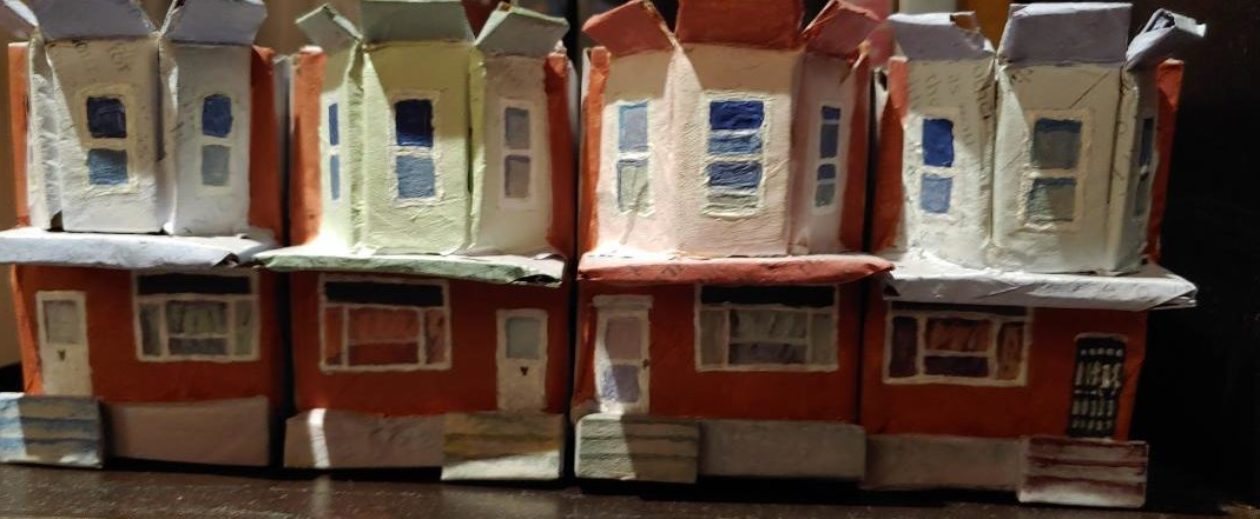
Philadelphia Row Houses by Colin Fredrickson

Crumbs

Jesus left that place and went away to the district of Tyre and Sidon. Just then a Canaanite woman from that region came out and started shouting, “Have mercy on me, Lord, Son of David; my daughter is tormented by a demon.” But he did not answer her at all. And his disciples came and urged him, saying, “Send her away, for she keeps shouting after us.”

He answered, “I was sent only to the lost sheep of the house if Israel.” But she came and knelt before him, saying, “Lord, help me.” He answered, “It is not fair to take the children’s food and throw it to the dogs.”

She said, “Yes, Lord, yet even the dogs eat the crumbs that fall from their masters’ table.”

Then Jesus answered her, “Woman, great is your faith! Let it be done for you as you wish.” And her daughter was healed instantly. Matthew 15:21-28, NRSV

For Jesus, it was plain that he was sent to Abraham’s children – all those who served the God of Jacob, Leah, Abraham, and Hannah. God knows he had his hands full with that destiny, and may not have given anyone who fell outside that focus much thought. Until an outside voice cries for help, desperate enough to break through any barrier to save her daughter.

We are not worthy so much as to gather up the crumbs under thy table.

She doesn’t argue the point with Jesus, or pretend that she is one of the flock. She doesn’t even contradict him when he relegates her to dog status, worth so much less than a child. She doesn’t ask for a place at the table, she just claims her right to the smallest grace – the crumbs that are so small that they end up on the floor, out of sight and mind of those enjoying the banquet. She turns Jesus’ image on its head by claiming her place within it; she gains a demon-free life for her daughter, and Jesus, perhaps, sees the scope of his life’s work widen to include outsiders as well as insiders.

But thou art the same Lord whose property is always to have mercy.

Worthy or not, everyone has a right to claim the crumbs.

We do not presume to come to this thy table, O merciful Lord, trusting in our own righteousness, but in thy manifold and great mercies. We are not worthy so much as to gather up the crumbs under thy table. But thou are the same Lord whose property is always to have mercy. Grant us therefore, gracious Lord, so to eat the flesh of thy dear Son Jesus Christ, and to drink his blood, that we may evermore dwell in him, and he in us. Amen. Prayer of Humble Access

Merciful

We do not presume to come to this thy table, O merciful Lord, trusting in our own righteousness, but in thy manifold and great mercies.

When we come to God in all our humanity, flawed thinking and acting on full display, will we be welcomed or rejected?

Since God came to us in Jesus, proactively seeking us out and offering love, I’m going to go with welcomed.

When we come to God in all our humanity, acutely aware of our flaws and mistakes, will we accept God’s love or reject it because we only want what we have earned?

An answer of yes isn’t as sure a thing, because it’s entirely up to us rather than God.

Say yes, for God’s sake as much as ours.

Presume

We do not presume to come to this thy table, O merciful Lord, trusting in our own righteousness, but in thy manifold and great mercies. We are not worthy so much as to gather up the crumbs under thy table. But thou are the same Lord whose property is always to have mercy. Grant us therefore, gracious Lord, so to eat the flesh of thy dear Son Jesus Christ, and to drink his blood, that we may evermore dwell in him, and he in us. Amen.

[Prayer of Humble Access, various sources. To read more on this: https://en.wikipedia.org/wiki/Prayer_of_Humble_Access]

Presume: To undertake without leave or clear justification; to expect or assume especially with confidence; to suppose to be true without proof; to take for granted. [merriam-webster.com]

The table which feeds us spiritually isn’t our personal property, and we have no claim on its bounty. Just as it would be wrong to assume a place at our neighbor’s table for dinner, it’s presumptuous of us to assume a space at God’s: neither God nor neighbor owe us automatic hospitality. It’s important to admit that we need an invitation.

At the same time, it’s critical to remember that we do have an invitation, that Jesus asked us to take our place at his table. There is a place at the table for each one of us – not because of our own claim on it, but because God claims us as welcome guests. If we remember that we are guests at the table and not hosts, we won’t take the bounty of the table for granted.

Humble Access

Some love it, some have a problem with the language. You might hear it at an eight o’clock service, but rarely at a ten or eleven o’clock Rite Two. After many years of hearing thoughts divided between appreciation and discomfort, I thought I’d take a closer look. I hope you join in!

Prayer of Humble Access

We do not presume to come this thy Table, O merciful Lord, trusting in our own righteousness, but in thy manifold and great mercies. We are not worthy so much as to gather up the crumbs under thy Table. But thou art the same Lord whose property is always to have mercy.Grant us therefore, gracious Lord, so to eat the flesh of thy dear Son Jesus Christ, and to drink his blood, that we may evermore dwell in him, and he in us. Amen.

[Rite One Eucharistic Service, Book of Common Prayer]

Noonday Sight and Blindness

Almighty Savior, who at noonday called your servant Saint Paul to be an apostle to the Gentiles: We pray you to illumine the world with the radiance of your glory, that all nations may come and worship you; for you live and reign for ever and ever. Amen.

Was it at noon that the burst of light and the voice of God met Saul on the road? At noon that his companions had to lead a blind Saul into the city? At noon that a blind Saul was healed, transformed into a sighted Paul?

How is it that we can remain blind to what it takes to live a holy life – loving God, self, and neighbor – even on the brightest of days? Saul couldn’t see it, or didn’t see how to apply it; it took three days of blindness, the courage and grace of a stranger, and a new name for writer of so much of our New Testament.

What will it take for me to see?

[Book of Common Prayer, p. 107]

Our

Officiant and People: Our Father, who art in heaven

If you look through the New Testament, the word saints is only in its plural form – no singular saints, just a collective. This is different from the honorific Saint that is bestowed on a select few whose very human essence scattered the love of God like a prism flings light. Christianity, like its mother Judaism, is a communal affair rather than a singular pursuit.

The collective shows up again in the prayer Jesus left with us. Our father, not my father or your father. God isn’t the personal property of a single person, even one praying this prayer in solitude. God gives life to everyone, and everyone is claimed as a child of God’s love.

Our means I can’t exclude those I’d prefer to exclude, and they cannot exclude me. We are in this life together. We come before God together, even when we don’t, can’t, or won’t admit it.

What a powerful reminder, in the middle of whatever activities the day brings, that I am not alone – unique, beloved, but never alone.

That goes for you, too.

[For more on the Noonday Prayer service, click above.]

Silent or Spoken

A meditation, silent or spoken, may follow.

There are so many words thrown at us every day, almost every minute of every day, that they can become an indistinct buzzing more than bearers of anything important. When the words become too loud and too numerous, turning them into background noise can keep things manageable – a way of keeping our heads above water and our lives moving forward. But there’s a cost to it: life-giving words are filtered out along with the meaningless babble.

Built into this mid-day service is a pause, a space for a meditation. It might be filled with words, it might be an intentional respite from words. In the middle of the day’s activities, in the middle of this service, is this pause. Silent or spoken, a time to ponder life and love and holiness and fear, this is opening our hearts and souls to God – if only a crack.

What would life be like if we took time in the middle of every day to pause? If only for a moment, a few breaths in length, we welcomed God into the middle of our commonest of activities?

I can’t say I know, but I think it’s worth giving it a try.