Christ is Risen! Death does not have the last word. So what now?
My mother thought that people didn’t find faith because they were afraid that God would ask them to die for that faith. That might be true for some. I’d bet that people are more afraid that God will ask them to live for that faith.
What would my life be if I lived as God’s beloved child?
What would my life be if I loved God rather than feared some kind of afterlife punishment?
What would my life be if I loved myself for the unique person I am, shortcomings and all?
What would my life be if I loved you for the unique person you are, shortcomings and all?
Good Friday – one of those euphemisms, a way of glossing over the horror of crucifixion and death. There’s nothing good about it. Sure, it will turn out right in the end, but the end isn’t here yet. Calling it Good doesn’t change that.
How do we get from a horrible death and so much darkness to a place of light and peace not just in the Holy Week sense, but in our every day living? There is so much that is wrong, that is painful, that is evil. How do we dream of something better, and find the strength to work for that something better?
Faith. Hope. Love. These three things.
Have faith that God-With-Us is with us.
Find hope in unlikely places – despair doesn’t have to win.
Love yourself and others because you are so loved.
The Palm Sunday parade through Jerusalem, with Jesus riding triumphant as he entered, is past. The final meal with his disciples and friends is fast approaching. It’s so close to the end of Lent, but the hardest part is almost upon us: betrayal, denial, death.
Judas betrays Jesus, the religious leaders sacrifice him to keep the peace and their power, Peter denies knowing Jesus, and God-With-Us dies on a cross. Only a handful of women and the disciple John stayed with him, the rest scattered in terror.
Every year I wonder where I would have been. Would I be among the women who stayed or among those who ran? I hope I would have stayed; I fear I would have run.
For the first time, this year I wonder if asking this question really matters. There’s no way of knowing its true answer. If I think I’d have stayed, perhaps I overestimate my own faithfulness and courage; if I assume I’d run, how does that help me live a life of faith?
Maybe it’s time to let go of that question, whatever the answer, and love what is truly amazing: Jesus loved them all, the runners and the steadfast.
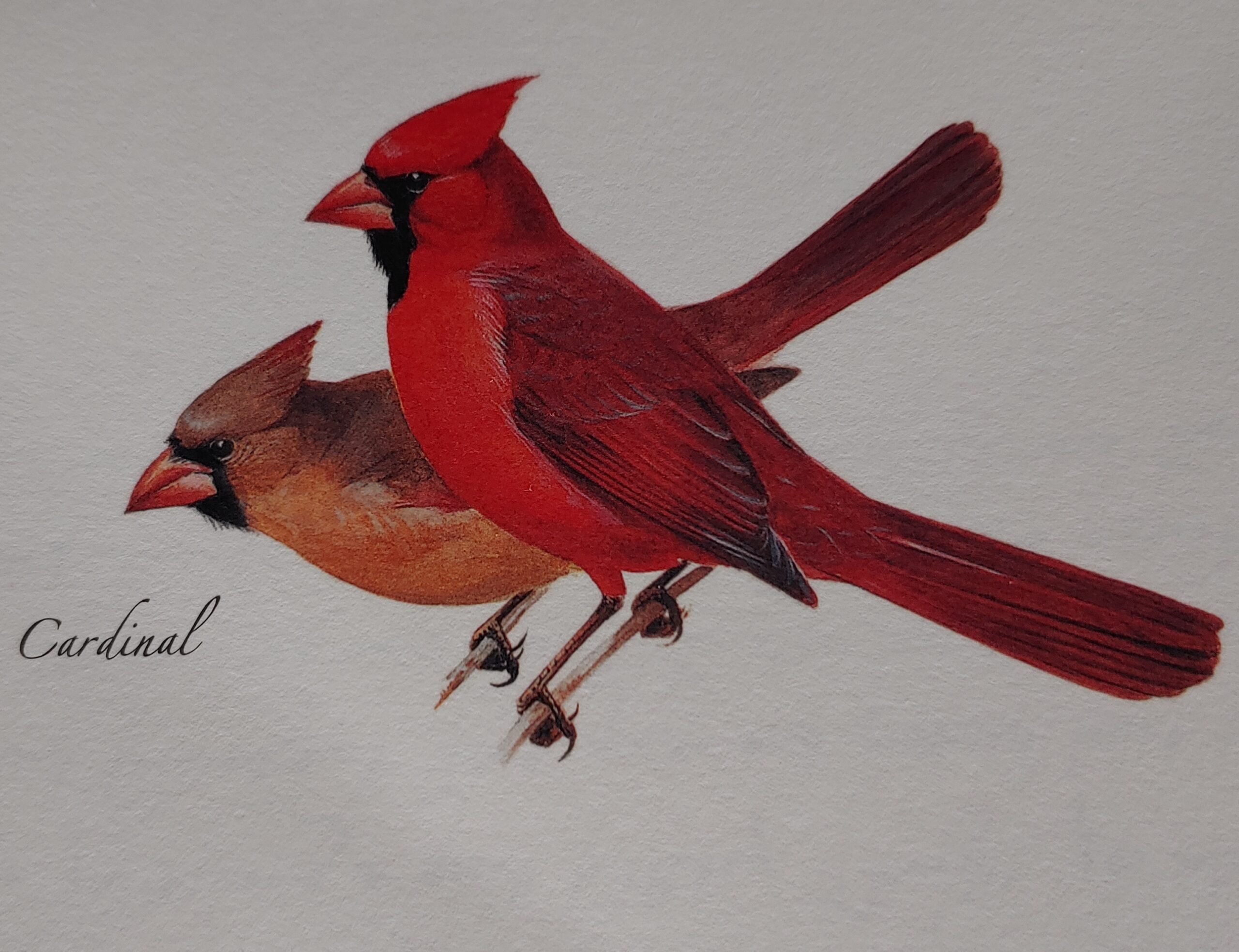
Two of them are in my back yard, perched on the yet-to-bloom forsythia as they wait for their time at the feeder. Traditionally, cardinals are departed loved ones come to visit. Attending a funeral, finishing The Secret of Secrets (Dan Brown’s latest Robert Langdon novel), Palm Sunday ushering in Holy Week, watching the cardinals in my yard: death hovers over my days.
Most people don’t want to talk about death, whether or not they claim and are claimed by a faith. There are a few exceptions – those who have had near-death experiences, those who are dying and have made peace with it, and the enlightened few such as the Dalai Lama. Death is just a part of life to be accepted rather than feared for them. They may not focus on death, but they don’t deny its existence or their own inevitable end. They give death a nod and get on with their day, grateful for and loving what the day brings.
Perhaps I should think of the cardinals as death’s presence gracing my life – acknowledge that death is real and appreciate the winged reminder that I will soon enough be a departed soul. It might make talking about death easier; it might make talking about death a relief.
I sat in the back half of Saint Patrick’s sanctuary, neither friend nor family of the man whose picture and ashes were placed at the front before the altar. I was there for a son who lost his father.
After the usual prayers and sermon came the Lord’s Supper, accompanied by the terms of participation:
A member of the Roman Catholic Church; currently practicing the faith and attending church regularly; having made confession recently.Anyone else should remain in the pews or come up, arms crossed, and receive a blessing.
Neither the son I was there to support nor I met the requirements. He remained seated. I went up for a blessing.
The priests certainly didn’t mean to do harm; most likely, they believed they were preserving the sanctity of the Lord’s Supper. But designating the worthy and the unworthy in this gathering, making family and friends feel unwelcome or uncomfortable while saying good-bye to a loved one is harmful. Ironic, considering Jesus didn’t seem nearly so picky about the people who joined him for dinner – and a person’s worthiness or unworthiness seemed to rest in their compassion toward others more than in their denominational credentials.
On my walk back afterward, I pondered the words of the priest: death leads to everlasting communion with Christ. Considering the brevity of the years we spend in this life, taking into account the eternity that embraces us in death, wouldn’t it be wiser to let go of the terms of participation? Instead of keeping the Lord’s Supper for those who meet the terms, wouldn’t it be better to reflect the expansive and merciful love that welcomes us home after death?
Life is too short to hold a grudge over being excluded from the Lord’s Supper, so I let it go. Going up for the blessing was my way of showing love for the family and respect for the rules of the church.
But I wonder how many who remained in the pews, and how many who walked past all those seated on the way up to receive the wine and wafers, will be able to do the same in this time of grief. I wonder about the son.
Theology was considered the queen of the sciences in Europe a few centuries back. The assumption was that every field of study would support the Church’s current vision of the Christian God and creation.
Then came the Enlightenment, a heliocentric solar system, the periodic table of elements, and a Big Bang origin for all of it. Theology wasn’t the queen of the sciences: it was just bad science.
Then came divorce. Science would take care of the how‘s of it all while theology would confine itself to the why‘s. Impartial observation would offer answers to the former, morality codes and religious practices would lead to answers for the latter.
That got washed away by the observer effect – that scientific results were influenced by how scientists chose to observe something. (electrons and protons would appear to be particles or waves, depending on the observer’s choices). Heisenberg found that a particle’s position and momentum couldn’t be determined at the same time, and the Uncertainty Principle was born. Scientific knowledge was inherently limited by its own practice – by the limits of the people involved.
Theology, at its best, offers some insight into all this. All of life is God created and God related. It’s from this perspective that humans live, move, and seek answers to the great mysteries of the universe and the soul. God is not a big, beloved object in a humanly constructed world. Humans are beloved creatures in God’s world, held by divine love and living in this mysterious creation.
When we accept that how and what we see are bound to our limited perspective, we lose the illusion of Godlike power and understanding. But with luck, we just might gain the wisdom to see the miraculous nature of all that is, was and ever will be. Whether you look at the stars from your back porch or through the Hubble telescope.
It’s the study of matter, energy, space, and time as a way to figure out how the universe came to be and continues on. From the subatomic to the galactic, physics explores it all. And yet, it was so boring a class that I dropped it in both high school and college. How can that be?
I wish someone had mentioned the big picture of the field at some point when I was still sitting in the classroom. I wish someone had told me that all the equations and models were attempts to understand and hand on a glimpse of the miracle that is this cosmos -writ large across galaxies and small among the atoms. But no one did.
Turning the miraculous and mysterious into something boring isn’t just happening in a physics classroom. It happens in confirmation classes, where creeds and dogma are trundled out like how-to manuals rather than what they are: a specific group of people’s best attempt to hand on their life changing experience of God. Religious studies classes, seminary courses, even Bible studies – none are immune from well meaning people sucking the life out of them along with the air out of the classroom.
I think it’s time to start over, to let go of the dull packaging that has surrounded so much mystery. It’s time to take another look with an open heart, a curious mind, and an adventurous spirit.
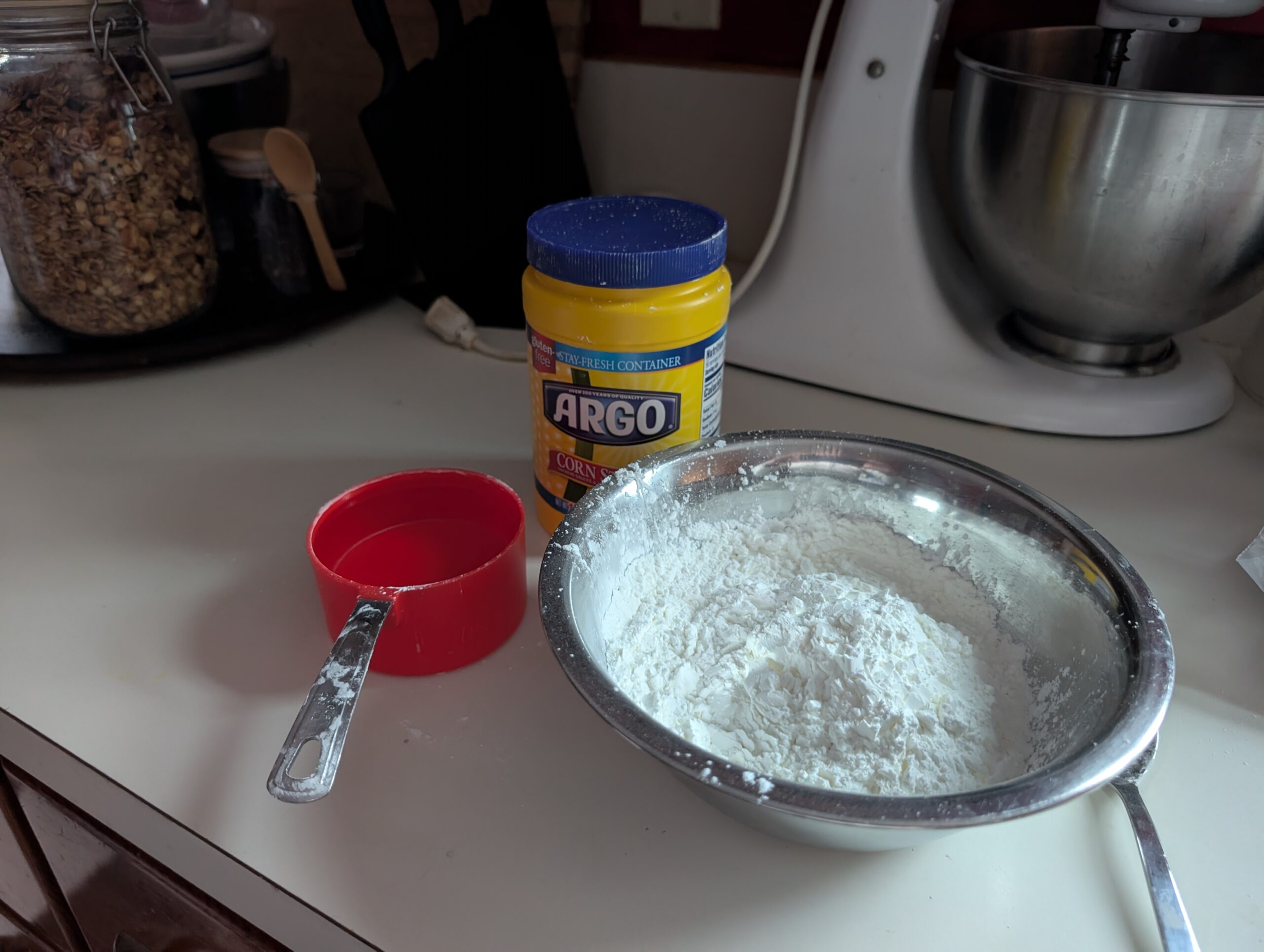
I made a mysterious and miraculous substance this morning. It’s two parts corn starch and one part water.
Oobleck is a non-Newtonian substance – a rare thing that is both a liquid and a solid, depending on how I interact with it. If I gently dip my fingers into it, it’s a liquid; if I smack the top of it with the palm of my hand, or squeeze it, it’s a solid. If you have corn starch in your cupboard, give it a try.
This is my prayer life in a nutshell. When I approach it with opposing force, it’s impenetrable . When I try to squeeze answers or results out of it, it hardens in my hand. When I approach it gently, it surrounds and envelops me…
Ology, attached to the end of a word, means the study of. It comes from the Greek word logia, meaning words or sayings.
Logia means sayings or words, a collection of writings, sayings, or oracles. It’s a common enough term in theological studies and philosophical traditions. It’s related to the Greek word, logos.
Logos means the word, the source, the rational principle that underlies things. The Word. It’s also one of the names given to the man Jesus, the incarnation of the source (God), and the principle that underlies all life.
Descent Into Hell
Biology is the study of life; most of us, happily or unhappily, ended up taking it in high school. If we pull a six degrees to Kevin Bacon, Biology moves from -ology to logia to logos in three degrees. If we take it back to the original root, then Biology isthe word of life.
If we approached biology, and all the other ologies, as the word of instead of the field or study of, perhaps we would let go of the teenage boredom that still blinds us and see it for what it truly is: a window into the sanctity of all life.
I can recall a lot of my early life because I moved from place to place. The trash cans floating down the street after a flood were in Mississippi, so I was three years old (1967). Christmas with my grandparents was right before I turned four, during the weeks between Mississippi and Hawaii (also 1967). I was four when I used to see Mr. Yokoyama (1968) walk to work – that was in Hawaii. Stopping at a Texas rest stop to have a drink of water happened when I was barely five (Winter 1969)- it was during the drive across country on the move back to the mainland. Where I was and when I was are easier to determine because the wheres changed every year and a half.
sp TI ac ME e
But there were some years when too many moves in too short a time blur together. My sister and I were in three different school systems in three different states one year – and ended it in a return to one of them to finish the school term. I lived in four different places in two states between my first and second semesters in seminary. Few of the details from those times are solid enough to grasp, and all that remains is a cloudiness that hangs between two more distinct times and spaces.
StPiAmCeE
Space and time are intertwined, sometimes offering clarity and sometimes made more obscure because of that entanglement. Sometimes this melding anchors my life, sometimes it unmoors it. Either way, it reveals just how profound spacetime is in life.
There’s a lesson here, if I care to learn it. This life grows in particular space and time. The walls and roof that keep me warm, the chairs drawn up to the table for a meal, and the spot I occupy when I pray are where I seek God, and where God meets me. The ordinary time that finds me at work, making dinner, or gathering myself for prayer before anyone else is awake is when I encounter neighbor, self, and God. It makes it a lot easier to let go of the illusion that none of the particulars really matter; it also makes it a whole lot easier to love those particulars, imperfect and ultimately transitory as they may be…