Category Archives: Books

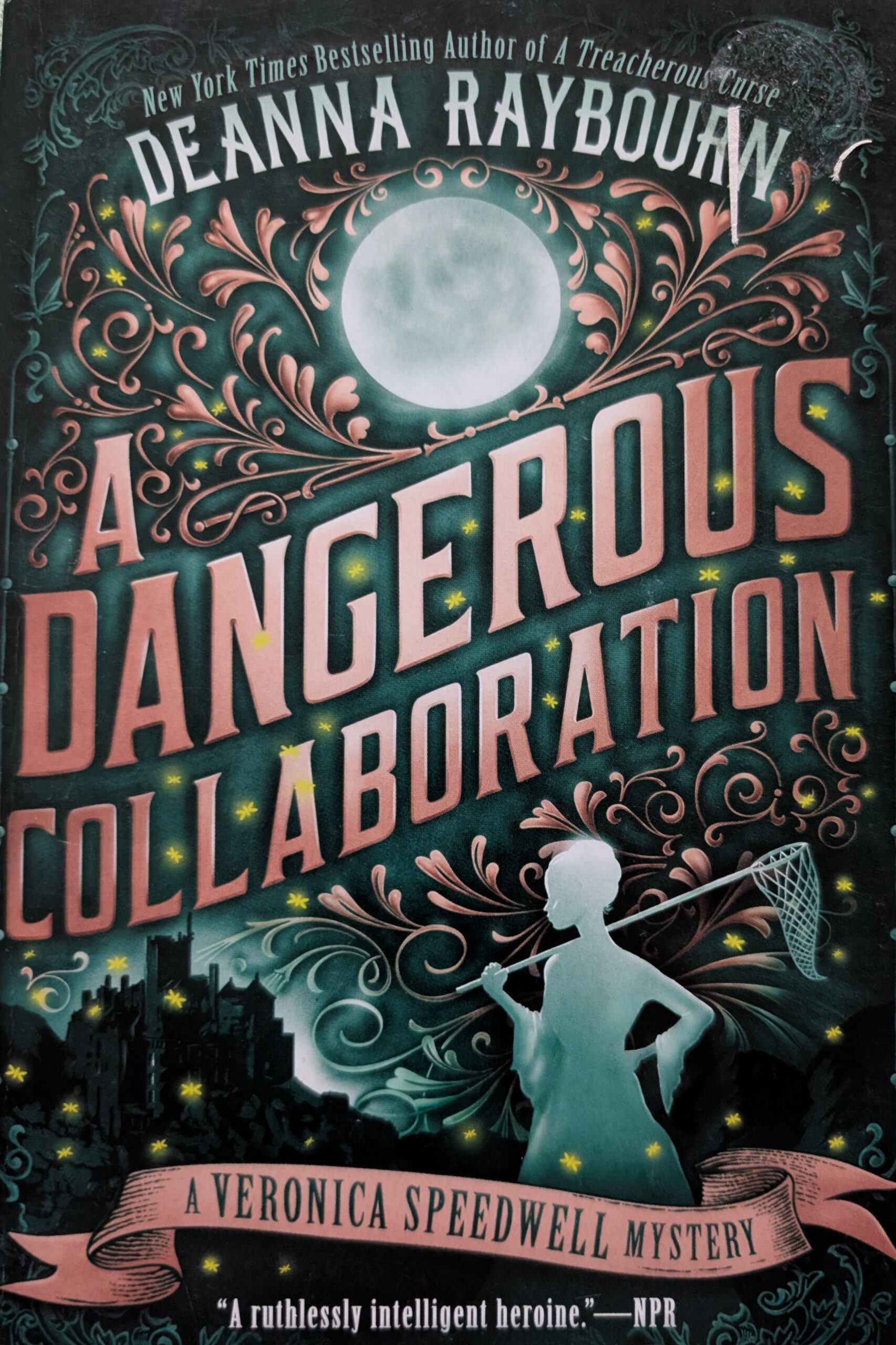
Two or More…

Berkley, New York, 2019

The book behind the title is a murder mystery set in Victorian London and beyond. But the title itself? That could go in a different direction.

Collaborations bring individuals together, and the combination can move them beyond the sum of their individual abilities. Two perspectives, two approaches, two ways of seeing and being in the world. And every time you add another person, the collaboration expands so much more than the numbers might suggest. Watson, Crick, and Rosalind Franklin; Fred and Ginger; John, Paul, George, and Ringo.

Collaborations can be dangerous. What one person would not dare to do, two or more just might attempt. There’s a certain weight to a collective, a critical mass that collaboration offers that just might change the world in extraordinary and fundamental ways. For good or ill – that’s what makes them dangerous.

But danger to the status quo, threatening what deadens the mind, body or spirit? That’s hope. That’s love. That’s reconciliation and justice. That just might save the world.

For wherever two or three are gathered in my name, I am there among them. Matthew 18:20, NRSV
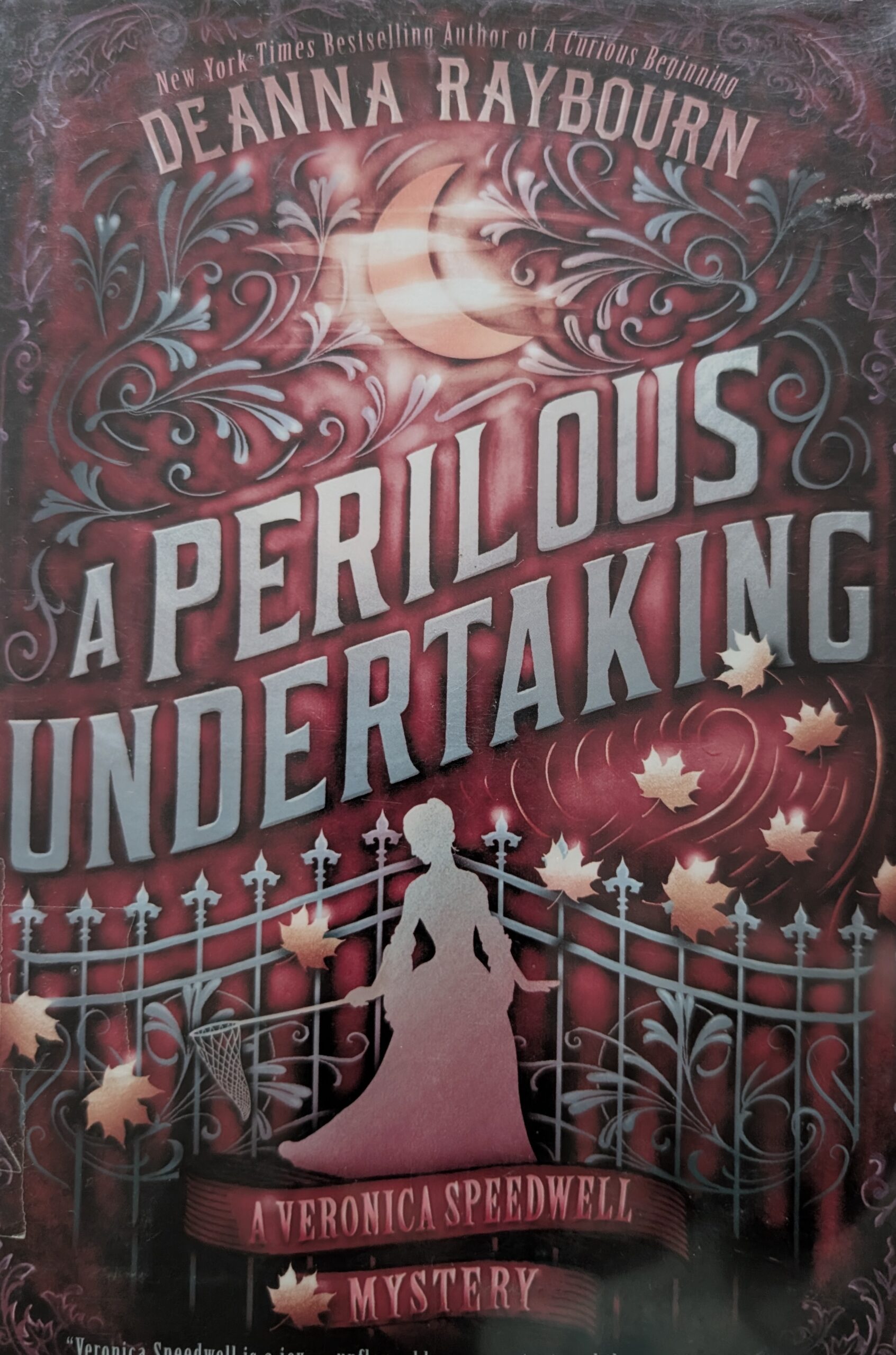
A Perilous Undertaking

Berkley, New York, 2017

I don’t know about you, but I haven’t played a part in any kind of espionage, and I haven’t solved any murders. I don’t fight fires or climb the Himalayas; I haven’t sailed around the world or landed on Antarctic ice.

I suspect you and I don’t have to do any of those things to find ourselves in a perilous undertaking. Judging by the state of the world, I’d say all it takes is treating others as if their lives are of no consequence – as if they are mere pieces in a game rather than God’s own beloved. Such a way of life may not result in physical harm, but it certainly damages the soul. To imperil others in ways physical and metaphysical rebounds – a spiritual boomerang returning to the one who threw it.

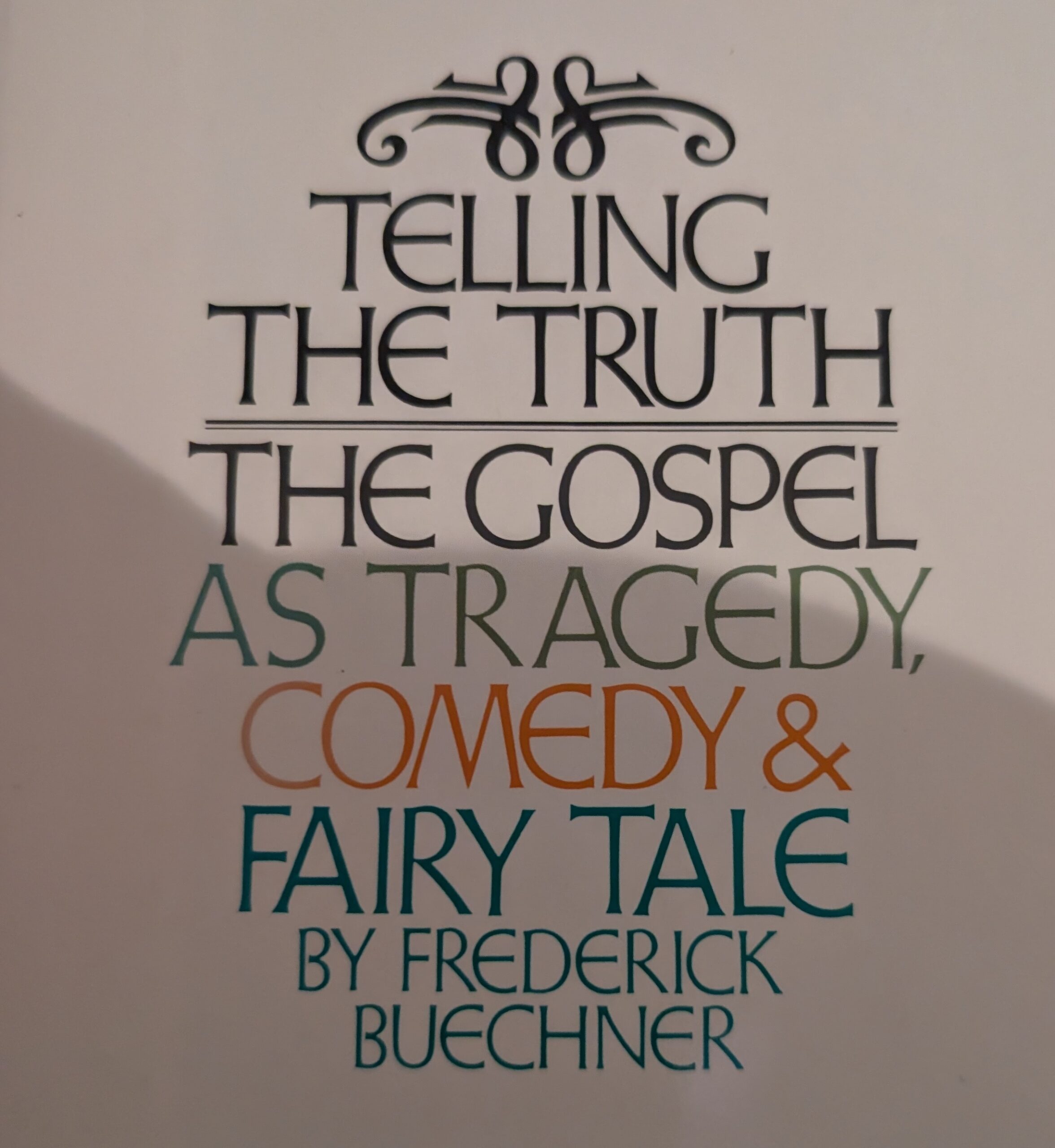
What Is Truth?

HarperSanFrancisco, 1977

Someone I knew cut the bad and scary parts out of The Little Mermaid before showing it to her children. Ariel sang her way into marriage with Eric, with Ursula the Sea Witch removed – no scary bargain to gain legs and no final battle included. She didn’t want her children to be upset or frightened, so she just curated what they saw and heard. She did the same with the fairy tales she read them – choosing innocuous versions that left out undeserved suffering and pain, or skipping over those parts in the reading.

This kind of behavior, well intentioned though it might be, offers a false version of what fairy tale reality includes. It only offers the ending, skipping tragic loss and abuse. It also skips the unexpected acts of bravery from unlikely sources – a daughter switching places with her father in a beast’s dark castle, or a huntsman who chooses not to kill the stepdaughter of an evil queen.

It’s tempting to do the same with the Gospel: to skip over or excise from the narrative anything evil or scary or tragic – and to miss the irony and humor involved. Don’t read about Jesus asking God if he could avoid torture and death, just celebrate the resurrection. Don’t laugh at Jonah running away only to be swallowed by a sea creature and spit up at the very place he didn’t want to go. Miss the humor in two followers fleeing Jerusalem for Damascus only to run into Jesus and not recognize him, or the widow’s two cents being worth more than thousands dropped in the plate by the wealthy.

There’s a part of me that doesn’t want a Gospel that offers me the truth of tragedy, the unexpectedness of comedy, and the last word of a fairy tale. There’s a part of me that wants the fairy tale ending without pain and death and without having to see myself as a comic figure. But cutting out the scary parts of scripture is doing to life what cutting Ursula out of the movie does to The Little Mermaid. It’s turning the story that is my life, God created and related, into a false narrative.

Perhaps that’s why Frederick Buechner’s title caught my eye. It refuses to skip over tragedy and comedy. Because a fairy tale ending is a lie without the beginning and middle included in all their tragic and comedic depths. And the tragedy and comedy of life are incomplete without the unexpected all is well ending…

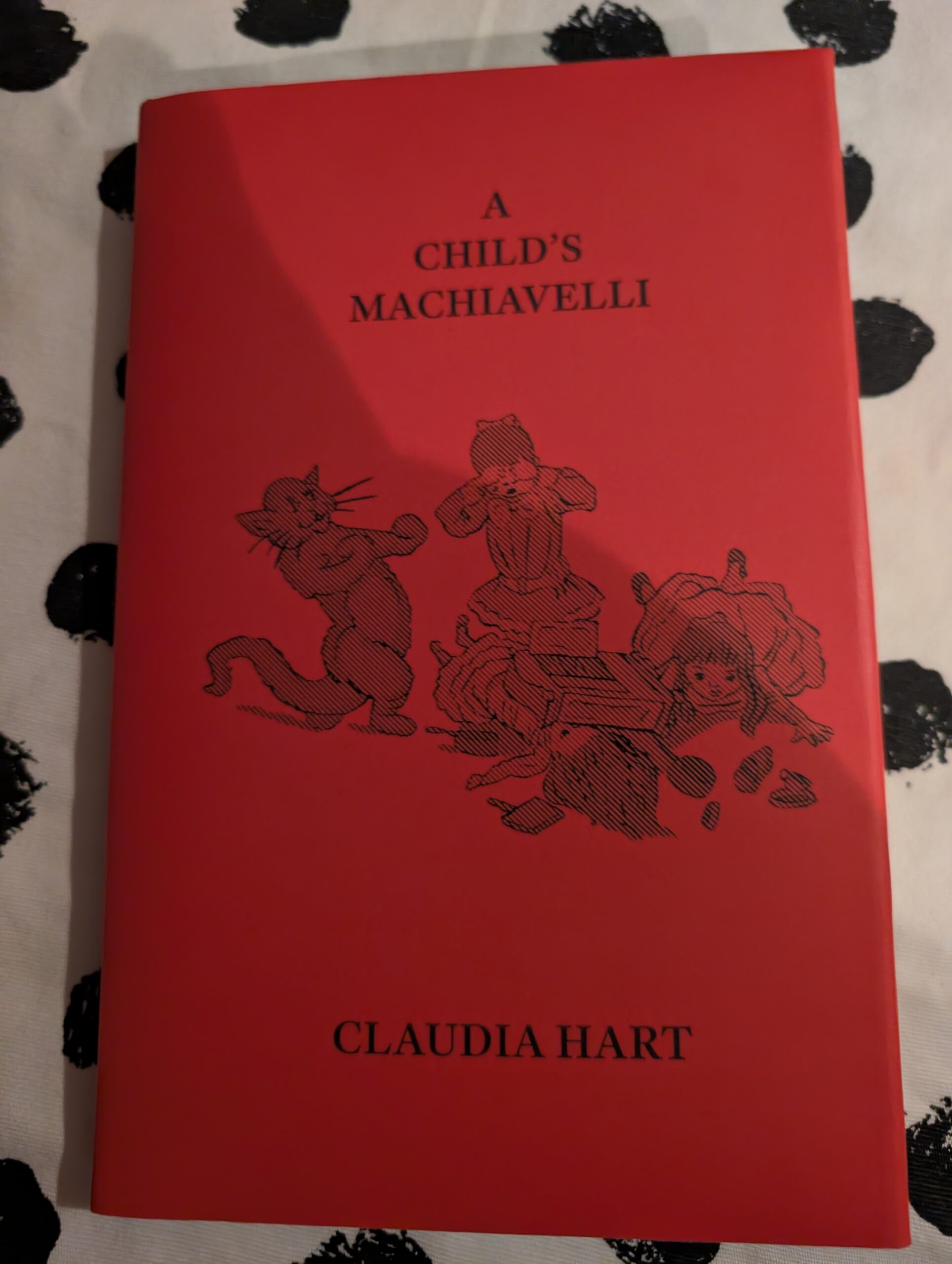
Political Intrigue For Children

Brooklyn, NY: Beatrice. 2019

The words Child and Machiavelli aren’t usually found in the same sentence, but Claudia Hart put them together. Inside are wonderfully old fashioned illustrations that accompany political advice such as You gotta be tough. People won’t really like you but they’re probably only your friends ‘cos they think they can get something off you anyway and People who cheat are always more successful than people who are always honest. Such advice isn’t part of typical parenting, at least not overtly, but I wonder how often similar messages are received during childhood.

Machiavelli isn’t a great resource for nurturing the spirits of the young and impressionable, in a typical form or this cheeky one. But that’s why it’s so gripping. I think it conveys a truth, this coming together of lessons in power and nursery illustrations:

Only the spiritually immature offer such advice, and only the spiritually stunted would waste a life putting it into practice.

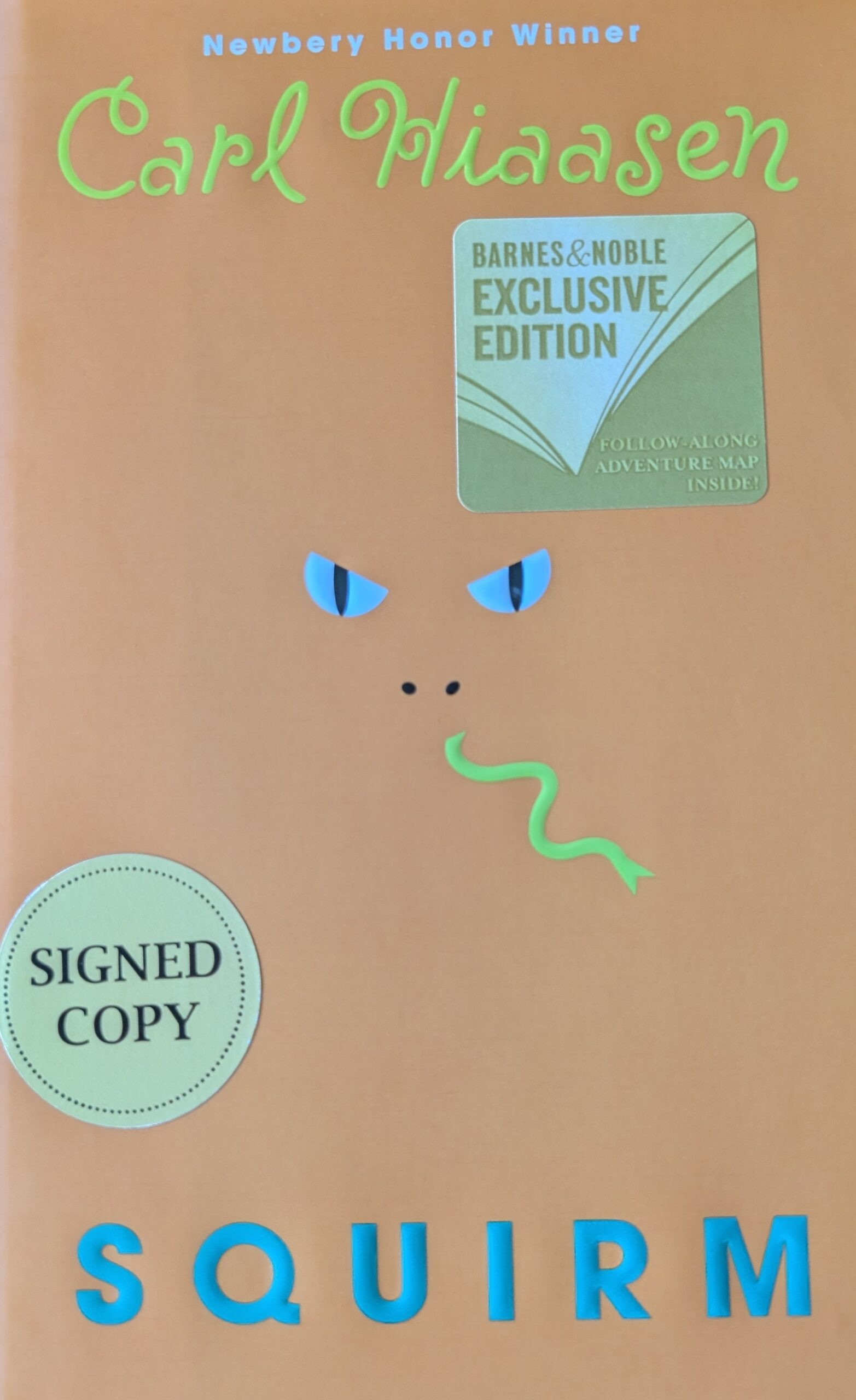
Sounds Like What It Is

Alfred A. Knopf, New York, 2018

Chomp. Flush. Hoot -Onomatopoetic titles all. Carl Hiaasen’s titles are sound tracks for the stories they front. Full of humor, life in Florida, and the courageous young vanquishing the crooked old, they are quirky tales of hope and working for something larger than personal gain. But the word squirm induces the action in a way that the others don’t.

What makes me squirm isn’t a snake, although snakes play a major part of the plot. It’s not an upcoming test or the high expectations of others. It’s likely to be something I’ve done that’s come to light, something I’d rather others not know – and what I do when confronted with it. It’s hard to sit still, hard to stay put when I’d rather slide out of my chair and sneak out of the room. It’s what I do when I’d rather not admit to my own failing. I squirm when the smallness of my actions breaks through the carefully crafted inflated persona I offer the world. That deflation that reveals my true self makes me squirm.

When I get squirmy in my spiritual life, it’s a sure sign that I’m trying to present a false face to God. Like a child, I do my best to wriggle out of the encounter. But when I stop squirming, when I drop back into my true self, I learn the truth that’s so simple and so hard to keep hold of: that false face, that public persona – it’s too small to contain the image of God which is who I really, truly am.

And it’s too small for who you really, truly are as well.

[This is one in a series. For more information, click Title Search above…]

A Few Magical Words

Captivating Titles

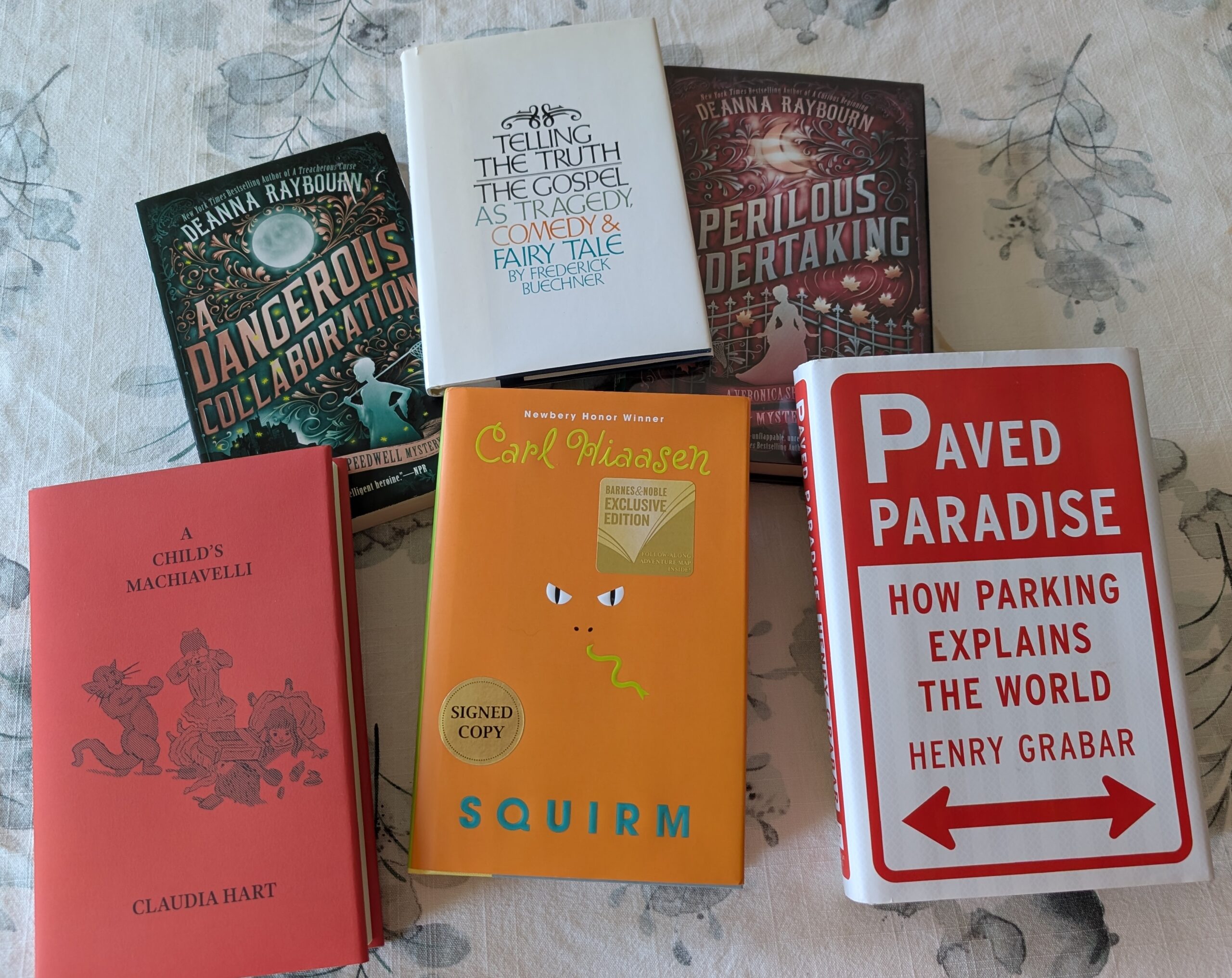
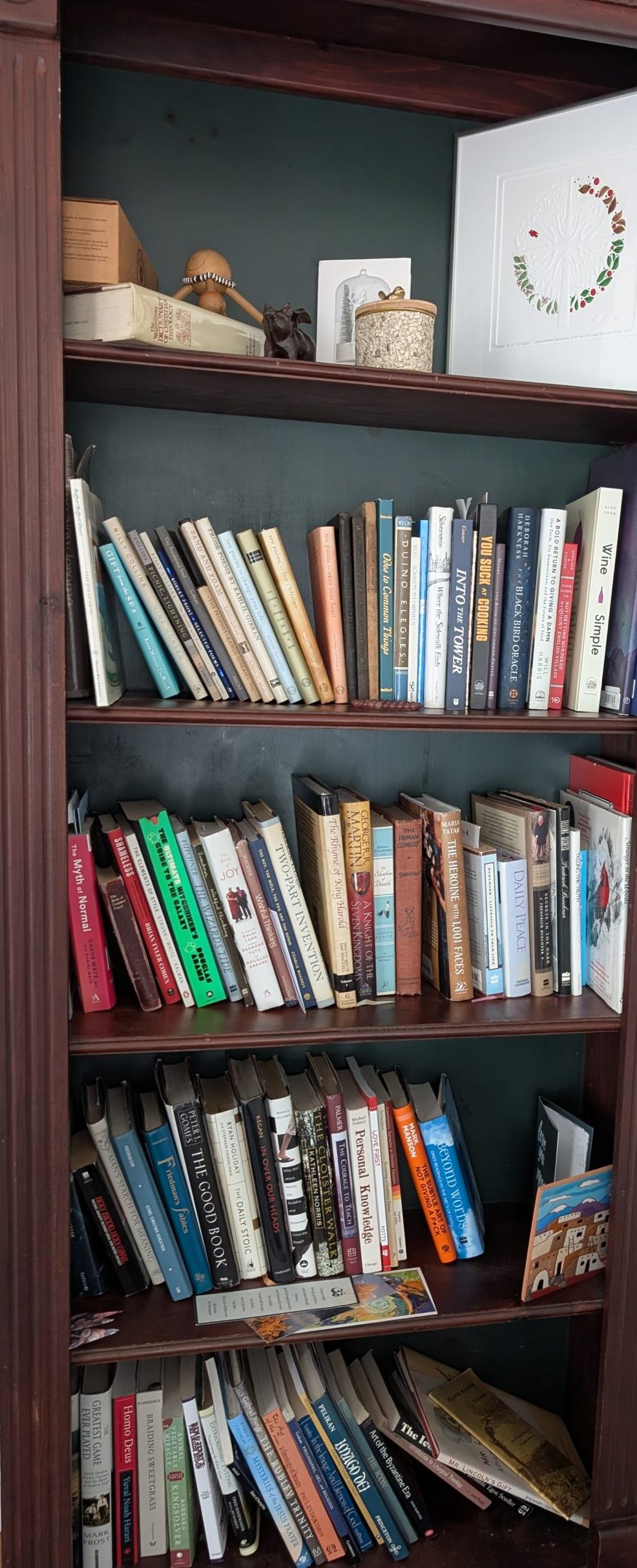
I was pulling books off the shelf Monday, part of Fall cleaning, when I ran across these six books. Two were gifts, two part of a series I found at the library, one purchased for my son a decade ago, and the remaining one required reading for a preaching class. Each one captivated me with their titles. Genre didn’t matter, age of intended audience beside the point: something in me had to walk through the words to see what was hidden beyond and behind them.

I still wonder why I was so drawn to the titles – enough to take a deeper dive into the titles themselves. How can a scant few words work such magic? Perhaps you’ve had that same experience. As we move toward Halloween, perhaps you’d be willing to share with me the titles that worked their magic on you…

[This begins the series. For more on this, click Title Search above…]

Why Do I Have To Read This?

I can’t remember every title on those high school required reading lists, but here are some of the highlights:

Shakespeare – Romeo and Juliet, The Merchant of Venice, Julius Caesar, A Midsummer Night’s Dream, MacBeth, Hamlet, The Taming of the Shrew

East of Eden, The Grapes of Wrath, The Catcher in the Rye, Ethan Frome, To Kill A Mockingbird, Uncle Tom’s Cabin, The Once and Future King, The Scarlet Letter, All Quiet On the Western Front, Profiles In Courage

There were also poets – not whole books, but select pieces: Choose Something Like a Star, The Red Wheelbarrow, How Do I Love Thee?, Because I Could Not Stop For Death, Do Not Go Gentle Into that Good Night, For Whom the Bell Tolls(No Man Is an Island), The Raven

And there were excerpts: The Grand Inquisitor (The Brothers Karamazov by Dostoevsky), The Allegory of the Cave (Plato’s Republic), the Bible, Aesop’s Fables, Grimm’s Fairy Tales

For almost every book assigned, someone in my class asked the teacher why it was required. Most answered with a perfunctory It’s good for you, and you’ll need to know it when you go to college. Only two of my teachers gave different answers.

Because through these words you will come to understand what it means to be human. (Mr. Quimby)

These books will help you ask the truly important questions. (Mr. Hewitt)

The first answer was an honest one, and a small one. Wasn’t anything valuable about the reading other than some future benefit exclusively for the college bound learners? Shouldn’t learning be about something bigger than this?

The other two answers left some breathing room; they included and were big enough for every student -in the present. To be drawn into the story of someone else’s life, to experience another way to be human, to ask the big questions: the right words can do this.

So can the right teachers…

Book Covers

Covering a Book

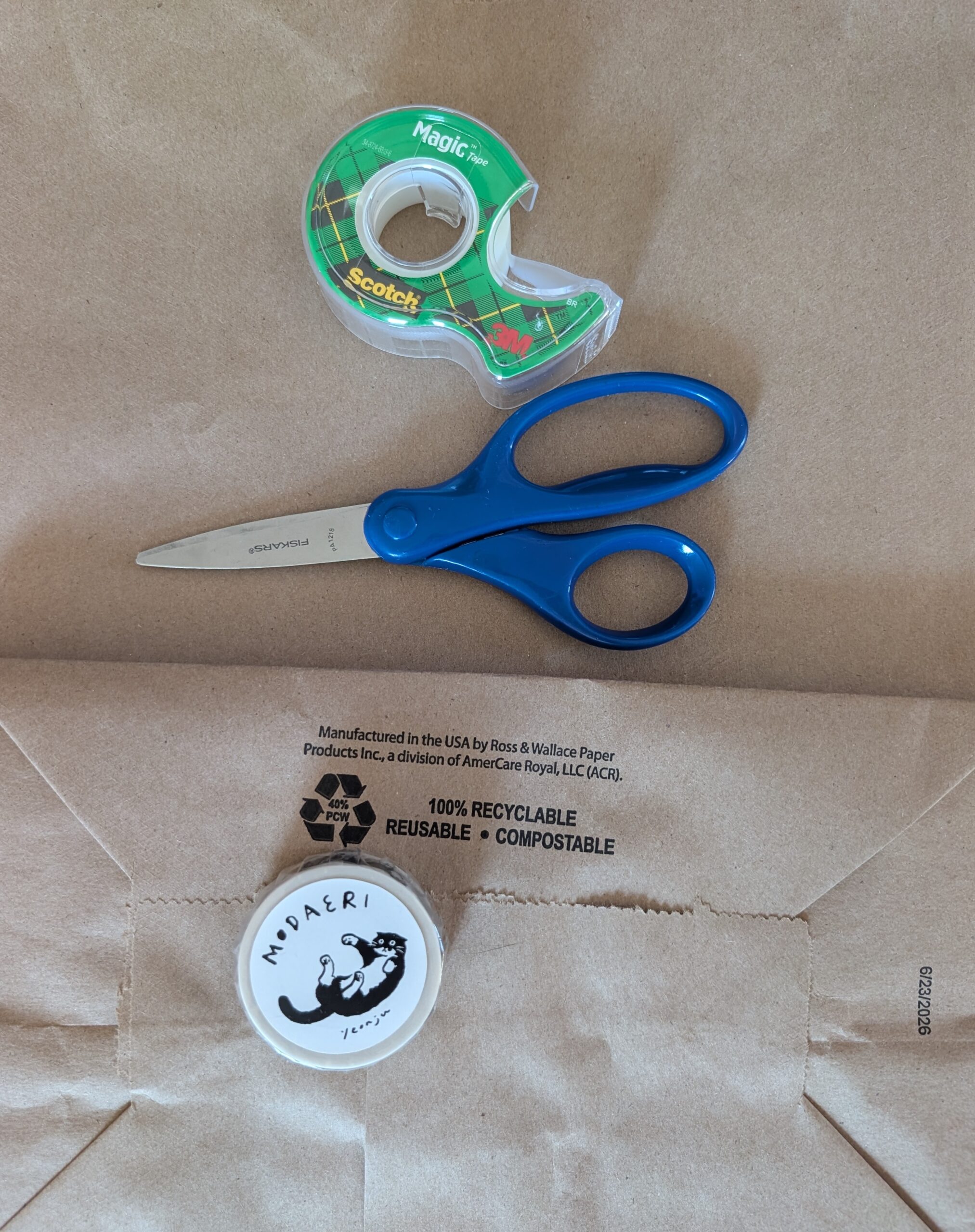
It was the first class assignment: cover the book to keep it in good condition. I used paper grocery bags. It was easy to read whatever I wrote on them, and I could add stickers or pictures to dress them up.

By the end of January, most of my covers were worn, torn, and re-taped. Some were close to falling off or falling apart; they no longer protected the books. So I recovered them with grocery bags, tape, and new stickers and pictures. At the end of the year, the books entrusted to me were in good shape, ready for the next person to use and protect.

Other than cookbooks, I never covered books after high school. Other than library books, which I took good care of (and still do), what I read I owned. Since I wasn’t handing them in or handing them down, there was no pressure to preserve them for other hands and other eyes. I kept and continue to keep my personal library in good shape, but I’m willing to put my own books at risk (take to the beach, on a trip, read while drinking hot cocoa) more than ones on loan.

I think damage is done when I mistake what is on loan to me for something I own, when I don’t think beyond my own life to what comes after. And I don’t own most things – air, soil, plants, animals. I need to put some effort into handing these things on in good condition. And I need to remember that doing so will not be a one-and-done activity.

The Yearly Migration

It happens every year, starting three weeks before the first day of school: the annual migration of parents and children to their local libraries. They are looking for copies of the books assigned for summer reading (There are the rare early birds who do this in June, getting the books read before summer activities and travels).

The first few who come through the door find several options on the special display of required books; the rest find empty shelves where the now-checked-out books recently sat. Most accept this, resigned to buying books online or at the local bookstore; a few put a hold on the library copies, hoping they will be available in time to read before school starts. Others get upset, calling the library useless and stomping out the door.

I understand the frustration and disappointment these migrators feel – I feel the same when I show up at Market Basket or Trader Joe’s on a Monday morning and find empty shelves. If I continue to show up at the same time with the same expectations, I’ll end up with the same empty shelves and the same disappointment. The only way out of this is to change my migratory pattern, to show up on a Monday evening or a Friday morning when the staff has restocked the shelves. If I do this, if I change, I’ll find what I need and then some.

It’s not easy to change our patterns, but it’s possible. It takes effort, it takes a change of perspective, it takes a certain flexibility to adapt to the world as it is rather than expecting the world to accommodate our current patterns. Perhaps this is the first lesson of every school year.

Back To School

It’s August 19th. Labor Day is almost three weeks off. But the yellow school buses are out and about: several of the local schools are back in session, with several more welcoming learners next week.

I haven’t darkened the door of a classroom, at least as a student, for a long time. But I’ve spent most of my adult life telling stories and leading classes of one sort or another. It might be fun go back to school – to look at the reading, writing, and (a)rithmetic once again. As well as all the other things…art, music, drama, languages, etc…

Hit the Books