Tag Archives: School Days

The Final Bell

The day begins with a bell. Bells ring throughout the day to mark when it’s time to move between the many classes and activities. Then comes the final bell, ending the school day and prompting everyone to leave the school grounds and move into the bigger world waiting beyond them. For school is a temporary place of learning, meant to inform and prepare but not contain or restrain. The bell is the prompt for moving within and moving beyond.

There aren’t many bells beyond high school, and precious few other markers that spur movement within and beyond; it’s up to each of us to keep an eye on the time, to create a life pattern with built-in bell equivalents. It’s also up to each of us to remember that there’s a bigger world beyond whatever work fills our days.

How do we know when it’s time to leave behind that part of life, that temporary place that was never meant to contain or restrain us? How do we take what such a place taught us and move into the larger world? How do we recognize and accept that it’s time to move on and beyond? How do we trust that there’s something more that waits beyond?


Why Do I Have To Read This?

I can’t remember every title on those high school required reading lists, but here are some of the highlights:

Shakespeare – Romeo and Juliet, The Merchant of Venice, Julius Caesar, A Midsummer Night’s Dream, MacBeth, Hamlet, The Taming of the Shrew

East of Eden, The Grapes of Wrath, The Catcher in the Rye, Ethan Frome, To Kill A Mockingbird, Uncle Tom’s Cabin, The Once and Future King, The Scarlet Letter, All Quiet On the Western Front, Profiles In Courage

There were also poets – not whole books, but select pieces: Choose Something Like a Star, The Red Wheelbarrow, How Do I Love Thee?, Because I Could Not Stop For Death, Do Not Go Gentle Into that Good Night, For Whom the Bell Tolls(No Man Is an Island), The Raven

And there were excerpts: The Grand Inquisitor (The Brothers Karamazov by Dostoevsky), The Allegory of the Cave (Plato’s Republic), the Bible, Aesop’s Fables, Grimm’s Fairy Tales

For almost every book assigned, someone in my class asked the teacher why it was required. Most answered with a perfunctory It’s good for you, and you’ll need to know it when you go to college. Only two of my teachers gave different answers.

Because through these words you will come to understand what it means to be human. (Mr. Quimby)

These books will help you ask the truly important questions. (Mr. Hewitt)

The first answer was an honest one, and a small one. Wasn’t anything valuable about the reading other than some future benefit exclusively for the college bound learners? Shouldn’t learning be about something bigger than this?

The other two answers left some breathing room; they included and were big enough for every student -in the present. To be drawn into the story of someone else’s life, to experience another way to be human, to ask the big questions: the right words can do this.

So can the right teachers…

Recess

It was the fifteen minutes around 10am. The bell rang and everyone headed outside. Sometimes, it was to a playground with swings and slides; other times, it was just cement with a four square court and a couple of red rubber balls. Unless it was raining or really cold, everyone left classrooms and books behind to get some fresh air and run off some excess energy. When the bell rang, everyone went back inside to their desks and the next subject.

Recess is good for many reasons. Children can concentrate better if they get a break in the learning to move around and rest their minds between subjects. There are fewer disciplinary problems because recess lowers frustration. Having time to talk with friends means fewer side conversations during class time. Because it doesn’t produce quantifiable results, its value is noticed more in its absence. And it is noticed.

Taking a break, going outside for some fresh air and a quick walk, having a conversation – a few minutes away from whatever we consider our important work may not result in more pages written, more spreadsheets filled, or additional organizing accomplished. But it’s silly to think that recess isn’t just as valuable for us after our school years as it was during them.

It’s good for the soul to take a break, to look up and out at this big, beautiful world and marvel at the life around us and within us. Grow into the wisdom of childhood: get outside and reclaim recess.

Three Tickets, One Lunch

It was common practice, although it isn’t any longer: handing out three different colored lunch tickets. The red ones were for children who paid full price for lunch; the blue ones were for children who paid a reduced price for their meal; the green ones were for the children who got their lunches for free. It was an easy way to count up how many of each were purchased every day. It made it easier to know the percentage of students who were in each category, and to report the numbers to the federal agency in charge of funding free lunch programs. But revealing for all to see who could pay full price for lunch and who could not was a daily exercise in cruelty. Humiliation was portioned out just as surely as the whipped potatoes and carton of milk. As they got into the upper grades, many students skipped lunch altogether, preferring hunger over embarrassment.

One of the blessings of the digital age is that every child does the exact same thing at lunch: they punch in their student ID number, they grab a tray, and they pick up their lunch. No one knows who receives assistance and who doesn’t (in my sons’ elementary school, food assistance forms had to be filled out for each child, whether they needed the help or not. Everyone handed in the forms, no exceptions and no embarrassment.). It may not be as flashy as multiplying loaves and fishes, but it’s a miracle of hospitality and generosity all the same.

Taking Attendance

I never thought about it much – what I said every school day morning when the teacher took attendance.

Here.

I am here. I exist in this time and place. This unrepeatable day brought me here, of all places. In this space, with these people.

Here.

This is where I live and breathe.

Here.

To be fully in the present moment. To be called by name. If I’m at all aware, then this is a sacred moment.

But that’s a big if…

Lord Jesus Christ, Son of God, have mercy on me – I am too often unaware.

Book Covers

Covering a Book

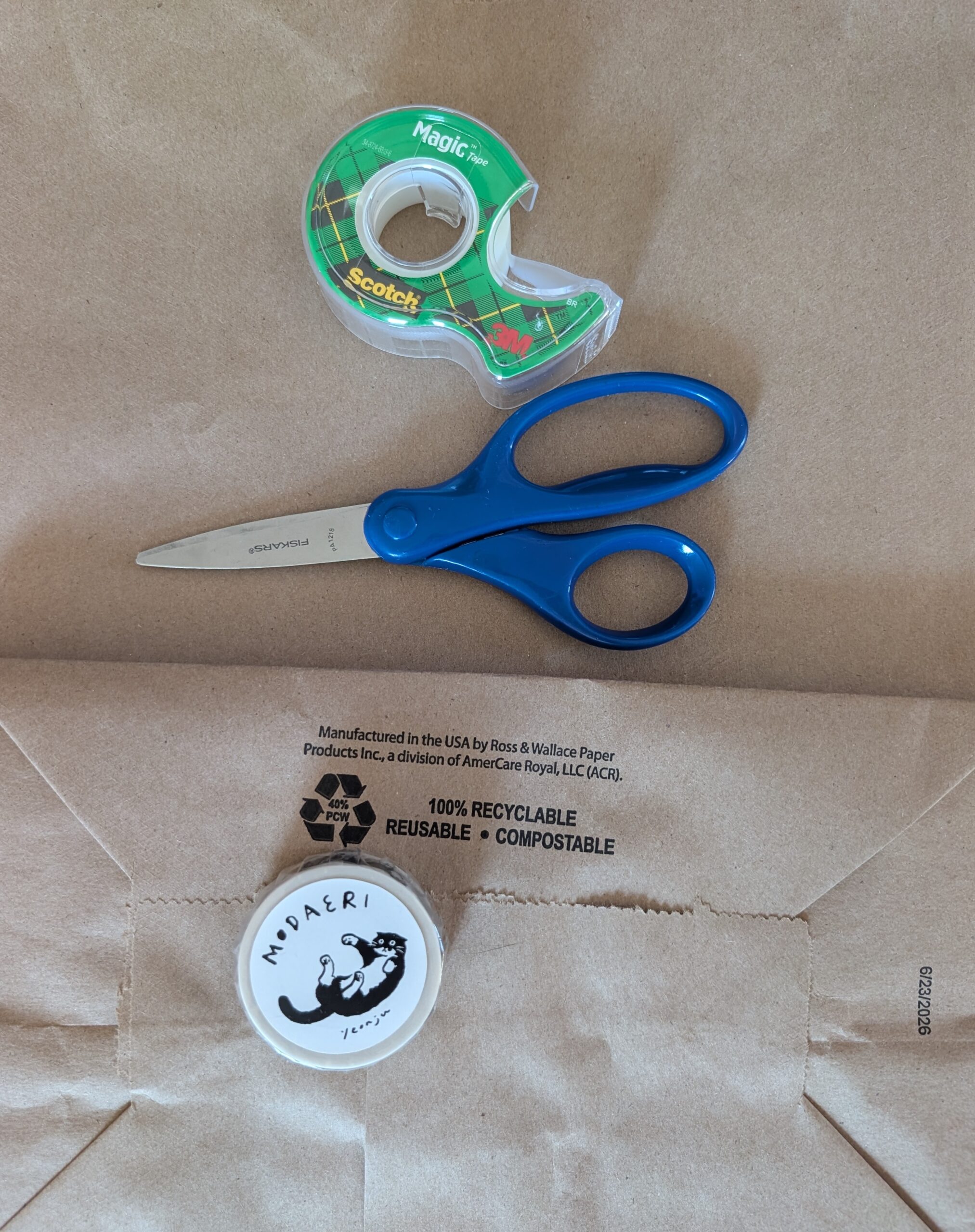
It was the first class assignment: cover the book to keep it in good condition. I used paper grocery bags. It was easy to read whatever I wrote on them, and I could add stickers or pictures to dress them up.

By the end of January, most of my covers were worn, torn, and re-taped. Some were close to falling off or falling apart; they no longer protected the books. So I recovered them with grocery bags, tape, and new stickers and pictures. At the end of the year, the books entrusted to me were in good shape, ready for the next person to use and protect.

Other than cookbooks, I never covered books after high school. Other than library books, which I took good care of (and still do), what I read I owned. Since I wasn’t handing them in or handing them down, there was no pressure to preserve them for other hands and other eyes. I kept and continue to keep my personal library in good shape, but I’m willing to put my own books at risk (take to the beach, on a trip, read while drinking hot cocoa) more than ones on loan.

I think damage is done when I mistake what is on loan to me for something I own, when I don’t think beyond my own life to what comes after. And I don’t own most things – air, soil, plants, animals. I need to put some effort into handing these things on in good condition. And I need to remember that doing so will not be a one-and-done activity.

Home Room

It’s the place I began my school day, seventh through twelfth grade: art studio, math class, social studies center, history room, physics lab, and English literature classroom. Only twice did I have an actual class in that year’s home room; only once out of those two times was it with my home room teacher. The only effect my home room had was that it governed where my locker was located.

The others sharing my home room changed yearly. Sometimes, I was assigned a seat in alphabetical order; other times, I could choose my seat but could not switch it; once, after the home room teacher had learned everyone’s names, I could sit anywhere I wanted for as many or as few days as I wished. Rarely were any of my friends in my home room. School began with a bell, a settling down in home room, roll call, then announcements, perhaps a short conversation with the person next to me. Eight minutes and a second bell and home room was over.

Home room was the one place, the one time of the day, that I had no common goal or activity with the others in the room. There was no shared subject, homework, or guidance for conversation or getting along. Home room was a randomly assigned time and place that asked nothing of me beyond acceptable behavior. If any friendships were going to grow, any connections made, I had to work for them. I could engage with whomever was there or keep my distance.

Although it wasn’t really a class, it taught me a lesson. The spaces in between intentional work or study, the times when I found myself among strangers without a common purpose, would be what I made of them.

That stuck with me. It’s the quick conversation in the grocery check-out, the moment passing someone on the sidewalk, eye contact on the subway, or the occasional catching up with the neighbor down the street these days. Some of these lead to deeper connections, most don’t. But each offer a moment, an hour, a day, a lifetime lived better for its happening.

Bus Stop

We moved to Virginia just before my fifth grade year began. The week before school started, my mother took me to Kingston Elementary School for registration and placement testing. An hour and several tests later, the vice principal told me the name of my teacher (Mr. Blake) and asked me if I had any questions. It went something like this:

Where is my bus stop?

What do you mean?

Where do I stand to get the bus to school?

I don’t know. Just ask one of your friends.

Is there anyone else here who knows where the bus stop is?

I don’t know. Ask one of your friends.

I stopped asking. There seemed to be no point in pointing out the obvious: I didn’t yet have any friends to ask. After an hour of testing my language and math skills, the grown-up in charge of registering new students couldn’t answer a very simple and practical question, and didn’t take the time to find someone who could.

On the first day, I found the bus stop by walking up the road until I saw some kids standing together and asking them if this was the bus stop for Kingston Elementary School. A girl named Rita Weimorts said yes, beginning a friendship and helping me get where I needed to go.

The vice principal wasn’t a bad man, but he lacked the ability to put himself in the shoes of a child who was new to the area. He had forgotten how to reason like a child. Since he was in charge of registering new pupils, that shortcoming had consequences for who knows how many children. He could have offered the grace of true hospitality for the time and effort it took to regain his childlike perspective by asking himself: how would I feel if_______________?

Pencil or Pen?

Writing Implements

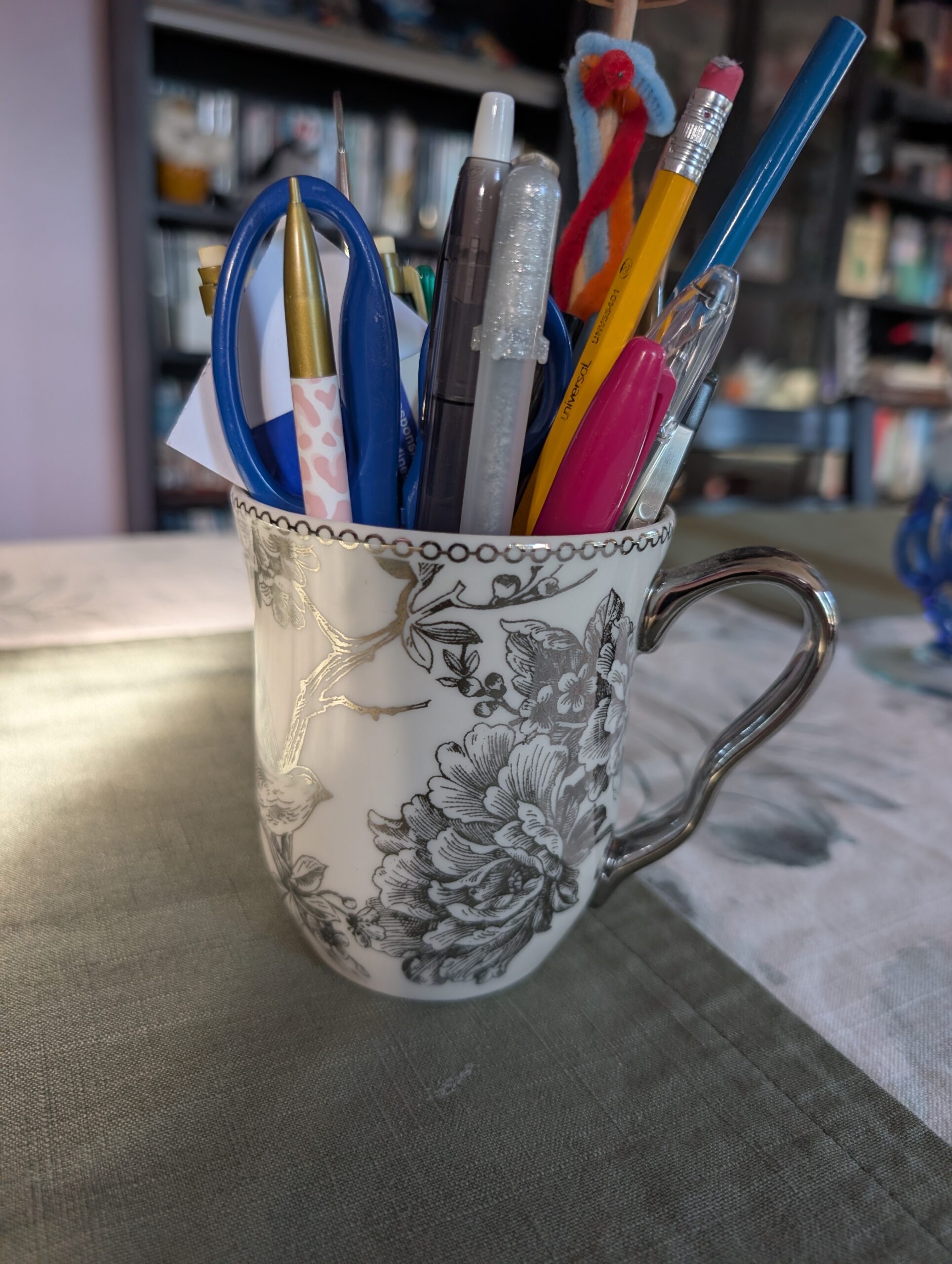
Something written in pencil can be erased, making it easier to correct mistakes or remove a foundational sketch once it’s been inked. Something written in pen shows up more clearly on the page and cannot easily be removed. There are advantages to both. I used pencils a lot more than pens from kindergarten through high school. In college, it was 50-50. In graduate school, I favored pens – not because I liked them better, but because there were very few pencil sharpeners on campus.

These days, I’m back to the 50-50 ratio. Pens are for cards, official signatures, and crosswords; pencils are for grocery lists, brainstorming, and daily math. If I’m drawing Celtic knots, I use both. Pencils are for letters and figures that are transitory, that I might need to change and adapt; ink is for the more permanent words and images.

It’s rare that I cannot quickly and easily choose between pencils and pens for a given task. I can’t say the same in the larger, existential sense. There are times when I mistake what is transitory – what needs to be flexible and changeable – for what is permanent. There are times when I mistake the permanent – what is foundational – for what is short-term. Both are necessary and life-giving. Wisdom is knowing which one is which. Wisdom is knowing they are not interchangeable.

Drawn to Scale

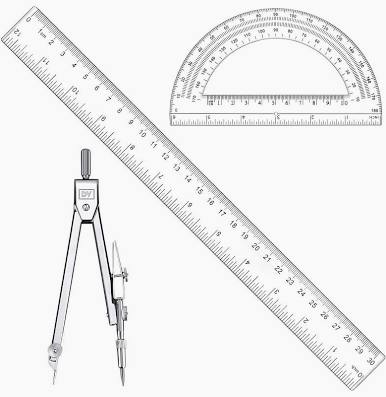
Compass, Ruler, Protractor – required school supplies that are rarely used after graduation. Unless, of course, you are an artist, architect, builder, woodworker, or crafter. These help you draw a good circle, a straight line between two points, and figure out the degree of an angle. With the right notation, a plan drawn on paper – landscape, building, airplane, boat – can be made three dimensional. All that’s needed is the scale.

That’s the thing, though: the scale. What we sketch out in our lives, if not kept in scale, can end up in laughter, a lesson learned, or disaster. Proportion is important. Whether or not we ever use these instruments after graduation…