Category Archives: death

Narrated

Markus Zusack’s The Book Thief is a great read for many reasons – it’s a different perspective on the horrors of war as lived out in World War II Germany, it’s centered on an orphan girl, and the street she lives on is named Heaven (Himmel). The most interesting part is the narrator who tells the tale: Death.

Death notices Liesel Meminger when she steals a copy of The Gravedigger’s Handbook (after her toddler brother died). What is a young girl going to do with a book like that? Then Death notices as Liesel steals more books throughout her childhood – one from a bonfire burning books outlawed by the Nazis, and several from the library of the mayor’s wife. Death notices Liesel because of the thefts, but then because of her life. Why steal books, and why steal books that aren’t the usual fare read by young girls?

I’m not advocating book thievery, but there’s something to grabbing onto anything that speaks of ages/places/people/professions/ideas beyond what daily life and expectations bring. In dark times, when fear robs people of their basic humanity, stealing a little of that back seems a daring and justified act. Death, largely uninterested in how humans live, noticed and found something worthwhile in it, something that revealed a life truly lived.

What marks the difference between existing for a number of years and truly living those years? Philosophy and religion have pondered and expounded on this question. God, self, neighbor. Love. Hope. Faith that things can be better – and working toward that better. Perhaps stealing a book or two…

Time to Go

How do we know when it’s time to leave the work that has been such a meaningful part of our adult lives? How do we help others make that move?

One of the graces of my meaningful work has been the opportunity to foster the gifts of coworkers – and to seek out and encourage those who will continue whatever work I held dear. When I leave, I hope people are glad that I was there; if I’ve done my work well, they will continue on without missing a beat (as an individual I’m as irreplaceable as anyone, but many others can take my work to new and wonderful places). But leaving has always been a choice, never because I was asked to go or because I could no longer do my work.

Now I’m in my early 60’s. The next leaving may well be because staying would burden rather than bless my coworkers. Over the past few years, I’ve seen people who’ve made the transition well, leaving behind a legacy of care and a firm foundation for the next generation of workers who will build on it in their own unique ways. More often, I’ve seen people refuse to give an inch of their territory or power; instead of fostering the next generation, they create obstacles. I’ve seen people forced into the next stage, often in humiliating ways and without compassion. And I’ve seen resentment, in the person refusing to leave and in those whose own work is made more difficult because of that refusal.

It’s a difficult task, letting the work of decades die a good death; it can be hard seeing and embracing the life beyond it. It’s equally challenging to support others who need to let go of theirs.

The truth that gives me hope: every time I’ve let go of a life stage, there’s been another waiting for me, full of new gifts and challenges. I need to trust in the holiness of the whole of life – the first parts through the last. I need to trust that leaving when it’s time to go, or helping another to do so, isn’t something done alone. God’s loving presence will remain and sustain when it’s time to go.

Clean Up Your Own Mess

I took my husband to the New England Aquarium yesterday – the first time I’d been there since the 1980’s. The penguins were the first thing I saw, then the sea lions, then the big center tank and the smaller ones on the outside walls surrounding it. Aquatic life – in fresh, salt, and brackish water – comes in such variety and beauty, and it’s breathtaking. The plaques informing guests how much of that life is endangered are breathtaking as well.

While we took it all in, two divers were busy cleaning the center tank with brushes and a vacuum. Another was wading in the penguin habitat, sucking algae and poop off its bottom. Without constant cleaning and maintenance, the residents would sicken and die – something else that was noted on a plaque.

Rescuing injured mammals, breeding programs for fish in danger of extinction, releasing to the wild those who can survive and taking good care of the ones that cannot: it’s cleaning up a mess humans have made. It isn’t glamorous work; it’s physically demanding as well as a strenuous research endeavor. Both are necessary.

It’s a life lesson for me. I can’t escape the sheer physical work of leaving the planet in better shape than when I arrived on it. I also can’t dodge the necessity of the learning side of it. Not all my time, perhaps not even the majority of my waking hours, can be spent on my own hobbies and interests. Life, and life more abundant, requires something more of me than a spare thought, a half-hearted effort, and a symbolic gesture.

For more on this, visit the New England Aquarium via website – or in person! www.neaq.org.

Not Stopping

Because I could not stop for Death-

He kindly stopped for me-

The Carriage held but just Ourselves-

And Immortality.

[Because I Could Not Stop For Death, Emily Dickinson]

It’s a small thing, but not such a small thing – traffic yielding to let a funeral procession pass. Growing up, I saw it in every town I called home – and there were a lot of them. And it wasn’t just the cars that paused. I remember my grandmother standing still on a sidewalk, holding my hand and giving a nod to the procession. When the last car with headlights on passed, she’d give my hand a squeeze and continue with whatever activity had brought us to that piece of sidewalk in the first place.

I’m not sure if the yielding, the pausing of life’s goings-on, was out of superstition, public pressure, or something more profound – perhaps some combination of the three. But keeping still in honor of a life received, lived, and given back is a chance to catch a glimpse of something sacred and true: the mystery of life draws close when I am going about my daily tasks. This mystery is never far away. And it encourages me to remember the sanctity and brevity of the gift that is my life and the lives of those with whom I spend it.

Sirens

I live in a coastal community – fresh water rivers emptying into the salty bay. The miles and miles of coastline mean lots and lots of boats – kayaks to dredgers and everything in between. With the increase in boat travel comes the increase in sirens – ambulances, fire engines, and police cars responding to accidents. Then there are the medi- flights that shuttle between here and Boston or Providence hospitals. Since I live half a mile from the hospital, EMS facility, and a quarter mile from the fire station, I am well aware of the emergency vehicles [I heard police and ambulance sirens while writing this paragraph]. When the sirens wail, I say a prayer that God holds fast whomever requires help.

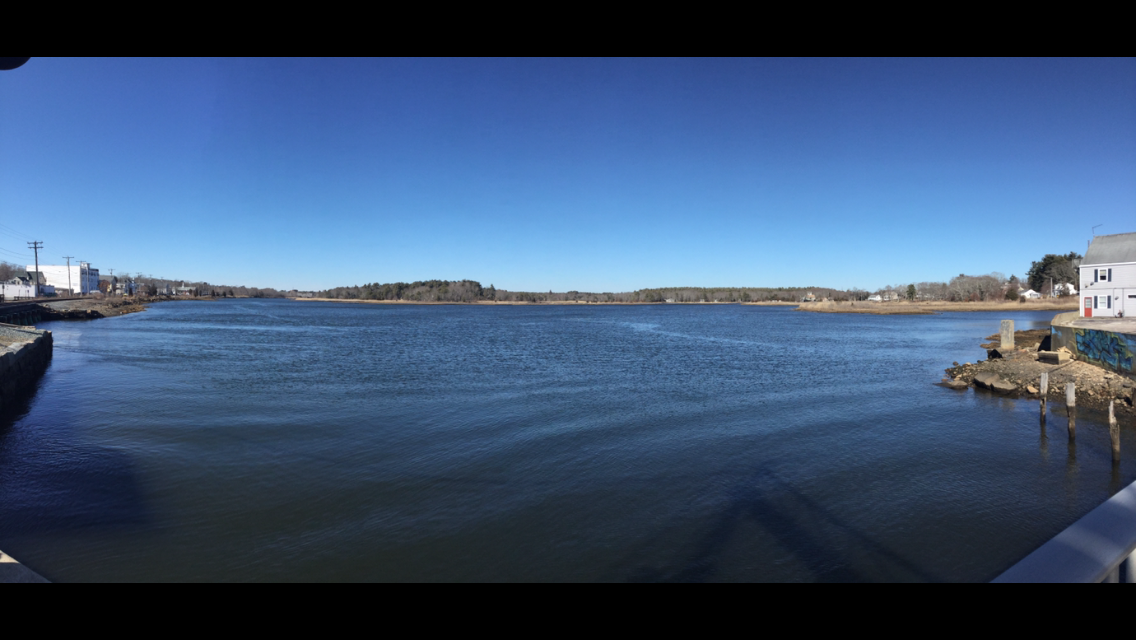
View From Besse Park

There are other siren calls, ones not attached to emergency vehicles and victims: birdsong, the river rushing over rocks, chittering chipmunks, and squawking seagulls. These sing of life, of beauty, of joy. They enchant and delight.

I’m doing my best to heed both kinds of siren calls, recognizing death and loss along with life and beauty. All the life in the world won’t make up for a single death, but all the death in the world can’t negate even a single life. It’s a privilege to be aware of both…

Dad’s Life and Death Lessons

William Orpheus Smith died a couple months short of his seventy-fifth birthday. I was with him when he left this life behind, the man who gave me and my siblings life and a place and community we called home and family. He left behind a wife, four children, five grandchildren, a great-grandchild, a couple of dogs, and all his paperwork in order.

He was the son of an alcoholic who didn’t hand on that addiction. He made home a calm and safe place. He found the world an interesting place, taking advantage of his many trips abroad (U.S. Navy) to attend an opera, admire frescoes, and volunteer at the excavation of Pompeii.

He wasn’t good at making light conversation or expressing his emotions, except when matters of life and death were involved. He rarely shared his inner thoughts and held on to many of the prejudices that came with growing up in a poor New Hampshire town.

When the treatments stopped working and the hospice nurse came to discuss upcoming needs for walkers and pain management on that Friday morning, he turned from facing life to welcoming death. Eighty-seven hours later, he stopped breathing.

The life lesson I learned: hold fast to this extraordinary life.

The death lesson I learned: let life go when it’s time, and embrace the mystery beyond it.

Thanks, Dad.

April 24, 1981, Rick Springfield (Success Hasn’t Spoiled Me Yet)

Death and Life

I’m out early this morning to work in my yard before the heat makes it a chore rather than an enjoyable activity. Garden bag, clippers, and a few bags of mulch already in the front yard, I head around the house to get the spade and watering can. Just past the end of the driveway, death was waiting for me in the form of a small opossum.

This isn’t the first time I’ve found what remained after a bird of prey fed – there are a number of hawks and owls living in my neighborhood. The raptors keep the populations of small animals in check – as much a part of the circle of life as bats keeping the insect population within reason. But knowing that the tiny opossum died to feed a raptor, accepting that as nature’s regulating overpopulation, doesn’t mean that it isn’t a loss.

Instead of laying mulch in the front garden beds, I dig a hole, say some prayers, and bury one of God’s creatures.

I move on to dividing the mint threatening to take over the garden bed, then to replacing the snow peas and nasturtiums that have been eaten by the three bunnies who’ve taken a liking to my plants. Two herons make their morning flight over me; a couple of robins peck at the grass; the teen next door walks by on the his way to school. Life surrounds me in infinite variety and beauty. Death, too, accompanies me.

Perhaps it’s time to take a look at these companions of mine – life and death. You are welcome to keep me company.

Stopping by Woods on a Snowy Evening, Robert Frost – contemplating life and death…

[This is one piece in Randall Thompson’s Frostiana: Seven Country Songs. It was commissioned by the town of Amherst, Massachusetts, in 1959 to commemorate the town’s bicentennial. Thompson set seven poems by Robert Frost, who lived for several years in Amherst, to music.]