When new life comes into the world and when life leaves the world at whatever age, there are witnesses. People gather to welcome the newly born or the newly met into their families and their hearts; people gather to say God-be-with-you and release friends and relatives from this life, handing them back to God. We all come into life as individuals, and we leave it in much the same way – but others bear witness to our initial coming and our final leaving. Life and death may be solo activities, but they are not unseen.
What does it mean to bear witness to the life of another, the death of another? It’s with this question that I leave my ponderings on life and death over the last few weeks. For me, bearing witness is a joyful and sometimes terrible blessing. Life in any form is precious, if I have eyes to see it clearly. Being given life is a holy and finite gift, one given back in the return to the one who bestowed it in the first place.
For the life I have been given, I am grateful beyond words. For the death I will receive some time in the future, I pray for the wisdom to be equally as grateful. The same holds for the lives and the deaths I have born witness to.
At three this afternoon, family will gather in a church in Los Angeles to bear witness to wedding vows exchanged – vows spoken by my son and his beloved. Most of us know the vows and at least some of the prayers and music. Some of us have said them ourselves. There’s nothing particularly unique in any of it. And yet.
Each time two people vow to grow together, to face life as a couple rather than as individuals, to honor the spirit of the other through all the predictable and surprising changes life brings – each time, the world is made new. Life will never be the same because two people stood in front of friends and family (or just a couple of witnesses) and made promises.
There’s no guarantee that those promises can be kept, or that the couple will grow together rather than apart – life brings unforeseen challenges. But life is altered by the exchange of vows and rings, whether they are together until death separates them or until life does.
May God bless the vows said today, and bless the life that comes from them. May they find the strength to choose each other every day – even when that choice is a hard one. May they share their joy and their sadness with others, and be true companions on the journey of a lifetime.
Colin and Adilene, blessings and peace. I am so glad you found each other, and so happy to have you both in my family and life.
Twenty-five years ago today, at Hamilton Hospital in New Jersey, Jared came into the world. Today, he has been on this earth for a quarter century. From first breath to walking to reading to driving to graduation and work in his chosen field, these twenty five years have been a changing adventure, inner and outer life-altering. We will mark this birthday with a cross country flight and dinner at the In-N-Out Burger just off the LAX runways because his older brother is getting married. The typical cake and dinner celebration will happen when everyone returns home.
I have loved every single stage of Jared’s life. I wouldn’t turn back the clock to live them over again, and I certainly wouldn’t wish to remain in any particular stage. There’s something wonderful in the miracle of maturation. And there’s something holy in being a part of it.
Jared, you’ve been a delight from the moment you came into the world. Happy 25th Birthday.
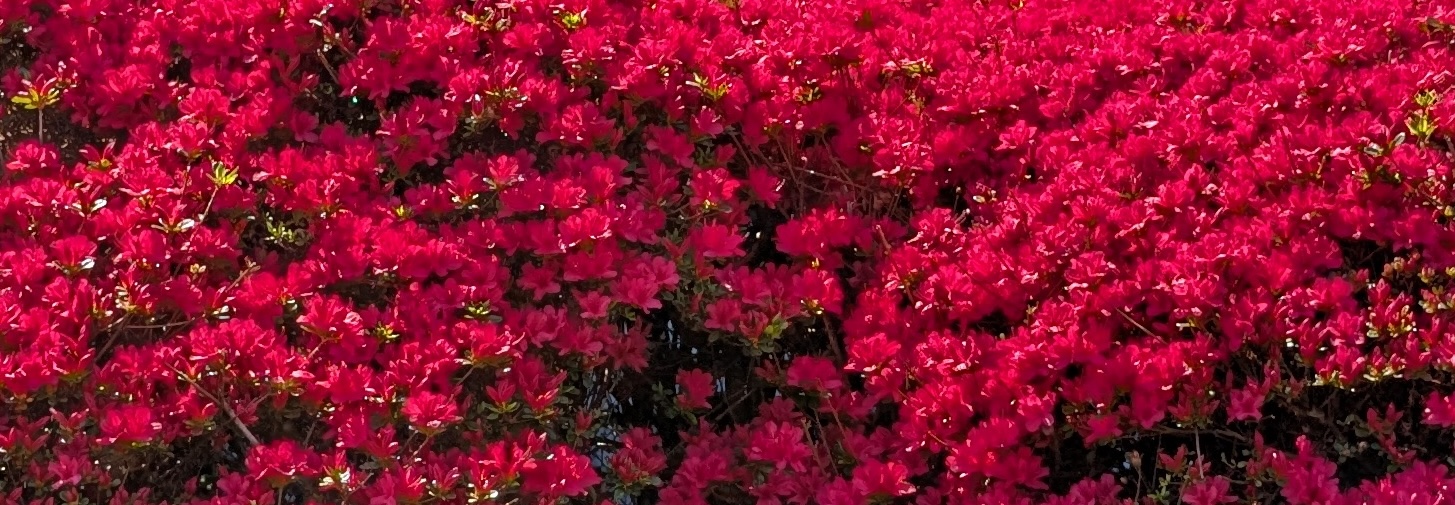
4am. They are gathering on the azaleas outside my bedroom window, greeting the coming day the best way they know how: chirping, tweeting, whistling, and with an occasional caw. They are loud enough to wake me, even with a fan running and the windows closed. Whether or not I want to greet the coming day at the first glimmer of light in the East, they serenade me into the predawn world.
Most days, I note the birds and find my way back to sleep for a couple of hours. Some days, I don’t. The avian crowd pulls me fully awake to give me a choice: greet the early beginning as a punishment or as a gift.
There’s something wonderful about looking out the window to watch the stars fade into dawn. Even better, taking a cup of tea into the back yard to be a participant in the dawning, not just an observer. I keep company with the birds, squirrels, and bunnies – the only human on the street who answered the invitation.
I’m going to lose sleep either way. Why not be amazed at what morning brings to my back yard?
Markus Zusack’s The Book Thief is a great read for many reasons – it’s a different perspective on the horrors of war as lived out in World War II Germany, it’s centered on an orphan girl, and the street she lives on is named Heaven (Himmel). The most interesting part is the narrator who tells the tale: Death.
Death notices Liesel Meminger when she steals a copy of The Gravedigger’s Handbook (after her toddler brother died). What is a young girl going to do with a book like that? Then Death notices as Liesel steals more books throughout her childhood – one from a bonfire burning books outlawed by the Nazis, and several from the library of the mayor’s wife. Death notices Liesel because of the thefts, but then because of her life. Why steal books, and why steal books that aren’t the usual fare read by young girls?
I’m not advocating book thievery, but there’s something to grabbing onto anything that speaks of ages/places/people/professions/ideas beyond what daily life and expectations bring. In dark times, when fear robs people of their basic humanity, stealing a little of that back seems a daring and justified act. Death, largely uninterested in how humans live, noticed and found something worthwhile in it, something that revealed a life truly lived.
What marks the difference between existing for a number of years and truly living those years? Philosophy and religion have pondered and expounded on this question. God, self, neighbor. Love. Hope. Faith that things can be better – and working toward that better. Perhaps stealing a book or two…
How do we know when it’s time to leave the work that has been such a meaningful part of our adult lives? How do we help others make that move?
One of the graces of my meaningful work has been the opportunity to foster the gifts of coworkers – and to seek out and encourage those who will continue whatever work I held dear. When I leave, I hope people are glad that I was there; if I’ve done my work well, they will continue on without missing a beat (as an individual I’m as irreplaceable as anyone, but many others can take my work to new and wonderful places). But leaving has always been a choice, never because I was asked to go or because I could no longer do my work.
Now I’m in my early 60’s. The next leaving may well be because staying would burden rather than bless my coworkers. Over the past few years, I’ve seen people who’ve made the transition well, leaving behind a legacy of care and a firm foundation for the next generation of workers who will build on it in their own unique ways. More often, I’ve seen people refuse to give an inch of their territory or power; instead of fostering the next generation, they create obstacles. I’ve seen people forced into the next stage, often in humiliating ways and without compassion. And I’ve seen resentment, in the person refusing to leave and in those whose own work is made more difficult because of that refusal.
It’s a difficult task, letting the work of decades die a good death; it can be hard seeing and embracing the life beyond it. It’s equally challenging to support others who need to let go of theirs.
The truth that gives me hope: every time I’ve let go of a life stage, there’s been another waiting for me, full of new gifts and challenges. I need to trust in the holiness of the whole of life – the first parts through the last. I need to trust that leaving when it’s time to go, or helping another to do so, isn’t something done alone. God’s loving presence will remain and sustain when it’s time to go.
I took my husband to the New England Aquarium yesterday – the first time I’d been there since the 1980’s. The penguins were the first thing I saw, then the sea lions, then the big center tank and the smaller ones on the outside walls surrounding it. Aquatic life – in fresh, salt, and brackish water – comes in such variety and beauty, and it’s breathtaking. The plaques informing guests how much of that life is endangered are breathtaking as well.
While we took it all in, two divers were busy cleaning the center tank with brushes and a vacuum. Another was wading in the penguin habitat, sucking algae and poop off its bottom. Without constant cleaning and maintenance, the residents would sicken and die – something else that was noted on a plaque.
Rescuing injured mammals, breeding programs for fish in danger of extinction, releasing to the wild those who can survive and taking good care of the ones that cannot: it’s cleaning up a mess humans have made. It isn’t glamorous work; it’s physically demanding as well as a strenuous research endeavor. Both are necessary.
It’s a life lesson for me. I can’t escape the sheer physical work of leaving the planet in better shape than when I arrived on it. I also can’t dodge the necessity of the learning side of it. Not all my time, perhaps not even the majority of my waking hours, can be spent on my own hobbies and interests. Life, and life more abundant, requires something more of me than a spare thought, a half-hearted effort, and a symbolic gesture.
For more on this, visit the New England Aquarium via website – or in person! www.neaq.org.
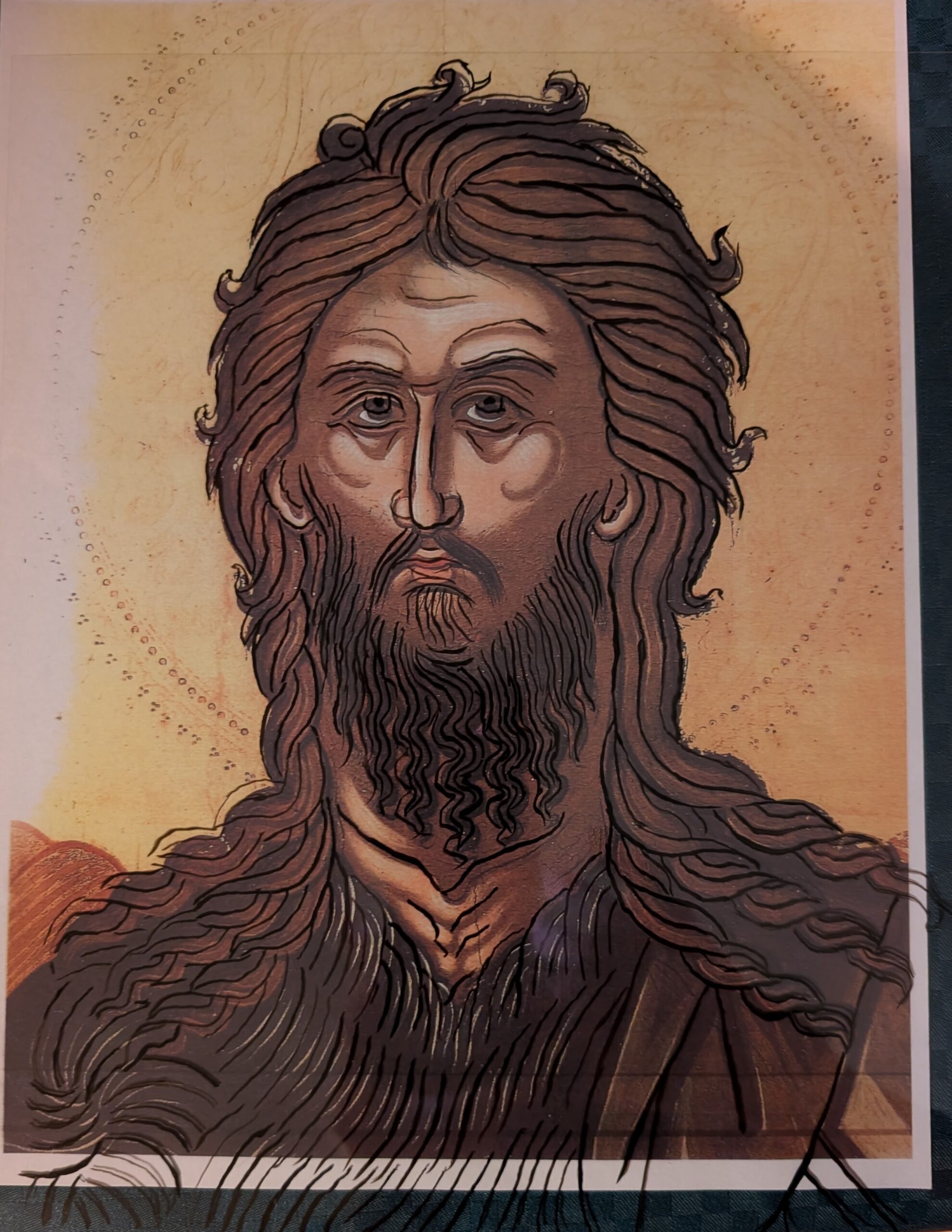
It was a Christmas gift: a one day retreat workshop on creating icons with transfers – workshop because it was hands-on, retreat because creating icons is a profoundly theological prayer practice. The other participants all had some background in art, from college minors to art school grads to experienced iconographers. For them, picking up the brush was easy – it was the praying part that was challenging. For me, the praying part was easy – it was picking up the brush that was challenging.
Finding the Lines
Our teacher, Marek Czarnecki, told us that creating icons (writing/painting – he wasn’t fussed about the term) is a process of making our prayers something physical and beautiful through our hands. Through those brushes, a personal prayer becomes a beautiful means of prayer for others. The prayer for creating icons: Lord Jesus Christ, Son of God, have mercy on me, a sinner. The Jesus Prayer.
Marek said more than once that creating an icon was a matter of self-confidence and justification. We needed to trust in our ability to do the work and accept that the time and energy devoted to this prayer practice is justified (not selfish or merely a hobby).
I didn’t doubt that a spiritual practice was justified – I’ve set aside the time for decades. I very much doubted, and still do, that an icon will come from my brush. The others struggled with the exact opposite issue – no doubt about the ability to create but doubtful that taking the time to do so was justified.
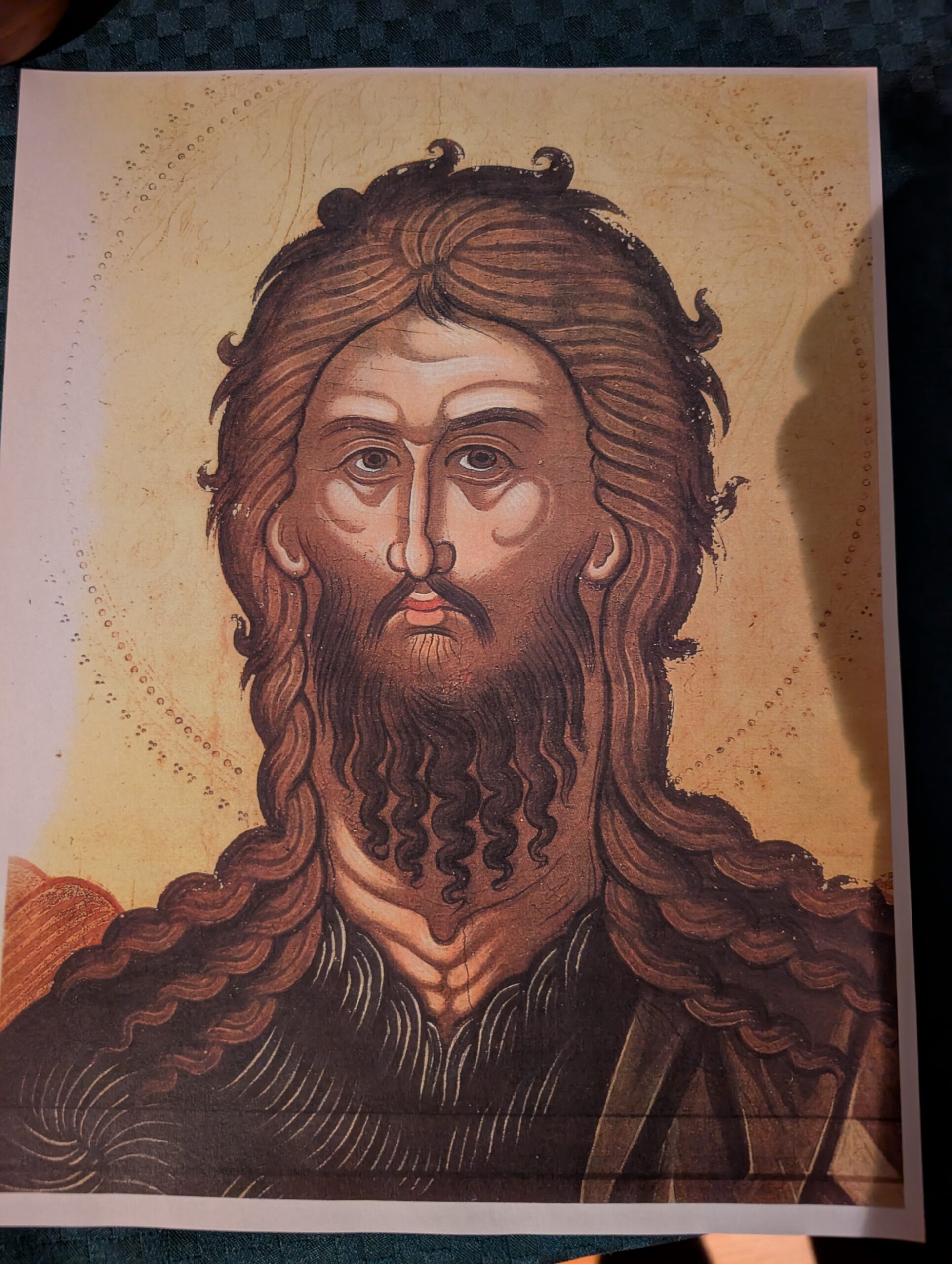
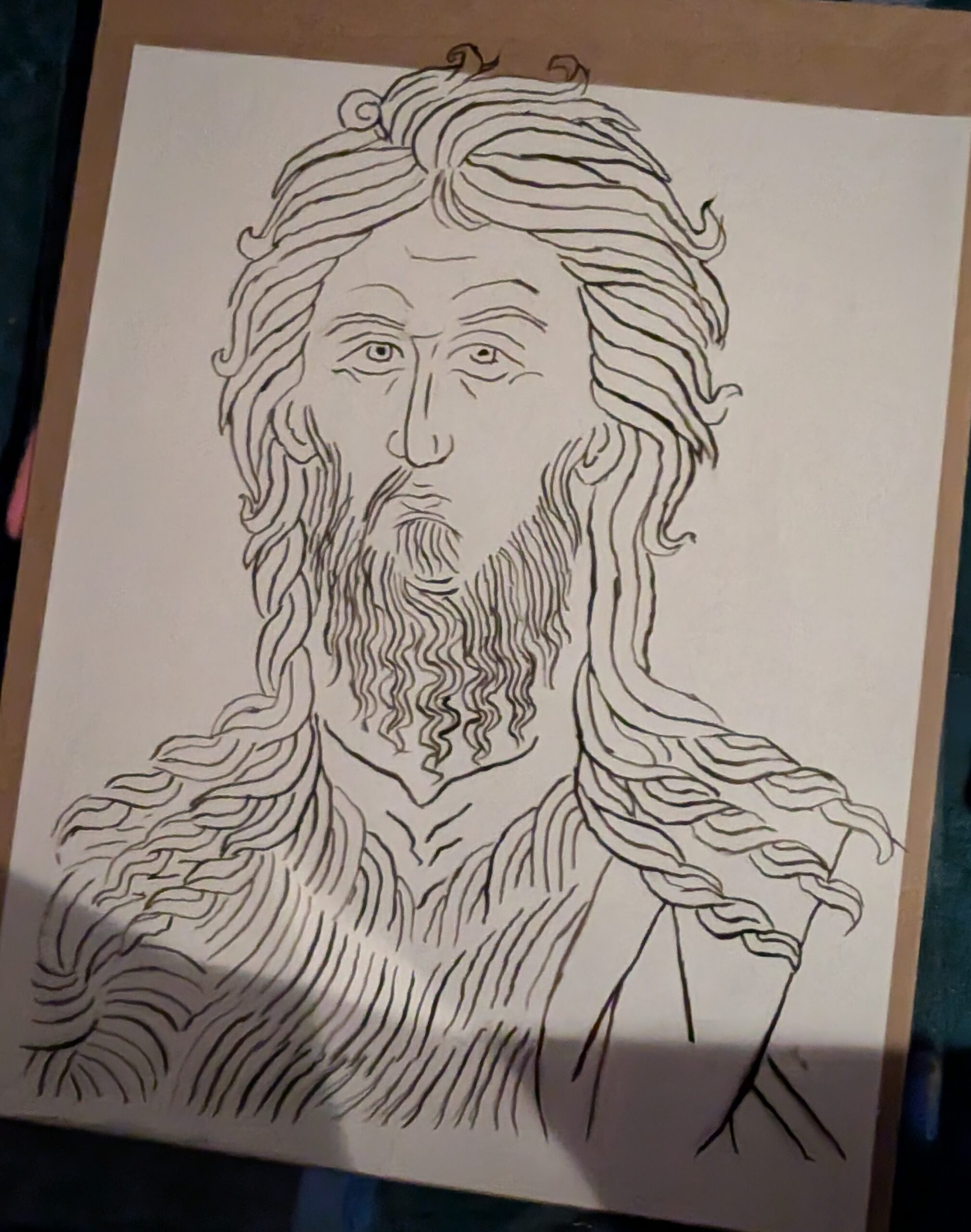
At the end of the workshop, all of us had created a transfer pattern of the icon of Saint John the Baptizer as a spiritual practice. Here’s mine:
Transfer
It’s not clean enough to be the basis for an icon, and I didn’t finish half of his mustache, but it’s the first time I’ve tried to pray with a paint brush (creating Celtic knots with gel pens is as close as I’ve gotten). I haven’t figured out how to turn what I see and what I pray into ink on acetate. But I can see the underlying structure, the lines that form the basis of an icon, in a way I never did before. I got the chance to learn from someone whose prayers and talent come together to create icons – beauty that draws us into God’s embrace. I doubt there could be a better way to spend a Saturday in June…
[The workshop was on Ender’s Island, in Mystic, Connecticut – home of St. Edmund’s Retreat. www.endersisland.org. Marek Czarnecki leads many workshops here.]
[Because I Could Not Stop For Death, Emily Dickinson]
It’s a small thing, but not such a small thing – traffic yielding to let a funeral procession pass. Growing up, I saw it in every town I called home – and there were a lot of them. And it wasn’t just the cars that paused. I remember my grandmother standing still on a sidewalk, holding my hand and giving a nod to the procession. When the last car with headlights on passed, she’d give my hand a squeeze and continue with whatever activity had brought us to that piece of sidewalk in the first place.
I’m not sure if the yielding, the pausing of life’s goings-on, was out of superstition, public pressure, or something more profound – perhaps some combination of the three. But keeping still in honor of a life received, lived, and given back is a chance to catch a glimpse of something sacred and true: the mystery of life draws close when I am going about my daily tasks. This mystery is never far away. And it encourages me to remember the sanctity and brevity of the gift that is my life and the lives of those with whom I spend it.
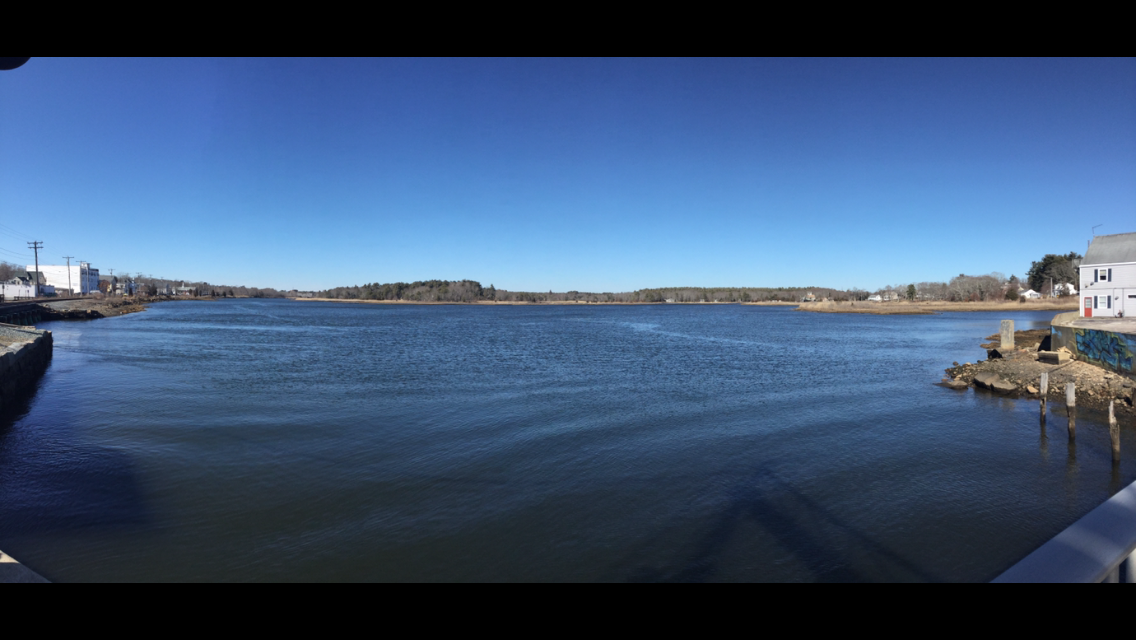
I live in a coastal community – fresh water rivers emptying into the salty bay. The miles and miles of coastline mean lots and lots of boats – kayaks to dredgers and everything in between. With the increase in boat travel comes the increase in sirens – ambulances, fire engines, and police cars responding to accidents. Then there are the medi- flights that shuttle between here and Boston or Providence hospitals. Since I live half a mile from the hospital, EMS facility, and a quarter mile from the fire station, I am well aware of the emergency vehicles [I heard police and ambulance sirens while writing this paragraph]. When the sirens wail, I say a prayer that God holds fast whomever requires help.
View From Besse Park
There are other siren calls, ones not attached to emergency vehicles and victims: birdsong, the river rushing over rocks, chittering chipmunks, and squawking seagulls. These sing of life, of beauty, of joy. They enchant and delight.
I’m doing my best to heed both kinds of siren calls, recognizing death and loss along with life and beauty. All the life in the world won’t make up for a single death, but all the death in the world can’t negate even a single life. It’s a privilege to be aware of both…