But there are many other things that Jesus did; if every one of them were written down, I suppose that the world itself could not contain the books that would be written. John 21:25, NRSVue
There are so many other things Jesus did. If they were all written down, each of them, one by one, I can’t imagine a world big enough to hold sucha library of books. John 21:25, The Message
Jesus lived into his early to mid thirties. If every single thing he did while walking this earth were written down, I’d wager it would take up the shelves of a fairly large library. But I doubt the books would be so many that the world couldn’t contain them. Until I think about it.
God With Us dwelled in the person of Jesus, living a fully human life but not limited to a single life span. Jesus lives on in everyone who feeds the hungry, clothes the naked, and visits the sick and lonely. Jesus lives on in you, and Jesus lives on in me, so the stories continue in our stories. What we do, who we are, those we love and serve continue the story.
Simon Peter and another disciple followed Jesus…Peter had to stay outside. Then the other disciple went out, spoke to the doorkeeper, and got Peter in. The young woman who was the doorkeeper said to Peter, “Aren’t you one of this man’s disciples?”
He said, “I am not.” John 18:15-17(excerpts) The Message
It’s painful to read about this – how Peter denied being a follower of Jesus. I’m sure living it was much worse. Every time I read Peter’s denial – the first of three – I feel slightly sick. I know what happens later. I know Peter is forgiven and goes on to spread the news of Jesus’ love. But still.
Standing in the dark, outside the court where Jesus is being questioned, fear grows inside Peter. It takes hold of him. So he does what he must to avoid being taken into custody, tried, and executed: he denies who he is.
Such fear in those of us who follow Jesus is still here, still grows when life and limb are in danger. I think that’s why we pray in the Lord’s Prayer: save us from the time of trial. Because none of us know what we will say, standing in the dark, when someone says to us, “aren’t you…?”
Jesus, having prayed this prayer, left with his disciples and crossed over the brook Kidron at a place where there was a garden. He and his disciples entered it…John 18:1, The Message
Then God planted a garden in Eden, in the east. He put the Man he had just made in it. God made all kinds of trees grow from the ground, trees beautiful to look at and good to eat. The Tree-of-Life was in the middle of the garden, also the Tree-of-Knowledge-of-Good-and-Evil. Genesis 2:8-9, The Message
For humanity’s first home, God chose a garden. It was here that humanity grasped for the knowledge of good and evil, then hid from God because they were afraid of what God might do to them because of it.
For his last night of freedom, for the place of a friend’s betrayal, God-With-Us chose a garden.
Why in a garden? I’m not sure. But for me, a garden is a place of life, a life-giving and nurturing space. It’s a place where the holy walks in nature. Perhaps that’s why: it’s the place that cannot be blamed for choosing betrayal and death over true connection and life.
Live in me. Make your home in me just as I do in you. In the same way that a branch can’t bear grapes by itself, but only by being joined to the vine, you can’t bear fruit unless you are joined with me. John 15:4
Abide in me as I abide in you. John 15:4a, NRSVue
Who lives in you? Who makes a home in your deepest self, and who holds you in theirs? Cullen, Ted, Elisabeth, Elizabeth, Eun Joo, Jeanne, Diane, Heidi; Aleph, Barney, Magic, Taylor, Frank. My children, husband, parents, siblings. These are the ones who live in my heart – mentors and friends, beloved pets, and the ones who share my DNA and physical addresses.
What if we dare to let Jesus take up residence in our heart of hearts? What if we welcome God-With-Us into our souls as we would a best friend who stops by – without worry of judgement at our imperfections, and confident that we are loved as is?
What if we claim our home in Jesus, not as a vacation rental but as our permanent address?
If we dare, then every place we go, we are at home – and everyone we meet is family.
I am the Real Vine and my Father is the Farmer. He cuts off every branch of me that doesn’t bear grapes. And every branch that is grape-bearing he prunes back so it will bear even more. You are already pruned back by the message I have spoken. John 15:1-3, The Message
I am the true vine, and my Father is the vine grower.He removes every branch in me that bears no fruit. Every branch that bears fruit he prunes to make it bear more fruit. You have already been cleansed by the word that I have spoken to you. John 15:1-3, NRSVue
The front yard is surrounded by a hedge, a living fence offering separation from the street and a home for small wildlife. Once a year, I take my pruners to it, thinning out maple saplings and other vines. The dead branches go next. But it’s the rest of it that’s so much more difficult: pruning off healthy branches to allow light to penetrate the top leaves, and to keep the sides as well as the top of the shrubs green.
Next week, I’ll be taking the pruners to the hedge for the first time in over two years. Skipping last year’s pruning didn’t make the hedge happier or healthier; it made the hedge scragglier and overgrown.
It’s a lot of work, this pruning, and not for the faint of heart or the overly sentimental. The results, at first, aren’t pretty. It’s only over time that pruning reveals itself as a necessary and good thing. New growth and healthier branches take time.
Lately, it feels to me like my life is in the process of being pruned – some things that no longer work for my age and stage are getting cut away. There doesn’t seem to be a particular logic in it, and it isn’t pretty or a lot of fun. I just have to trust that it will end up bearing some kind of fruit in due time.
[Note: John 7:53-8:11 [the portion in the brackets] is not found in the earliest handwritten copies.] A note in The Message
The entire narrative is bracketed – Jesus, the religious leaders, and the woman caught in adultery. At some point, this story was added into the Gospel of John. Is the whole story just an embellishment added by an unknown writer? Did Jesus really write in the dirt? Is any of it real?
There’s no definitive proof. It could have been a legend added in to make a point. It could have been an encounter that was handed down orally, making it into the gospel in one of its later forms. But for almost two thousand years, it’s been a part of our Bible. Biblical scholars, John Calvin among them, saw no reason to remove or dispute its right to remain in John – the benefit of the doubt won out.
What matters to me is whether this story gives us a glimpse of God-With-Us. Does it reveal something of human nature, both the good and bad? Does it draw us more deeply into God’s love? Does it plant us more firmly in loving relationship with our neighbors?
If we answer these questions with a yes, then it’s gospel – good news. It’s a yes for me. How about you?
The woman was left alone. Jesus stood up and spoke to her. “Woman, where are they? Does no one condemn you?”
“No one, Master.”
“Neither do I,” said Jesus. “Go on your way. From now on, don’t sin.” John 8:10-11
The plotters and accusers left without throwing the first or any other stone, perhaps a bit wiser for the experience. Jesus speaks to the woman after they’ve gone, then sends her back to her life without judgement or condemnation – just telling her not to sin from now on. What could have been a bloody death becomes a second chance at a better life.
I wonder, who needed the second chance more – the woman dragged in for adultery or the ones who did the dragging? I also wonder, of those walking away, who left the wiser?
[Jesus bend down and wrote with his finger in the dirt…He straightened up and said, “The sinless one among you, go first: Throw the stone.” Bending down again, he wrote some more in the dirt.] Hearing that, they walked away, one after another, beginning with the oldest. The woman was left alone. John 8:9, The Message
When they heard it, they went away, one by one, beginning with the elders, and Jesus was left alone with the woman standing before him. John 8:9, NRSVue
Perhaps some wisdom comes with age, or at least a healthy dose of self-reflection. Maybe that’s why the oldest among the rock toting crowd were the first to step back from their violent intent. It’s a gift to be able to step away from harming another, from using another as a means to a questionable end. They took the gift Jesus offered and others followed suit.
I’m now in that same category – elder. Along with the creakier joints comes the freedom to turn back, to turn away from a wrong step down a questionable path. There isn’t quite as much at stake as far as my ego is concerned in admitting to an error in judgement.
There’s an added bonus: stepping back and rethinking a harmful act or wrong move is also a teaching moment for the younger ones who happen to see it.
Jesus bent down and wrote with his finger in the dirt. They kept at him, badgering him. He straightened up and said, “The sinless one among you, go first: Throw the stone.” Bending down again, he wrote some more in the dirt. John 8:6-8, The Message
Jesus bent down and wrote with his finger on the ground. When they kept questioning him, he straightened up and said to them, “Let anyone among you who is without sin be the first to throw a stone at her.” And once again, he bent down and wrote on the ground. John 8:6-8, NRSVue
We don’t know what Jesus wrote in the dirt, just that he wrote in the dirt. Some speculate that he wrote the names of the men accusing the woman of adultery, along with their sins. Others claim he wrote the Ten Commandments, giving the accusers a look at what the Law requires – and whether they are in compliance [Augustine interpreted it as Jesus forcing the accusers to look at their own sinful natures and deem whether they are worthy of judging another.]. John Calvin offered this thought: Jesus was showing his lack of interest in their accusations and questions, showing his disdain for them by scribbling in the dirt rather than engage with them.
It’s fun to imagine what Jesus might have written in the dirt, if it doesn’t distract from what that act of writing accomplished. It stopped the momentum, delaying the throwing of the first stone that would give permission for throwing all the rest.
When Jesus straightens up and speaks, his words shift the focus from the woman to the state of the accusers’ souls: Go ahead, throw the stone – if you are without sin yourself. Take a good look at yourself before you harm another. Are your motives pure? Are you without blame? Let’s see if you come forward, see if you can stand up to the scrutiny of others.
Then Jesus bends down to write in the dirt again – giving the accusers the chance to think before acting, to question their right to judge and punish the sins of another. And to think through the consequences of claiming moral perfection and throwing a stone.
It’s something I’m going to picture – Jesus writing in the dirt – when I’m sitting in judgement of another. I’ll imagine Jesus stopping the momentum, shifting the focus to my own inner life and motives, and giving me a chance to go in a different direction.
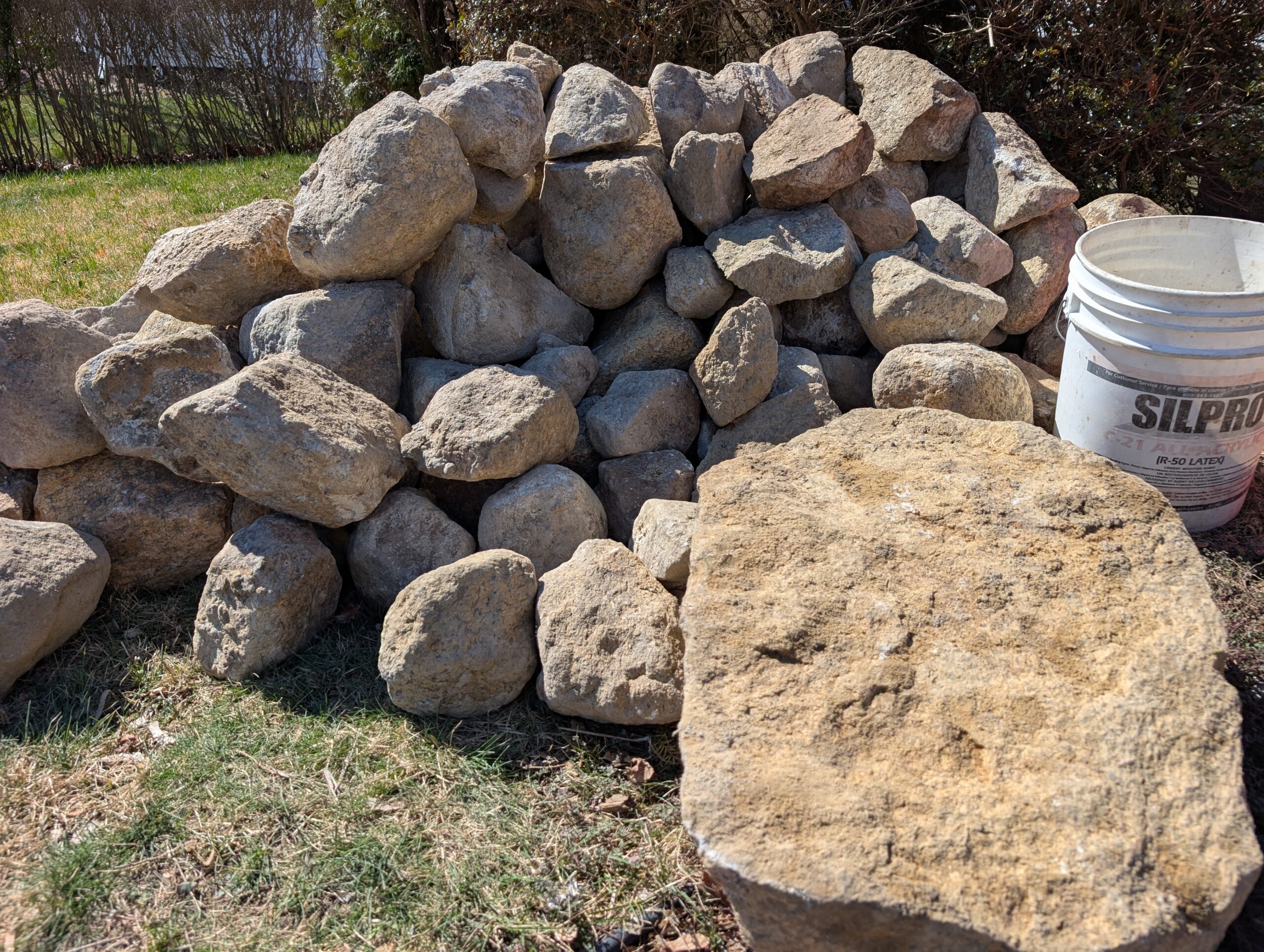
I think I’ll picture these words for now, not that it really matters all that much: are you sure you want to throw that stone?
Jesus went across to Mount Olives, but he was soon back in the Temple again. Swarms of people came to him. He sat down and taught them.
The religious scholars and Pharisees led in a woman who had been caught in the act of adultery. They stood her in plain sight of everyone and said, “Teacher, this woman was caught red-handed in the act of adultery. Moses, in the Law, gives orders to stone such persons. What do you say?” They were trying to trap him into saying something incriminating so they could bring charges against him. John 8:1-5, The Message
They were looking for a way to get Jesus to say or do something against the law, so they find a woman committing adultery (why is only the woman brought in? That’s another discussion.). They had no real interest in her adultery: she was just a means to an end. She was just in the wrong place at the wrong time. They were blind to her worth, her humanity, her life.
Sometimes people get so caught up in defeating an enemy, in winning, that they are blind the collateral damage:
The lives that are lost in the pursuit.
The damage to their own souls that comes with every thrown stone.
[And the story will continue… John 8. This is one in a series of writings. For more information, click Picturing John above.]