God To Surround Me

What surrounded me today?  Images on screens, traffic, Ikea shoppers, clothes on the drying racks.

What surrounded you?

I wish I had taken the time to ask for God’s presence in what I saw on various screens, on routes 495 and 24, in the aisles at Ikea, and in my bedroom. But I didn’t.

Lucky for me, God is willing to work with what’s here rather than waiting for the state of my soul to improve.

That’s true for everyone,  including you.

Thank God.

The Deer’s Cry, The Pilgrim, Rita Connolly, Shaun Davey, 1994

The Notorious RBG

She didn’t set fashion trends, but she did change her collar in coordination with her opinion. She went to law school when women just didn’t do that. In the past few years, she was the subject of several books and a couple of films. One of her best friends and coworkers held radically different views, something that made them both better professionally and personally. She died a few days ago.

Ruth Bader Ginsburg fought for the rights of those who most needed a champion. She faced strong opposition, but managed to stand her ground with dignity and with respect. She made constitutional law interesting.

The world is a better place for her passion and compassion.

Check out these books about her life and work:

Levy, Debbie; I Dissent: Ruth Bader Ginsburg Makes Her Mark

Ruth Bader Ginsburg with Mary Hartnett and Wendy W. Williams; My Own Words

Kathleen Krull; No Truth Without Ruth: The Life of Ruth Bader Ginsburg

Marc Cohn; The Things We’ve Handed Down

Prayer from the Hebrides: God To Enfold Me

God to enfold me

God to surround me,

God in my speaking,

God in my thinking.

[Prayer from the Hebrides, 1st stanza. David Adam, The Eye of the Eagle, London: Triangle, 1990, p. 83. For full prayer, click “Prayer of the Hebrides” above.]

David Adam offers this prayer with these instructions: Pray it regularly with the use of your imagination.

There are days when it is only with my imagination that I can speak these four words – God to enfold me. What I assume is God’s embrace isn’t always what God’s embrace is. God enfolds me in ways that I cannot grasp. Like the air that enfolds me and gives me life, God may be invisible even when I am enveloped in a divine embrace.

The imagination I need isn’t a flight of fancy; imagination is opening my eyes to see what my spiritual blindness has hidden from me. Imagination can remind me that the face of God that I cannot see and the embrace of God that I do not feel aren’t because God is absent. I cannot see and I do not feel because I have’t opened my eyes or allowed myself to be held.

Ode to French Fries

What sizzles

in boiling

oil

is the world’s

pleasure:

French

fries

go

into the pan

like the morning swan’s

snowy

feathers

and emerge

half-golden from the olive’s

crackling amber.


Garlic

lends them

its earthy aroma,

its spice,

its pollen that braved the reefs.

Then,

dressed

anew

in ivory suits, they fill our plates

with repeated abundance,

and the delicious simplicity of the soil.

[Pablo Neruda (Ken Krabbenhoft, trans.); Odes To Common Things; New York: Bulfinch Press, 2010, p. 147]

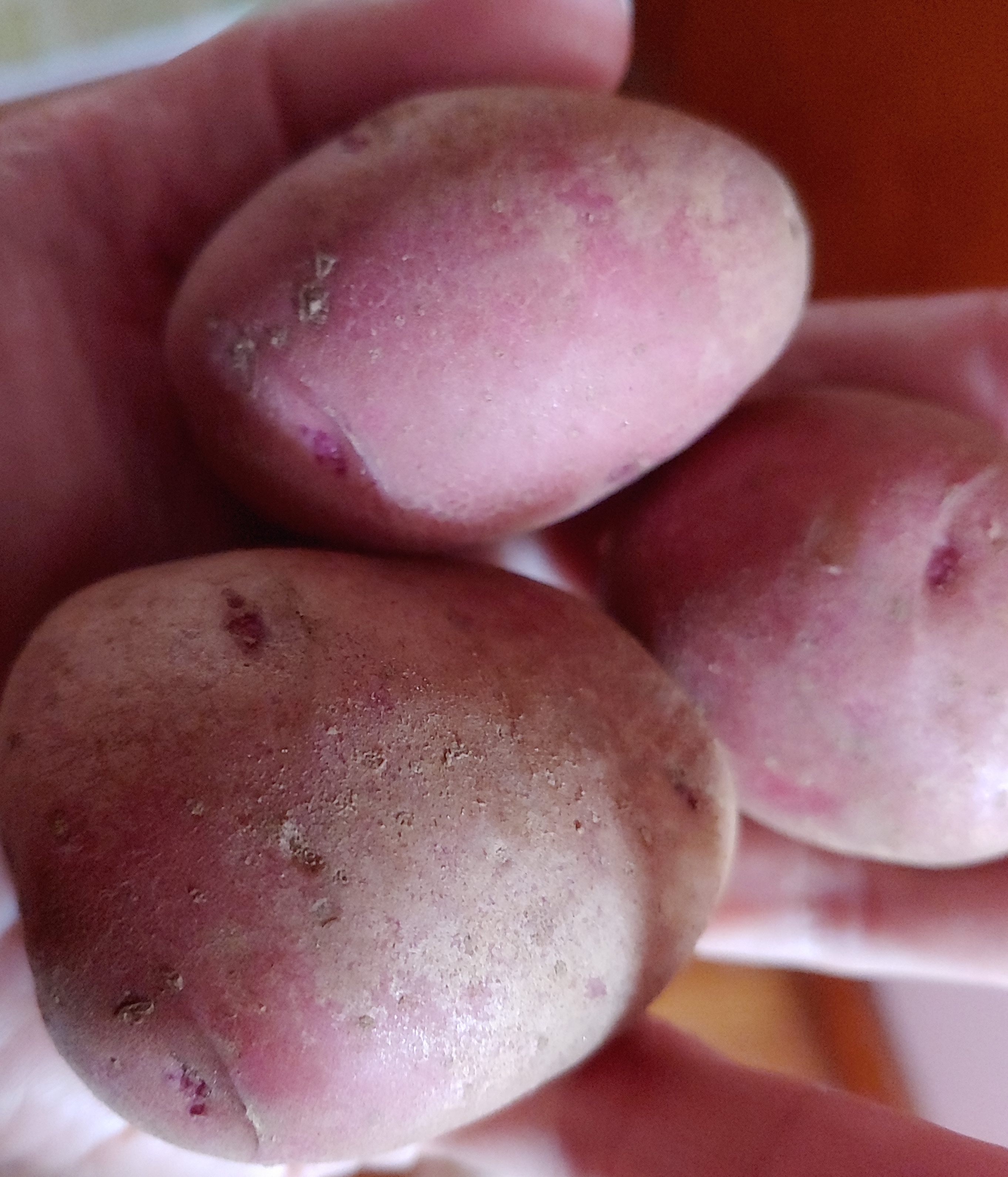
Last year, the potato harvest at the library’s learning garden was measured in pounds – all started from a handful of green tinted, stubby-root covered potatoes that were hiding in the back of my potato box. A couple of months after planting and a couple of days after pulling them from the soil, five middle schoolers scrubbed them clean. Thin sliced, soaked in salt water, lowered into golden oil, the learners turned those potatoes into chips. With a little guidance, work, and patience, garden-to-table went from an abstract idea to a direct and tasty experience. Long after they’ve grown up, they will remember the work it took to grow, harvest, and cook one of their favorite snacks. With Neruda, they may look at their plate of potatoes and know:

Then, dressed anew in ivory suits, they fill our plates with repeated abundance, and the delicious simplicity of the soil.

Maybe, when they say grace, they will be thankful for all the hands that prepared their plate full of food. And maybe, just maybe, it will be their own hands that turn soil and seed into food.

[For the past several years, I’ve been the learning gardener at my local library, leading a summer program for the very young, the middle schooler, and their parents and grandparents with the Marcia, the children’s librarian. Last year, Katarina joined in, bringing her considerable gardening and cooking talents – along with her deep fryer and a potato chip recipe. Although the pandemic cancelled this year’s program, I have faith that it will return in the years to come, and continue well beyond my own leadership.]

Wake-Up Call

Dust of Snow

The way a crow

Shook down on me

The dust of snow

From a hemlock tree

Has given my heart

A change of mood

And saved some part

Of a day I had rued.

[Robert Frost, Anthology of Robert Frost’s Poems, New York: Washington Square Press, 1971, p. 240]

Robert Frost chose Poe’s nevermore black bird, a tree whose distilled nectar killed Socrates, and the form of water that’s beautiful, blinding, and a cause of hypothermia to the unwise.

It’s not always the obvious or the eye-catching that shakes us from our existential stupor – that haze we stumble through, blind to the gift of life that every day presents.

We don’t get a do-over and we can’t reclaim hours long past. But we don’t have to lose the whole day to our own melancholy/boredom/self-pity. Just about anything can snap us back to the present moment.

Thank God.

Fire and Ice

Some say the world will end in fire,

Some say in ice.

From what I’ve tasted of desire,

I hold with those who favor fire.

But if it had to perish twice,

I think I know enough of hate

To say that for destruction ice

Is also great

And would suffice.

[Robert Frost, Fire and Ice, New Enlarged Anthology of Robert Frost’s Poems (Louis Untermeyer, intro and commentary); New York: Washington Square Press, 1971, p. 242]

Heat-of-the-moment or premeditated? A destructive act is world-ending, either way. A cursory glance at the news, with the violence of one against another encouraged or supported by those whose words and ideologies are spewed from a safe distance, remind me that fire and ice are not mutually exclusive in destruction.

In Biblical terms, hardness of heart brings about such things. Raising a hand against another in anger and the cold calculations designed to gain and maintain personal advantage at another’s expense spring from the same place: a heart without compassion.

God, help me this day to live with compassion in my heart. I’m not strong enough or wise enough to do it on my own. Please. Amen.

A new heart I will give you, and a new spirit I will put within you; and I will remove from you body the heart of stone and give you a heart of flesh. Ezekiel 36:26, NRSV


Solitary

Alone 

Lying, thinking

Last night

How to find my soul a home

Where water is not thirsty

And bread loaf is not a stone

I came up with one thing

And I don’t believe I’m wrong

That nobody,

But nobody

Can make it out here alone

Alone, all alone

Nobody, but nobody

Can make it out here alone.

There are some millionaires

With money they can’t use

Their wives run round like banshees

Their children sing the blues

They’ve got expensive doctors

To cure their hearts of stone.

But nobody

No nobody

Can make it out here alone.

Alone, all alone

Nobody, but nobody

Can make it out here alone.

Now if you listen closely

I’ll tell you what I know

Storm clouds are gathering

The wind is gonna blow

The race of man is suffering

And I can hear the moan,

Cause nobody

But nobody

Can make it out here alone.

Alone, all alone

Nobody, but nobody

Can make it out here alone.

[Maya Angelou, PoemsAlone; New York: Bantam Books, 1986, pp.69-70]

Dependence, independence, interdependence. We do our best to move from our childish dependence on others as we grow – at least as far as getting ourselves dressed, making our beds, and doing our chores. We strive for independence – making enough money to keep a roof over our heads, clothes on our backs, and food on the table. That’s all well and good, as far as it goes.

The problem is when we mistake interdependence – the truth that no one makes it out here alone – for weakness rather than a bedrock truth of life on this planet.

Interdependence. From our first breath to our last, we can’t make it out here alone. We are not self-created; we are not self-sustained; even in death, we are part of the life of this cosmos. I don’t question this. My big question: do I accept my interdependence and live in a way that increases the joy and love in the world, or in a way that decreases it?
 

Forgotten Language

Once I spoke the language of the flowers,

Once I understood each word the caterpillar said,

Once I smiled in secret at the gossip of the starlings,

And shared a conversation with the housefly

in my bed.

Once I heard and answered all the questions

of the crickets,

And joined the crying of each falling dying

flake of snow,

Once I spoke the language of the flowers….

How did it go?

How did it go?

[Shel Silverstein, Forgotten Language, Where the Sidewalk Ends; New York: HarperCollins, 1974, p. 149]

I don’t know if it’s so much forgetting the languages as it is forgetting that each form of life has its own life and language. It’s one of the reasons I love spending time in the garden and walking in woods, on beaches, and down the familiar streets of this town I call home: my selfish deafness to the languages of non-human life is lifted, if just for a few minutes.

Ann’s Colors

Colors (by Shel Silverstein)

My skin is kind of sort of brownish

Pinkish yellowish white.

My eyes are greyish blueish green,

But I’m told they look orange in the night.

My hair is reddish blondish brown,

But it’s silver when it’s wet.

And all the colors I am inside

Have not been invented yet.

[Silverstein, Where the Sidewalk Ends, New York: HarperCollins, 1974, p. 24]

Ann Fowler picked this poem to share for last Thursday’s poetry reading. The theme was “color,” and these eight lines are all about that. In fifty words (a few more, if you count the contractions as two words), a simple and profound truth: what we are on the inside is so much more than a passing glance of the outside reveals.

Twenty-six years ago today, I stood with my love in a church chapel. We said our vows and began a whole new adventure. I know Dave better than most do, but I don’t kid myself into thinking I’ve seen all his inside colors. There’s a lot more to see.

But what I have seen these past twenty-six years: amazing.

August 25, 2020

Neruda’s Flowers

Ode to some yellow flowers

Rolling its blues against another blue,

the sea, and against the sky

some yellow flowers.

October is on its way.

And although 

the sea may well be important, with its unfolding

myths, its purpose and its risings,

when the gold of a single

yellow plant

explodes

in the sand

your eyes

are bound

to the soil.

They flee the wide sea and its heavings.

                    We are dust and to dust return.

                     In the end we’re

                   neither air, nor fire, nor water,

                   just

dirt.

neither more nor less, just dirt,

and maybe

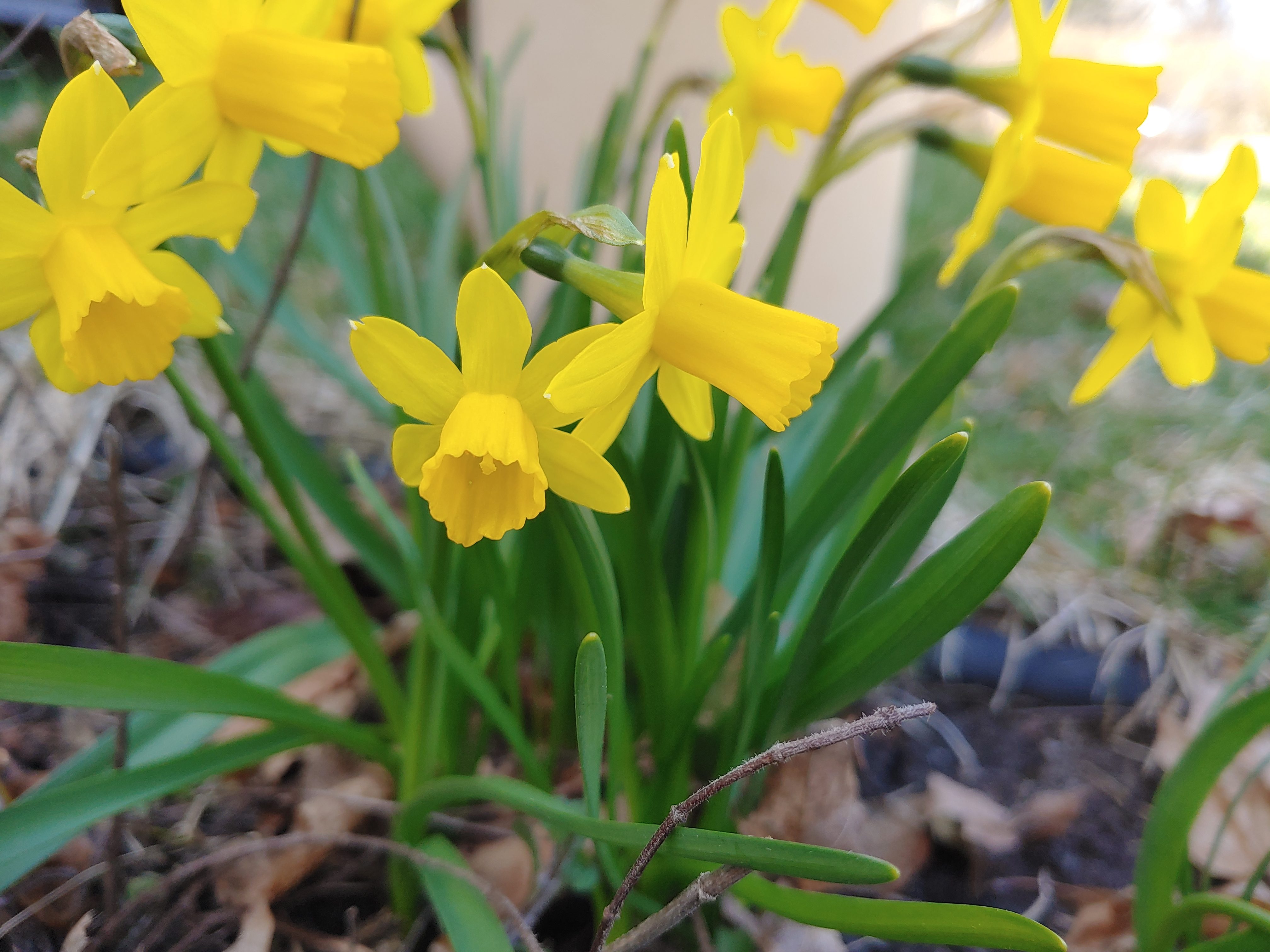
some yellow flowers.

[Neruda, Odes to common things; New York: Bulfinch Press, 1994, p. 57]

Neither more nor less than dirt – an Ash Wednesday sentiment. It’s true, too, in its own way. We are no more nor are we any less than ashes and dirt. Except we are also God’s beloved. Neruda never states that, at least not explicitly. Still, there are the yellow flowers. Perhaps, just perhaps, they are a glimpse of divine love.

Moving into God’s presence through words