Category Archives: Theology

Amen

We do not presume to come to this thy table, O merciful Lord, trusting in our own righteousness, but in thy manifold and great mercies. We are not worthy so much as to gather up the crumbs under thy table. But thou are the same Lord whose property is always to have mercy. Grant us, therefore, gracious Lord, so to eat the flesh of thy dear Son Jesus Christ, and to drink his blood, that we may evermore live in him, and he in us. Amen.

I say it at least eight times in the typical worship service. Recently, I’ve been thinking of different ways of saying Amen, ways to help me mean it when I say it: I’m in! Sign me up! Absolutely! Thinking of Amen as a verbal way of raising my hand rather than a place-holding word to keep the rhythm of the service on track keeps me from thinking I am merely a passive observer rather than an active participant. It also brings to mind what I’m in for…

Do I want to see love transform this world into a place where everyone knows they are unique and sacred? Absolutely!

Am I willing to give up the partial identities that drain joy from my daily life? Sign me up!

Will I join with others to serve those whom Jesus loved – the poor, the needy, the desperate? I’m in!

And the hardest one: will I let go of my preferred way of seeing and acting in the world to bring about God’s kingdom? Am I willing to follow in the footsteps of Jesus? Let’s hope I can say with conviction and joy: I’m in!

Indwelling

Grant us, therefore, gracious Lord, so to eat the flesh of thy dear Son Jesus Christ, and to drink his blood, that we may evermore dwell in him, and he in us.

[For full prayer, click Humble Access above.]

Exactly what are we doing when we take part in communion/eucharist/mass? Remembering, honoring, participating in Jesus’ last meal with his disciples? Are the bread/wafers and wine/grape juice symbolic, connecting us to something larger? Do these common elements somehow change into the body and blood of Christ? Our answers to such questions depend on our particular traditions and our life experience. There is no single correct answer because there is no single way to experience communion with God and with the people who join with us in this sacred act.

It matters how we approach the bread and wine, but not because our theology needs to be affirmed or corrected. It matters because we are seeking something much bigger than a correct understanding. We are seeking what God in Christ offers: living in the love of God, and the love of God living within us.

Indwelling – God in us and us in God – is the point. The theological particulars of how we understand this can provide a doorway into this indwelling, or they can be a wall that keeps us out.

Bow and Bend

‘Tis the gift to be simple, ’tis the gift to be free,

’tis the gift to come down where we ought to be

and when we find ourselves in the place just right,

’twill be in the valley of love and delight.

When true simplicity is gain’d, to bow and to bend we will not be ashamd.

to turn, turn, shall be our delight,

till by turning, turning we come round right.

[Simple Gifts, traditional Shaker hymn by Joseph Brackett]

Wiping down the tables. Sweeping up the paper scraps. Checking glue sticks and markers to see if they still work. Sweeping the pine needles off the back patios and keeping the chocolate mint plants in check. Wiping a nose, holding the hand of a toddler navigating a step. Such tasks weren’t the main focus of my work as the gardener of the learning library, but they were all necessary elements of the program. Practically anyone could do them, but it fell to Marcia, the children’s librarian, and me. Every summer for many years, Marcia and I returned to these most basic of tasks because they were ways to create a welcoming and engaging space for parents, grandparents, and children of all ages.

When we describe our program, none of these tasks are included. Goals, attendance, the garden-to-story-to-table pieces are highlighted in annual reports for the trustees and the greater library network; these crucial elements remain unrecognized. Perhaps because elements that anyone can do aren’t valued as highly as the elements that require special skills or education – writing curriculum, selecting meaningful stories, noting knowledge and maturity gained by participants.

Perhaps it’s because I’d rather be known for the complex things I accomplish more than the simple. If so, I’ve forgotten a couple of fundamental, spiritual truths:

Simple and easy aren’t the same thing.

More complex doesn’t mean more worthwhile.

Simple

Tis the gift to be simple, tis the gift to be free, tis the gift to come down where we ought to be

And when we find ourselves in the place just right, ’twill be in the valley of love and delight.

When true simplicity is gain’d, to bow and to bend we shall not be asham’d,

To turn, turn will be our delight, ’til by turning, turning we come round right.

Traditional Shaker Hymn, Joseph Brackett, Jr.

Right thought.

Do no harm.

Right Action.

Tell the truth.

Clean up after yourself.

Take care of God’s creation.

The basics of a good life are not particularly complex. Jesus put it this way: Love God, Love Neighbor, Love Self. That’s it: six words that open the door to a beautiful, holy life. Why do we do our best to make it more complex, adding unnecessary and often harmful additions and provisos? If I had to guess, I’d stake my money on another basic truth:

Simple and easy are not the same thing.

Daily Sustenance

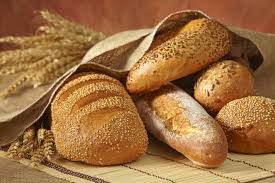
Give us this day our daily bread.

What’s the difference between a want and a need? What is necessary for a life well lived and loved? This question is all wrapped up in a request for daily bread – not daily five course dinner in a mansion, but what is necessary to sustain life and a roof over my head.

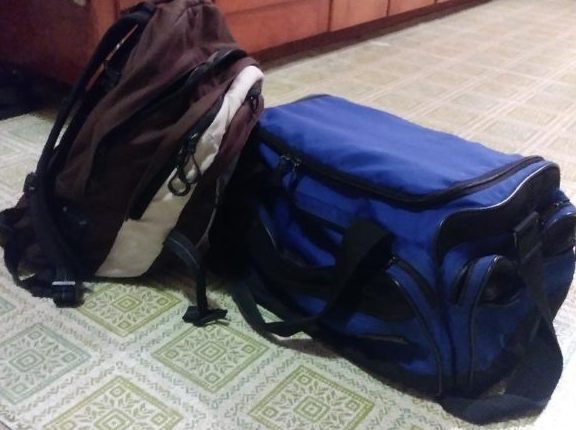
This is playing out in a larger sense at the moment, as I decide what to bring to a new (and temporary) home and what to leave behind. I want to bring what will make a fruitful, faithful life possible; I want to leave behind what distracts and hampers that life. I don’t want to waste this opportunity to let go of what is unnecessary and what doesn’t really matter.

Lord, help me discern what daily bread is, and what it is not. And help me pack accordingly. Amen

[For more on this, click Noonday Prayer Service above.]

Our

Officiant and People: Our Father, who art in heaven

If you look through the New Testament, the word saints is only in its plural form – no singular saints, just a collective. This is different from the honorific Saint that is bestowed on a select few whose very human essence scattered the love of God like a prism flings light. Christianity, like its mother Judaism, is a communal affair rather than a singular pursuit.

The collective shows up again in the prayer Jesus left with us. Our father, not my father or your father. God isn’t the personal property of a single person, even one praying this prayer in solitude. God gives life to everyone, and everyone is claimed as a child of God’s love.

Our means I can’t exclude those I’d prefer to exclude, and they cannot exclude me. We are in this life together. We come before God together, even when we don’t, can’t, or won’t admit it.

What a powerful reminder, in the middle of whatever activities the day brings, that I am not alone – unique, beloved, but never alone.

That goes for you, too.

[For more on the Noonday Prayer service, click above.]

Have mercy

Lord, have mercy.

Christ, have mercy.

Lord, have mercy.

Kyrie Eleison is the Greek form of this prayer for mercy. It’s often sung, which adds weight to the request. It’s a three-fer, guaranteeing that it can’t be skipped over as easily as a single plea might.

Have mercy, dear God, for my inability to love you, myself, or anyone else as well as I could or should. Think kindly of me when I don’t offer kind thoughts to others. Help me in my weakness and in the limits my humanity brings.

Have mercy as I pray. Have mercy when I cannot or choose not to pray. Grant that I may have mercy on others because you have so freely and often granted yours to me.

Amen.

Center

Where is the center of the sea? Why don’t the waves break there?

Donde esta el centro del mar? Por que no van allĂ­ las olas?

[Pablo Neruda (Sara Lisa Paulson, trans), Paloma Valdivia, illustrator; Book of Questions; New York: Enchanted Lion Books, 2022]

Ocean currents are amazing and mysterious. Surface movement in any direction is balanced out with deep currents going in the opposite direction – and all kinds of movement happens between. Since waves break upon shores, could there be a location where the deep currents are breaking – unseen by our human eyes, at depths beyond our reach?

In Orthodox theology, one of the images for God’s love and creative power is a procession; love and life begin in the Creator, flow through the Spirit and Christ, and out to the farthest reaches of creation. All things receive life and love from their center in God, like waves breaking on the shores of our very being.

If I stick with the wave metaphor, could it be that there is a deep, unseen current that returns even my tiniest offerings of love to the source of all things?

Recalling the Light

When a prisoner recalls the light, is it the same light that illuminates you?

Rejoice in the Lord always, again I say rejoice were the words Paul wrote from prison. Rejoice in the light, wherever it finds you; rejoice in the Lord, even in prison. Rejoice.

I guess the answer to Neruda’s question depends on whether the prisoner recalls light as overcoming darkness, and whether those of us who live in light-bathed freedom are aware that we could find ourselves in a darkness that doesn’t end when the sun rises.

[For more information, click Neruda’s Book of Questions above. Better yet, buy the book.]

Coffee Wars

It does not insist on its own way. I Corinthians 13:5, NRSV

[For the full text, click I Corinthians 13 above.]

The coffee pot was moved back to the corner, and thus began the battle…

The church kitchen had been a disorganized mess for years, so the youth group took it on as a way to contribute to the life of the community. Cupboards that hadn’t been opened in years, much less emptied, were given a thorough scrubbing; what was broken or dangerous was removed; what was left was cleaned, organized, and labeled. The walls were degreased and repainted. It took hours, but the transformation was spectacular.

One of the best things: the coffee station had been relocated to a space near the service window. Everything was within easy reach, and it made coffee hour so much easier for hosts and guest alike. The youth group did the honors that first Sunday after the reorganization, hosting the coffee hour and revealing the new kitchen.

The grumbling started within hours. How could the teens change the kitchen without asking (they had permission from the church leaders)? How could they toss things out without permission (only broken and expired things were thrown away)? What right did they have to change anything?

The next Sunday, the coffee pots and machine had been moved back to the corner by persons unknown, recreating the old set-up. The youth, assuming someone didn’t know about the new place, moved it again. The next Sunday, it happened again. And again. And again. Finally, the youth gave up. Their hard work and best intentions had run into a communal unwillingness to change. The coffee making status quo was restored, but the damage was significant: the youth no longer believed that their efforts or their presence were welcome.

I doubt the adults who moved the coffee pots were intentionally causing damage to the teens of the church. I’m almost positive that there wasn’t a conspiracy intent on rejecting and dismantling the gift of time and effort given by the youth. This was just a typical knee-jerk reaction, a reclaiming of turf, an exercise of power. I wish the adults had asked themselves this question:

What is more important: keeping things the way I want them or honoring the gift offered by others?

The true and most disturbing question: what would have been their answer?