Category Archives: Prayer

Cedar Street

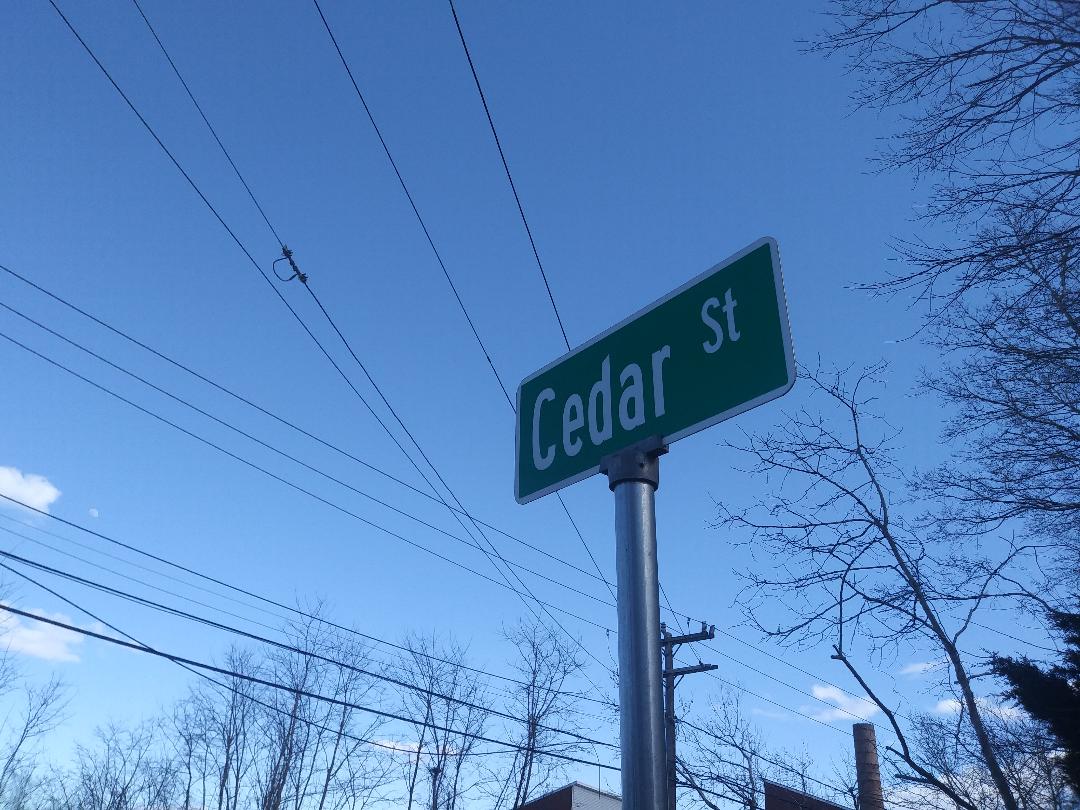
High Street ends with a choice: turn left or right onto Cedar Street. On the right, a steep, partially paved section of road with many potholes; on the left, a steep hill, well paved. I turn left.

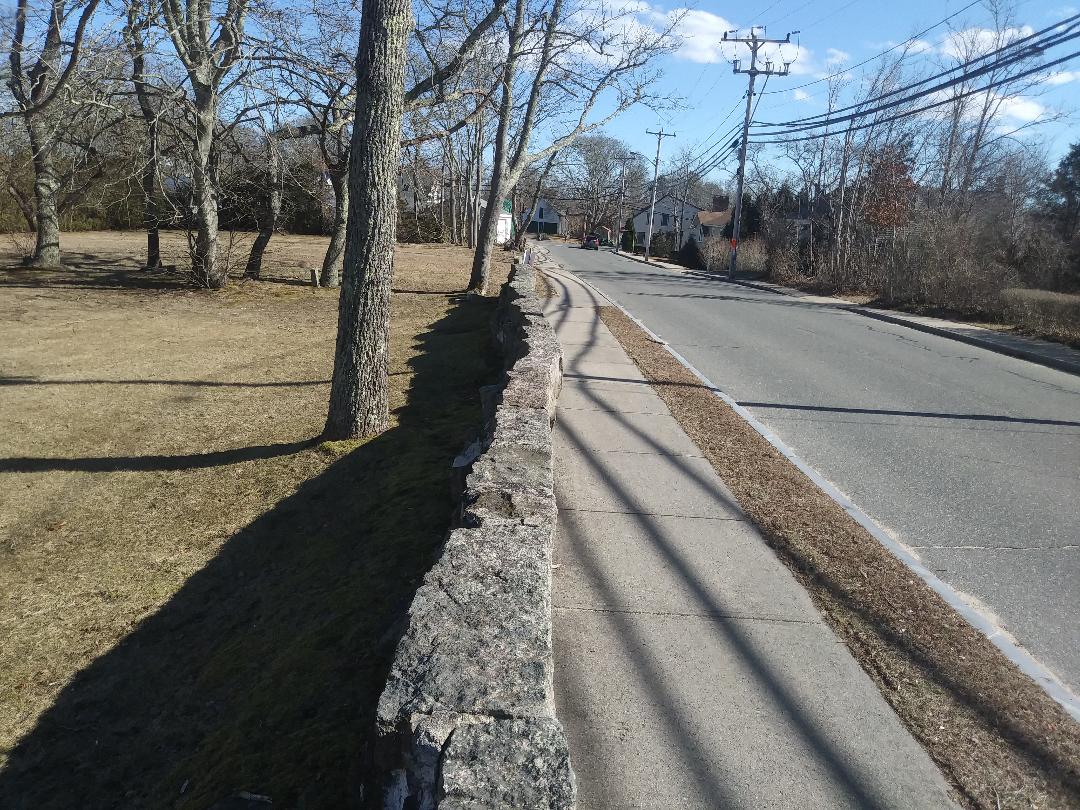
This a peaceful place to walk. Maple and Oak leaves shelter the houses and wildflowers grow in sidewalk cracks. After the leaves fall, there’s a beautiful view of Besse Park and the tidal area where the river meets salt water. Two of the houses were recently renovated, two more need work. Beauty, decay, and renewal live on Cedar Street. I wish the memory of a death didn’t.

A few years back, a seventeen year old borrowed a family car without asking. It was after midnight when she saw flashing lights from a police car. She flew straight through the stop sign at the end of High street, ran out of road and flipped the car. Trying to avoid a speeding ticket and punishment at home, she died. The priest at her funeral asked everyone to pray for the girl’s soul, since she died committing the sin of disobedience. Perhaps he thought it would serve as a deterrent, keeping other teens from borrowing cars late at night.

I pray the kyrie on Cedar Street: Lord Have Mercy, Christ Have Mercy, Lord Have Mercy. For the girl who died so young, for her loved ones, and for the priest whose words brought pain and sorrow rather than peace.

Lord, on this street and in this time, Grant Us Peace.

High Street: Gibbs/Marion Road to Cedar Street

Walking up from the light is a literal statement – the street slopes upward, coming to its apex just beyond Tobey Hospital. Past the light on the left is Ladner Street, with a garden so lovely it refreshes the soul. Sawyer Street cuts in on the left halfway up, with Kennedy Street one house up from it on the right side. Half the distance again, and Center Street is on the left. Saint Patrick’s Church and Church of the Good Shepherd (the bullet hole in its spire cross is a story for another time) are on the right side. Tobey hospital comes next, on the left. High street dead ends a few hundred feet later, with a right or left turn onto Cedar Street. With houses lining its sides, two churches and a hospital, it offers the full range of human experience – a living novel. But those stories are for another day. Today, it’s the walls.

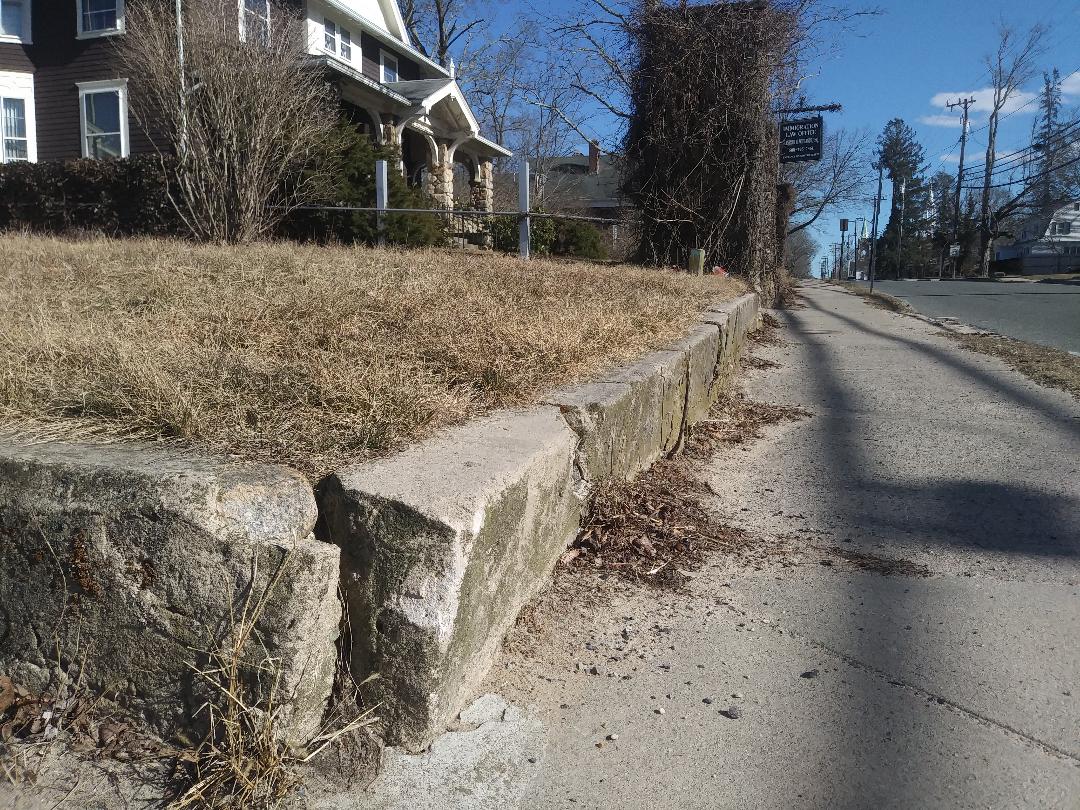
The first is a three layer wooden retaining wall, just eight or so inches high. It hugs the yard of a white colonial on the corner of Chapel and High. Next, fieldstone walls on either side, forty inches high with taller columns marking the driveways.

At Sawyer Street, a nine inch cement retaining wall in front of Wiegandt Immigration Law. Almost across from it, a two foot fieldstone wall with electric lanterns lighting the front walkway. Close to the end, a waist high stacked stone wall separates the street from Tobey hospital’s parking lot.

I’ve loved walls my whole life, walking countless ones for untold hours and holding the hands of many little ones as they learned to do the same. I’ve fallen off a few – gravity at work. Balancing on the narrow ones, skipping along the wide ones, walls offer a new perspective. Young children grow taller than their parents, getting a foretaste of their grown-up height. Adults can see farther in all directions than is possible on the ground. Thin ones are an exercise in balance and trust, wide ones are steady as solid ground.

I don’t walk on them so much as walk beside them these days, except the one at Sawyer Street; the owners are friends who won’t mind my trespassing. I still love them, though. They remind me that 1) Adventure and fresh perspective can be found by anyone, but not without personal effort and some risk; 2) Learning to walk on walls is easier with a helping hand; and 3) At some point, it’s time to be the helping hand.

High Street: Gibbs Ave to Chapel/Marion Road

It’s over a mile long, parallel to Main Street, and I find myself on it almost every day. It begins on Gibbs Avenue, with the blue and white hospital sign pointing the way. Mulberry Bed & Breakfast and Bladez Hair Salon are on its left side, workplaces and living spaces to their owners. A quarter mile down, Highland Avenue comes in on the right. Morse Avenue  comes next, its sign obscured by the grand Catalpa on its corner. Another few hundred yards along comes the light at Chapel Street/Marion Road. It’s as far as I’ll walk today.

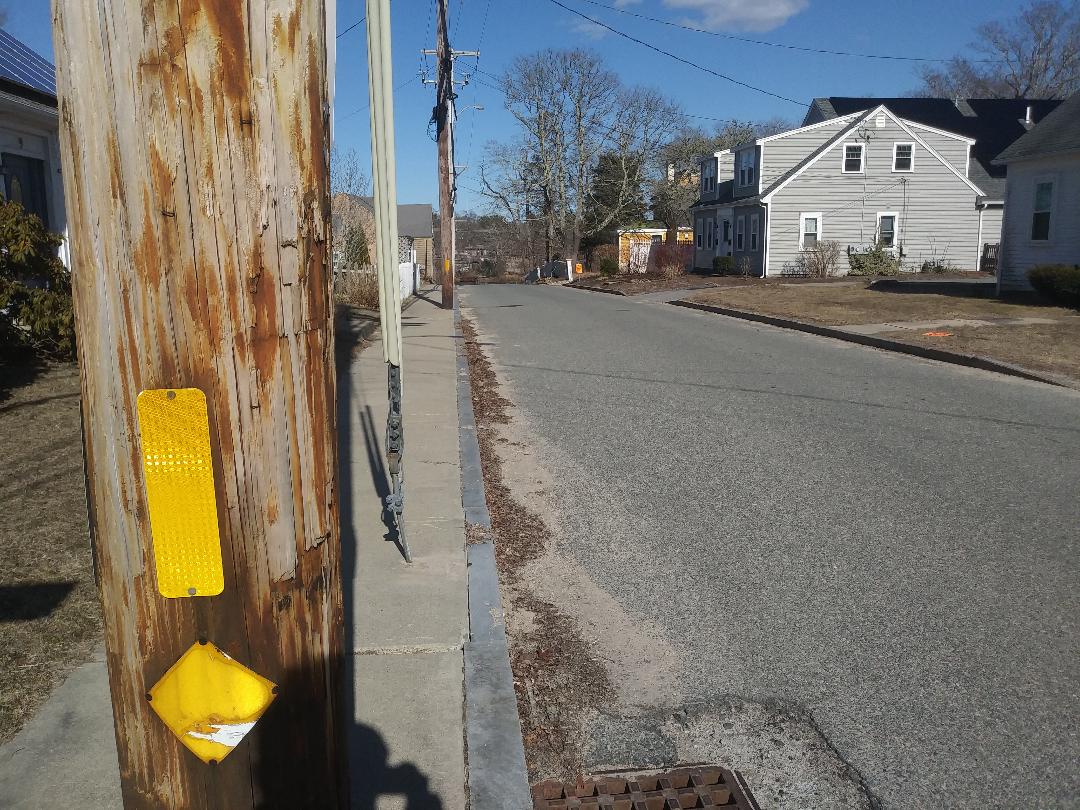
One of my favorite things about High Street is its geometry. I can stand at any telephone pole, look either way, and see all the other poles on the street perfectly aligned with it. If I stand behind one pole, all the others disappear completely. It’s an amazing gift of engineering and craftsmanship. It’s the same with the old trees that line the sidewalk. I take time to enjoy this visual effect at least once a week, an investment of a few seconds to behold geometric perfection realized with wooden poles and living wood.

I know very little about civil engineering, but I know it’s made High Street a good place: a one-point perspective  in three dimensions, bringing with it a life-enhancing sense of proportion and order. It wasn’t created to be admired from afar. It was built for hands and feet, wheels and foliage, asphalt and wires. A public work that works for the public.

High street is a lesson. Skill and vision, with work and good materials, make an artful way to get people from one place to another – a beautiful means to an end beyond itself, outlasting its creators. It’s the same with scripture, poetry, and prayer – words thoughtfully aligned, beautiful in their own right, holy because we walk through them to God.

Question: What do you see on your town’s High Street?

For more information about the Walking Wareham writings, see  the “About” page.

Prayer for the Acceptance of God’s Will: Line Thirteen

I have no other desire than to fulfil thy will.

 On a deep level, this is the truth of my life. These are the words, this is the path, leading to the reign of God here and now. I am myself most truly when I am God’s most willingly. I pray this line sincerely.

On a superficial level, this isn’t true. I have other things I want to have or do. I’d like to set the terms for what a holy life is. I’d really like the will of God to be a bigger version of my own will. I pray this line half-heartedly.

How do I reconcile my deep and superficial desires? Praying this line moves me to reframe the whole thing. I’m praying not for God’s will to be a bigger version of my own, but for my will to be a miniature version of God’s. In this time, this place, and my life, may my will be a clear reflection God’s will. I pray this line always.

Prayer for the Acceptance of God’s Will: Line Twelve

I put all my trust in thee.

 As for those who in the present age are rich, command them not to be haughty, or to set their hopes on the uncertainty of riches, but rather on God who richly provides us with everything for our enjoyment. They are to do good, to be rich in good works, generous, and ready to share, thus storing up for themselves the treasure of a good foundation for the future, so that they may take hold of the life that is really life. (I Tim 6:17-19, NRSV)


My parents aren’t perfect, but they are trustworthy. What they promise, they make good on. If circumstances prevent them from keeping a promise, they do their best to make it up. When they make mistakes or hurt someone, they apologize. To the best of their ability, they mean well and act well. They prayed for and with my siblings and me when we were growing up, giving us a good foundation to a life that is really life. Trusting in God and being trustworthy.

Putting all my trust in God allows me to trust my insufficient self, imperfect neighbor, and this impermanent world. With all its heartache and wretchedness, with all its joy and peace – trust in this blessed life is possible because God holds it all in holiness. I can forgive and be forgiven. I can accept reality for what it is: the God given imperfect present.

When I don’t put my trust in God, I’m reduced to the uncertainty of riches – the shifting, shaky foundation that I will for myself. It may be tempting, but my parents raised me better than that. I’ve seen how to take hold of the life that is really life:  trusting in God and being trustworthy.


O Lord, I know not what to ask of thee. Thou alone knowest what are my true needs. Thou lovest me more than I myself know how to love. Help me to see my real needs which are concealed from me. I dare not ask either a cross or consolation. I can only wait on thee. My heart is open to thee. Visit and help me, for thy great mercy’s sake. Strike me and heal me, cast me down and raise me up. I worship in silence thy holy will and thine inscrutable ways. I offer myself as a sacrifice to thee. I put all my trust in thee. I have no other desire than to fulfil thy will. Teach me how to pray. Pray thou thyself in me.   Amen. (From A Manual of Eastern Orthodox Prayers, Crestwood, NY: St. Vladimir’s Seminary Press, 1991, p.24)

 About the Author of this prayer:

Metropolitan Philaret was the son of a Russian Orthodox priest who became a priest himself. He taught at St. Petersburg Theological Academy, and eventually became the Metropolitan of Moscow – a ranking somewhere between archbishop and patriarch. Not quite on par with the pope, but awfully close. He worked for offering scripture and other teachings in Russian so more people could read them. He wrote a catechism that is still in use.

Prayer for the Acceptance of God’s Will: Line Eleven

I offer myself as a sacrifice to thee.

 There’s a difference between offering myself as a sacrifice to God and masochism:

Sacrifice to God deepens the spirit, making me more human, whole, and holy. When suffering is involved, it is redemptive. It is never pointless.

Masochism cripples body, mind and spirit; it’s inhumane, shattering, and an act against God’s gift of life. Self-inflicted suffering is an exercise of self hatred, not Godly love.

God grant me the wisdom to know the difference.


Prayer for the Acceptance of God’s Will: Line Ten

I worship in silence thy holy will and thine inscrutable ways.

 Inscrutable is the perfect word for this prayer. It means impossible to understand or interpret, and that’s just what the will of God is. Holy and inscrutable together remind me that I can trust in and accept God’s will. I don’t have to fear it because it is holy, and I can’t reduce it to my will because it’s inscrutable, beyond my comprehension. I can worship or reject God’s holy will and inscrutable ways, but why in silence? Can I pray in silence if I’m praying these words?

Silence is a rare thing these days. The world around us is so noisy, and it doesn’t stop when the sun goes down. There’s no such thing as an end to the day for television, computers, or phones. Appliances hum, leaf blowers start, and cars drive by with loud engines and louder stereo systems. Finding a place of outer silence requires intention.

Inner silence is even rarer. For most people, the mind is filled with constant chatter, distracting and exhausting. There is too much information to process, too many choices, and very few moments of peace. Inner silence requires intention and practice. It’s not easy and it can be scary, quieting the noise that drowns out God’s voice. Left alone and open to God without distraction removes the partial and false identities and reveals the true self – what God treasures most and what seems so inadequate.

Perhaps that’s why Philaret included “in silence” in this prayer. Only when I am before God, with no noise to distract me and no false identity to hide behind, can I feel God’s love for me and for all creation. Held by God, who is far beyond the small version of God I usually prefer, I can worship. When I am still, I know God is (Psalm 46:10). Not in the thunder or the storm, but in a still, small voice, I hear God (I Kings 19:11-13). In silence, inner and outer, God finds me. In silence, I am renewed.


O Lord, I know not what to ask of thee. Thou alone knowest what are my true needs. Thou lovest me more than I myself know how to love. Help me to see my real needs which are concealed from me. I dare not ask either a cross or consolation. I can only wait on thee. My heart is open to thee. Visit and help me, for thy great mercy’s sake. Strike me and heal me, cast me down and raise me up. I worship in silence thy holy will and thine inscrutable ways. I offer myself as a sacrifice to thee. I put all my trust in thee. I have no other desire than to fulfil thy will. Teach me how to pray. Pray thou thyself in me.   Amen. (From A Manual of Eastern Orthodox Prayers, Crestwood, NY: St. Vladimir’s Seminary Press, 1991, p.24)


About the Author of this prayer:

Metropolitan Philaret was the son of a Russian Orthodox priest who became a priest himself. He taught at St. Petersburg Theological Academy, and eventually became the Metropolitan of Moscow – a ranking somewhere between archbishop and patriarch. Not quite on par with the pope, but awfully close. He worked for offering scripture and other teachings in Russian so more people could read them. He wrote a catechism that is still in use. I suspect Philaret was a very busy man who had his share of difficulties.

Prayer for the Acceptance of God’s Will: Line Nine

Strike me and heal me, cast me down and raise me up.

 Just four lines ago, I prayed: I dare not ask either a cross or consolation. Am I now praying for both? If this line were taken alone, yes. It reads like a demand rather than a request. But it is one sentence among others, part of a larger whole – a handing over of personal agenda to the one who created me, as Jesus did before he was crucified. My Father, if it is possible, let this cup pass from me; yet not what I want but what you want. (Matthew 26:39). It’s the opposite of a demand, it’s a total surrender. Let it be with me what you will. I will not insist upon my own way, but I will trust that you hold me fast in hurt and relief, in humiliation and exaltation.

I’m not asking for trouble and I’m not asking for an easy life. I’m open to whatever comes because God will find me in all circumstances. In Yes, And: Daily Meditations, Richard Rohr points to the deeper truth behind this line:

Try to remember and give thanks for the good things even more than the bad, but learn from both of them. And most of all, as the prophet Baruch said, “Rejoice that you yourself are remembered by God.” (5:5)

(Cincinnati, OH: Franciscan Media, 2013, p.209)

Prayer for the Acceptance of God’s Will: Line Eight

Visit and help me, for thy great mercy’s sake.

 I visited strangers one year at Mercer Medical Center. I sat with them, talked with them, prayed with them, listened to them. I’d refill empty water glasses and remove food trays. Some were patients, some hospital staff, some were family or friends. I had the honor of hearing many life stories and the privilege of finding the Spirit awaiting my visit, already embracing the sick and the healthy. I saw enough pain to break my heart, and found enough grace to heal it.

I know that the Spirit is always present, so I don’t really need to ask God to visit; it’s asking for what’s already been given. But I misplace this truth  when I need it most. I’m so focused on what’s bothering me that I can’t see beyond it. So when I ask for God’s help and visitation, I’m really asking for God to remove my spiritual blindness. God is merciful, patiently giving me eyes to see what I already have.

Jesus visited and helped so many people during his time among us. He healed the sick, gave sight to the blind, and brought peace to the possessed. He restored lepers to their families and villages. He is the answer God gave to this prayer, and he comes to us today in the Spirit. This prayer is always answered.

Another wonderful thing: sometimes we are the answer to this prayer, sent by the Spirit. We have the honor of being the hands of Christ and the grace of serving the Christ we meet in those around us. We just don’t see it most of the time…

For I was hungry and you gave me food, I was thirsty and you gave me something to drink, I was a stranger and you welcomed me, I was naked and you gave me clothing, I was sick and you took care of me, I was in prison and you visited me. Then the righteous will answer him, “Lord, when was it that we saw you hungry and gave you food, or thirsty and gave you something to drink? And when was it that we saw you a stranger and welcomed you, or naked and gave you clothing? And when was it that we saw you sick or in prison and visited you?” And the king will answer them, “Truly I tell you, just as you did it to one of the least of these who are members of my family, you did it to me.” (Matthew 25:35-40)

Prayer for the Acceptance of God’s Will

O Lord, I know not what to ask of thee. Thou alone knowest what are my true needs. Thou lovest me more than I myself know how to love. Help me to see my real needs which are concealed from me. I dare not ask either a cross or consolation. I can only wait on thee. My heart is open to thee. Visit and help me, for thy great mercy’s sake. Strike me and heal me, cast me down and raise me up. I worship in silence thy holy will and thine inscrutable ways. I offer myself as a sacrifice to thee. I put all my trust in thee. I have no other desire than to fulfil thy will. Teach me how to pray. Pray thou thyself in me.   Amen. (From A Manual of Eastern Orthodox Prayers, Crestwood, NY: St. Vladimir’s Seminary Press, 1991, p.24)


About the Author of this prayer:

Metropolitan Philaret was the son of a Russian Orthodox priest who became a priest himself. He taught at St. Petersburg Theological Academy, and eventually became the Metropolitan of Moscow – a ranking somewhere between archbishop and patriarch. Not quite on par with the pope, but awfully close. He worked for offering scripture and other teachings in Russian so more people could read them. He wrote a catechism that is still in use. I suspect Philaret was a very busy man who had his share of difficulties.

Prayer for the Acceptance of God’s Will: Line Seven

My heart is open to thee.

      Having a heart open to God is a major inconvenience. I can’t pursue my own ends to the exclusion of those around me, and I question the ends I would pursue. There is no way I can act as if my ends justify my means, especially when the spirits of others and the entire created world live with the consequences, always and everywhere. With an open heart, I live with the sure and complete knowledge that God’s love for others equals God’s love for me, and that God will provide a way for me to walk kindly through the places and years given to me. But it’s a lot of work and little glory, living with a heart that sees what is good: and what does the Lord require of you but to do justice, and to love kindness, and to walk humbly with your God (Micah 6:8). So I don’t live with a heart open to God most of the time. It’s why I have to pray for it; I can’t do this without God. An open heart is a gift and a responsibility, loving world and self with every talent and shortcoming, through intentional action and purposeful inaction.

The psalmist put it in these words: Create in me a clean heart, O God, and renew a right spirit within me (Ps. 51:10). I know enough to be careful what I pray for, because I’ll surely get it. It won’t look the way I expect it to – God is constant, but not predictable. And not hindered by my lack of imagination. Then I can’t pretend I don’t know the truth: the life God has given me isn’t just sufficient, it’s extraordinary and holy.