Category Archives: observation

Heaven On Earth

Lord Jesus Christ, you said to your apostles, “Peace I give to you; my own peace I leave with you:” Regard not our sins, but the faith of your Church, and give to us the peace and unity of that heavenly City, where with the Father and the Holy Spirit you live and reign, now and forever. Amen.

Peace I leave with you, Jesus said. He didn’t say leisure, money, power, or the security and insularity they might buy us. Don’t look at our blindness or our inability/unwillingness to see past our own desires: see us always as part of that spiritual congregation whose vision is clear, we ask. Because the peace and unity of heaven will never settle in our bones and our communities through our own efforts. Such things come from an awareness and acceptance of our own participation in a communion that stretches back to the beginning of this creation and will embrace all life that is to come.

Heaven on earth isn’t a mini-paradise of our own making. Heaven on earth is already here, in the peace that Jesus left with us. If we want to find ourselves in it, we have to let go of our smaller, self-centered versions that will always fall short.

What a gutsy, wise thing to request in the middle of my day.
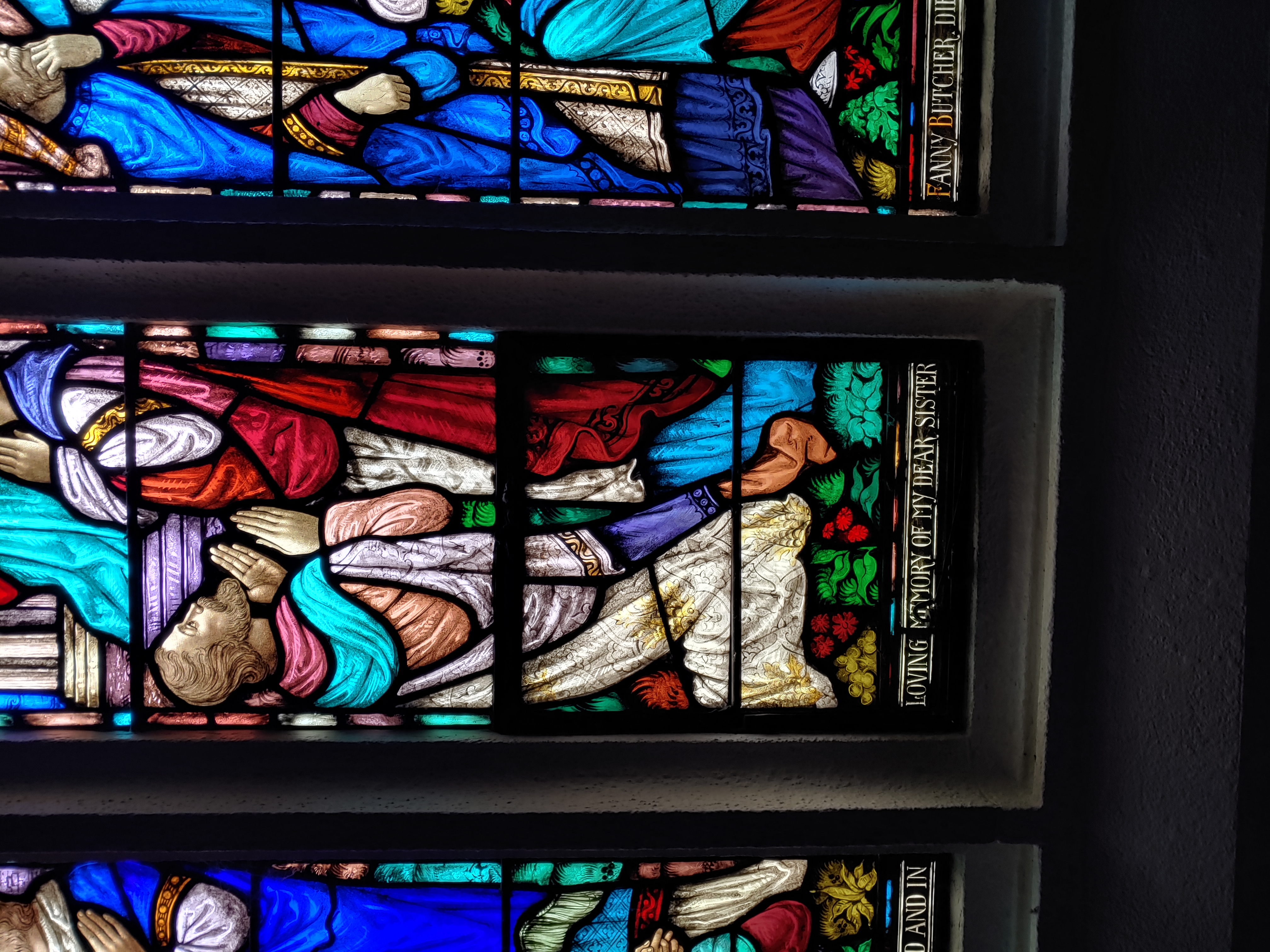
Collecting Paul

Almighty Savior, who at noonday called your servant Saint Paul to be an apostle to the Gentiles: We pray you to illumine the world with the radiance of your glory, that all nations may come and worship you; for you live and reign for ever and ever. Amen.

Illumination is a gift from God to be sure, but it comes at the cost of the life we assumed we would lead. Paul had no desire to bring the love of God to Gentiles, but that was the holy calling and life that he got. The flash of light and the voice from heaven stripped him of his spiritual blindness courtesy of a three day physical blindness.

Perhaps it is only when we are stripped of the illusion that we see reality clearly that we are willing to rely on God’s vision. It’s quite a bold thing to ask for, as an individual and as part of the nations of this world, this clarity of vision. If it changed Paul’s life so dramatically, it’s likely to do the same to ours…

The Second Collect

Blessed Savior, at this hour you hung upon the cross, stretching out your loving arms: Grant that all the peoples of the earth may look to you and be saved; for your tender mercies’ sake. Amen.

I haven’t spent much time thinking about when Jesus was on the cross. Only in Holy Week does the movement of my hours align with the hours of crucifixion. But here it is, in the middle of my routine day: a prayer to remember the cost of true love.

If I claim Jesus, then Jesus has a claim on me. I doubt it will involve martyrdom, but it does demand that I take up the cross of my own life. I’m meant to love truly in this time and place, and to sacrifice to foster that love for and in others.

It’s the best of all possible realities, not the easiest.

Silent or Spoken

A meditation, silent or spoken, may follow. (BCP, p. 106)

Words, spoken aloud or within the heart, have the power to change our perceptions. They can reassure, humiliate, amuse, and frighten. Some can bring us closer to God in new and unexpected ways; others can assault the spirit and break us. They can be the words spoken by others, and they can be our own self-created and sustained inner dialogue/diatribe.

This meditation isn’t at the beginning of noonday prayers; it is in the middle, following psalms and a couple of other short scripture passages. The Lord’s Prayer follows soon after. But in between the two are these words:

Lord, have mercy.

Christ, have mercy.

Lord, have mercy.

Have mercy, loving God, on the words I ponder within my heart or speak out loud. May they be words that reveal your love, imperfect as they are. Give me the courage to speak and meditate. Give me the wisdom to recognize and admit my limitations. Fill in the gaps with your grace. Amen.

In Every Place

From the rising of the sun to its setting my Name shall be great among the nations, and in every place incense shall be offered in my Name, and a pure offering; for my Name shall be great among the nations, says the Lord of Hosts. (Malachi 1:11) (BCP, p.106)

People: Thanks be to God.

It doesn’t say that the nations will follow a holy path, or that love of God, self, and neighbor will be the guiding political principles. But somewhere in the world, among the many nationalities and faiths, there are people who offer sincere and honest prayers to God. Every moment of every day (the sun is always rising, shining, or setting somewhere, after all!) God is loved, honored, called upon, and recognized.

There isn’t a single place on the planet that lacks the spirit of prayer, or the Spirit that guides them. There isn’t a single faithless, prayerless moment.

Every day, from the rising of the sun to its setting, you and I are invited to participate in this most holy endeavor. What a wonderful thing to remember as morning transforms into afternoon.

Reconciled, reconciling

If anyone is in Christ she/he is a new creation; the old has passed away, behold the new has come. All this is from God, who through Christ reconciled us to Godself and gave us the ministry of reconciliation. (BCP, p.106, 2 For. 5:17-18)

God offers us the chance to be a new creation, every minute of every day. The old can pass away at any time, and the new ushered in with gladness. This isn’t something we do for ourselves – it’s a blessing Christ offers.

Thanks be to God, we respond.

But there’s something missing if we leave it at that. God also gave us the ministry of reconciliation – the joy and responsibility of handing on that reconciliation in our own lives, our own relationships. It’s not an easy or pleasant thing in all times, places, and circumstances. Sometimes, reconciliation is painful, difficult, and at the expense of something we’d rather do or have.

This ministry of reconciliation doesn’t seem like much of a gift compared to the chance to be a new creation. But there it is. I’m going to take it on faith that this ministry of reconciliation is every much the gift that new life is. For that reason, I’ll respond:

Thanks be to God.

Sung or Said

One or more of the following may Psalms is sung or said

Psalm 119: Your word is a lantern to my feet, and a light upon my path.

Psalm 121: I lift up my eyes to the hills; from where is my help to come?

Psalm 126: When the Lord restored the fortunes of Zion, they were we like those who dream…

It makes a difference, whether you sing or say a psalm. Psalms are poems, sung or spoken in Jewish and Christian worship services. Singing comes from a different place in the heart and brain than speaking does – it’s why people who cannot speak can sing (and swear!).

There are times when I cannot speak to God. Words fail me, or seem incapable of conveying what is most important and true for me. Grief can steal my words; anger can keep me from talking with God; I can murmur memorized words without really paying any attention to them or God.

Singing is different. It bypasses my grief, anger, and complacency. Singing can bring me before God when I most need to be there and I am least able to find my way.

There is such wisdom in setting our prayers to music. Sing along, why don’t you?

Save us, help us

Officiant: O God, make speed to save us.

People: O Lord, make haste to help us.

Why these words at the beginning of a noonday prayer service? It’s not likely that anyone praying them is in mortal danger. Anyone who is in such a predicament isn’t likely to have their BCP in hand, after all. As I pondered these words for the past few days, these thoughts arose…

The officiant is the one who asks God to save us, not the people. Although we shouldn’t need it, having a leader ask for God’s saving presence gives the rest of us permission to do the same. Everyone needs God’s saving love and presence, and asking for it is a sign of wisdom rather than a terrible weakness.

Most of us are okay with giving help, but needing help? It takes strength to admit to needing help; it’s easy to consider needing a help a character flaw rather than a universal human truth.

Asking God for help, admitting our need to be saved by God, is easier with practice. If the words become part of us, we will have them when we need them. Practice may not make perfect, but it certainly makes for sufficiency.

I may not need saving from a physical danger at the moment, but I do need saving from things that kill the soul and maim the spirit. Disdain for others and self, hopelessness, and a perspective so limited that I am unable to act with love and compassion are deadly if not in an obvious way. I may not wish someone harm, but without recognizing my limitations and my need for God’s saving love I may not wish them well – and I certainly won’t be willing to foster their wellbeing.

In the middle of the day, in the company of others, I am asking for help. Only with God’s help and saving grace can I hope to love God, myself, and others. I’m so very glad there are others asking for help, too…

Officiant and People

Officiant: O God, make speed to save us.

People: O Lord, make haste to help us.

Officiant and People

Glory to the Father, and to the Son, and to the Holy Spirit: as it was in the beginning, is now and will be forever. Amen.

There’s no “officiant only” service that I’ve ever seen, something that doesn’t require the presence or participation of anyone else. Sure, any of the services can be prayed by someone in solitude – but there’s no pretending that no one else exists.

That makes sense to me, reminding me of a deeper truth; you and I are part of a much larger, older community of prayer that is not limited to the souls currently alive on this planet. You and I, we are part of an unbroken chain of prayer that stretches back to the beginning of creation and will stretch well beyond the span of our lifetimes. Neither as officiant nor as one among the people do we ever pray and praise by ourselves.

Worship isn’t a spectator sport or a television soap opera. It isn’t the job of the officiant to perform for me. I am asked to show up and participate, to serve as a conversation partner in this most basic act of honoring God.

What a wonderful and necessary requirement.

Noonday Prayers

I pray in the morning, I pray in the evening, but I don’t pray at noon on any kind of a regular basis.

I’m familiar with Morning Prayer and Vesper liturgies, but not the Noonday service.

I say prayers throughout the day, depending on what I see, hear, and feel; I don’t say mid-day prayers as a routine activity. There’s no “noonday prayers” on my calendar. Why is this?

Our Muslim sisters and brothers pray at noon as part of their every day faith, stopping in the middle of activities to orient themselves toward God. Isn’t it time I give this a try?

I hope you’ll join me. With these words, let us begin…

O God, make speed to save us.

O Lord, make haste to help us.