Category Archives: Theology

Marking Time

Until March, 2020, I got up every weekday morning to feed cats, prepare lunches, and get my high school son fed and out the door. Mondays were days off. On Sundays and Thursdays, I was in Plymouth for work and worship; on Tuesdays and Thursdays, I spent time at the library as a volunteer; Wednesday and Saturday mornings were at-home work days spent in front of my computer. Then two things happened: Covid-19 shut down in-person activities and my younger son graduated from high school.

For many months, only four things are scheduled for a particular day and time – things that I do every week: Morning Prayer, Thursday study, Sunday school Zoom, and worship via YouTube. It’s harder to tell one day from another, and the calendar on the wall seems to have little to do with any of it. Pandemic time just has a different feel.

At the end of the month, I’ll be two weeks past my second vaccine. When enough people are vaccinated, post-pandemic time will begin. Many things will resume their former shape and significance, but many things will not. But I won’t mark my days in the same way:

  1. I am now the mother of adult sons, and my time won’t depend on a school calendar.
  2. I can set when I rise and when I go to sleep.
  3. My husband and I are looking at a new way of being together.


A new life pattern is emerging, not a return to pre-children reality and not the full-on parenting of the past two decades. I’m not sure what will mark my time, what will fill my days and nights. It’s strange, and a bit disorienting, but I trust that God’s grace will make of this new time something beautiful.

I can’t wait to see what happens next in adventure of life.

How about you?

Enduring Time


This week, my brother Scott’s home was damaged by fire, smoke, and water; it’s uncertain when he will be able to move back in – it depends on a number of things: assessing damage, repairing the structure, cleaning and drying floors, ceilings, and walls damaged by smoke and water. All these things depend on permits and inspections, the speed of repair crews and construction teams, and whether wet weather slows things down. Clocks and calendars may mark how long Scott will have to wait before moving back home, but Scott’s moving back home cannot be determined by those very clocks and calendars. Time is duration in such a circumstance much more that it is something divisible by hours, days, and weeks.

Yesterday, I sat in Saint Patrick’s church, praying alongside the family and friends of Marguerite Barrett as they gave her back to God. The funeral began at the time set by church and family, but there’s no particular schedule to the grief that comes when a beloved dies. Time seems to stop, then rush by, with no particular regard for the minutes and hours that the clock measures. Time is determined by love and loss so much more than it is by day, date, and time.

Children don’t experience time as adults do; it’s measured in duration – the time at the playground is much shorter than the time spent in the car getting there, even if the clock says otherwise.

In the larger sense, time and space are intertwined, bound together as the space-time continuum rather than separate entities. Time bends with space, influenced by creation. It’s true nature is much closer to a child’s experience of duration than to an adult’s measured-by-the-clock reality.

Scientists like Einstein and Hawking shared this truth in numerical form, complete with mind-bending verbal explanations. Perhaps it was their way of offering the truth of time without the usual earth-shattering event. But seeing its truth on paper, understanding it as an intellectual fact, doesn’t mean we’ll grasp it in our hearts and souls. For that, perhaps, we must become like little children.


Stephen Hawking’s Time(s)…

I read it in January, 1990; the several days of snow, ice, and subzero temperatures that stranded me in East Machias, Maine, for a week gave me the time and incentive slog my way through. To this day, the cover art of A Brief History of Time makes me think of icy roads, the warmth of a wood stove, and just how hard it was to understand Hawking’s words and diagrams.

Chapter nine was all about time, and how it seems to flow – not just one kind of time, but three: how things are constantly moving toward chaos and disintegration (entropy), how things move from past through present toward the future (psychological time), and how time moves with the expanding universe (cosmological). Will the whole universe and all of us living within it come to a stop, drifting in a lifeless chaos? Will the universe stop expanding outward at some point, reversing the process in a great contraction, pulling all that is back together into a single point of matter? It’s the end of all that is, either way. Time ends, reality ends.

Stephen Hawking had little interest in God talk of any kind – science and faith were at odds for him, and faith was more about ignorance and wishful thinking than deep truth. But I think faith is also about time. Just like us, the cosmos was born, lives, and will come to its end; just like our lives, there’s no going back, no do-over for the universe. But this creation, and our lives within it, don’t just disappear as if they had never been. Time and life cannot be re-run, but time and life can be redeemed – birth to death giving us over to the graciousness of the God who loves each and every particle that ever has been and ever shall be.

And beyond that? An adventure I cannot even imagine.

[Stephen W. Hawking; A Brief History of Time:From the Big Bang to Black Holes; New York: Bantam Dell Publishing, 1988]

Zeno’s Paradox of the Arrow: Time and Motion

Zeno’s Arrow Paradox…in so many words…

An archer shoots an arrow at a target. For the arrow to move, it must change its position – otherwise, it can’t get from one place to another. It must change the position it occupies.

In any one instant of time, the arrow is neither moving to where it is (it’s already there) or moving to where it is not (it isn’t there yet).

In other words, in every instant of time, there is no motion happening: the arrow isn’t moving.

If everything is motionless at every instant, and time is composed of every instant, then motion is impossible.

There are solutions to this paradox, of course. The obvious one: The arrow moves in reality, so the conclusion that motion is impossible is clearly wrong. There’s something wrong with how the whole thing is set up because reality contradicts Zeno’s conclusion, but it’s really hard to spot the problem. Mathematical solutions are also available (for some of these, check out The Internet Encyclopedia of Philosophy). But it’s the time aspect that I’m interested in.


Sometimes, it feels like life is Zeno’s arrow – stuck in place in moment after moment. Sometimes, it feels like it’s impossible to move through the instances, seconds, minutes, hours, and decades that mark the passing of our lives. We can easily see arrows flying from an archer’s bow to a target, but we can’t easily see the trajectory or movement of our lives from birth to death. Life’s movement through time isn’t as easy to spot as a flying arrow.

If I just look at this moment, even this day, it may appear that my life isn’t going anywhere. But if I step back, gaze beyond the momentary to take in the past and look toward the future, it’s quite simple to see its motion through time.

Zeno’s paradox is fun to play with, and in a sense, provides me with an answer to its larger life application. Like an arrow, I didn’t launch myself into life. I believe God did that. Like an arrow, I am moving through this life, but I can’t see where the flight ends. But I trust the archer to make of my life’s instances a holy and purposeful arc that lands me safely in eternity’s embrace.

Time and Tide Wait for No One

My grandparents had this saying in cross stitch, hanging in their Lone Star Avenue home (No Man, of course, but I doubt either time or tide takes gender into account). It’s a truth often ignored: not one of us can stop time from flowing onward any more than we can stop the ebb and flow of the tide. What we cannot stop, slow, or accelerate moves us from infancy to our last breath. We can mark its passing and we can work with its movement, but we cannot rewind it, pause it, or skip ahead of its present offering. Time’s gifts are offered when they are offered. It is up to us to make of these gifts a life of love.

 [photo by Jared Fredrickson]

The cross stitch was half of a set – its companion hung next to it:

Cleaning and scrubbing can wait ’til tomorrow…for babies grow up, we’ve learned to our sorrow…so quiet down cobwebs…dust go to sleep…I’m rocking my baby and babies don’t keep. 

The irony of this saying: it is when we stop doing the day’s mundane tasks that we most notice the need to complete them. To live in the presence of new life, to lay aside the many tasks by which we are judged, is a blessing that comes at the price of work’s incompletion.

Life isn’t convenient and it doesn’t wait until the chores are done and the desk is cleared. The passage of time is one of the greatest incentives we have to focus on what is vital rather than what is merely important.

[For more on this series, click It’s About Time above.]

Other Things…

Now Jesus did many other signs in the presence of his disciples, which are not written in this book. But these are written so that you may come to believe that Jesus is the Messiah, the son of God, and that through believing you may have life in his name. John 20:30-31, NRSV

This is the end of today’s Gospel offering – the story of Jesus appearing to his disciples, of Thomas’ absence at that time, his doubt and his eventual acceptance of Jesus resurrected once he had seen Jesus for himself. The gospel reminds us that what we read in scripture is just a partial account: there was more to the story, things we will never read or have read to us. What was handed down wasn’t to relate everything that Jesus ever said or did; what was handed down was for us to make a doorway of words and images – a way for us to enter the truth, meet Jesus, and gain life. They are the words that end chapter 20.

But there are also many other things that Jesus did; if every one of them were written down, I suppose the world itself could not contain the books that would be written. John 21:25, NRSV

This is the end of John’s Gospel, similar to the ones above, but rarely ever read in church – the lectionary reading ends a couple of verses short of them. Maybe it’s because these words are so similar to the ones ending chapter 20? Did the similarities between the passages make them appear to be exactly the same, not worth a second reading? Perhaps, perhaps not. Either way, what sets them apart is remarkable.

The first words are about the disciples, and about Jesus appearing in resurrected form to them. They are written for all of us, so that we may encounter Jesus and be forever changed by him. They are our linguistic doorway into truth and life.

The second words go way beyond that. Two differences stand out to me, but there are sure to be more:

Jesus did other things beyond the presence of his disciples, his followers, and us – so many things that the world itself isn’t big enough to contain an account of them. Jesus isn’t limited to the Christian record, the church and its history, the fellowship through time and space. It’s a well phrased reminder that we cannot and should not try to set limits on how God manifests, even within the limits of our own space and time. 

Jesus manifests in ways that the world cannot contain because within each and every living thing is a world of mystery and untold depth. The cosmic scope of the universe finds its reflection in the cosmic scope of our own inner landscapes – the dwelling place of the Spirit within. It takes a lifetime to scratch the surface; perhaps part of the joy of eternity is a deep dive into these worlds, and a complete sharing of them with God and all God’s beloved children.

I think the differences make them both worth reading.

Accomplished

So is my word that goes forth from my mouth;* it will not return to me empty;

But it will accomplish that which I have purposed,* and prosper in that for which I sent it.

[The Second Song of Isaiah, BCP pp. 86-87 (Is. 55: 6-11)]

It is Good Friday today, called “good” in the tradition of describing all things powerful and potentially deadly as positive. The act of crucifixion, the death of God on a cross, was not required by God; the idea that God’s anger or holiness required the blood of an innocent man to pay the price for the evil of others feels more like a way of avoiding the truth: humanity put Jesus on the cross.

From God’s side, crucifixion wasn’t a requirement. But God works with this broken world and its fearful people, bringing holiness and forgiveness out of even the worst acts. Since humans chose the cross as a response to God With Us, God hallowed even that.

Good Friday is good because God accomplished what was intended in incarnation. As it was, so it is, and always shall be. Even when the means could have been other that what humanity chose.

Conservation of Spiritual Matter

So is my word that goes forth from my mouth;* it will not return to me empty;

But it will accomplish that which I have purposed,* and prosper in that for which I sent it.

[Canticle 10: The Second Song of Isaiah, Isaiah 55:6-11, BCP pp. 86-87]

It’s one of the basics of science: the law of the conservation of energy. The gist is that energy cannot be created or destroyed – it can only change from one form to another. Of course, this is assuming that we take a really long view, taking into account the entire cosmos when we apply this principle. Nothing in God’s creation can be lost, but things can change form – energy to matter, matter back to energy.

This law has been put to the test countless times by creating an enclosed system that can be monitored and measured – biospheres, bell jar ecosystems, etc. Nothing lost, nothing gained in such a system. But what about this life we live outside such controlled experiments?

The word of God doesn’t dissipate, and it doesn’t fail. Perhaps it changes form, adapting to the realities that we create in ways that foster love and compassion. Ignored in one manifestation, perhaps it assumes another – one that we can understand and accept. Perhaps the word of God will keep manifesting in new ways, constantly seeking us out, patiently offering us a part in bringing about the transformation of all that is into the holy reality it is meant to be.

All we have to do is keep an eye out for it, and love accordingly.

Life and Growth

For as the rain and snow fall from the heavens* and return not again, but water the earth,

Bringing forth life and giving growth,* seed for sowing and bread for eating,

So is my word that goes forth from my mouth;* it will not return to me empty;

But it will accomplish that for which I have purposed,* and prosper in that for which I sent it.

Canticle 10: The Second Song of Isaiah (Is.55:6-11), BCP, pp. 86-87

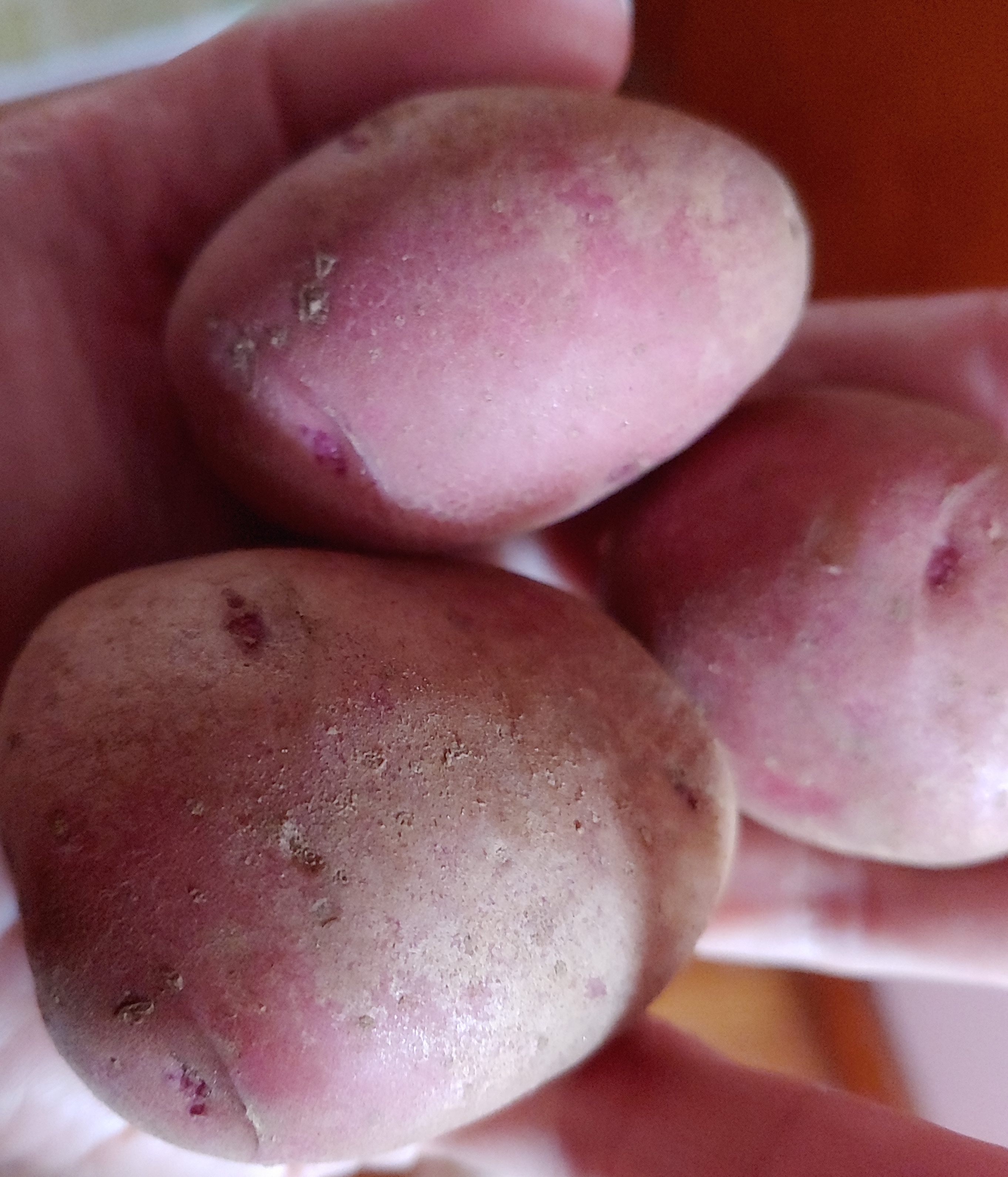
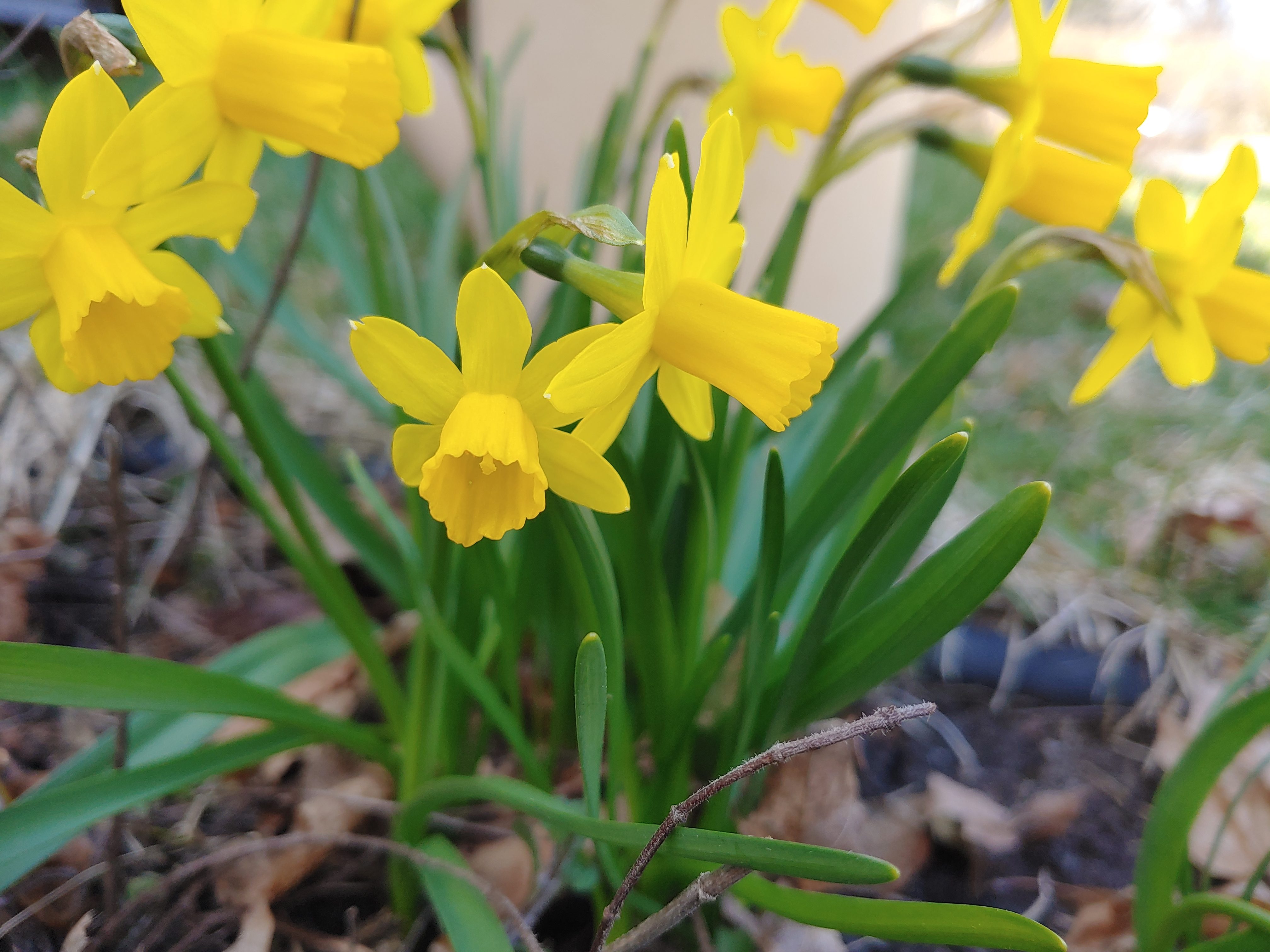
The chives are emerging – green shoots finding their way through last year’s leafy mulch. Onions have been sending up shoots for weeks now, even though I haven’t planted anything this year. Hollyhocks, daffodils, and crocuses are up, too: the every day miracle of perennial and reseeded growth. In another few weeks, it will be tomato, potato, and pumpkin plants – bounty and life  begun from the composted remnants of last year’s crops. All this life, and I haven’t begun to plan or plant this year’s garden yet.

Nature doesn’t seem to waste much; she calls life from the left over, the discarded, and the sowing done decades ago. It is a joy to behold, and a privilege to have a hand in any of it. My investment of time, energy, and a negligible amount of money continue to pay handsomely in beauty and food.

Bringing forth life and giving growth – the Spirit doesn’t seem to waste much, either. Surely She can bring forth life and give growth from even my leftover, discarded, and half-hearted offerings.

Think, Think, Think

Seek the Lord while he wills to be found;*

call upon him when he draws near.

Let the wicked forsake their ways*

and the evil ones their thoughts;

And let them turn to the Lord, and he will have compassion,*

and turn to our God, for he will richly pardon.

For my thoughts are not your thoughts,*

nor your ways my ways, says the Lord.

One of the most wonderful and frustrating things about the people I love is that they don’t all or always approach life’s joys, sorrows, and all the things in between on the same cognitive footpath I do. While this isn’t surprising when there are disagreements, it’s equally true when there is agreement.

My husband, sons, siblings, and friends have their own pathways, leading to their own conclusions. Sometimes, these mental paths cross with mine; sometimes they don’t. When we share how we arrived at a particular opinion or conclusion, I catch a glimpse of mental landscapes wholly different from my own.

These glimpses remind me of how very limited my own mental meanderings are – even when they lead to good and fruitful places. There are other ways to come to the same place, and there are other places that I cannot reach from my own paths – the equivalent of you can’t get there from here.

Given the variety of paths and the variety of the places such paths lead, it would be silly of me to assume that how and what I know provide the standard for all of humanity’s hows and whats. That goes at least double for the thoughts of God, who created all of us and everything else to boot.

If I remember this, and if I repeat this truth enough, perhaps it will sink in…

For your thoughts are not my thoughts.

[photos by Jared Fredrickson. For more on this series, click Lent 2021 above.]