Category Archives: Theology

A Matter of Choice

You are not your body and hair-style, but your capacity for choosing well. If your choices are beautiful, so too will you be.”

Epictetus, Discourses, 3.1.39b-40a

It’s easy to confuse the image we present to the world for who we actually are…that’s what Stoics urge us to consider. Not how things appear, but what effort, activity, and choices they are the result of.

[Holiday and Hanselman, The Daily Stoic, New York: Portfolio/Penguin, 2016, p. 87]

What is a beautiful choice? What choices lead to a beautiful life? Is it possible to tell from the outside whether or not someone is beautiful? In many ways, all of my daily meditations have asked these questions. Two of the other books I’ve read in recent weeks also ask these questions, just with a different vocabulary – Desmond Tutu’s and the Dalai Lama’s Book of Joy and Mark Manson’s The Subtle Art of Not Giving a F**K. 

The difference between appearance and reality, false self and true self is common to all these books. The authors range in age from thirty-something to eighty-something, the quotes stretching back to philosophers and seekers of holiness over thousands of years. Perhaps this is why some have named sources from all religions and philosophies as the Perennial Tradition – the basic questions don’t vary much, and the answers similar in gist if not vocabulary.

I don’t want to live a life devoted to maintaining a false self – hiding from myself and the world behind a mask of my own making. How do I make wise, holy, and beautiful choices?

I don’t think the answer is particularly complex. In fact, it’s fairly simple: love God, self, and neighbor. Remember that everything is holy and beloved, even when it’s damaged and hurting/hurtful.

But simple isn’t the same thing as easy…

The most beautiful people we have know are those who have known defeat, known suffering, known struggle, known loss, and have found their way out of the depths.These persons have an understanding of life that fills them with compassion, gentleness, and a deep loving concern. Beautiful people do not just happen. 

Elizabeth Kubler-Ross [Daily Peace, Washington, D.C.: National Geographic Society, 2015, March 19]

He has shown you, O Mortal, what is good. What does the Lord require of you? To act justly and to love mercy and to walk humbly with your God. Micah 6:8 NRSV

Lord, give me the strength to live a truly beautiful life. Amen.

Failing, failing, failing

Every time I turn around, there’s another obstacle to restoring adequate library services in Wareham. Lack of money, lack of political awareness and will, lack of leadership and vision -take your pick, they’ve all played a part. I’m not optimistic about the situation because there’s no indication that things will turn out well if everything keeps going the way it’s going now. Optimism is limited by circumstance. That doesn’t mean it will all end in tears.

Our business in this world is not to succeed, but to continue to fail, in good spirits.

 Robert Louis Stevenson

[Daily Peace, Washington, D.C.: National Geographic Society, 2015, March 1]

I don’t think this is about cheerily accepting the demise of hopes and dreams, or standing by while the world goes to hell in a hand basket; this is about the difference between optimism and hope. Hope doesn’t rely on present circumstance: it’s a trust in the grace and justice that knits the universe together, and that will eventually/slowly/painstakingly bring about a compassionate world. Love conquers all, it’s true – or it will be true in the end. The glorious failures of my efforts and in my time are steps in the right direction, even when the end is nowhere to be seen. Continuing to put one foot in front of the other becomes possible, even a blessing, when I do so in good spirits.

And now faith,hope, and love abide, these three; and the greatest of these is love. I Corinthians 13:13


Somebody done somebody wrong

Reading: Matthew 5:39

Another has done me wrong? Let him see to it.

Marcus Aurelius, Meditations, 5.25

[Holiday and Hanselman, The Daily Stoic, New York: Portfolio/Penguin, 2016, p. 66]

The quote has a few more lines, taken from a larger writing. Without a context, these words wouldn’t make any sense to me. What does he mean, let him see to it?

Hanselman and Holiday put these lines in a larger framework – controlling how we respond to people who have caused us harm. Another way to say this: Somebody done me wrong? He/She has to live with it (not me).

In one sense, this isn’t true; if someone burns down my house or crashes into my car, I have to deal with the damage. Real consequences fall to me because someone else behaved badly. In another sense, it is absolutely true; my inner life doesn’t have to suffer because of this event – unless I choose to hold on to anger and resentment because of the damage. The one who caused the damage has to square himself/herself with the actions and results.

This is the kicker: if I choose to let go of any negative feelings the damage created, I choose to forgive the one who caused it. To save my inner life the turmoil and damage that resentment and revenge bring, I cannot exact revenge. My freedom comes when I free the one who hurt me.

There are always consequences to damage and hurt  – breaks need to be healed, reality restored. But whether the souls of the people involved are blighted by the experience is optional. I can choose to let it all go. The one who done me wrong? He/She will see to it with a better chance to refrain from harm in the future if I refrain from returning damage for damage.

But I’d be kidding myself if I said it was easy. Wise, yes, but not easy.

An Incomplete Truth

Reading: John 8: 31b-32

If you continue in my word, you are truly my disciples; and you will know the truth, and the truth will make you free. (NRSV)

The truth will set you free.

But not until it is finished with you.

David Foster Wallace

(Daily Peace, Washington, D.C.: The National Geographic Society, 2015, Feb. 15 quote)

David Foster Wallace was brilliant, productive, and curious. He looked into the world, seeking its core and its cohesion: seeking its truth both in the physical sense and in a more societal and communal sense. Suffering from depression for many years, he hanged himself in 2008. He was 46 years old.

I think he’s right – the truth won’t set anyone free until it’s finished with him or her. No one seeking truth comes back unchanged because truth opens eyes and challenges the boundaries of personal and communal understanding and knowledge. It tears apart the partial to replace it with something larger, then tears it apart again in a never-ending process of expansion. For some of us, this is the adventure of a lifetime; for some of us, it is endless striving without relief. In the process, the reality of self emerges just as surely as the nature of the world does – in glimpses, flashes of insight, and hard won understanding. The truth of this whole process will set you free, indeed.

As much as David Foster Wallace was right, his quote is only partially right. The truth as an outer reality or as an inner reality is only part of the story, just as the truth shall set you free is only part of a larger sentence. If you continue in my word, you are truly my disciples is the proviso almost always left out. Something critical is lost when the second part is removed from the relationship of seekers to God-With-Us/Jesus. It is perilous to the soul if truth is understood as a solo pursuit, or even as a communal effort, if it isn’t attached to another truth: God seeks us. The truth, or the Truth, isn’t a disconnected reality: it’s the gift of a creator who loves each living thing, each single thing from sub-atomic particle to universe. No one is alone, everyone is loved, and the truth frees us to live with the consequences of this infinite belonging. When truth opens our eyes and reveals us for who we are, we can see it as blessing only in the embrace of the God who created us, seeks us always, and holds us fast. Without knowing how infinitely precious and loved we are, how could we endure our infinitesimally brief existences?

Gracious God, hold my hand and set me free. Amen.

For more reading on this subject:

Heschel, Abraham Joshua; Man is not Alone: A Philosophy of Religion (New York: Farrar, Straus, and Giroux, 1951

Heschel, Abraham Joshua; God in Search of Man: A Philosophy of Judaism (New York: Farrar, Straus, and Giroux, 1955)

Changed by Power?

Reading: Matthew 4:1-11

Hero or Nero? is a meditation from The Daily Stoic – a good rhyme as well as an intriguing read. The point made: whether power corrupts depends upon the character of the person who wields it. In the words of Holiday and Hanselman:

It looks like it comes down, in many ways, to the inner strength and self-awareness of individuals – what they value, what desires they keep in check, whether their understanding of fairness and justice can counteract the temptations of unlimited wealth and deference.

Lent is a time for taking stock of inner resources. Understanding my strengths can lead to a deeper sense of self, greater gratitude for God’s grace, and an expanded ability to serve others. Awareness of my shortcomings gives me a chance to accept my limitations instead of denying them, to remember that they cannot separate me from God’s love, and to refrain from hurting others because of them. I’m better able to act with compassion and love when I am aware of my inner state, with all its pluses and minuses.

At the end of the meditation, Holiday and Hanselman move the focus from those with political power and position to everyone, including me:

Both personally and professionally. Tyrant or king? Hero or Nero? Which will you be?

For Jesus and for us, there is no avoiding the temptation to exercise power to achieve recognition and to remake the world in significant ways. When tempted, Jesus recognized and acted from one eternal and central truth: God-given power can only be exercised properly if done with God’s help and guidance. If I forget this truth, if I act by and for myself, whatever power I have will harm others even as it crushes my spirit.

Guide my feet, dear Lord. Hold me fast. Amen.

Excerpt from: Holiday and Hanselman, The Daily Stoic (New York: Portfolio/Penguin Press, 2016), p. 11


Ashes to Ashes

In two days, crosses of ash will be drawn on foreheads. With the swipe of a finger and a few words, Lent will begin. Some people will give up desserts or alcohol while others will add daily devotional readings and service projects. Whether adding something positive or subtracting a negative habit, a change in behavior is how most people observe Lent. It’s what I’ve done for most years of my adult life. Sometimes these actions have brought about a deeper understanding of my faith and sometimes they haven’t. But each of them created the chance for me to live with greater intention, even if only in a single aspect of my life.

For the past four years, I’ve chosen a particular topic for Lent – specific prayers or poetry, parables, deadly sins or life-giving virtues have filled this blog with words and images. Others have been kind enough to add their art or words to the mix, giving everyone (most especially me) the gift of a different voice and different perspective.

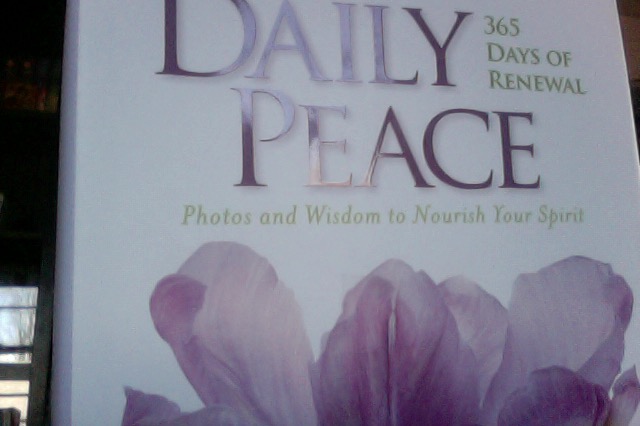
This year, I’ll be looking at some of the word gifts I’ve received over the past couple of months: The Daily StoicDaily Peace, and The Book of Joy. The first two were surprises, the third one I requested. All three provide opportunities to get my inner house in order, see the world around me in all its glory, and thank God for the precious life I’ve been given.

I hope you come along with me through this path of words, and perhaps add a few of your own…

Resources:

Holiday and Hanselman, The Daily Stoic: 366 meditations on wisdom, perseverance, and the art of living (New York: Portfolio/Penguin Press, 2016)

Daily Peace: 365 Days of Renewal (Washington, D.C.: National Geographic Society, 2015)

Dalai Lama and Desmond Tutu, The Book of Joy: Lasting Happiness in a Changing World (Avery, 2016)

308 miles, 27 hours, and $125.64

Wareham to Rochester (with a stop in Portsmouth) to New Durham, New Durham to Wareham: 308 miles altogether. My older son and I made the first part of the journey on Friday, and the return trip on Saturday. Measured by clock and receipts, these 308 miles took twenty-seven hours (five behind the wheel) and $30 for gas and tolls to make it up and back. $1.15 went to a parking meter, $12.47 to a market, $42 to a restaurant, and $40.02 off a specialty store gift card – expenses along the way. This trip adds up to 27 hours, $125.64, and 308 miles.

But if you asked me about it, I wouldn’t tell you any of these things. Instead, I’d say:

What fun it was to walk with my son through my old neighborhood in Portsmouth, and to eat scrambled eggs with smoked salmon and peas at the Friendly Toast. How interesting to listen to Colin’s stories about walking around Philadelphia.

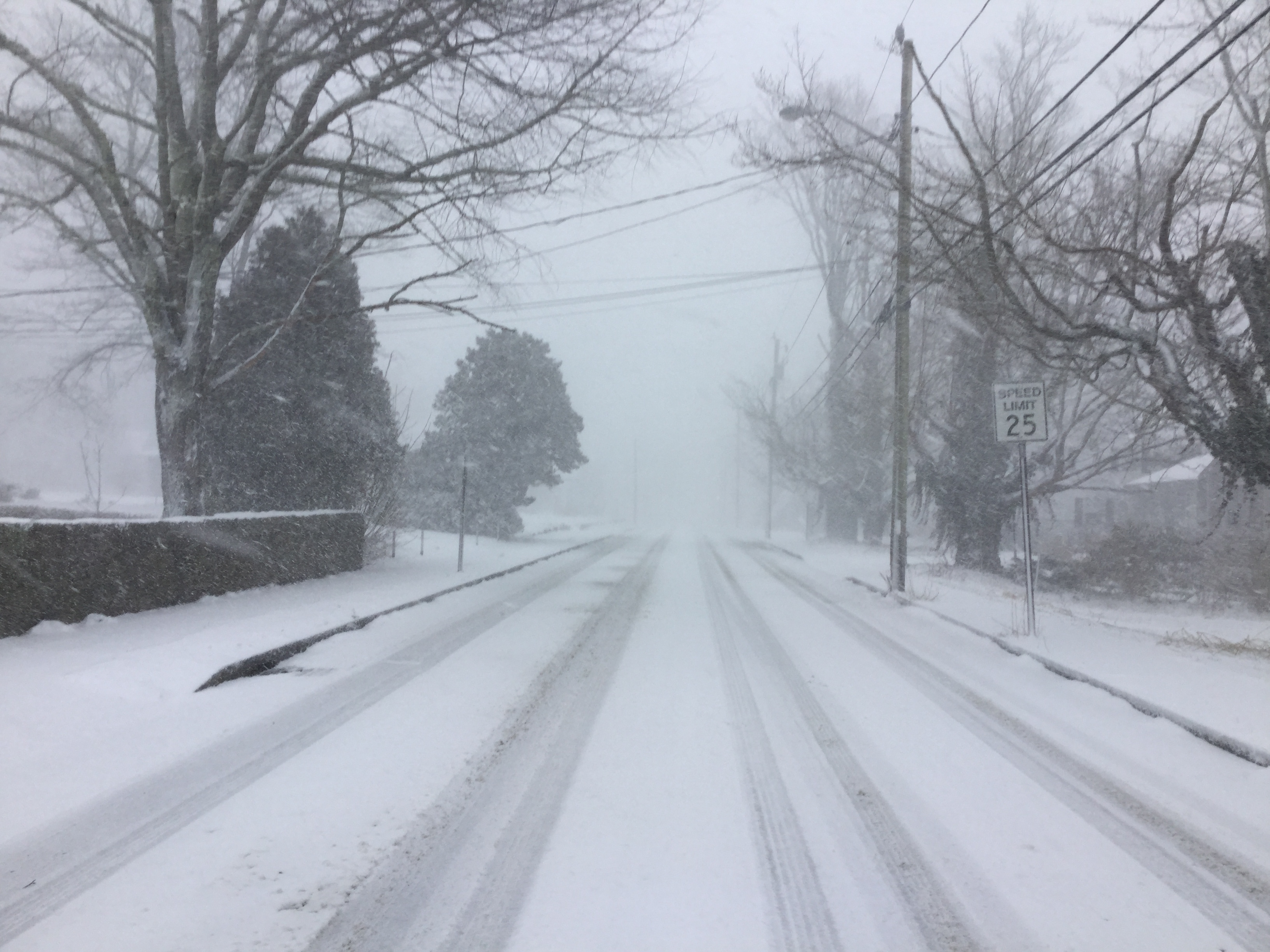
The fog coming off the snow was so dense that my mother’s road couldn’t be seen through it. 

Seeing my mother in person is so much more fun than talking with her on the phone. 

Laughter comes easily to all of us at our yearly family get-together. There is a precious ease and familiarity to it – a gift that not all families receive.

I missed seeing my Aunt. I hope I get to spend time with her the next time I’m in New Hampshire. I hope my brother, mother, husband, and younger son make the next family event, too. They were missed.

The gifts and the food were fun, but without the people they wouldn’t be worth much.

It’s been a blessing and a privilege to spend my life’s time with these particular people. I wouldn’t trade my relatives for anything or anyone else.

There’s a richness that can’t be found in receipts and odometer readings. The length of time spent isn’t the measure of its worth. Beyond today, I won’t remember the 308 miles, the 27 hours, or the $125.64 I spent. But I will hold in my heart and memory the immeasurable goodness they brought.


Welcome, New Year

It’s not quite ten hours into 2018. It’s only a degree or two above zero, a degree or two below with the wind chill factor factored in. Birds are flying to and from my bird feeder, squirrels are picking bread crusts and seeds off the frozen ground, and the sun shines down from a brilliant blue sky. There’s just enough snow on the ground and shrubs to make the view out my window an almost perfect vision of a New England winter. Looking out on this downtown Wareham beauty, I wonder what this new year will bring.

I’ve been reading Coates’ We Were Eight Years In Power, a collection of essays written over eight years prefaced with personal notes from the author before each one. In the fifth essay introduction, Coates writes about his joy in seeing his wife, Kenyatta, taking up a new course of study and growing in unexpected ways. Where some would see disruption and the loss of comfortable life patterns and goals, he sees wonder and adventure – a new way to grow together rather than an inevitable (or at least likely) cause of growing apart. What a wonderful way to experience the changes brought to daily life when a beloved leaves behind the old and familiar pursuits.

I don’t think it’s easy, growing together through new directions and stages. It’s easy to become so attached to a specific version of friends and relatives that significant change and growth feels like loss and death rather than gain and new life. There’s something important here for me to learn. With this new year just a few hours old, perhaps I’ve been given my first life lesson of 2018: foster and appreciate the changes and growth of everyone I care about. Love the person, not a particular age or stage. If I can learn how to do this, there’s no telling what delight and adventure I’ll find.

Welcome, New Year. Welcome, New Life Lesson.

Ta-Nehisi Coates, We Were Eight Years In Power (New York: One World Publishing, 2017)

My Mouth Will Proclaim

Readings: Psalm 89:1-4, 19-26; 2 Samuel 6:1-11; Hebrews 1:1-4

I will sing of your steadfast love, O Lord, forever;

with my mouth I will proclaim your faithfulness to all generations.

I declare your steadfast love is established forever;

your faithfulness is as firm as the heavens.

You said, “I have made a covenant with my chosen one,

I have sworn to my servant David:

I will establish your descendants forever,

and build your throne for all generations.”

Psalm 89:1-4

Offered by Colin Fredrickson, artist, college student, child of God.

An Age of Grief


Third Sunday of Advent

Readings: Isaiah 61:1-4, 8-11; Psalm 126 or Luke 1:46b-55; I Thessalonians 5:16-24; John 1:6-8, 19-28

“The Spirit of the Lord God . . . comfort[s] all who mourn . . . faithfully give[s] them their recompense . . . The Lord has done great things for them.”  Isaiah  61:1-3, Psalm 126:3

Five years ago as my beloved grandmother approached her dying transition she told me that she felt as if she was being punished.  This observation had a lot to do with her unhappiness about living her last years in a nursing home, about grieving the loss of more and more physical abilities, and about her isolation from loved ones.  She further said that she couldn’t understand why she was being punished because “all I have done is gotten old. And that is not a crime.”

As I’ve watched how our culture treats elders, I am wont to wonder if, in our culture, it is a crime.  We segregate elders into institutionalized settings with rigid rules and authority figures who tell them how to spend their time.  Sounds like prisons, no, nursing homes.  We make all major and many minor decisions for them, just like prisoners.  We lose patience with their increasing inability to keep pace, understand, and navigate our frenetic world. So, we marginalize their involvement in our lives.  We withdraw our social favor by ignoring them because they and their frailties make us feel uncomfortable and burdened.

I read an outstanding book recently that addresses all these issues and puts elder treatment into poignant perspective:  Being Mortal_by Dr. Atul Gawande.  The author teaches the history of assisted living and end-of-life medical decision making in the context of what his own family experienced during his father’s decline and death.  My main takeaway from the book was that what we, the children of aging parents, want for our parents — that would be safety — is in direct conflict with what they want for themselves:  independence.  This tug-of-war for control reminded me a lot of what occurs between toddlers and their parents.  It is no wonder inter-generational meltdowns abound.

Pondering this strife-filled conundrum, I am reminded of how elders were treated in the novel The Giver by Lois Lowry.  They were given the suggested “choice” of voluntary euthanasia.  It was unclear how many made this choice under societal duress and how many welcomed it as a solution to the misery their long and debilitated lives had devolved into.

Into this situation comes the above quoted verse from Isaiah.  Do the aged feel comforted and recompensed?  My personal experience as an elder caregiver is that there is less grace and more “rage against the dying of the light (D. Thomas, “Do Not Go Gentle Into That Good Night”).  Sometimes it seems as if “the greatest thing” the Lord does for them is to end their suffering when they die.  It is miles above my understanding to see clearly into the life of this exchange, but I want to hope that it is true.

As we live longer, we face more challenges.  I would recommend Dr. Gawande’s book to anyone who is ministering to aging family members or, not even that specifically, to anyone who needs compassion when dealing with the decisions and choices of others.  It is a beautiful love story to his father but it also offers the hope of the Isaiah passage (aptly labeled the Exaltation of the Afflicted).  In the end, at the end, we all need each other.

Come, Lord Jesus, Come.

Offered by Jill Fredrickson, compassionate nurturer, business woman, child of God.