Category Archives: Prayer

The Break

Readings: Psalm 124; Genesis 9:1-17; Hebrews 11:32-40

The Break

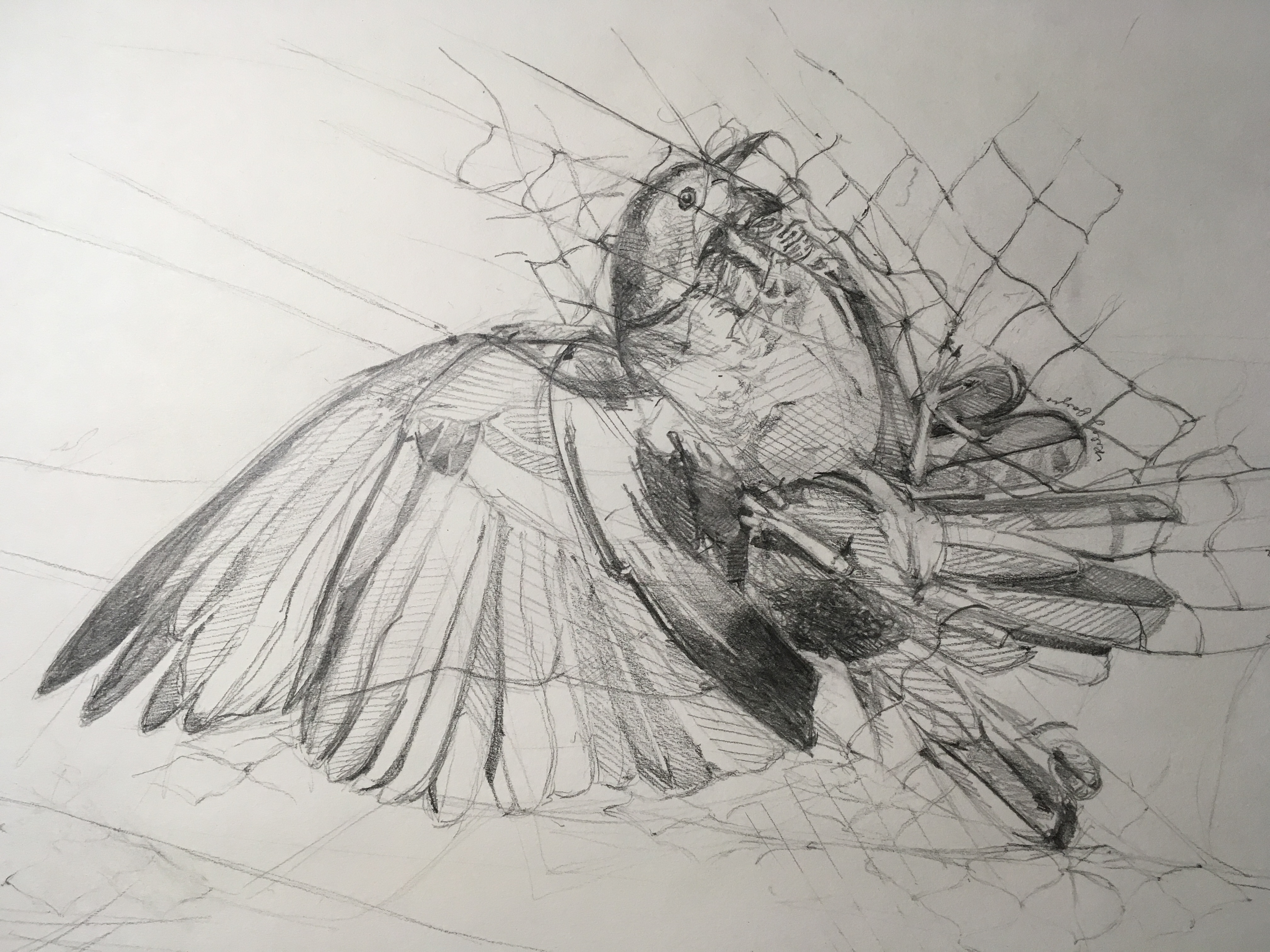
img_2875

If it had not been the Lord who was on our side – let Israel now say-

If it had not been for the Lord who was on our side,

when our enemies attacked us,

then they would have swallowed us up alive,

when their anger was kindled against us;

then the flood would have swept us away,

the torrent would have gone over us;

then over us would have gone the raging waters.

Blessed be the Lord,

who has not given us

as prey to their teeth.

We have escaped like a bird 

from the snare of the fowlers;

the snare is broken,

and we have escaped.

 Our help is in the name of the Lord,

who made heaven and earth.

Come, Lord Jesus, Come

Offered by Riley Anderson, artist, college learner, seeker of the Christ Child.

Birth…and pain, and death

Readings: Psalm 124; Genesis 8:1-19; Romans 6:1-11

What then do we say? Should we continue in sin in order that grace may abound? By no means! How can we who died to sin go on living in it? Do you not know that all of us who have been baptized into Christ Jesus were baptized into his death? Therefore we have been buried with him by baptism into death, so that, just as Christ was raised from the dead by the glory of the Father, so we too might walk in newness of life. For if we have been united with him in a death like his, we will certainly be united with him in a resurrection like his. We know that our old self was crucified with him so that the body of sin might be destroyed, and we might no longer be enslaved to sin. For whoever has died is freed from sin. But if we have died with Christ, we believe that we will also live with him. We know that Christ, being raised from the dead, will never die again; death no longer has dominion over him. The death he died, he died to sin, once for all; but the life he lives, he lives to God. So you also must consider yourselves dead to sin and alive to God in Christ Jesus.   Romans 6:1-11

I admit it seems odd: all this talk about sin and death and even resurrection when we are supposed to be thinking about a birth of a baby in a stable, surrounded by shepherds and magi and celebrated by a heavenly host. It might cause you to wonder what was going on in the heads of those who chose this passage to be read during Advent. What kind of malcontents insist on putting a damper on this holiday season, when the new regime has promised us that even store clerks will be able to say “Merry Christmas” once again? But I think they knew what they were doing and what they were doing is particularly important for us in these days. It’s not the baby that should be our focus in these days before Christmas: it’s the incarnation. And that’s why death and sin and resurrection are all important to keep in mind in this season when we are plagued by persistent pulls toward petty piety.

I have often thought I would like to play a video of a real birth at a Christmas Eve service. It would help us ground the birth of Jesus in the often harsh realities of the real world. Mary may well have pondered many things in her heart that night, but it was only after she had endured real pain and worry and fear. And that is what incarnation is about. It is about God coming to the pain of our lives. It is about God becoming part of a world in which worry and fear are never far from us. It is to suffer and to die. But as this passage from Romans reminds us, it is also to be raised from the dead and to walk in newness of life. The truth is we can truly experience that newness of life only after we know the reality of pain and suffering and fear. This Advent, let’s understand that this is at least part of what preparing for the birth of Christ is all about. It is only through the pain of childbirth that new life happens. So, let’s acknowledge the concerns and worries we have for ourselves, for those we love, for our world that are part of living in these days. We don’t need to wallow in them, but neither should we ignore them, thinking that somehow they undercut the merriness of Christmas. They are, after all, the reason we need a savior. The incarnation reminds us that God is with us in our all our concerns and worries and suffering, so it is possible to face them. And God leads us through all this to new life. This is our faith. This is our incarnation/resurrection hope.

Come, Lord Jesus, Come.

Offered by Jeff Jones, author, teacher, seeker of the Christ Child.

Waiting Time

Readings: Jeremiah 33:14-16; Psalm 25:1-10; I Thessalonians 3:9-13; Luke 21:25-36

Look at the fig tree and all the trees. As soon as they sprout leaves you can see for yourselves and know that summer is near.

One thing Jesus did so well was to speak in the language of regular people. He talked about farming and shepherding and the natural world, stuff that everyone understood. He pointed to the turn of the seasons and the food coming from the land.

As a farmer, I, too, appreciate Jesus’ words about seeing things coming into season. I look for the first signs of potatoes sprouting up out of the cold ground in the spring. And I long for the blackberries to finally ripen into bursts of sweetness. The kale tastes that much better after the first frost.

It’s a little harder for us now to appreciate Jesus’ agrarian words. Asparagus no longer just appears in the spring when it is growing outside, but all year round. Crisp apples no longer just show up with the crisp fall air.  But we do still see the leaves bud out on the trees. The leaves fall in the autumn and we are reminded of the turning of the seasons and the pattern of the year.

As our natural world cycles so, too, Advent comes to us again, reminding us of the season of waiting, of anticipation. We may no longer have to wait for the season of asparagus or apples, but we do still wait for Jesus, for the Incarnation, for the birth of joy and hope into our broken world.

This year, amidst a fractured world, torn by ugly elections, ongoing war in the Middle East, and moving through the inevitable shortened days of our northern hemisphere, we once again wait. We wait for hope. We wait for light to return. We wait for a Savior who will come and show us again and again what it means to love as God loves and to work for the kingdom of God. We wait. And we shall know the kingdom of God is near.

Come, Lord Jesus, Come.

Offered by Karen Gale, farmer, minister, seeker of the Christ Child.

Things Handed Down

Were he still alive, my father would be 76 years old today. With his birthday being so close to Thanksgiving, it’s a simple thing for me to remember him with deepest thanks. Because of him, I am a part of a loving family. I didn’t choose them and they didn’t choose me, but this unplanned life has been nothing but a blessing.

My mother is 76 years old. Because of her, I am a part of a loving family. I give thanks for such a blessing every day.

The same can be said of all those who came before me, unfamiliar names on a family tree that handed down my particular genetic pattern. How can I be anything but thankful  – to those with me, to those who came before me, and to the God who made us all?

Marc Cohn, The Things We’ve Handed Down, The Very Best of Marc Cohn, 2005

Thanks for the Inconvenience

My husband and I were up late on Monday assembling our new Ikea bed. After measuring the room and trying several different models, we chose a Hemnes. We threw in the four large underbed storage drawers, making the bed a space saver as well as a comfortable place to sleep. All the boxes fit in the car, the directions were easy to understand, and we managed to get the whole thing together before midnight – quite an accomplishment for two spatially challenged individuals.

My husband was the first to notice the problem. While the bed fit into the space beautifully, there wasn’t enough room on the sides to pull the drawers out. Either we give up the storage drawers or we reconfigure the room for the first time in five years.

We haven’t decided what we’ll do yet. One way or the other, it hasn’t turned out the way we thought it would. It’s certainly not a devastating dilemma, just an inconvenience and an opportunity to choose storage or furniture placement status quo.

We’ve been laughing about the whole thing these past couple of days – an unexpected blessing courtesy of our spatial shortcomings. The chance to enjoy inconvenience together doesn’t happen so often that I don’t recognize its benefits.

Teach me to treat all that comes to me throughout the day with peace of soul…

Prayer at the Beginning of the Day, A Manual of Eastern Orthodox Prayers, New York: St. Vladimir’s Seminary Press, 1991, p. 20

Also many other things…

In the beginning was the Word, and the Word was with God, and the Word was God…

But there are also many other things that Jesus did; if every one of them were written down, I suppose the world itself could not contain the books that would be written. John 1:1, 21:25

Whenever I teach, I end the last class with John’s final words about Jesus. No matter the age and stage of the learners, how short or long the class ran or subject studied, these words have the last word. It’s a beautiful way to end a gospel or close a class, this truth.

Jesus did so much that I never saw or heard about, bringing the grace of God to unknown people and forgotten places. This sentence reminds me that I will never know or appreciate all that God-With-Us did when he walked this earth.

Paired with the opening words, John takes me from God-before-creation to God-in-Jesus. That’s a cosmic trip lasting billions of years, spanning unimaginable distances. The world that holds me could not contain the books that could be written about the beginning of everything – much too much for words to convey.

These words were written after Easter, after Jesus sent the Spirit to be God-within-us, God-walking-with-us, God-everywhere-around-us. Jesus is now with me through the Spirit. Of course the world itself could not contain the books that would be written about Jesus: the story continues to unfold in me, in you, in all that is, and in all that will be. Once again, much too much for words to convey. Isn’t that extraordinary? Isn’t that wonderful?

Photo on 2015-07-13 at 10.10

Running Away, Coming Home

Once there was a little bunny who wanted to run away…

…”Have a carrot,” said the mother bunny.

The Runaway Bunny

I’ve read these words hundreds of times to nieces, nephews, and sons. I’ve admired Clement Hurd’s black and white sketches and full color illustrations with many toddlers, their little hands pointing out the little bunny in his boat, flower, and fish disguises. I’m on my second copy now – the first was loved to tatters before my younger son turned two.

I’ve read these words to hundreds of Sunday school children and their parents. I’ve read them to hundreds more sitting in pews in half a dozen churches. It’s one of the best interpretations of Psalm 139 I’ve ever found, and the simplest. Like the little bunny, most of us try to run away from God’s love and care, changing identities to avoid the holiness of our unique lives. Fortunately, God comes looking for us, bringing us home.

If you have the time, read all about the little bunny who wanted to run away. Pull out your Bible and look up Psalm 139, the grown-up poem about the same thing. Take God’s hand and come on home.

O Lord, you have searched me and known me…

You search out my path and my lying down, and are acquainted with all my ways…

If I take the wings of the morning and settle at the farthest limits of the sea, even there your hand shall lead me…

I come to the end – I am still with you. Psalm 139:1, 3, 9, 18b NRSV

Brown, Margaret Wise; The Runaway Bunny (New York: HarperCollins Publishers), 1942

ottableofcontents


Opening Sentences, Parting Words

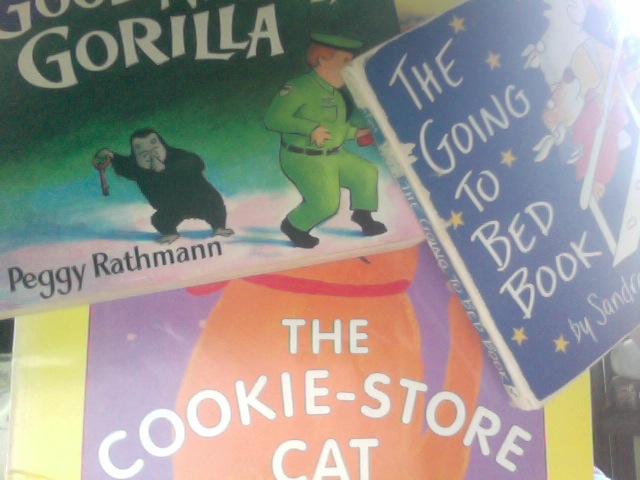
boarbooks

I may not be able to judge a book by its cover, but the words that come before its first period often determine whether I will take a book home or put it back on the shelf. A surprising turn of phrase or an intriguing question are enough to keep me reading. Sometimes the first sentence stands on its own, other times it takes some explaining. Somehow, it leads me to the last few words and the final punctuation mark: period, question mark, exclamation point.

The last words in a book are the door out of its world and back into my own. I don’t read them until I read all the words that came before them – why spoil the surprise? But I do like to go back and read the first sentence again before I put the book away, seeking again the words that began the whole adventure. Do the opening sentence and the final one have anything in common? Could the story in between be something other than what it was?

Sacred or secular, stories begin and end. But the best don’t really end because they have taken residence in the story that is my life. Over the next few weeks, I’ll share some of my favorite beginnings and endings. I hope you enjoy them. Perhaps, if you are feeling bold, you will share some of your own favorites…

In the beginning was the Word, and the Word was with God, and the Word was God…

…But there are also many other things that Jesus did; if every one of them were written down, I suppose the world itself could not contain the books that would be written. John 1:1, John 21:25

Rain fell that night, a fine, whispering rain…

…As Mo had said, writing stories is a kind of magic, too. Cornelia Funke, Inkheart

In those days, there were prophets in Israel…

…Warm and gold the sunlight lay over Greece. Robert Nathan, Jonah

Mickey Cray had been out of work ever since a dead iguana fell from a palm tree and hit him on the head…

…”Me, too, Lucille.” Carl Hiaasen, Chomp

In the beginning, when God created the heavens and the earth, the earth was a formless void and darkness covered the face of the deep, while a wind from God swept over the face of the waters…

…And Joseph died, being one hundred ten years old; he was embalmed  and placed in a coffin in Egypt. Genesis 1:1, 50:26

Once there was a little bunny who wanted to run away…

…”Have a carrot,” said the mother bunny. Margaret Wise Brown, The Runaway Bunny

If you are interested in stories with happy endings, you would be better off reading some other book…

…The car drove farther and farther away, until Justice Strauss was merely a speck in the darkness, and it seemed to the children that they were moving in an aberrant – the word “aberrant” here means “very, very wrong, and causing much grief” – direction. Lemony Snickett, The Bad Beginning

The revelation of Jesus Christ, which God gave him to show his servants what must soon take place; he made it known by sending his angel to his servant John, who testified to the word of God and to the testimony of Jesus Christ, even to all that he saw…

The grace of the Lord Jesus be with all the saints. Amen. Revelation 1:1, 22:21


Bibliography:

The Holy Bible, NRSV

Brown, Margaret Wise; The Runaway Bunny (New York: HarperCollins Publishers), 1942

Funke, Cornelia; Inkheart (New York: Scholastic Inc), 2003

Hiassen, Carl; Chomp (New York: Alfred A. Knopf), 2012

Nathan, Robert; Jonah (New York: Robert M. Mcbride & Company), 1925

Snicket, Lemony; The Bad Beginning “A Series of Unfortunate Events” (New York: HarperCollins Publishers), 1999

I’M NOT DRUNK: I’m avoiding potholes

I read this off the bumper of an SUV a few days back. Living in New England, I’ve lived these words. Late December through March involves a lot of swerving around frost heaves and craters that could swallow a Vespa. On some of the back roads in town, potholes are a year round constant.

I don’t know where the driver with this bumper sticker lives, whether he or she chose these words or if they were a gift. But it struck me today that there’s a certain sadness to them if they extend beyond seasonal driving adventures. If I’m so busy avoiding the bumps and ditches on this road of life that I’m mistaken for a drunk, perhaps I’m spending too much time focused on the pavement (or lack thereof) and not enough time looking out the window at all life has to offer.

Lord, give me eyes to see your glory. Amen.

Make Time To Pray

They are on bumper stickers and church message boards everywhere. But last night I saw them shining down from another place: Collision and Auto Repair of Carver. I pass the sign at least once a week. I am always thankful for the reminder, but until last night I hadn’t connected the business with an exhortation to pray.

I’ve seen good death and painful death working in a hospital. I’ve seen pain and suffering endured with and without grace. I’ve stopped at a few accidents to offer pastoral care. For doctors, nurses, EMT’s, chaplains it’s all part of the job. But it’s also part of the job for those who tow the cars away from the accident, and for those who repair them. Why this never occurred to me until last night, I cannot say.

To offer up a prayer, and ask that others do the same. From people who see the wreckage and work to repair it, this is no glib request. Life and death come to their doorstep every day. Lord bless them as they have blessed me with wise words and deep commitment.