Category Archives: Meditation

It’s Always Pouring

The love of God has been poured into our hearts through the Holy Spirit that has been given to us. Romans 5:5

It’s been a summer of drought. High humidity and temperatures, but not a drop of water to bring this parched land life-giving relief. Many afternoons, the air has been so saturated that it seemed impossible that the rain wouldn’t come down. But with a couple of welcome exceptions, the life-giving raindrops never made it to the ground.

Spiritual droughts have come to my inner landscape more than once, when my spirit was straw more than a green and growing vine. At such times, I choked on these words because they felt something like an aspiration more than a statement of the obvious and true. When I most needed to pray, when quieting my inner voices to be in God’s presence was most necessary – that’s when I was least able to do either. I turned away from the very sources that offered my soul refreshment and life. When desert times came, I chose to remain in that dry place when I could have moved into a greener, life-giving place.

But true these words remain. God pours love into us, and remains with us in the Spirit. When my own small reservoir of love is inadequate, I am filled again and again from the infinite sea of God’s own love. If I fully accept these words as truth, I could offer love to every living thing and never worry about running out.
Psalmlight

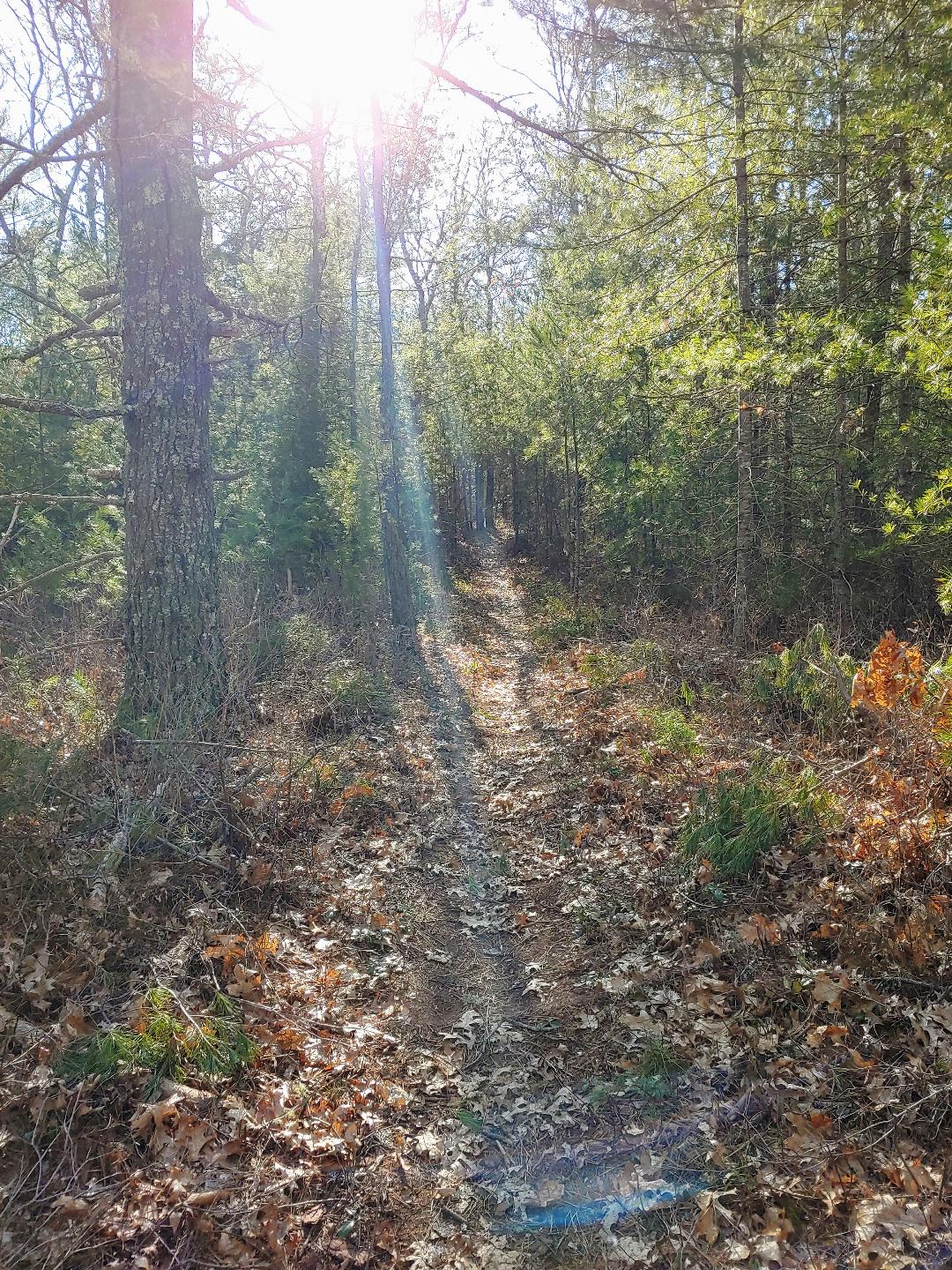
Your word is a lantern unto my feet, and a light upon my path.

I have sworn and am determined to keep your righteous judgments.

I am deeply troubled; preserve my life, O Lord, according to your word.

Accept, O Lord, the willing tribute of my lips, and teach me your judgments.

My life is always in my hand, yet I do not forget your law.

The wicked have set a trap for me, but I have not strayed from your commandments.

Your decrees are my inheritance for ever; truly, they are the joy of my heart.

I have applied my heart to fulfill your statutes for ever and to the end.

Psalm 119, BCP

When the seminary library was doubled in size by a new addition, many of the existing sidewalks were removed or rerouted to connect the new indoor spaces to the outer campus. Most of the sidewalk lights were taken out during construction, so new lighting was needed for old and new walkways. Unfortunately, the tall bright lights that were originally proposed couldn’t be installed – a town light ordinance banned bright lights in order to preserve its historic charm, even at the expense of safety. The seminary had no choice but to comply. Still wanting enough lighting to keep the paths illuminated, designers went in a new direction: footlights. Two feet off the ground, with caps to keep the light directed downward, the new fixtures illuminated the paths without adding light to the surrounding airspace. The town was happy, and everyone could see where to direct their feet even in the darkest of nights.

I think of those paths when I read this psalm. Scripture doesn’t turn the darkness into daylight – my own limitations keep me blind to much of reality. But scripture offers enough illumination for me to keep my feet on the right path. I may not be able to see where the path is going to take me, but I trust that it leads to God, making my life a holy walk.

Alleluia

It comes after the Glory To‘s, and the So Be It/Make It So/Amen that is our affirmation that such glory is the right response to God’s graciousness and eternal presence.

But nothing in those words says we have to be happy about any of this. Nothing says giving God glory is a joy, an honor, a privilege, and something we love. The wonder and elation that we are blessed to offer God the glory is summed up in a word that is hard to define exactly, but is almost universally understood:

Alleluia

Perhaps the reason we don’t say it during Lent is to remind us that we can choose a joy-filled or a joyless life. It’s our call.

And

Officiant and People

Glory to the Father, and to the Son, and to the Holy Spirit; as it was in the beginning, is now, and will be for ever. Amen. [Book of Common Prayer, p. 103]

And is usually a filler or a connecting word. When we are at a loss for words, trying to remember the seventh item on our never-written-down to-do list, or still in the process of figuring out exactly how many persons/places/things are involved, and leaves the end open. And means it isn’t quite nailed down, not quite finished yet.

And means there’s more to the story: not just an officiant, because no one worships God in solitude – even when alone, there’s the communion of saints that surrounds us all through space and time. And means God’s creative, loving presence wasn’t just a past reality: now and for all the nows to come, God will continue to hold us all in love.

And means that God comes to us in multiple forms, even while always being God: it means we recognize that our language is too small to offer more than a passing glimpse of God, even with a trinitarian understanding.

And means there will always be more to life than we can experience or grasp. If we kept this in mind every time we used or heard this most common of words, I doubt we’d be anything but amazed. And grateful.

Speed and Haste

Officiant: O God, make speed to save us.

People: O God, make haste to help us.

[An Order of Service for Noonday, Book of Common Prayer, p. 103]

The middle of the day doesn’t usually lend itself to extremes in the same way that the middle of the night might – or early in the morning, for that matter. The day is moving along its usual course, leaving the extremes in favor of moderation. By noon, there doesn’t seem to be enough time or energy to change the general direction of the day; such things can be put off until the next day.

I wonder if this lull in awareness, this willingness to aimlessly keep to the task and the direction already begun might not be the very peril that endangers me: this willingness to disengage from the only holy life I’ve been given as if I had an eternity of days to enjoy the beauty of the world and offer thanks to the loving creator that included me within it.

Center

Where is the center of the sea? Why don’t the waves break there?

Donde esta el centro del mar? Por que no van allĂ­ las olas?

[Pablo Neruda (Sara Lisa Paulson, trans), Paloma Valdivia, illustrator; Book of Questions; New York: Enchanted Lion Books, 2022]

Ocean currents are amazing and mysterious. Surface movement in any direction is balanced out with deep currents going in the opposite direction – and all kinds of movement happens between. Since waves break upon shores, could there be a location where the deep currents are breaking – unseen by our human eyes, at depths beyond our reach?

In Orthodox theology, one of the images for God’s love and creative power is a procession; love and life begin in the Creator, flow through the Spirit and Christ, and out to the farthest reaches of creation. All things receive life and love from their center in God, like waves breaking on the shores of our very being.

If I stick with the wave metaphor, could it be that there is a deep, unseen current that returns even my tiniest offerings of love to the source of all things?

Recalling the Light

When a prisoner recalls the light, is it the same light that illuminates you?

Rejoice in the Lord always, again I say rejoice were the words Paul wrote from prison. Rejoice in the light, wherever it finds you; rejoice in the Lord, even in prison. Rejoice.

I guess the answer to Neruda’s question depends on whether the prisoner recalls light as overcoming darkness, and whether those of us who live in light-bathed freedom are aware that we could find ourselves in a darkness that doesn’t end when the sun rises.

[For more information, click Neruda’s Book of Questions above. Better yet, buy the book.]

Absolute or relative?

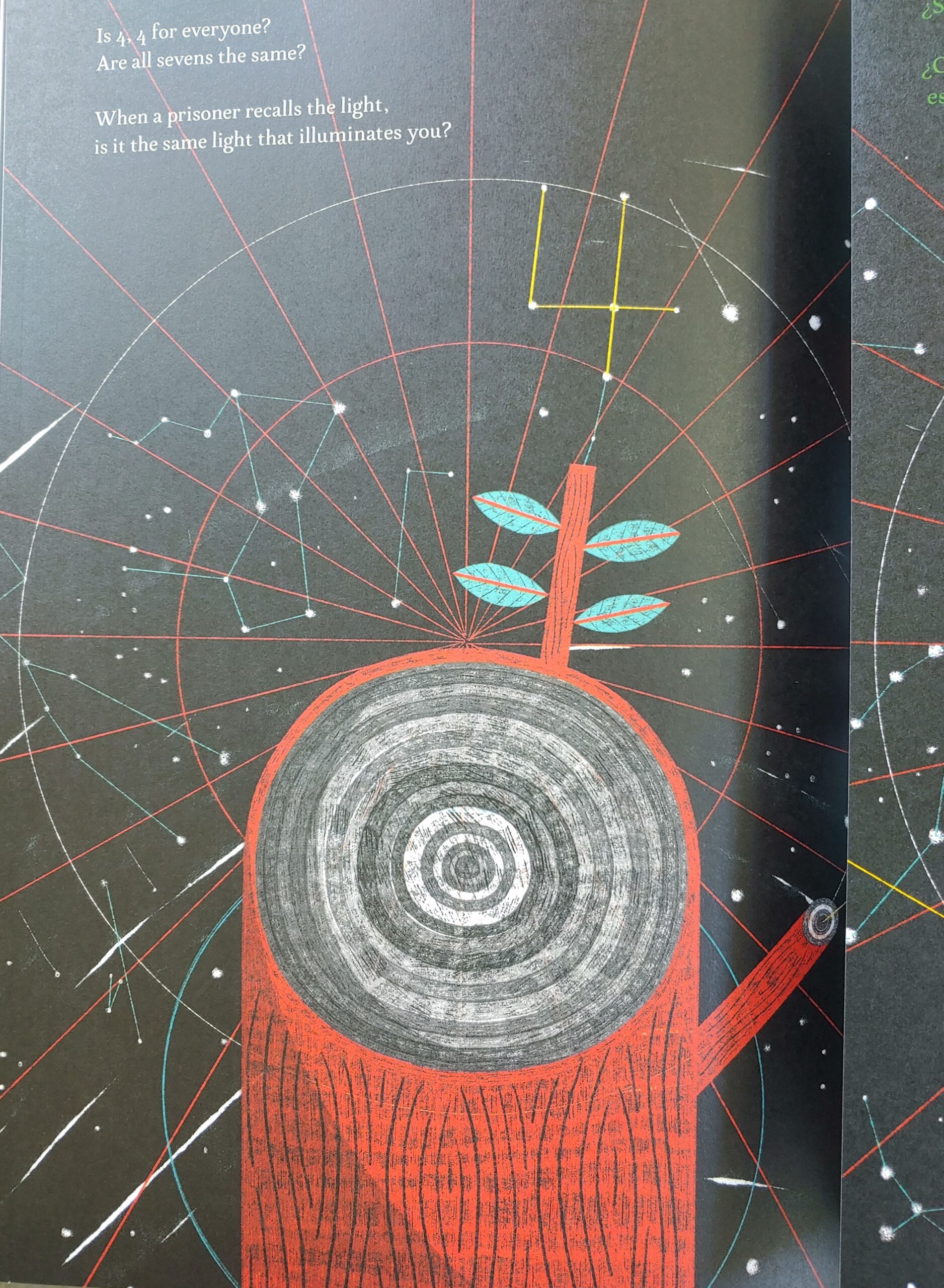
Is 4, 4 for everyone?

Are all sevens the same?

For a four year old, four years is an entire life; for an eighty year old, it’s only five percent of a life. 4 may be 4, but the sense of duration can be vastly different.

Toting four pounds of bricks is a lot easier than hoisting four pounds of feathers. Same weight, varying levels of difficulty.

I’m enough of a math geek to confirm that 4 is 4, and I’ve lived long enough to know that 4 of anything may be quite different for one person than another – or even the same person at different life stages.

How about sevens? Lucky for some, assigned other characteristics by others, a seven is still a 7.

If this is true of numbers, which are widely considered constant, how much more true is it for less quantifiable realities? I’m going to try and keep that in mind the next time someone offers a completely different understanding of God’s presence among us or what happens after death.

Perhaps Paul was right: in the end, it’s just these three things that remain constant: faith, hope, and love….and maybe he was wrong.

Questions Everywhere

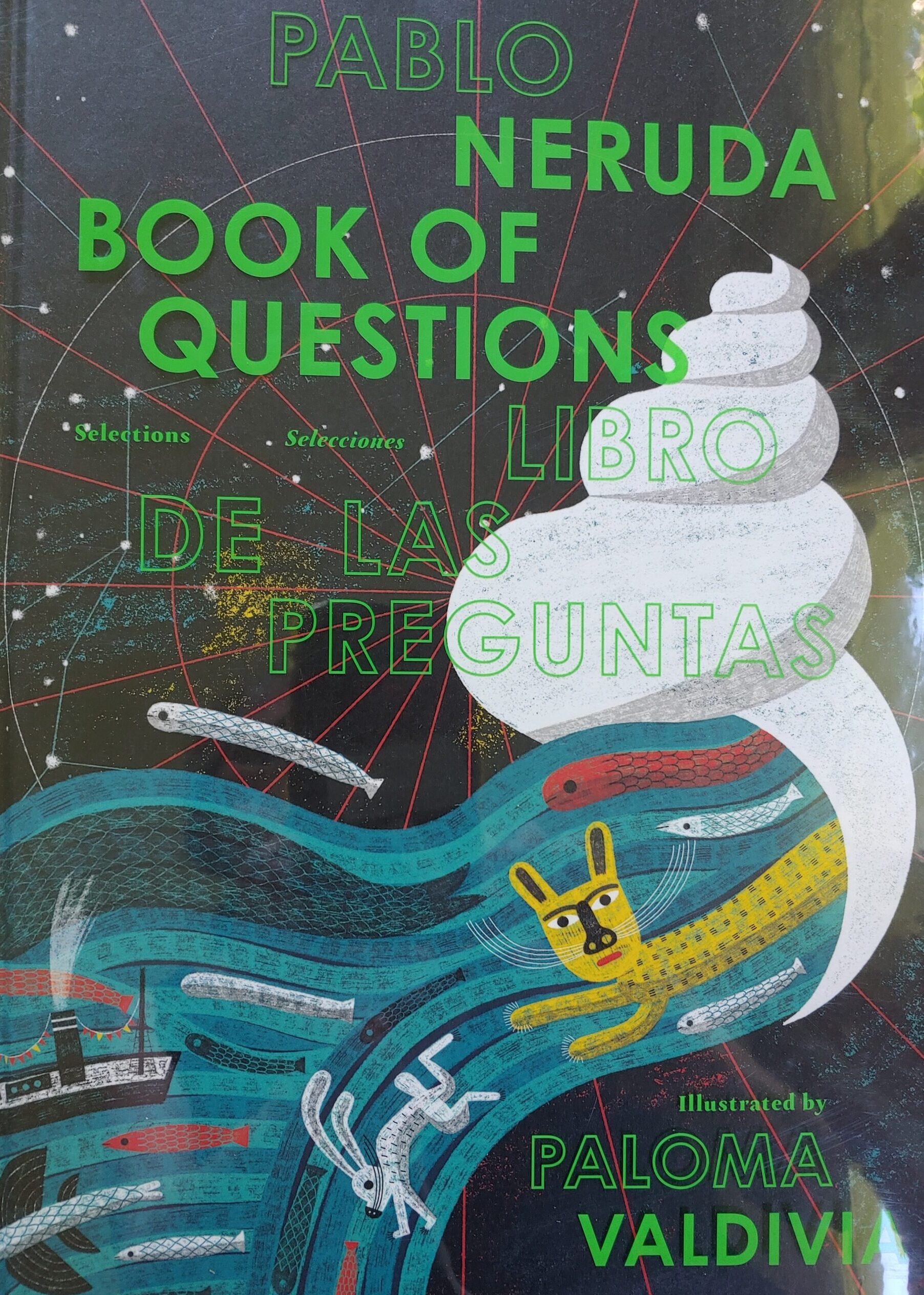
Doesn’t this seem to be a time full of questions? Who, what, where, when, why, and how fly around inside and outside my head. Perhaps that’s why this new book crossed my desk and made it onto this blog: Book of Questions (Libro de las Preguntas) by Pablo Neruda. It’s visually stunning and verbally fascinating, and one of the few poetry books that’s ever been on back order immediately after publication (thanks, New York Times book review!). So let’s dive in…

Is 4,4 for everyone?

My thoughts in a few days. Why not add yours – just hit the comment button….

Pablo Neruda (Sara Lissa Paulson, trans.), Paloma Valdivia, illustrator; Book of Questions (Libro de las Preguntas); Brooklyn, New York: Enchanted Lion Books, 2022