
Someone I knew cut the bad and scary parts out of The Little Mermaid before showing it to her children. Ariel sang her way into marriage with Eric, with Ursula the Sea Witch removed – no scary bargain to gain legs and no final battle included. She didn’t want her children to be upset or frightened, so she just curated what they saw and heard. She did the same with the fairy tales she read them – choosing innocuous versions that left out undeserved suffering and pain, or skipping over those parts in the reading.
This kind of behavior, well intentioned though it might be, offers a false version of what fairy tale reality includes. It only offers the ending, skipping tragic loss and abuse. It also skips the unexpected acts of bravery from unlikely sources – a daughter switching places with her father in a beast’s dark castle, or a huntsman who chooses not to kill the stepdaughter of an evil queen.
It’s tempting to do the same with the Gospel: to skip over or excise from the narrative anything evil or scary or tragic – and to miss the irony and humor involved. Don’t read about Jesus asking God if he could avoid torture and death, just celebrate the resurrection. Don’t laugh at Jonah running away only to be swallowed by a sea creature and spit up at the very place he didn’t want to go. Miss the humor in two followers fleeing Jerusalem for Damascus only to run into Jesus and not recognize him, or the widow’s two cents being worth more than thousands dropped in the plate by the wealthy.
There’s a part of me that doesn’t want a Gospel that offers me the truth of tragedy, the unexpectedness of comedy, and the last word of a fairy tale. There’s a part of me that wants the fairy tale ending without pain and death and without having to see myself as a comic figure. But cutting out the scary parts of scripture is doing to life what cutting Ursula out of the movie does to The Little Mermaid. It’s turning the story that is my life, God created and related, into a false narrative.
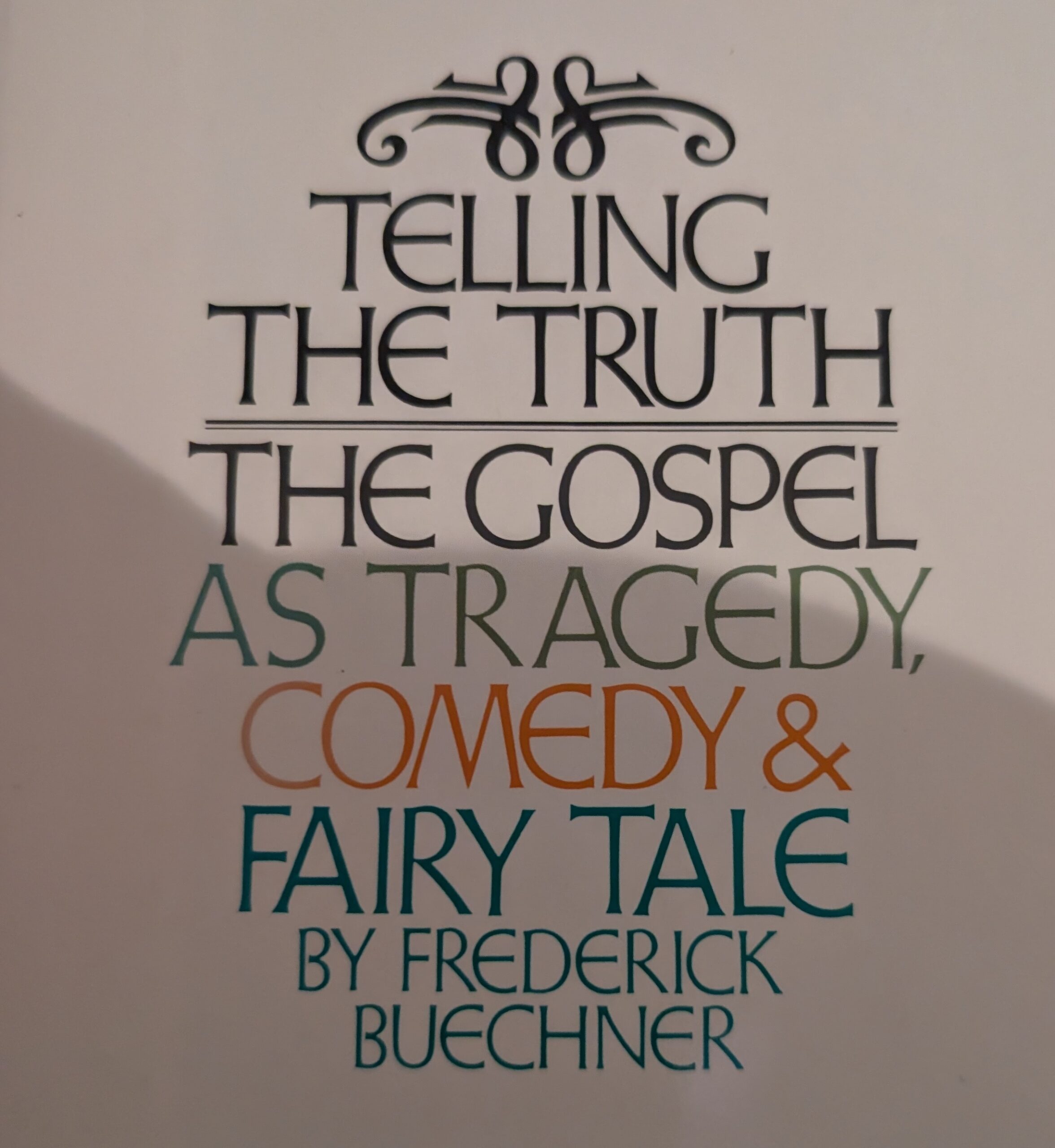
Perhaps that’s why Frederick Buechner’s title caught my eye. It refuses to skip over tragedy and comedy. Because a fairy tale ending is a lie without the beginning and middle included in all their tragic and comedic depths. And the tragedy and comedy of life are incomplete without the unexpected all is well ending…