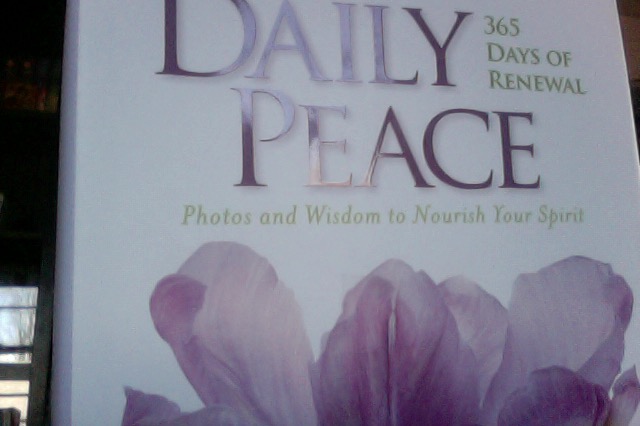
Storm and Calm Lessons

There are some things you learn best in calm,

and some in storm.

Willa Cather

[Daily Peace, Washington, D.C.: National Geographic Society, 2015, March 17]

When the chips are down, will this person be there? My parents believed the answer to this question divided trustworthy partners from untrustworthy ones, real friends from the merely friendly. They didn’t think the answer could be found in a person’s wealth, talent, personality, or good looks. Only a storm could strip the surface appearance away to reveal the true nature underneath. This is as true for self as well as other: when the chips are down, will I be there? Knowledge of self and the other that is gained in the answering can be painful, and it cannot be unlearned – storm damage.

But not everything is best learned or revealed in storm. Calm, peace, and order provide a safe structure to grow in, and they foster flexibility and strength of spirit. It’s when the storm blows by that I can learn whether the person who wasn’t there when the wind was whipping around is not a true friend or a true friend who just made a mistake. And if I happen to be the one who ran away at the first sign of the storm, whether I’m a true friend or not is also a lesson best studied in calm.

I hope what I do with the answers to such questions has something to do with love of God, self, and neighbor. Otherwise, what’s the point of asking?
Powerless

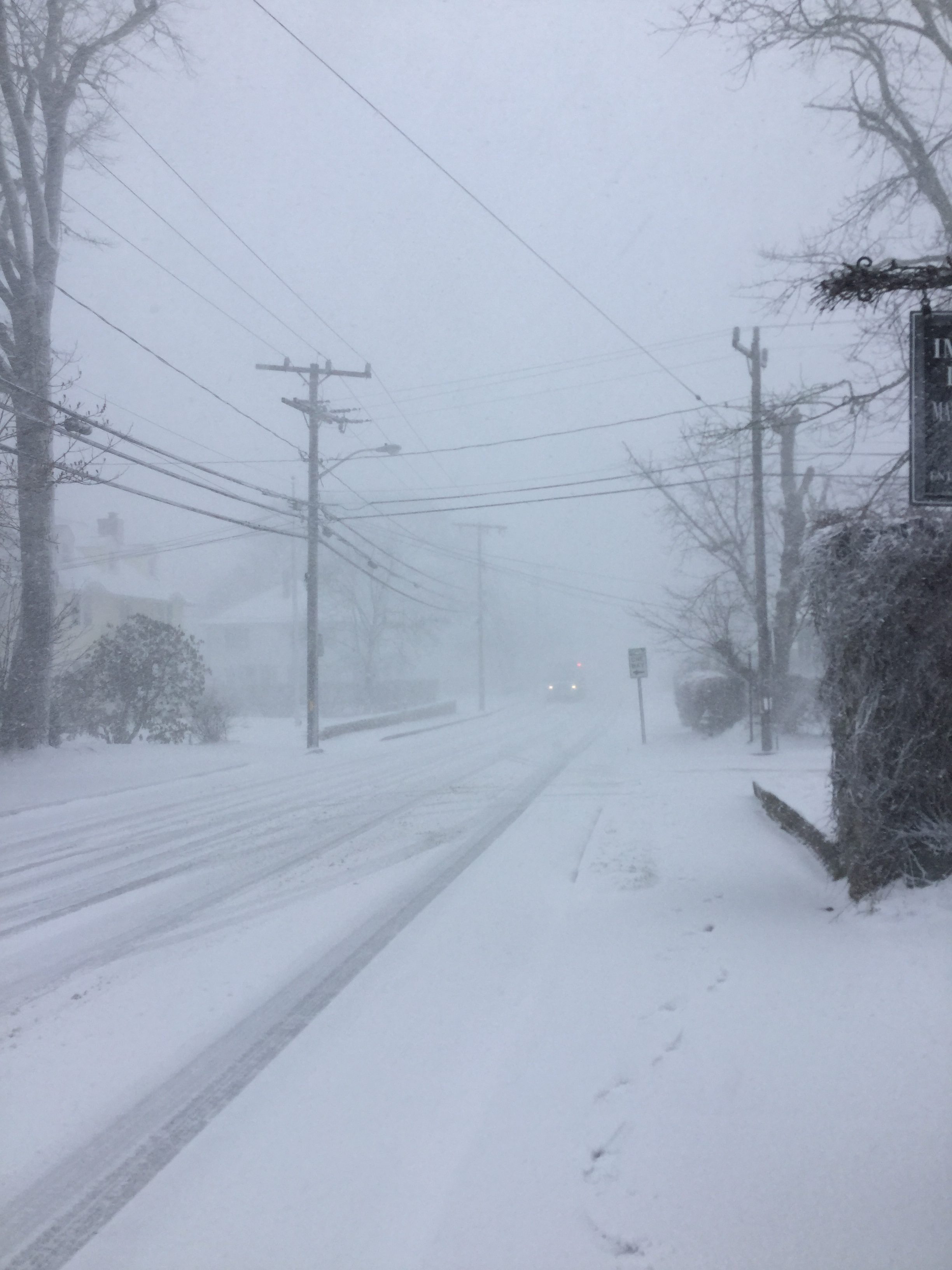
It went out just after nine in the morning yesterday – the second time in as many weeks that storms took down power lines throughout the area. Lights and heat, phone and computer cease their work and noise. Food in the fridge is moved to the red Coleman cooler and cell phone calls are made to Eversource to report the outage. There’s no school, public meetings are rescheduled, and neighbors check in with one another. Some birds pull seeds from one feeder while others cling to the suet feeder. The wind rattles the windows while snow drags tree branches to the ground.

There are some great things that come when the power fails: a break from electronic media, extra family time, and a chance to marvel at nature’s beauty and destructive ability. But showers aren’t pleasant without hot water, clothes can’t be washed, and prepping meals becomes something of challenge without an oven and stove. There is also a reality check involved: modern technology isn’t a given as much as it is a usually reliable but not guaranteed convenience, and without a fireplace or a generator my house gets cold.

There are lines down just around the corner and power may not be restored for a couple more days. The temperature inside the house is hovering at 50 degrees. With my older son flying in for Spring break, my younger son’s school reopening in the morning, my husband facing a full day, and my own work resuming tomorrow, it made sense to book a hotel room for the night – hot showers, warm food, and access to communications are worth the cost. At least for a single night.

It’s a blessing to remember the power of nature, and it’s a gift to be stuck at home with people I love. It’s also a blessing to move into a hotel for the night. I have the benefit of both, inconvenient graces that remind me that I’m privileged with food, clothing, and shelter. Why does it take an outage to remember this (especially in this time of reflection called Lent)?

School (s) of Hard Knocks and Soft Touches

If you can learn from hard knocks,

you can also learn from soft touches.

Carolyn Kenmore

[Daily Peace, Washington, D.C.: National Geographic Society, 2015, March 3]

Your mother and father smiling at you from your first day in this world taught you what it meant to be human and loved. Your grandmother helping you plant seeds in a garden taught you to see the beauty in earth’s bounty. Friends and siblings teaching you to play checkers, dodgeball, Sorry, and Clue gave you the chance to learn how to win and lose with grace. Walking, talking, tying shoes, using a fork and knife, and going to the bathroom – the basics are best learned from soft touches. It isn’t just handing on a skill, it’s a gesture of love and care that reminds you that you are special and you are loved.

The school of hard knocks isn’t the place to learn the basics – shame is a lesson often learned alongside. But once the basics are known, hard knocks provide the opportunity to learn and practice patience, determination, and judgement. You learn to answer such questions as these: when is enough enough? how does this experience help me understand and help others? where is God in all of this mess?

Hard knocks are powerful teachers if they aren’t ways of disguising cruelty or abuse. You and I don’t have to seek hard knocks, nor do we have to visit them upon others. There are enough difficult things that will come along without any help from either of us.

Soft touches are powerful teachers if they aren’t ways of covering up reality or avoiding difficult truths. You and I can learn their lessons, and employ them to teach in ways that honor and foster the human spirit. How else can we share the love we’ve been given with others?

If you google Carolyn Kenmore, you will find lots of pictures, a few book covers, and several quotes in many different fonts. I had never heard of this model and writer before today, and I had never come across this quote – learning about new writers is one of the benefits of the new daily readings books I’ve been given this year.

Failing, failing, failing

Every time I turn around, there’s another obstacle to restoring adequate library services in Wareham. Lack of money, lack of political awareness and will, lack of leadership and vision -take your pick, they’ve all played a part. I’m not optimistic about the situation because there’s no indication that things will turn out well if everything keeps going the way it’s going now. Optimism is limited by circumstance. That doesn’t mean it will all end in tears.

Our business in this world is not to succeed, but to continue to fail, in good spirits.

 Robert Louis Stevenson

[Daily Peace, Washington, D.C.: National Geographic Society, 2015, March 1]

I don’t think this is about cheerily accepting the demise of hopes and dreams, or standing by while the world goes to hell in a hand basket; this is about the difference between optimism and hope. Hope doesn’t rely on present circumstance: it’s a trust in the grace and justice that knits the universe together, and that will eventually/slowly/painstakingly bring about a compassionate world. Love conquers all, it’s true – or it will be true in the end. The glorious failures of my efforts and in my time are steps in the right direction, even when the end is nowhere to be seen. Continuing to put one foot in front of the other becomes possible, even a blessing, when I do so in good spirits.

And now faith,hope, and love abide, these three; and the greatest of these is love. I Corinthians 13:13


Somebody done somebody wrong

Reading: Matthew 5:39

Another has done me wrong? Let him see to it.

Marcus Aurelius, Meditations, 5.25

[Holiday and Hanselman, The Daily Stoic, New York: Portfolio/Penguin, 2016, p. 66]

The quote has a few more lines, taken from a larger writing. Without a context, these words wouldn’t make any sense to me. What does he mean, let him see to it?

Hanselman and Holiday put these lines in a larger framework – controlling how we respond to people who have caused us harm. Another way to say this: Somebody done me wrong? He/She has to live with it (not me).

In one sense, this isn’t true; if someone burns down my house or crashes into my car, I have to deal with the damage. Real consequences fall to me because someone else behaved badly. In another sense, it is absolutely true; my inner life doesn’t have to suffer because of this event – unless I choose to hold on to anger and resentment because of the damage. The one who caused the damage has to square himself/herself with the actions and results.

This is the kicker: if I choose to let go of any negative feelings the damage created, I choose to forgive the one who caused it. To save my inner life the turmoil and damage that resentment and revenge bring, I cannot exact revenge. My freedom comes when I free the one who hurt me.

There are always consequences to damage and hurt  – breaks need to be healed, reality restored. But whether the souls of the people involved are blighted by the experience is optional. I can choose to let it all go. The one who done me wrong? He/She will see to it with a better chance to refrain from harm in the future if I refrain from returning damage for damage.

But I’d be kidding myself if I said it was easy. Wise, yes, but not easy.

So Sad…

Reading: Matthew 5:1-11

The deeper that sorrow carves into your being,

the more joy you can contain.

Kahlil Gibran

[Daily Peace, Washington, D.C.: National Geographic Society, 2015, Feb. 23]

Sorrow is my recognition that whatever is absent from my life has left an impression behind, an almost physical cavity that will be filled by something; it could be joy, but it might be something else.

In The Book of Joy, the Dalai Lama talks about sadness as a part of life that can lead to a deeper life or a lesser life:

Focus only on the Self:

If your focus while grieving remains mostly on yourself – ‘What am I going to do now? How can I cope?’ – then there is a greater danger of going down the path of despair and depression.

Focus moving beyond the Self:

With the great sadness of the loss, one can live an even more meaningful life.

[the Dalai Lama and Desmond Tutu with Douglas Abrams, The Book of Joy, New York: Avery, 2016, p.112]

Sorrow brings blessings, but only if I don’t cut myself off from the rest of the world. Recognize the loss, accept the sorrow, allow it to soften me, and remain part of the life around me.

Blessed are those who mourn…blessed are you and I when we mourn.

Blessed Peace

Reading: Matthew 5:1-11

Blessed are the peacemakers, for they will be called children of God.

Matthew 5:9

You cannot find peace by avoiding life.

Sir David Hare, British screenwriter and playwright

As my friend, Bill Albritton, is fond of pointing out: it’s the peacemakers, not the peaceful who are called blessed and will be called the children of God. Not that the two are mutually exclusive – in the best of circumstances they reside together, giving a calm center to those who work for peace and spurring the ones living a serene inner life into public service and action. Peace isn’t the same thing as lack of contact with life in all its diversity. Hiding from my inner reality and shying away from the messiness of the world is a recipe for boredom and superficiality – not remotely the same thing as peace.

In the past few years, serving on a municipal board has brought its frustrations. The municipal leaders’ lack of a fruitful vision of and compassion for the people they were elected to serve has caused many a good person to throw hands in the air and walk away. Rude behavior at public meetings, refusal to recognize anything beyond personal likes or gain, and unwillingness to admit to mistakes and misjudgments are enough to make anyone angry, bitter, and exhausted physically and emotionally. No good deed goes unpunished runs through my mind at these times – not exactly biblical, but it sure feels like the truth some days.

Matching bad behavior with bad behavior won’t bring about change for the better – at least not in a permanent way. Hearts and minds are not expanded and opened by snide and demeaning comments. Sarcasm is a conversation killer, distressing to the one on the receiving end and revealing the user’s fear and mistrust of true conversation.  Even if verbal retaliation feels better in the immediate sense, it makes the encounter an act of war rather than peace. It will damage people on both sides. I’d rather have a conversation than a fight.

I don’t want to avoid life’s frustrations, and I don’t want to add to the conflict already alive and well in this world of mine. That means I have to seek peace as an internal state as well as work for peace in an all too flawed communal life. Perhaps this is the challenge of a lifetime. Perhaps it’s also a blessing…

[Quote from Daily Peace: 365 Days of Renewal, Washington, D.C.: National Geographic Society, 2017, Feb. 17]

An Incomplete Truth

Reading: John 8: 31b-32

If you continue in my word, you are truly my disciples; and you will know the truth, and the truth will make you free. (NRSV)

The truth will set you free.

But not until it is finished with you.

David Foster Wallace

(Daily Peace, Washington, D.C.: The National Geographic Society, 2015, Feb. 15 quote)

David Foster Wallace was brilliant, productive, and curious. He looked into the world, seeking its core and its cohesion: seeking its truth both in the physical sense and in a more societal and communal sense. Suffering from depression for many years, he hanged himself in 2008. He was 46 years old.

I think he’s right – the truth won’t set anyone free until it’s finished with him or her. No one seeking truth comes back unchanged because truth opens eyes and challenges the boundaries of personal and communal understanding and knowledge. It tears apart the partial to replace it with something larger, then tears it apart again in a never-ending process of expansion. For some of us, this is the adventure of a lifetime; for some of us, it is endless striving without relief. In the process, the reality of self emerges just as surely as the nature of the world does – in glimpses, flashes of insight, and hard won understanding. The truth of this whole process will set you free, indeed.

As much as David Foster Wallace was right, his quote is only partially right. The truth as an outer reality or as an inner reality is only part of the story, just as the truth shall set you free is only part of a larger sentence. If you continue in my word, you are truly my disciples is the proviso almost always left out. Something critical is lost when the second part is removed from the relationship of seekers to God-With-Us/Jesus. It is perilous to the soul if truth is understood as a solo pursuit, or even as a communal effort, if it isn’t attached to another truth: God seeks us. The truth, or the Truth, isn’t a disconnected reality: it’s the gift of a creator who loves each living thing, each single thing from sub-atomic particle to universe. No one is alone, everyone is loved, and the truth frees us to live with the consequences of this infinite belonging. When truth opens our eyes and reveals us for who we are, we can see it as blessing only in the embrace of the God who created us, seeks us always, and holds us fast. Without knowing how infinitely precious and loved we are, how could we endure our infinitesimally brief existences?

Gracious God, hold my hand and set me free. Amen.

For more reading on this subject:

Heschel, Abraham Joshua; Man is not Alone: A Philosophy of Religion (New York: Farrar, Straus, and Giroux, 1951

Heschel, Abraham Joshua; God in Search of Man: A Philosophy of Judaism (New York: Farrar, Straus, and Giroux, 1955)

Changed by Power?

Reading: Matthew 4:1-11

Hero or Nero? is a meditation from The Daily Stoic – a good rhyme as well as an intriguing read. The point made: whether power corrupts depends upon the character of the person who wields it. In the words of Holiday and Hanselman:

It looks like it comes down, in many ways, to the inner strength and self-awareness of individuals – what they value, what desires they keep in check, whether their understanding of fairness and justice can counteract the temptations of unlimited wealth and deference.

Lent is a time for taking stock of inner resources. Understanding my strengths can lead to a deeper sense of self, greater gratitude for God’s grace, and an expanded ability to serve others. Awareness of my shortcomings gives me a chance to accept my limitations instead of denying them, to remember that they cannot separate me from God’s love, and to refrain from hurting others because of them. I’m better able to act with compassion and love when I am aware of my inner state, with all its pluses and minuses.

At the end of the meditation, Holiday and Hanselman move the focus from those with political power and position to everyone, including me:

Both personally and professionally. Tyrant or king? Hero or Nero? Which will you be?

For Jesus and for us, there is no avoiding the temptation to exercise power to achieve recognition and to remake the world in significant ways. When tempted, Jesus recognized and acted from one eternal and central truth: God-given power can only be exercised properly if done with God’s help and guidance. If I forget this truth, if I act by and for myself, whatever power I have will harm others even as it crushes my spirit.

Guide my feet, dear Lord. Hold me fast. Amen.

Excerpt from: Holiday and Hanselman, The Daily Stoic (New York: Portfolio/Penguin Press, 2016), p. 11


Ashes to Ashes

In two days, crosses of ash will be drawn on foreheads. With the swipe of a finger and a few words, Lent will begin. Some people will give up desserts or alcohol while others will add daily devotional readings and service projects. Whether adding something positive or subtracting a negative habit, a change in behavior is how most people observe Lent. It’s what I’ve done for most years of my adult life. Sometimes these actions have brought about a deeper understanding of my faith and sometimes they haven’t. But each of them created the chance for me to live with greater intention, even if only in a single aspect of my life.

For the past four years, I’ve chosen a particular topic for Lent – specific prayers or poetry, parables, deadly sins or life-giving virtues have filled this blog with words and images. Others have been kind enough to add their art or words to the mix, giving everyone (most especially me) the gift of a different voice and different perspective.

This year, I’ll be looking at some of the word gifts I’ve received over the past couple of months: The Daily StoicDaily Peace, and The Book of Joy. The first two were surprises, the third one I requested. All three provide opportunities to get my inner house in order, see the world around me in all its glory, and thank God for the precious life I’ve been given.

I hope you come along with me through this path of words, and perhaps add a few of your own…

Resources:

Holiday and Hanselman, The Daily Stoic: 366 meditations on wisdom, perseverance, and the art of living (New York: Portfolio/Penguin Press, 2016)

Daily Peace: 365 Days of Renewal (Washington, D.C.: National Geographic Society, 2015)

Dalai Lama and Desmond Tutu, The Book of Joy: Lasting Happiness in a Changing World (Avery, 2016)

Moving into God’s presence through words