Category Archives: Theology

Consequences

Readings: Psalm 80:1-7, 17-19; 2 Samuel 7:23-29; John 3:31-36

For you, O Lord God, have spoken, and with your blessing shall the house of your servant be blessed forever. 2 Samuel 7:29b

He whom God has sent speaks the words of God, for he gives the Spirit without measure. The Father loves the Son and has placed all things in his hands. John 3:34-35

Consequences. Pretty much everything we do has them. Some are obvious: if I plant tomato seeds, the plant that grows will produce tomatoes. Some are not quite as obvious: If I engage with an infant, mirroring her actions with smiles, words, and eye contact, her brain will develop as it should. Even less obvious: the infant girl I mirror will one day do the same for her infant son, handing on the blessing. One thing leads to another. Consequences.

God promised David a blessing for his people and for his family. There is no unblessing, no taking back the love God has freely given. It returns in the words of the prophets, the prayers of the faithful, the care for the widows and orphans. It returns in Jesus, the man of Nazareth. Blessing is writ large in his words, the healing of the sick, and in his love for even the ones who condemned him to die.

What are the consequences for us, loved for so long and so well? How will we hand the blessing on?

Mary’s Boy Child/Oh My Lord, Boney M, Nightflight to Venus 

Come, Lord Jesus, Come
Where Did I Come From?

Readings: Psalm 72:1-7, 18-19; Isaiah 30:19-26; Acts 13:16-25

“I have found David, son of Jesse, to be a man after my heart, who will carry out all my wishes.” Of this man’s posterity God has brought to Israel a Savior, Jesus, as he promised; before his coming John had already proclaimed a baptism of repentance to all the people of Israel. 

Acts 13:22-24

Candles lit, prayers said, Bibles read…the Christian community of faith approaches the manger through Advent practices that keep us on the dusty road to Bethlehem. Trying our best to walk in faith through a world that celebrates Christmas as a time to acquire new clothes and an excuse to eat and drink, some of us focus on keeping Christ in Christmas rather than on something altogether obvious but often overlooked: Jesus of Nazareth wasn’t Christian. God With Us was born into and fostered by an older faith – a faith he followed devoutly as a rabbi.

With every psalm I read, with the words of the prophets in my heart, in every New Testament account of Jesus, I inherit the blessing of a faith that gave birth to my own spiritual home. The Christian tradition didn’t spring fully grown from nowhere: it was birthed by the Jewish faith as surely as Jesus was born to Mary and Joseph.

May I remember where my faith came from this Advent, and honor those who keep it.

Come, Lord Jesus, Come.

Power

Readings: Psalm 72:1-7, 18-19; Isaiah 4:2-6; Acts 1:12-17, 21-26

May he judge your people with righteousness, and your poor with justice…

May he be like rain that falls on mown grass, like showers that water the earth. Ps. 72: 2, 6

“Let another take his position of overseer.” Acts 1: 20b

Power corrupts if it is attained and exercised for its own sake. Power also exhausts the one who wields it if he or she is not grounded in something far more gracious than personal talent, drive, and energy. It’s why communities of faith pray for those who hold the reins of government – not so much a statement of agreement for a particular agenda, but a recognition that without a connection to something holy it will end in damage.

Today’s psalm reminds us that leaders can choose to rule for the benefit of those who will never have enough money to help them get re-elected, whose influence cannot open political doors. Ruling for the good of those who most need help rather than those who can offer material reward is a road less travelled, but it will make all the difference. The Acts reading implies that the best leader might not be the one who wants it the most: it might be someone whose constancy and service is evident to others.

If I judge leaders by a higher and holier standard of serving the least and last, I must also judge myself by that higher and holier standard. Am I serving the needy in the work I do, or am I serving only those who can reward me in material goods or influence? In the end, the blessing I offer others without seeking reward brings peace. In the end, the blessing I withhold because it doesn’t line my pockets or promote my welfare will shrink my soul in proportion to the harm I do to others.

Come, Lord Jesus, Come.

Birth…and pain, and death

Readings: Psalm 124; Genesis 8:1-19; Romans 6:1-11

What then do we say? Should we continue in sin in order that grace may abound? By no means! How can we who died to sin go on living in it? Do you not know that all of us who have been baptized into Christ Jesus were baptized into his death? Therefore we have been buried with him by baptism into death, so that, just as Christ was raised from the dead by the glory of the Father, so we too might walk in newness of life. For if we have been united with him in a death like his, we will certainly be united with him in a resurrection like his. We know that our old self was crucified with him so that the body of sin might be destroyed, and we might no longer be enslaved to sin. For whoever has died is freed from sin. But if we have died with Christ, we believe that we will also live with him. We know that Christ, being raised from the dead, will never die again; death no longer has dominion over him. The death he died, he died to sin, once for all; but the life he lives, he lives to God. So you also must consider yourselves dead to sin and alive to God in Christ Jesus.   Romans 6:1-11

I admit it seems odd: all this talk about sin and death and even resurrection when we are supposed to be thinking about a birth of a baby in a stable, surrounded by shepherds and magi and celebrated by a heavenly host. It might cause you to wonder what was going on in the heads of those who chose this passage to be read during Advent. What kind of malcontents insist on putting a damper on this holiday season, when the new regime has promised us that even store clerks will be able to say “Merry Christmas” once again? But I think they knew what they were doing and what they were doing is particularly important for us in these days. It’s not the baby that should be our focus in these days before Christmas: it’s the incarnation. And that’s why death and sin and resurrection are all important to keep in mind in this season when we are plagued by persistent pulls toward petty piety.

I have often thought I would like to play a video of a real birth at a Christmas Eve service. It would help us ground the birth of Jesus in the often harsh realities of the real world. Mary may well have pondered many things in her heart that night, but it was only after she had endured real pain and worry and fear. And that is what incarnation is about. It is about God coming to the pain of our lives. It is about God becoming part of a world in which worry and fear are never far from us. It is to suffer and to die. But as this passage from Romans reminds us, it is also to be raised from the dead and to walk in newness of life. The truth is we can truly experience that newness of life only after we know the reality of pain and suffering and fear. This Advent, let’s understand that this is at least part of what preparing for the birth of Christ is all about. It is only through the pain of childbirth that new life happens. So, let’s acknowledge the concerns and worries we have for ourselves, for those we love, for our world that are part of living in these days. We don’t need to wallow in them, but neither should we ignore them, thinking that somehow they undercut the merriness of Christmas. They are, after all, the reason we need a savior. The incarnation reminds us that God is with us in our all our concerns and worries and suffering, so it is possible to face them. And God leads us through all this to new life. This is our faith. This is our incarnation/resurrection hope.

Come, Lord Jesus, Come.

Offered by Jeff Jones, author, teacher, seeker of the Christ Child.

Thanks for the Inconvenience

My husband and I were up late on Monday assembling our new Ikea bed. After measuring the room and trying several different models, we chose a Hemnes. We threw in the four large underbed storage drawers, making the bed a space saver as well as a comfortable place to sleep. All the boxes fit in the car, the directions were easy to understand, and we managed to get the whole thing together before midnight – quite an accomplishment for two spatially challenged individuals.

My husband was the first to notice the problem. While the bed fit into the space beautifully, there wasn’t enough room on the sides to pull the drawers out. Either we give up the storage drawers or we reconfigure the room for the first time in five years.

We haven’t decided what we’ll do yet. One way or the other, it hasn’t turned out the way we thought it would. It’s certainly not a devastating dilemma, just an inconvenience and an opportunity to choose storage or furniture placement status quo.

We’ve been laughing about the whole thing these past couple of days – an unexpected blessing courtesy of our spatial shortcomings. The chance to enjoy inconvenience together doesn’t happen so often that I don’t recognize its benefits.

Teach me to treat all that comes to me throughout the day with peace of soul…

Prayer at the Beginning of the Day, A Manual of Eastern Orthodox Prayers, New York: St. Vladimir’s Seminary Press, 1991, p. 20

Big Blue Marble

The Earth’s a big blue marble when you see it from up there

The sun and moon declare her beauty’s very rare.

Big Blue Marble theme song

It’s a little over two miles from where we parked to the end of canal. With sunny skies and a brisk breeze at our backs, we set out for the farthest point on the Cape Cod Canal path. A few cyclists, the odd fisherman, and a handful of other walkers shared this extraordinary place and time with us.

A cormorant fanned her wings, standing on a seaweed covered rock; seagulls caught updrafts, skillfully hovering in place. Almost invisible sparrows emerged from the sea grass just a few feet away from us. We left the Sagamore bridge at a bend in the path before we could see the beacon that marked the path’s end. Spiderwebs filled the spaces between the breakwater rocks, sheltered from the ocean currents, blowing sands, and gusting wind.

We spoke a few words out on the breakwater, sharing a few amazing particulars in the vast beauty of ocean, sky, and land. Most of the time, we listened to the wind and water, two small creatures keeping silent before the mystery of nature.

On the walk back, we gathered up the pieces of our everyday life we’d left along the way. Lunch ideas, guesses on when we would get back to the car, and afternoon plans were reclaimed as the bridge and traffic sounds reappeared. The couple of hours spent walking settled into place, a piece of the day among other pieces. Time moved us along its path.

But our walk wasn’t just a way to get from one point to another, and it wasn’t just a photo opportunity – nothing so common as either of these. When the blindness that prevents us from seeing the beauty of this place is healed, when we know we are a part of Life’s story, and when we bow down in gratitude for our small and fleeting part in it? It’s a walk in Eden and a glimpse of heaven.

I am grateful beyond words.

A Worded Life

Rain fell that night, a fine, whispering rain…

…As Mo had said, writing stories is a kind of magic, too.

[Funke, Cornelia; Inkheart (New York: Scholastic Inc), 2003, pp. 1, 534]

Meggie’s begins with a stranger’s visit on a rainy night. It ends with Meggie’s decision to create new worlds with paper and ink, writing places for readers to visit. In between these lines, storytellers read villains and fairies out of their book worlds into ours through the magic of their voices. But there’s a catch: for everything that comes out of a book, something or someone leaves behind our world to enter it. Behind the words, through the pages and in the chapters, a rich life awaits – a place that some call home and others want to visit. So real is this story world that Meggie thinks that “perhaps there really was something behind the printed story, a world that changed every day just like this one.” (p.529)

I’ve spent thousands of hours in Middle Earth, the Hundred Acre Woods, Inkworld, Hogwarts, Tara, and countless versions of London, New York, and Maine. The ability to create a new reality on the page that changes real life is a powerful gift.

The words I read to myself can change who I am. The words I read to others can do the same, feeding the imaginations of adults and forming a child’s ability to reason. They can reveal marvelous possibilities for tomorrow or they can damage heart and soul. It’s vital to choose the stories I tell wisely.

The same can be said of scripture. It’s a world of love, pain, loss, ignorance, and miracles. But it’s not really just a collection of stories. It is a doorway into the biggest world possible: the one God created, nurtures, and enters to meet us. Not just words on a page, but the Word that created all possible worlds – most especially the beloved cosmos we all call home.

Also many other things…

In the beginning was the Word, and the Word was with God, and the Word was God…

But there are also many other things that Jesus did; if every one of them were written down, I suppose the world itself could not contain the books that would be written. John 1:1, 21:25

Whenever I teach, I end the last class with John’s final words about Jesus. No matter the age and stage of the learners, how short or long the class ran or subject studied, these words have the last word. It’s a beautiful way to end a gospel or close a class, this truth.

Jesus did so much that I never saw or heard about, bringing the grace of God to unknown people and forgotten places. This sentence reminds me that I will never know or appreciate all that God-With-Us did when he walked this earth.

Paired with the opening words, John takes me from God-before-creation to God-in-Jesus. That’s a cosmic trip lasting billions of years, spanning unimaginable distances. The world that holds me could not contain the books that could be written about the beginning of everything – much too much for words to convey.

These words were written after Easter, after Jesus sent the Spirit to be God-within-us, God-walking-with-us, God-everywhere-around-us. Jesus is now with me through the Spirit. Of course the world itself could not contain the books that would be written about Jesus: the story continues to unfold in me, in you, in all that is, and in all that will be. Once again, much too much for words to convey. Isn’t that extraordinary? Isn’t that wonderful?

Photo on 2015-07-13 at 10.10

The Bad Beginning of a Long Journey

If you are interested in stories with happy endings, you would be better off reading some other book…

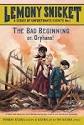
The car drove farther and farther away, until Justice Strauss was merely a speck in the darkness, and it seemed to the children that they were moving in an aberrant – the word “aberrant” here means “very, very wrong, and causing much grief” – direction. (Lemony Snicket, A Series of Unfortunate Events, The Bad Beginning (New York, NY: Harpercollins publishers, 1999)

search

It’s the story of the Baudelaire orphans trying to survive the fiendish plots of Count Olaf with life, health, and inheritance intact. As the three children get older, they grow from seeing everyone as either all good or all evil to seeing everyone (themselves included) as a mixture of light and dark, good and evil. Along the way, some good people make costly mistakes and a few villains find the courage to do what’s right. There is a lot of gray, and not all the questions are answered.

Like most of us, the Baudelaire children gradually come to realize that not everyone is willing to do the right thing. Some lack courage, others can’t figure out what the right thing is, and still others prefer worldly gain over personal sacrifice. Not everything gets resolved, and the three children don’t get a clear happy ending. What they get are moments of decision and the strength to accept the consequences of their actions. They make mistakes, they cause pain, and they grow up enough to withhold snap judgements about the actions of others.

At the end of the series, the children face an uncertain future together, willing to help others even at their own cost. They accept the world for all the hurts it has brought, and they accept their own inability to create a perfectly happy ending for everyone they love.

There isn’t anything particularly religious in this book or the twelve others in the series, but moving from a child’s simplistic view of people as all good or all bad to a more nuanced perspective is a sure sign of maturity. If such maturity evokes compassion for self and others, it is a journey of faith. If it ends in the rigid condemnation of others and personal despair, it’s a glimpse of hell.

Thank you, Lemony Snicket, for the ethics lesson, and for all the big and small words that took me on the journey.


In the beginning when God created the heavens and the earth, the earth was a formless void and darkness covered the face of the deep, while a wind from God swept over the face of the waters…And Joseph died, being one hundred ten years old; he was embalmed and placed in a coffin in Egypt. Genesis 1:1, 50:26


It begins with the beginning of everything: space, time, matter, elements, life. It ends with the end of a single man dying in the foreign land that sheltered his whole family. It doesn’t get bigger than a universe whose size is beyond imagination. It doesn’t get more personal and specific than the last words and final resting place of a single human. Genesis stretches from our infinite creator and to our universal and very specific experience of death.

There are so many ideas about why God created, and why God chose to make the great, big world that is our cosmic home. I think it’s one of the reasons we tell our sacred stories, writing them down as our best attempt to give those who follow us a glimpse of how we saw God moving across the depths of our souls.

There are just as many ideas about why God made us, and why we all die. Saying goodbye to our holy, mortal flesh is another reason we tell our sacred stories, writing them down as our best attempt to give those who follow us a glimpse of our return to the God who made us.

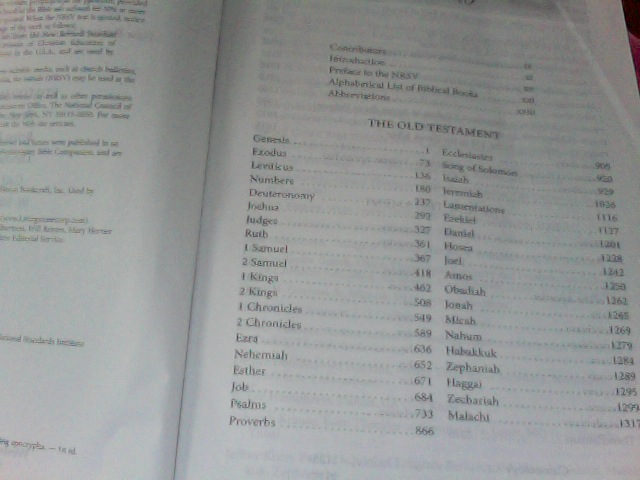
The Bible is a magnificent library, full of books written by men and women who found God waiting for them on mountains, in shrubs and jail cells, in the belly of a big fish, and in the birth of a baby boy. If I had to sum it all up, this talking with and listening for God, it’s this:

The universe is very big, and you are very small.

You belong to the entire cosmos, and you are precious.

I love you so much.

I love everything and everyone else, too.

You are never lost to me.

The words aren’t really the point; they are an invitation to fall into the arms of God. I doubt I’ll ever receive another such beautiful invitation.