Category Archives: Prayer

A Thousand New Roads

Any Chance Meeting

In every gathering, in any chance meeting

on the street, there is a shine,

an elegance rising-up.

Today, I recognized that that jewel-like beauty

is the presence, our loving confusion,

the glow in which watery clay

gets brighter than fire,

the one we call the Friend.

I begged, “Is there a way into you,

a ladder?”

“Your head is the ladder.

Bring it down under your feet.”

The mind, this globe

of awareness, is a starry universe that when

you push off from it with your foot,

a thousand new roads come clear, as you yourself

do at dawn, sailing through light.

Rumi, Any Chance MeetingSay I Am You, Athens, GA: Maypop, 1994, p. 29

The mind is a globe of awareness, a starry universe indeed. But it isn’t the be-all or end-all: it’s the push-off point. The thousand new roads aren’t inside it  because roads are meant for walking, not contemplating while sitting in place.
Enough?

The tradition in my house for birthdays and other special days: the honored person gets the day off from all household chores, and gets to decide what to eat. From appetizers and snacks, through entrees, sides, and dessert, it’s all selected by the honoree  and made by someone else. Something became very obvious when this tradition started, and continues to the present:

If we are grateful for our lives, enough is as good as a feast.

If we are not, no feast will ever be enough.


The Grateful Living

When my father was nearing the end of his life, he spent a lot of time sitting on his back porch. He watched the birds at the feeder, the squirrels running in the yard, and the heron that would fly low over the river every afternoon. He was sitting there because cancer had invaded his body, and the chemotherapy that held it off for two years had taken his strength.  I was lucky enough to sit with him at times, and blessed to be with him when he fell out of this life into the arms of God.

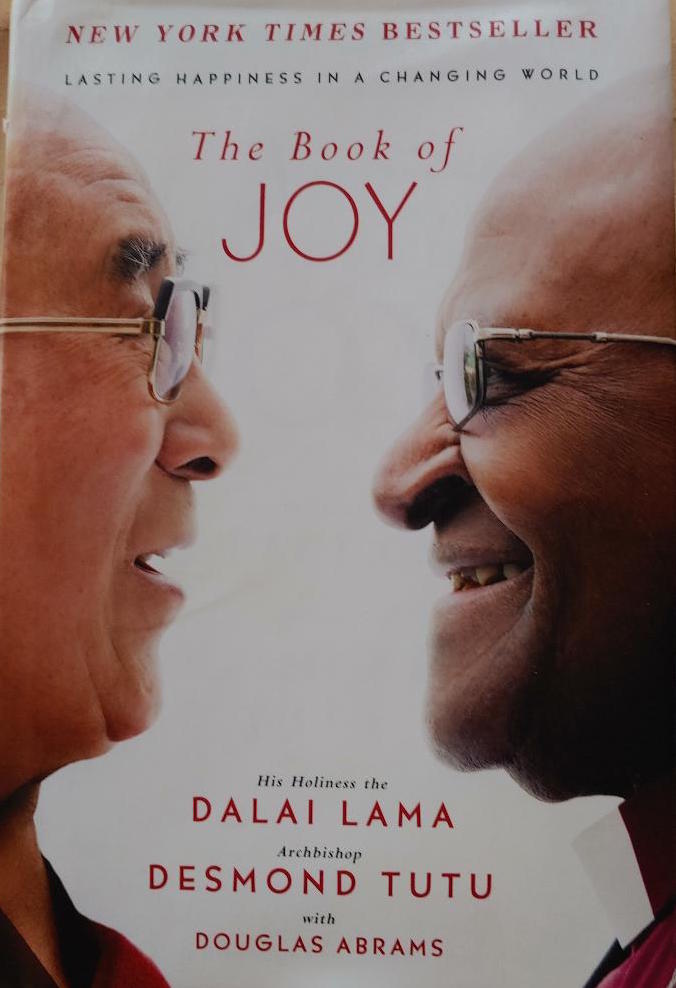
Why is it that living with gratitude comes so much more easily when life is difficult? Is it because I am forced to see the giftedness of each day against the backdrop of life’s imperfections? I doubt there’s ever been a day in my life that wasn’t amazing in some unique way, but I’m certain that I was blind to the gifts of many of them.  Going forward, I’m going to remember what the Dalai Lama, Desmond Tutu, and Douglas Abrams noted in The Book of Joy;

Gratitude is the recognition of all that holds us in the web of life and all that has made it possible to have the life that we have and the moment that we are experiencing. Thanksgiving is a natural response to life and may be the only way to savor it. (p.242)

Amen.

 [New York: Avery, 2016]

The Deer’s Cry, Rita Connolly; from Shaun Davey’s The Pilgrim, 1994

Forgive, not Forget

Years back, someone dear to me lost the path of peace and joy, and ended up in the spiritual wilderness of physical exhaustion and emotional darkness. Hurtful things were said and done, and our friendship was damaged. Eventually, after many years, the friendship was repaired and trust came back. But it wasn’t something that came quickly or easily for either of us. It took a lot of work to restore what had been such an easily formed friendship so many years ago.

What kept me in the friendship when it would have been easier to let it go? The certainty that my friend was a good person going through a bad time, not a fundamentally bad person.

Desmond Tutu and the Dalai Lama both practice forgiveness – releasing self and other from continued harm and hatred. They do not advocate forgetting: actions have consequences, and avoiding or denying them gets us nowhere but in more trouble. I doubt either one would have inspired so many people to live in love and peace had they not learned to forgive, remember, and move forward.

It takes a lot of strength to forgive, but it opens us up to joy again. Isn’t such a life worth the effort? If the Dalai Lama and Desmond Tutu are able to forgive the many destructive things that have happened in their lives, I’m willing to try to forgive the few in mine. What have I got to lose but suffering?


Breathing Room

I Can’t Breathe.

These aren’t words spoken in jest, they are a cry for help. They were the last words of George Floyd, but weren’t lost when his life was taken. I CAN’T BREATHE speaks to more than loss of oxygen: it is just as true when someone’s intrinsic worth is denied because of the shade of their skin, their gender, sexuality, abilities, or any number of other reasons. I can’t breathe too often is a communal truth,  still true a hundred plus years beyond emancipation, sixty some-odd years after Civil Rights legislation. Potential is smothered, talents choked, and the whole world is the lesser for it. This isn’t a problem for a specific group of people, it’s an infection that destroys the humanity of those who are held down and the ones hate-filled enough to do the holding.

There’s nothing in these words that is new, but perhaps there’s something new in the air we all breathe. It cost a man his life, it cost the world his gifts and his love. But just maybe such a loss opened up the space for real change. I hope so. After all, the Spirit is the Breath of God. When we asphyxiate those we consider outsiders, we close our lungs and souls to the Spirit.

Jesus said to them again, “Peace be with you. As the Father has sent me, so I send you.” When he had said this, he breathed on them and said to them, “Receive the Holy Spirit.” John 20:21-22, NRSV

Kyrie, Mr Mister; RCA; December 21, 1985; Richard Page, Steve George, John Lang (writers)

Humility

I met one of my favorite professors several years after he retired. He’d agreed to come back and teach beginnning Greek and Hebrew grammar for a year. He’d been on the faculty with Bruce Metzger, the famous Biblical studies professor who had helped shape the Revised Standard Version of the Bible as well as the New Revised Standard Version. If asked, he would say that Metzger was the better scholar, and that he had learned a great deal from him. Even in his retirement, Metzger was quite aware of his reputation, and of his achievements. He had better things to do with his time and talent than teach grammar; someone else with lesser abilities could do that.

Metzger had a point. He continued giving lectures and working at the highest level of academia in his retirement. His list of accomplishments continued to grow almost until his death.

I am grateful for the life and work of Bruce Metzger. Every time I open my NRSV Bible, I encounter his work in its translation choices and notes. But I didn’t know him as a person, and I have no idea how his relationship to God in Christ affected his life.

The other professor, I knew. He taught Greek and Hebrew because the words of the prophets and the gospels were written in them. He didn’t think teaching grammar was beneath him: how could offering others the ability to read sacred texts be beneath him? He had humility in spades, and joy to share.

Love God, self, and neighbor in whatever you do, and joy is sure to come.

Down to Earth or Feeling Like Dirt?

Humility is the recognition that our gifts are from God, and this lets you sit relatively loosely to those gifts. Humility allows us to celebrate the gifts of others, but it does not mean you have to deny your own gifts or shrink from using them. Archbishop Desmond Tutu, The Book of Joy, p. 211

The Dalai Lama was reminding us throughout the week not to get caught up in roles, and indeed arrogance is the confusion between our temporary roles and our fundamental identity. The Book of Joy, p. 209

Humility: living with our feet planted on solid ground. Not trying to stand above anyone else, we live humbly.

Humiliation: being made to feel worthless by the thoughts, words, expressions, or actions of another or our own.

Knowing the difference between these two is critical. The first is being down to earth – a wonderful expression and an invaluable trait. The second is feeling like dirt: losing sight of our true identities (God’s beloved).

Aim for the first. Leave the second alone, either its giving (arrogance toward others) or receiving (losing sight of our own fundamental worth).

Not one of us is perfect, but all of us are beloved and precious.

[Dalai Lama, Desmond Tutu, Douglas Abrams; The Book of Joy: lasting happiness in a changing world, New York: Avery, 2016]

Pillar One: Perspective

Perspective: There Are Many Different Angles

It’s the chapter title for Desmond Tutu’s, the Dalai Lama’s, and Douglas Abram’s first chapter on the Eight Pillars of Joy [Book of Joy, New York: Avery, 2016, p. 193]. In a nutshell, the main point is that how we experience something is a matter of how we look at it as well as a matter of what we are looking at:

A healthy perspective really is the foundation of joy and happiness, because the way we see the world is the way we experience the world. Changing the way we see the world in turn changes the way we feel and the way we act, which changes the world itself. Or, as the Buddha says in Dhammapada, “With our mind we create our own world.” (p.194)

Taking a broader perspective, thinking long-term rather than immediate, and including the wants and needs of others in our deliberations can get us out of our small box reality and into something larger and more life-giving.  That’s true, but there’s more…

Sometimes a narrower focus brings to light beauty and joy that often goes unnoticed. This is especially true when life isn’t difficult. The value of a single tree can get lost in the forest.

Zooming in or stepping back, a change of perspective can open hearts and minds to the joy that each day holds, and sustain the soul in all circumstances.

What a marvelous thing that is.

How I Pray

in the name of the strong Deliverer, our only Lord and Savior, Jesus Christ, Amen.

One of my favorite quotes about hope is from Jim Wallis, founder and editor of Sojourners magazine, who defined it as …believing in spite of the evidence and then watching the evidence change. This prayer of Brooks’, while full of requests, is full of hope. How I pray may be more important than the words. If I pray with little expectation, that will be granted; with little hope, I probably won’t be disappointed in the results. If I pray, hopeful of its coming into the reality of my life, I won’t be disappointed, either. Let me pray it and watch the evidence change, believing what the strong Deliverer said several times in several ways in the Gospels – ask for it in my name and it will be given.

Offered by Bill Albritton, teacher, writer, speaker, and seeker.

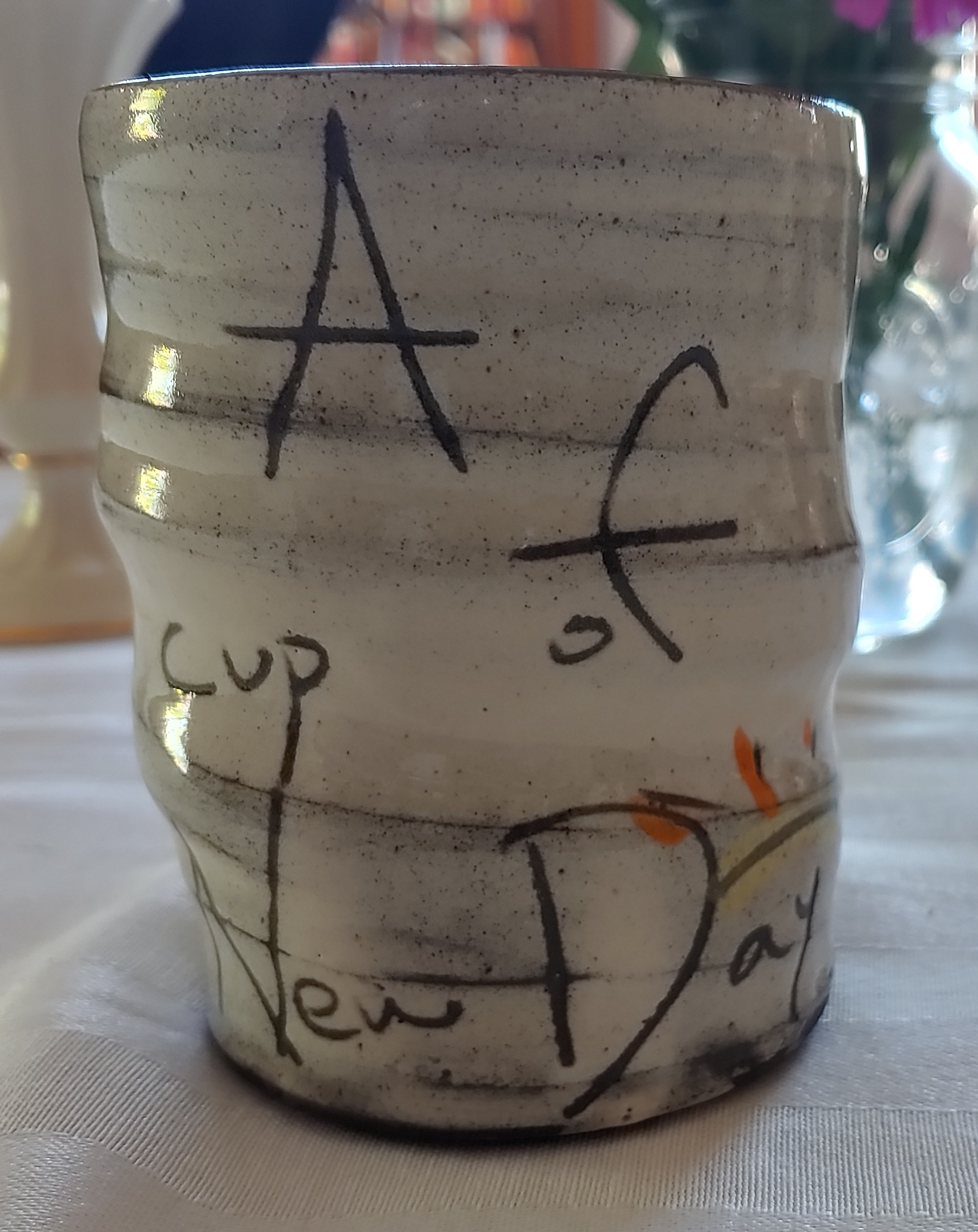
Cup of Strength

and make me the cup of strength to suffering souls

Caring about and for others is exhausting. If we don’t have a way to replenish it, our well of strength and compassion can run dry. When this happens, we are unable to support our own life’s burden (much less help anyone else). Sadly and often, this truth is ignored until the fatigue has already set in.

The wonderful and terrible truth is that none of us can offer much from our own resources, so a reframing is in order. If we are wise, or just blessed with common sense, we’ll forget about being a well and ask God to make us a cup of strength – and trust that God will fill and refill us again and again when we run dry.