Category Archives: observation

Cooking Up Some Vittles

One of my favorite scenes depicted in the gospels is Jesus making breakfast for some of the disciples—I can just imagine he enjoyed making the meal more than anyone enjoyed eating it. And that is why I cook.

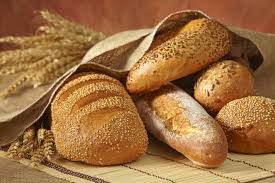
images-1I’m not much of a chef,  but I learned to be a pretty good cook when my wife was laid up for a few weeks. She’s fine now—some 10 years later—but I’m still in the kitchen much to her delight. I like the feedback.

imagesA lot of the work I’ve done over the years has had a long fuse so I don’t get much of a bang out of it—I’ve generally left the premises after planting the seeds of leadership and coaching skills, leaving the follow-up to others. Ah, but cooking! We get to taste the results generally in a few hours and they are usually not too shabby. It’s just a joy to explore new recipes and develop new tastes. And it’s a delight to share these findings with others—also a challenge, as we have vegans, lactose intolerants, gluten-free requirements, meat-lovers, and spicy vs. non-spicy situations to deal with. It makes things interesting (During the early phase of my new-found  love, I was married to the recipes. Now that I have more confidence, I do more creative cooking with mixed results, but usually pretty good.).

One final thought:

Isn’t it interesting how, no matter our age, we can pick up some new skill and continue learning things. We all know people who have done (and are doing) this. I think I’m going brush up my poetry writing skills next.  I hope I can find some of my old writings but if not we’ll just stop “fixin’ to get ready” and start writing some stuff—what a hoot!

Soli Deo Gloria, Bill Albritton

Offered by Bill Albritton, cook, poet, child of God.

The Service Industry

As Martin Luther emphasized, serving others is THE reason we work. God calls us to love and serve our neighbor, and it is through our work that we respond to that call.

[Ray, Darby Kathleen, Working, Minneapolis: Fortress Press, 2011, p. 123]

Work isn’t just to gain the necessities of life: it’s a way to serve the world through our actions. Taken to its end, all professions are meant to be helping professions, designed to give something back as much as to pull money in. What is valuable is what serves others in love, what is a response to God and neighbor. It is its own reward – pro bono with a salary or without. What a thought!

The measuring of professional success cannot be outrunning the other rats in the race. Getting the biggest slice of the pie isn’t the goal; making sure everyone gets dessert, perhaps even baking the pie, start to count. But such things can’t be definitively measured. They are seeds planted and potential fostered. Why consider things beyond the paycheck and the goods that come with it? Why not win the working game by the usual rules: material gain equals success? Ray notes this:

Jesus spent a whole lot of time doing nonheroic work: walking beside those who were heavy-laden; caring for the sick, the infirmed, the outcast, and the prisoner; telling stories rooted in everyday experiences; sharing simple meals with friends and strangers. [ibid., p. 127]

Could he have done otherwise? Sure. But he didn’t. He didn’t rule the land or preside over the temple. His work involved walking around everywhere and nowhere, talking with everyone who happened his way. He didn’t measure a person’s worth by the coins in a pocket. Job titles didn’t seem to matter much to him, but generosity and compassion did. The first and the last jumbled together, equally loved and often equally lost.

I have the luxury of meaningful work. I can write, teach, and serve on a municipal board pro bono. I can tend a garden, clean floors, and drive the carpool to school. No titles or measuring sticks necessary. All this work is a privilege, not just some of it. I sometimes forget this.

Lord, help me, lest I become arrogant in my forgetfulness.

Would you if you didn’t have to?

Would you work if you didn’t have to? Seriously. If you didn’t need the money, would you still work?

(Darby Kathleen Ray, Working, Minneapolis: Fortress Press, 2011, p.7)

It’s the opening of Ray’s book, kicking off a thoughtful exploration of how work affects us all. Beyond survival and acquiring enough to live a decent life, Darby believes that work is about having something to do. She continues:

Paid or unpaid, work endows our daily lives with structure, routine, and purpose. Through work, we act on the world around us. (ibid, p7)

I agree. Whether it’s the school schedule, paid or volunteer work, ongoing housework, or an occasional special project, work gives shape to my days in a way that other things do not (I’ve yet to check my play schedule to pencil in a work day, but I’ve certainly done the opposite). I’ve often heard discussions about the work ethic, but have yet to hear one about the relaxation ethic. How about you?

Is it a good thing that work provides the structure, routine, and purpose to my life? It’s not a bad thing. It’s how things are in the adult world. But sometimes the structures that define my daily living are the very ones I don’t notice – too big to be seen, perhaps. The problem is I might mistake something so basic for my life’s foundation. There needs to be something bigger and holier to this life, something that isn’t caught up in my abilities and my production. At some point, those things are going to diminish, perhaps disappear altogether.

Is there a bigger structure, an alternate routine, an eternal purpose that puts my work into perspective? Of course. It’s quite simple, but not particularly glamorous or easy to spot. It’s mentioned in church every so often, and quite a few Bible passages point me to it: Love God, and love neighbor as I do my own self. The God/self/neighbor lens brings my work into a much larger, sacred world. It can help me figure out how to work for something beyond a few material goods, a professional title, and a place to spend my time. It’s a way to offer who I am through my work, and a way to avoid mistaking my work for who I am.

Dear God, bless the work of my hands, that I might honor you and serve my neighbor as I work. Amen.

All Work and No Play

…makes Johnna a dull girl. Doing a good day’s work isn’t the same as cramming two day’s worth of work into a single marathon workday. I want to be a hard worker, not a workaholic…

…and I’ve been busy for days – leading classes, working on library projects and programs, hosting a dinner for twenty last night with my husband. With a blizzard keeping me home today, I could have gotten a jump on several writing projects, summer garden plans, and packed away all the dishes from last night’s party. But my husband and son are also home, so we did some computer work and filled the bird feeder. We got the most of the post-party work done, putting furniture and dishes back in their usual places. But we also played a couple of games, took a daily news quiz, and went outside to feel the snow and wind. For the first time in my life, I saw lightning and heard thunder while walking in a blizzard – amazing and scary and unforgettable. 

Had I done more work today, I’d have lived a lesser life. Sometimes the blessing is in the work I’ve left undone.

Back to Basics: Working

Popping the Question

I’m not talking about a marriage proposal. It’s a question that’s asked so often, by so many, in so many circumstances. After the usual Hi/How are you/Nice to meet you, it’s almost inevitable in any situation where people first meet:

What do you do?

Unless you are a child, you know that the words for a job/career are implied. The question isn’t really about what you and I do; it’s about what we do to earn money, and the answers we give to this question have immense social weight and interpersonal consequences. Wonderful conversations or awkward silence and quick departures? For better or for worse, it’s all too often about our answers to this question. Our working life defines who we are, sometimes just as much for ourselves as for others.

How do we answer such a question? How do we react to the answers we get when we ask it? For many of us, working keeps us busy for so many hours, days, months, years, and decades. How could it not be important?

For all the times we ask and answer this working question, we don’t seem to meditate on its importance very often, especially in light of our spiritual lives. So let’s explore this daily activity, this life basic. To begin, pick a time when asking or answering this question affected you in an unexpected way. If you are feeling bold, share it with me or someone else. Who knows where such a sharing could lead…

Here is mine:

I must have been asked this question a dozen times the day I arrived on campus to begin my theological studies: people playing Frisbee on the quad, the housing assistant who gave me my dorm keys, a few people who lived on my floor, several seminarians who stopped me while I was unpacking my car (none offered to help me with my boxes, either before or after asking what I did). Since I had two different work situations at the time, I had two answers: teacher/site director for a test prep company and bartender. The teacher answer usually got a positive if disinterested reaction; the bartending answer sent many scurrying away quickly, left others without a clue how to respond, and brought an appreciative smile to the face of a few adventurous souls.

Lord, bless the work of my hands.

Asleep and Dreaming

There are all kinds of studies about REM sleep, psychological implications of dream interpretation, and dream archetypes as doorways into the collective unconscious (thank you, Jung!). Dream analysis can be illuminating and fun, and sometimes a way to understand a dreamer whose waking pain prevents direct, conscious conversation. Favorite characters open their hearts and minds through dreams, and adventures sometimes depend on what is seen, felt, and learned in them (Dream on Harry Potter, Meg Murray, Percy Jackson, Daenerys Targaryen). God comes to dreamers, sleeping and awake (Paul, Hildegard, Peter, Mary, Magi, MLK, Francis and Clare). When we dismiss and discount the power of dreams, we close our eyes to the mystery that is our internal life and the glory that is the life of creation.

My dreams affect my waking life, and my waking actions affect my dreams. I have awoken with a new perspective to events in my life; taking cold medicine or antibiotics darkens the colors in my dreamscape, and certain pain meds bring on psychedelic shapes and 1960’s music (unexpected result of wisdom teeth removal). How can I deny the power of my dreams?

As a rule, I’m not one to spend time interpreting my dreams. But their fluidity, their permeable and mutable nature mean that I can alter sleeping reality with a simple change of mind or perspective. If nothing else, dreams are the playroom where I practice transforming the world through my thoughts and actions. It may not work so quickly or strangely, but I’m kidding myself if I think my thoughts and actions have no effect in this waking world I call home.

What do you dream? What dreams of yours change this waking world we share?

Back to Basics: Sleeping

Sleeping is the foundation of my waking life. Without it, everything gets shaky. I’m short with my children and husband. I eat more than I should to keep my body going, and usually the wrong things. It takes so much energy to plough through the day that I lose my ability and desire to look ahead, to imagine and work toward a better reality, to consider new ideas. Sleepwalking through my daily routine, I don’t notice other people, I don’t see the beauty of the world around me, and I forget the blessings of this holy life.

According to recent studies, many of us are chronically sleep deprived. The fast pace of life, work, and the easy availability of everything around the clock lengthen the day.  The glowing, blinking light of tv’s, computers, phones, and games make it hard for the mind to rest even after they are turned off. Good sleep doesn’t just happen anymore: it’s something we have to value and plan for. Sadly, getting enough sleep isn’t very high on our cultural must-do list.

So why are so many of us living a sleep deprived life? It can’t be because we feel better or happier. Could it be because we prefer a half-aware life with a few extra hours each day to a wide-awake one that includes restful nights of dreaming?

What is so important that it keeps me up at night? What is so critical that it robs you of sleep? It’s something I’ll explore this week. I hope you will, too.


House of God

Readings: Luke 1: 46b-55; Isaiah 33:17-22; Revelation 22:6-7, 18-20

And he said to me, “These words are trustworthy and true, for the Lord, the God of the spirits of the prophets, has sent his angel to show his servants what must soon take place.”

“See, I am coming soon! Blessed is the one who keeps the words of the prophecy of this book.”

I warn everyone who hears the words of the prophecy of this book: if anyone adds to them, God will add to that person the plagues described in this book; if anyone takes away from the words of the book of this prophecy, God will take away that person’s share in the tree of life and in the holy city, which are described in this book.

The one who testifies to these things says, “Surely I am coming soon.” Amen. Come, Lord Jesus! 

Revelation 22:6-7,18-20

Row House 2


Row House 3


Row House


Row House 4

Offered by Colin Fredrickson, coed, observer of city life, seeker of the Christ Child.


Hannah’s Song

Readings: I Samuel 2:1-10; Genesis 37: 2-11; Matthew 1:1-17

For not by might shall a man prevail. 1 Samuel 2:9

Some people are people watchers. It’s their hobby to closely observe strangers in airports or shopping malls as they go about their daily business. People watchers usually have highly developed skills of extrapolating meaning, whether accurate or not, from what they see. They have mastered interpreting nonverbal communication to arrive at conclusions about their subjects without ever knowing them.

I’m an English teacher and a logophile, so I do with words what people watchers do with actions. I listen carefully to how people orally express themselves, the words they choose, the way they use sentences to convey their thoughts.  Based on my observations, I draw conclusions and often go further to making judgments.

The Scripture above intrigues me because of its use of the words might and prevail.  What are other fill-in-the-blank choices? Might could mean physical strength or will, power, or control. Prevail connotes to triumph, conquer, and overcome. But the important takeaway of the verse is that neither might nor any of its synonyms win out in the end. Further, Hannah’s Song of Thanksgiving, (1 Samuel: 2-10)  gives other concrete examples of commonly accepted contrasts that, really, in the end, play out in reverse: the feeble vs. the mighty; the hungry vs, the sated; the barren vs. the oft-pregnant; and the poor vs. the rich. In all cases, the former prevail over the latter, our short-term observations to the contrary.

So, back to people watching and language analyzing.  If the exact opposite of what we see or what we hear is truth, then what is the allure of the exercise? Doesn’t it just give us a false sense of superiority over our unwitting subjects? Doesn’t it give us the opportunity to make judgments, not out of any altruistic helpfulness but rather to stoke our own need to pass judgment, to make usually unkind comparisons, to feel greater than?  How worthy is that exercise, especially if our observations, in the end, prove to be wrong? 

To save this post from being just another semantic exercise, here’s my application: the next time I catch myself moving to judgment about another person based solely on observations, I will mindfully stop to remind myself that all is not as it seems.

I saw an image recently of a snail moving along the sharp edged side of a razor blade. That is me (the self-selected mighty) when I observe, analyze, and unkindly judge other people based on how they act and talk.  There is no need for me to prevail over them.  I, the snail, risk slicing my belly open on the razor of judgment if I move too quickly. My conjectures help no one, not my subjects or myself. It’s a worthless hobby rife with soul danger. My best course of action should be to not get up on the razor blade of analysis and judgment to begin with, to, rather, be with all my fellow seekers standing firm in the belief that

he who is least among you, he is the greatest. (Luke 9:48)

Come, Lord Jesus, Come.

Offered by Jill Fredrickson, teacher, fosterer of youth, seeker of the Christ Child.

The Big Secret

Readings: Psalm 80:1-7, 17-19; 2 Samuel 7:18-22; Galatians 4:1-7

Then King David went in and sat before the Lord, and said: “Who am I, O Lord God, and what is my house, that you have brought me thus far? And what more can David say to you? For you know your servant, O Lord God! 2 Samuel: 7:18, 20

I’ve read that a sense of humor is really a sense of perspective. I agree, but I think it’s more than that. When I can laugh at my own foolishness, get a chuckle out of my missteps, it’s a sure sign that I’ve been well loved. Otherwise, I would be embarrassed and ashamed instead of amused.

How David must have felt God’s love for him and for his people! When his wish to build a temple was turned down, pushed off for another generation, David’s responds with laughter rather than a tantrum (What more can I say? You know me too well!). He knew the big secret: God delighted in him, loved him to pieces, got a kick out of him. What could compare to that?

In Advent, we await another child of God who knew the secret, too.

O Lord, I know the secret: you love me. Help me live in it! Amen

Come, Lord Jesus, Come.