Category Archives: observation

Time Piece

There are two clocks at the center of Wareham. This is the one in front of the Post Office:
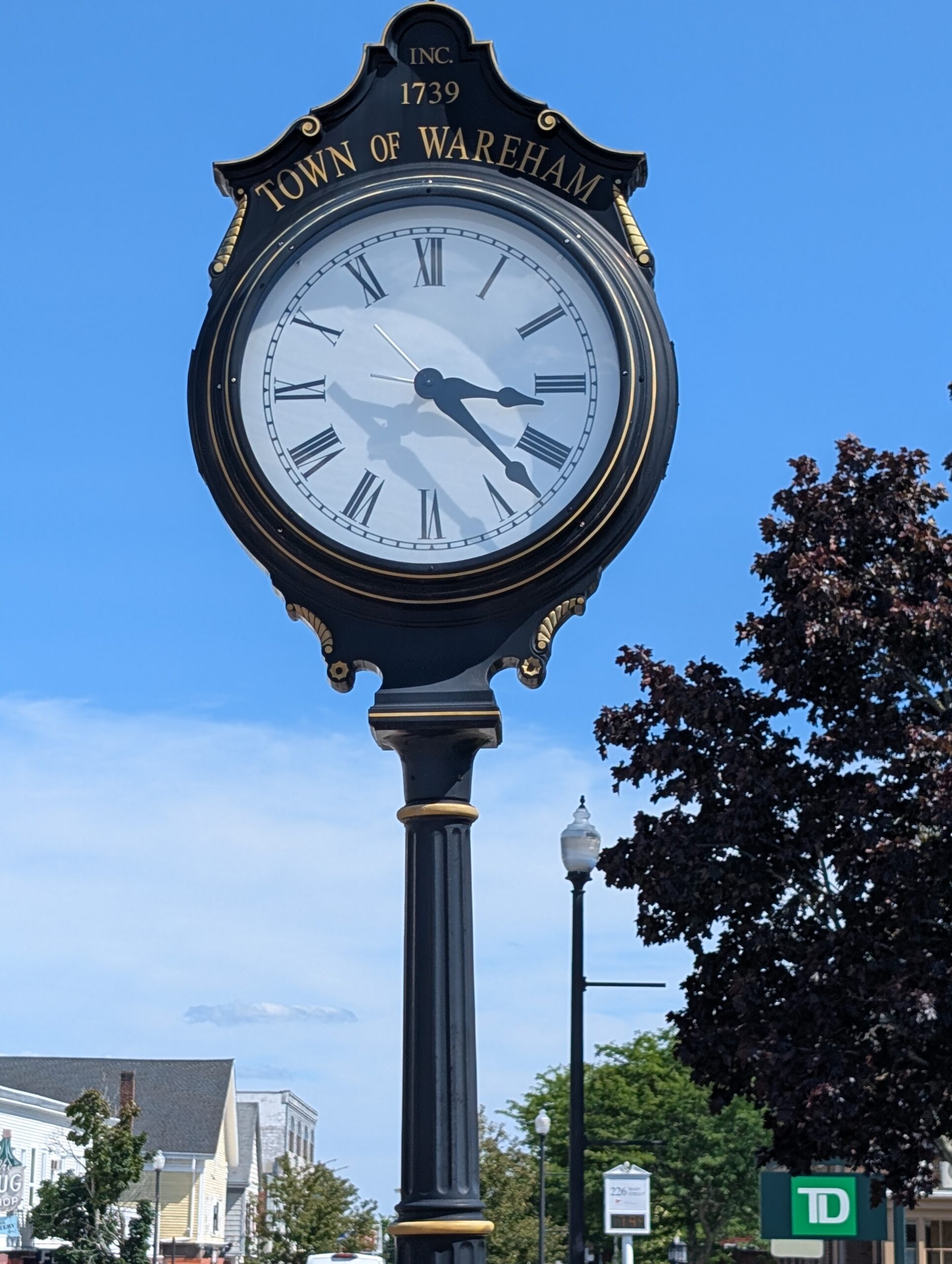
The second one is in the background, just to the bottom right of the clock’s pole. It’s in front of a bank building that is no longer occupied.

To adjust or set the time on the analog clock, someone has to get a ladder and manually adjust it. The contrasting colors make it easy to read from a distance. Other than for a few days around the Spring and Autumn time changes, it keeps good time.

To adjust or set the time on the digital requires the push of a button on a computer. On a sunny day, it’s hard to read; at night, it projects the time quite a distance. It can take weeks for the correct time to be on display after the Spring and Autumn time changes. Frequently, it’s off by several minutes; since the bank left town, it is off by hours. They are not synchronized because they aren’t kept (or neglected) by the same people.

Seeing two times at once irritates me more than it should. After all, I can check my phone if I really need the correct time; if I’m phone free, it means there’s no need for me to know the correct time. There’s just something jarring about it.

When I see these two clocks, when the asynchrony bothers my sense of order, I try to remind myself of some larger truths:

The sky will be blue or gray regardless of the Main Street clocks.

The trees offer shade and shelter no matter the time.

How I live my minutes, hours, days, and years can’t be measured or contained by any clock.
Signs on the Move

https://drive.google.com/file/d/1opYDbKOctmQBdbh3mPybbulDY2wUP4Ye/view?usp=sharing

The Pan-Mass Challenge brought its annual activity last weekend: thousands of cyclists and thousands of volunteers to help them as they ride from one side of Massachusetts to the other. Every year, I see the riders make the trip, part of the Dana Farber Cancer Institute’s fund and awareness raising. On their backs, the riders bear this sign every year: PMC. These are signs on the move.

During the rest of the year are the other signs, the permanent ones. These, too, are PMC. They mark the route for the riders and for those driving their cars along it. Be aware of the bicycles is the message for the two days of the annual challenge. Be aware of life’s fragility is the message for the other 363 days. Be aware. Look around. See.

I’m not posting a picture of the permanent signs – where’s the fun in that? But if you are ever in Massachusetts, between Worcester and the Cape, keep an eye out. They have a white image on a light blue background…And think of the thousands of people who devote their own time and resources to help others. A sign of the Kingdom?

To Whom?

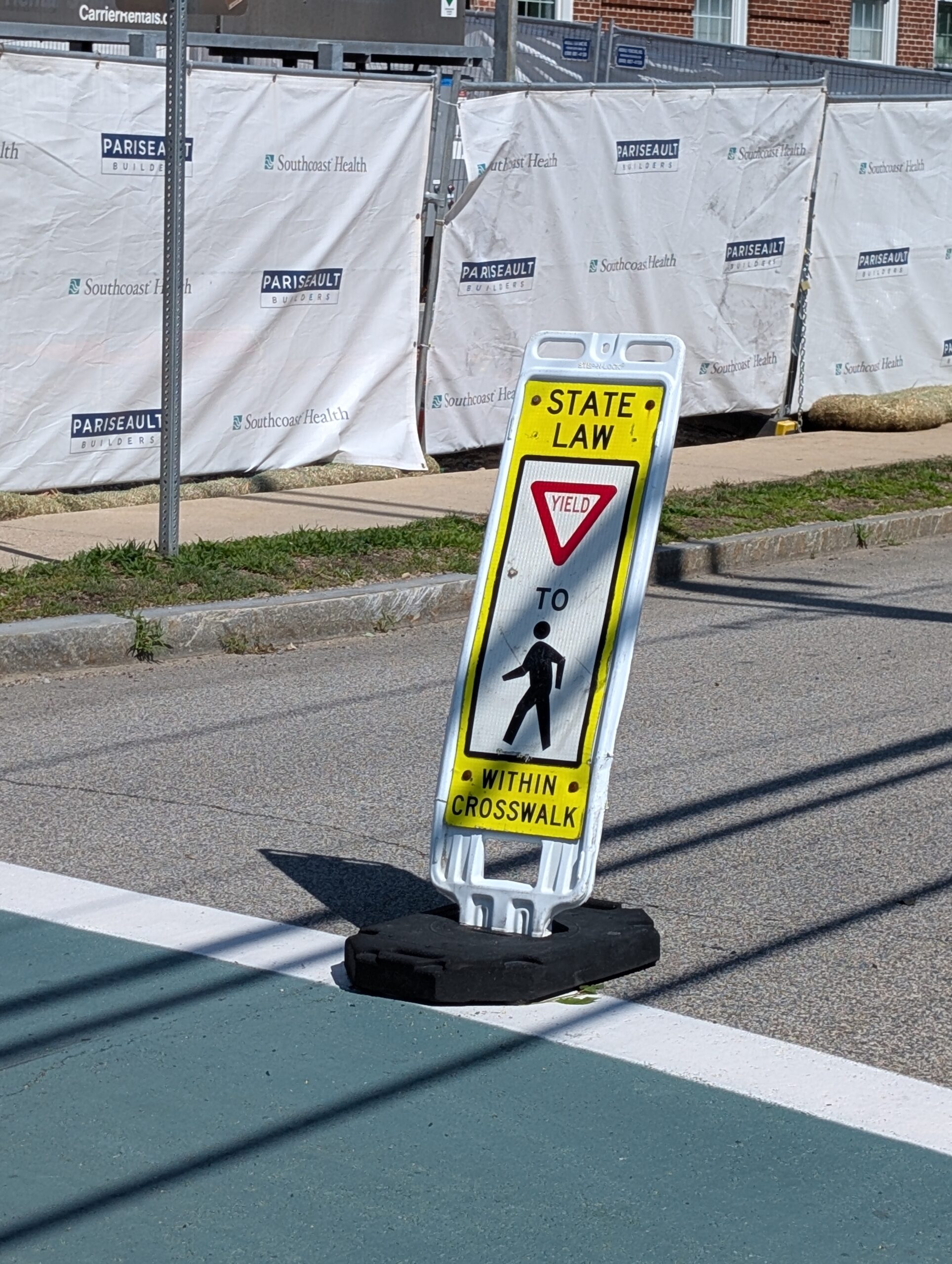
We yield to those in bigger vehicles when we merge into traffic. We yield to the opinions of the higher-ups at the workplace. We even yield the floor to the person running the meeting, allowing someone else to put limits on our time. The ones with more power and influence are the ones to whom we yield. There’s no big surprise here.

To the Pedestrians

But here is a different story. Here the drivers who own the road yield to the ones on foot, giving way for the smaller and more vulnerable. On this green strip between one side of the street and the other, the powerful pause to let the pedestrians pass.

There’s a deeper truth in this, this mandate to stop in our trajectories and defer to the lower and slower, the strangers we will never truly meet and may never set eyes on again. This is yielding not because someone else is more powerful and can make us do it, but because someone is more vulnerable and cannot make us do a damn thing. If we cannot let go of our own machinations long enough to stop and let someone cross the road, we have lost some precious part of humanity. But if we can, if we realize there’s a whole big world full of God’s beloved well beyond our own plans and desires, then every time we stop to let someone cross, if we look, we’ll catch a glimpse of heaven on earth. Perhaps the person we yield to is Jesus the stranger among us; perhaps angels wait on the side of the road to offer us a blessed chance to yield.

Perhaps it’s not only a stairway that goes to heaven, but a green crosswalk as well.

Seeing the Sign

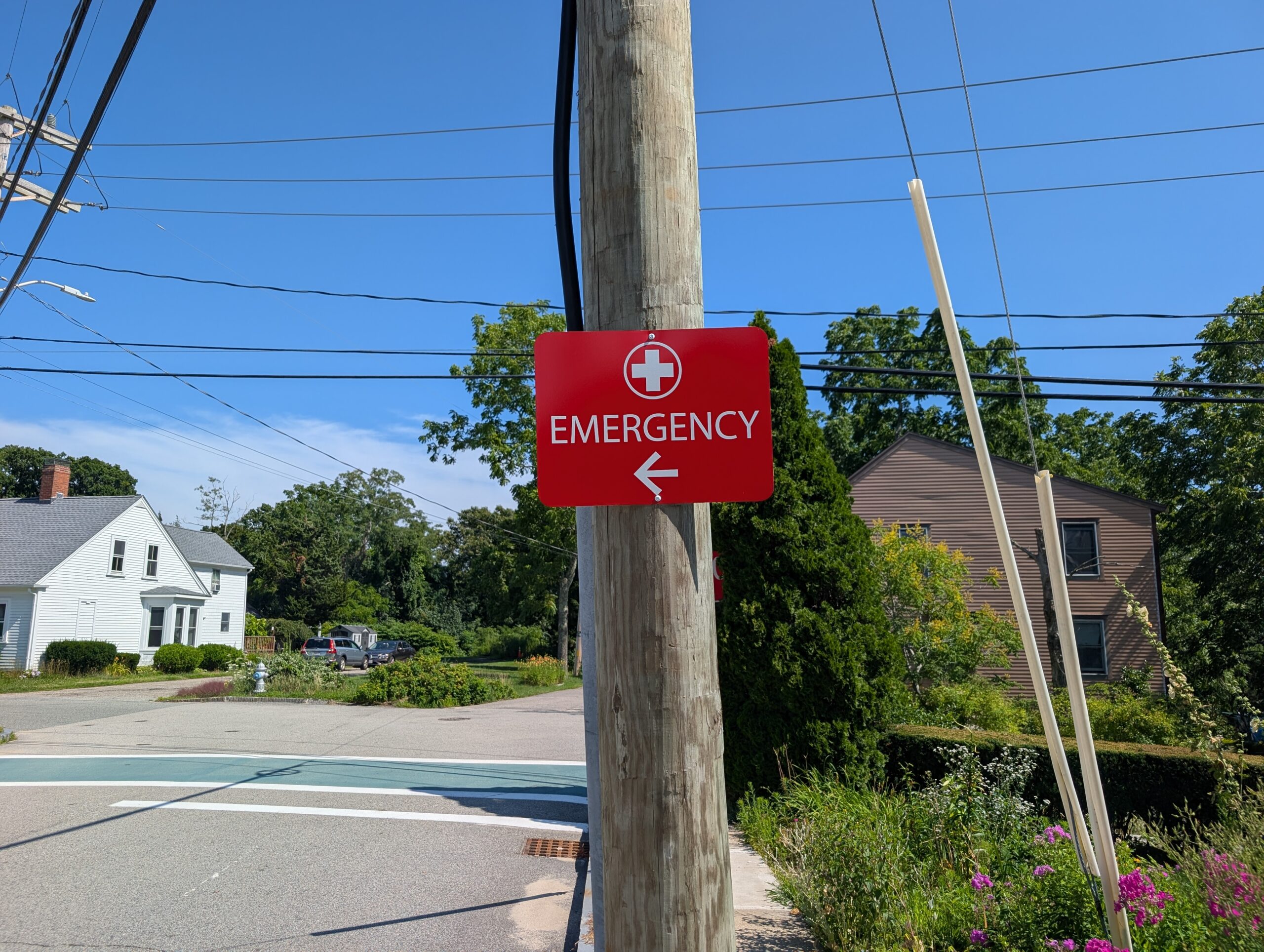
Hospital Sign

There are several more of these on the streets around Tobey Hospital than there were a few years back, mostly because renovations and expansions involved moving the Emergency room entrance – for walk-ins and for ambulances. While the ambulance drivers are well aware of all the changes over the years, people bringing themselves or relatives in aren’t. It’s not as if most people visit the ER on a regular basis, and the anxiety of needing medical attention makes it very easy to ignore the new entrance and to automatic-pilot it toward where it used to be.

Sign from a distance

This is understandable, but not helpful. Panic doesn’t help the ones in distress or those caring for them – it’s why ER staff remain calm and why certain friends and family members are better than others when an emergency occurs. It’s also why some are better than others at discerning whether the emergency is real or not – practicing triage.

In this ever evolving life, it’s easy to lose my bearings, to ignore changes and new patterns in favor of former conditions. It’s even easier to confuse what is a matter of concern and what is an emergency. Sometimes, my triage skills are wanting; sometimes, I make snap judgements based on prejudice or past experiences that really don’t apply to the situation at hand; sometimes, I forget what is necessary and what is merely important.

I’m using this sign as a touchstone, something that centers and grounds me in the present, something that reminds me to look around and base my actions on what is rather than what was or what I assume might be.

In this God-Self-Neighbor reality, this sign can keep me acting out of love rather than panic.

[This is one in a series, Seeing Signs. Click the words above for more information.]

Because of the Sign

Los Angeles

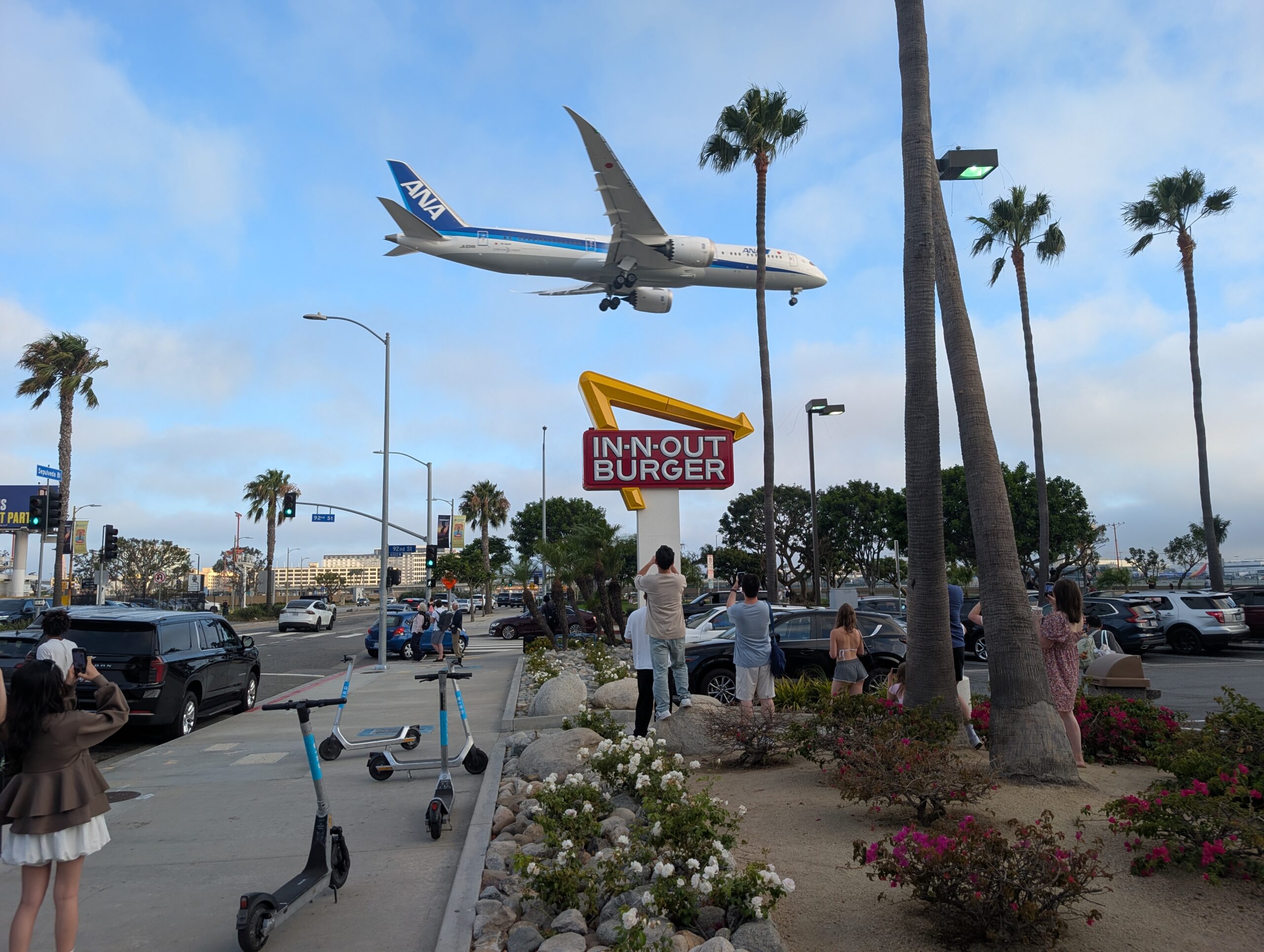
You can’t see it, but just behind the IN-N-OUT BURGER sign, is a small park. To get there, just cross the street on the crosswalk currently occupied by a blue car.

You can’t hear them, but children are laughing, running on the grass as the planes pass over.

You can’t smell the exhaust, but dozens of cars are idling on the road behind the sign, waiting to order burgers and shakes to go. You can’t smell it, but there’s a jet fuel scent on the brisk breeze blowing the palm leaves.

You can’t taste them, but thousands of burgers and fries are being enjoyed by hundreds of people just beyond and around this sign.

You can’t touch them, but this spot is filled with flawed, beautiful, unique people who will make this world a better place because they graced it – and a few whose broken spirits add to the world’s suffering.

Everything you can’t see, hear, smell, taste, or touch is here because of this sign and the planes that fly over it. It’s as good a place as any to ask in an everyday sense and in a profound sense: Why am I here?

Answer #1: To eat a burger and watch the planes

Answer #2:

If you feel up to it, send an answer…

Narrated

Markus Zusack’s The Book Thief is a great read for many reasons – it’s a different perspective on the horrors of war as lived out in World War II Germany, it’s centered on an orphan girl, and the street she lives on is named Heaven (Himmel). The most interesting part is the narrator who tells the tale: Death.

Death notices Liesel Meminger when she steals a copy of The Gravedigger’s Handbook (after her toddler brother died). What is a young girl going to do with a book like that? Then Death notices as Liesel steals more books throughout her childhood – one from a bonfire burning books outlawed by the Nazis, and several from the library of the mayor’s wife. Death notices Liesel because of the thefts, but then because of her life. Why steal books, and why steal books that aren’t the usual fare read by young girls?

I’m not advocating book thievery, but there’s something to grabbing onto anything that speaks of ages/places/people/professions/ideas beyond what daily life and expectations bring. In dark times, when fear robs people of their basic humanity, stealing a little of that back seems a daring and justified act. Death, largely uninterested in how humans live, noticed and found something worthwhile in it, something that revealed a life truly lived.

What marks the difference between existing for a number of years and truly living those years? Philosophy and religion have pondered and expounded on this question. God, self, neighbor. Love. Hope. Faith that things can be better – and working toward that better. Perhaps stealing a book or two…

Dad’s Life and Death Lessons

William Orpheus Smith died a couple months short of his seventy-fifth birthday. I was with him when he left this life behind, the man who gave me and my siblings life and a place and community we called home and family. He left behind a wife, four children, five grandchildren, a great-grandchild, a couple of dogs, and all his paperwork in order.

He was the son of an alcoholic who didn’t hand on that addiction. He made home a calm and safe place. He found the world an interesting place, taking advantage of his many trips abroad (U.S. Navy) to attend an opera, admire frescoes, and volunteer at the excavation of Pompeii.

He wasn’t good at making light conversation or expressing his emotions, except when matters of life and death were involved. He rarely shared his inner thoughts and held on to many of the prejudices that came with growing up in a poor New Hampshire town.

When the treatments stopped working and the hospice nurse came to discuss upcoming needs for walkers and pain management on that Friday morning, he turned from facing life to welcoming death. Eighty-seven hours later, he stopped breathing.

The life lesson I learned: hold fast to this extraordinary life.

The death lesson I learned: let life go when it’s time, and embrace the mystery beyond it.

Thanks, Dad.

April 24, 1981, Rick Springfield (Success Hasn’t Spoiled Me Yet)

Inertia

A busy couple of weeks and some dismal weather has interrupted my usual outdoor activity. I haven’t walked the half mile to the post office – or the half mile to the grocery and drug stores. I’ve caught up on some paperwork and correspondence, and read a couple of books. These are all good things, but all sedentary. Even though I value my outdoor time, I find that spending too much time parked on the couch leads to more time parked on the couch.The laws of physics apply to me: my body at rest tends to stay at rest.

Why is it that my life balance is so easily knocked over? It’s not as if I’m avoiding things I don’t like – I’m avoiding things I love because I’ve gotten used to not doing them. And it’s not just physical activity. If I skip my prayer time, my writing time, my connecting with friends and family time, it’s easy to drop them from my life pattern. It requires intention to start up again.

If I grow into my larger self, perhaps this will change. But, I haven’t achieved personal perfection yet. I’m still a work in progress, and it’s still work to return to a more balanced life. How about you?

Turbulence

Lack of sleep, an early boarding time, and ninety minutes of turbulence put a twinge in my lower back. A bumpy second flight, and the car trip home turned a twinge into real lower back pain: I Advil’ed up and avoided bending and lifting. Continued stretching, a heating pad, and an adjustment from a chiropractor had my back feeling better – not back to normal, but on its way.

It’s not the first time I’ve had lower back pain, and airplane turbulence isn’t the only reason for it. Stress, grief, exhaustion, and a lack of physical activity can lock my spine in a vise grip. Everything I usually do is affected until restorative sleep and gentle exercise loosen things up. I’m forced to put much of life on hold, and left to contemplate how my own actions and inactions had a major role in my sorry state. Then I get around to asking the big question: 

What needs to change?

I have no control over turbulence on a flight. I do have control over whatever internal turbulence is jolting my emotional life. When I forget this truth, a pain in the back shows up to remind me.

What’s On the Inside

Filler Stones

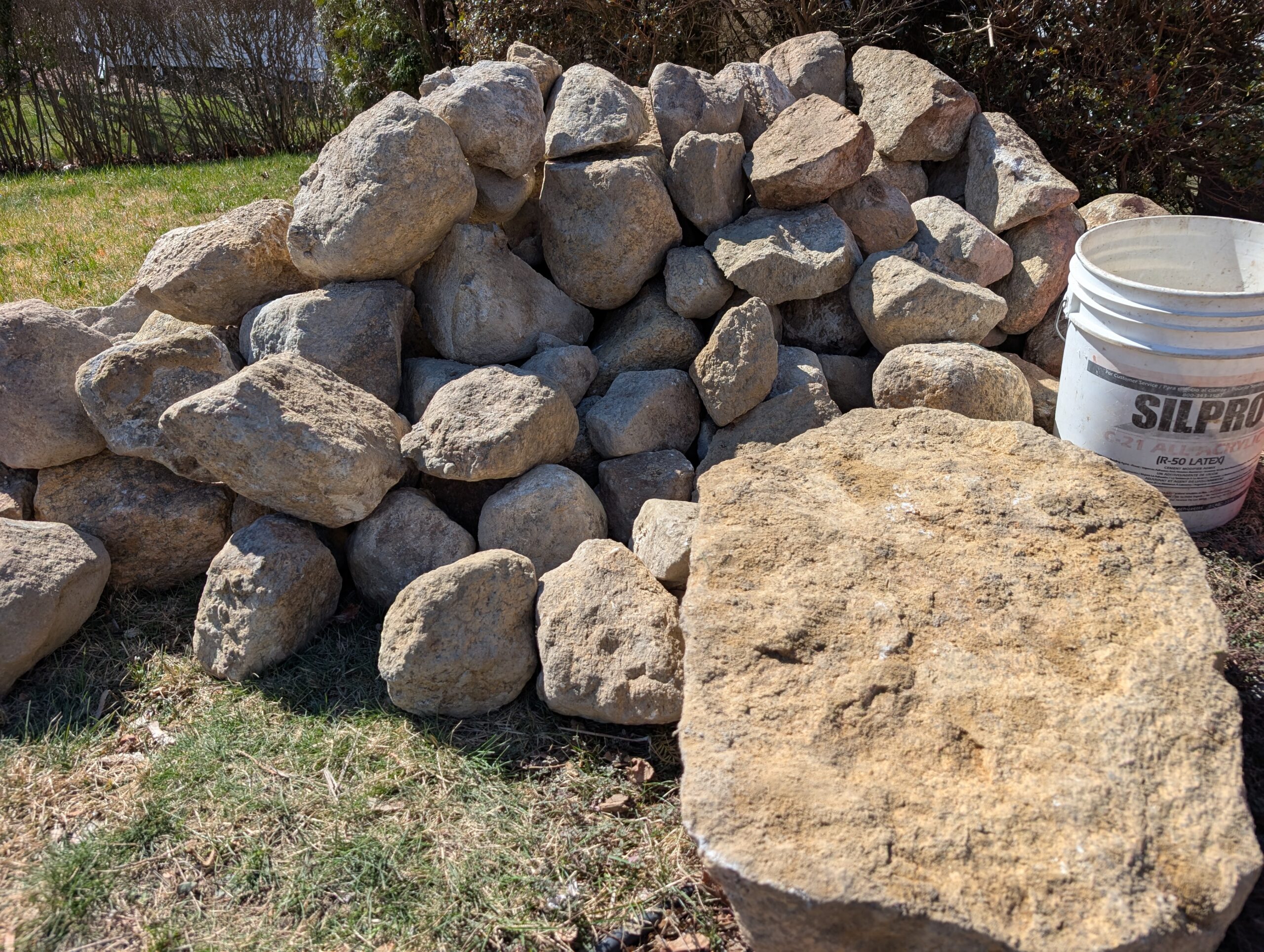
When my steps were built in the 1950’s, these rocks were used to fill the center. Over the decades, these rocks pushed on the brick stairs, weakening them until the mortar failed and they broke into pieces. The demise of the stairs began at their construction.

Looking at that huge pile of rocks makes me wonder: what’s inside of me that might be causing damage, pushing my inner life apart? Anger. Resentment. Disappointment. Jealousy. All these are inside me as surely as Joy, Gladness, Satisfaction, and Admiration are. Unlike the steps, I have a choice in what fills me, in what I retain inside myself.

Turns out, Mister Rogers was right: it’s what’s on the inside that counts – of me and of a set of stairs. Will I choose what is life-giving, or what will break me?

Tiny Mister Rogers