Category Archives: Meditation

SPACETIMESPACETIMESPACETIME

SP ti AC me E

I can recall a lot of my early life because I moved from place to place. The trash cans floating down the street after a flood were in Mississippi, so I was three years old (1967). Christmas with my grandparents was right before I turned four, during the weeks between Mississippi and Hawaii (also 1967). I was four when I used to see Mr. Yokoyama (1968) walk to work – that was in Hawaii. Stopping at a Texas rest stop to have a drink of water happened when I was barely five (Winter 1969)- it was during the drive across country on the move back to the mainland. Where I was and when I was are easier to determine because the wheres changed every year and a half.

sp TI ac ME e

But there were some years when too many moves in too short a time blur together. My sister and I were in three different school systems in three different states one year – and ended it in a return to one of them to finish the school term. I lived in four different places in two states between my first and second semesters in seminary. Few of the details from those times are solid enough to grasp, and all that remains is a cloudiness that hangs between two more distinct times and spaces.

StPiAmCeE

Space and time are intertwined, sometimes offering clarity and sometimes made more obscure because of that entanglement. Sometimes this melding anchors my life, sometimes it unmoors it. Either way, it reveals just how profound spacetime is in life.

There’s a lesson here, if I care to learn it. This life grows in particular space and time. The walls and roof that keep me warm, the chairs drawn up to the table for a meal, and the spot I occupy when I pray are where I seek God, and where God meets me. The ordinary time that finds me at work, making dinner, or gathering myself for prayer before anyone else is awake is when I encounter neighbor, self, and God. It makes it a lot easier to let go of the illusion that none of the particulars really matter; it also makes it a whole lot easier to love those particulars, imperfect and ultimately transitory as they may be…

spacetimespacetimespacetimespacetimespacetimespacetimespacetime

Timely

According to Isaac Newton, absolute time exists independently from anyone perceiving it, and it progresses at a constant pace throughout the universe.

According to Albert Einstein, time is not absolute, but intertwined with space and affected by gravity and speed (he also believed that the separation of past, present, and future was a “stubbornly persistent illusion”).

Stephen Hawking held that time began at the Big Bang, along with everything else.

The arrow of time moves from the past toward the future. There is no reversing of time’s arrow.

In my everyday life, time behaves as Newton’s independent dimension. It marches on, regardless of what’s going on in my life. I age a year at the same rate, whether I’m twenty going on twenty-one or eighty-four going on eighty-five. The clocks keep ticking and I move from cradle to grave.

But at the extremes – subatomic or cosmically large – time gets wonky. It’s so married to space that it becomes one half of a compound name: spacetime (space/time, space-time, you get the drift).

But scientists aren’t the only ones vexed by time. Philosophers and theologians were dealing with this headache long before modernity: is time an internal sense of duration, or an ordered relation of events? Is the time I experience, which isn’t quite so orderly or constant [sitting in traffic for 20 minutes feels a lot longer than watching a 45ish minute episode of Doctor Who (Okay, the old ones were 25 minutes, but you get the Time And Relative Dimensions In Space drift)], as real as the time that passes in orderly minutes and hours? How does God fit into time, stand outside of time, create time, enter time, redeem time, sustain time? What about past, present, and future – are they real, or something that helps me keep what I’ve done, what I’m doing, and what I might do in some kind of order? Yikes!

But if I take a deep breath, then really consider time, something emerges out of all this talk – something as profound as it is simple: my time is limited. Whether time exists in creation or outside it really doesn’t affect the reality of my own personal expiration date. My moments pass and cannot be regained. Soon enough, I’ll return to the dust from which I was made.

A lot of things I might consider important drop away when I accept and embrace the limited time I have on this earth. Letting go of jealousy, sarcasm, and one-upmanship becomes easier. Loving what does count – love, kindness, joy, others – just might get a little easier, too.

My favorite Grateful Dead song, melodic and wise…

Added Dimension

Plane: A geometric plane is a flat, two dimensional surface that extends infinitely in all directions, having length and width but no depth. Planes are made from three points that are not on the same line (non-collinear). Picture an endless piece of paper…

Picture life as a piece of paper. What do we do with this life, this piece of paper? Do we start with a blank sheet or is something of who we are already written upon it? Are we genetically predetermined to turn out a specific way, or are we shaped by the external forces that we experience? Or is it a combination of the two?

Philosophers, theologians, and scientists have pondered, debated, and fought over such questions, creating theories and intricate systems to support their particular answers. And those are entertaining and important (unless the arguments turn ugly and maim or claim lives – which happens with alarming frequency), as long as they are not mistaken for the life they seek to describe, define, and delineate. Because life is not a two dimensional plane, no matter the length or width of the treatises that have been written throughout history.

Picture life, and the years given us, as a piece of paper that is folded, shaped, gaining depth. Moved by the Spirit, infused with the Image of God from its inception, life becomes an expression of love and beauty. What shape will the folds of your life take, what holiness will be revealed?

The paper that is your life isn’t meant to be a two dimensional plane. It is a deep and holy origami.

Point of Reference

Let’s begin with a point. Add a second point and we can connect them with a line. Add a third that doesn’t sit on the line and we’ll end up with a triangle when we connect them. Point, line, plane. Non-dimensional, one dimensional, two dimensional. These ideas are the foundation of geometry a la Euclid. There’s really no proof that a point, a line, and a plane exist, but assuming that they do makes all kinds of things possible – and makes it a lot easier to frame out a door, hang a picture, and build a skyscraper.

So what does this have to do with Lent, a time of letting go of what doesn’t matter and loving what does? What is the point, the line, and the plane – the foundation – in all this? Here are the three my faith life assumes:

Point: God is the source of all that is (seen and unseen)

Line: Jesus of Nazareth is God-With-Us

Plane: We are neither God nor Jesus, but we are related to both

Point, line, plane: God, Jesus, Us

And when I note the difference between you and me, when we become neighbors in this space, life goes from a two-dimensional idea to a three dimensional grace-filled reality.

Path, and perspective

[Note: Euclid was a mathematician in Ancient Greece, circa 300b.c. The foundations of geometry can be found in his Elements, as well as in other works.

Also Note: Euclidean geometry isn’t the only geometry. For space/time issues, Euclid and his assumptions give way to other foundations…]

Town Hall

Town Hall. It’s where residents go to pay taxes, register a dog, or talk with the town manager. But every Saturday, it becomes the backdrop for something with far-reaching intent and effect. On that empty sidewalk, hundreds gather for an hour to protest the inhumane policies enacted and carried out by federal agencies intent on frightening the citizens of this democracy into silence. Illegal searches and detentions; masked agents carrying weapons into peaceful streets and communities; smear campaigns against victims who died at the hands of undertrained and overzealous ICE agents. People make signs objecting to all of it. All ages from all neighborhoods gather and stand together.

It may not seem like a very effective way to stop the violations and the violence happening just down the street and throughout the country. But just such tactics have worked wonders in the past – in occupied India as well as in our own country a few decades back. Shedding light on actions that harm and holding the government and individual people accountable for their actions work far better in the long run than returning violence for violence. For true change that lasts, a better and more peaceful world is a goal achieved by better and more peaceful means.

So hold a sign, call a representative, attend a vigil. It may seem like it’s a waste of time, or at best a silly symbolic action. But it can be transformed into so much more…

But God chose what is foolish in the world to shame the wise; God chose what is weak in the world to shame the strong. ICor. 1:27, NRSV

Caregiving Ain’t Easy

Daily Readings: Psalm 146:5-10; Ruth 4:13-17; 2 Peter 3:11-18

In 2 Peter 3:11-18, Peter is tasking Jesus’ followers with a few points to remain faithful.  He first describes the condition of the world and the coming destruction.  In verse 14 he says while you are waiting for these things to happen, make every effort to be found living peaceful lives that are pure and blameless in his sight.  And remember, our Lord’s patience gives people time to be saved.  Concluding with verse 18, rather you must grow in the grace and knowledge of our Lord and Savior Jesus Christ.  All glory to him, both now and forever!  Amen.
This verse reminds me of the words at the beginning of the gospels (also describing the last days before Jesus comes) “Sin will be rampant everywhere, and the love of many will grow cold.  But the one who endures to the end will be saved.” Matthew 24:12-13   

There may be something we are supposed to be striving for these days, but it sure doesn’t look like it should be power, money, or status. It looks like patience and endurance smothered in love.   And to me it doesn’t mean stockpiling enough rice and beans to get through it.  If this is part of enduring for you, hopefully you’ll share a dish later on when I need it.  

I am among the generation of baby boomers. God has given me the task of caring for my ailing husband.  He is almost 80, and has a list of disabilities and illnesses a mile long related to Vietnam and his as-long-as-possible adult life of extreme motocross racing. But we endeavor to persevere together, and some days are better than others.

Recently we were in a doctor’s waiting room full of women who were caregivers for their husbands. I noticed two of them. One man in a wheelchair, head in hands and looking tired and depressed was being hovered over by his wife as she tried to comfort him and meet his needs.  His response was rude remarks of impatience and despair.   Her face was strained and sad. The other wife came and sat beside me, making the statement “I am sick of this. I am out of here. I am not wasting the rest of my life taking care of him.  I’ve got a life to live.”  I didn’t say much back to her, I wasn’t sure how to respond. But I understood. I felt great empathy for these ladies.

I had been considering starting a caregiver support group for wives in my small town. It became plain to me this group would be needed and helpful. So, I was off and running. I contacted several women, all of whom I barely knew but had witnessed their daily lives from afar.  I organized our first meeting and gave them all kinds of data and statistics to them about why the support group could be helpful. Every woman jumped at the chance to be a member.

The husbands of the wives in our group have varied conditions: Parkinson’s with hallucinations, extreme heart failure or heart conditions, dementia and memory issues, and failing mobility.   As wives, we are all dealing with fear and anxiety.  Each wife has different challenges to navigate, but we all are trying to “do it right” and we all are facing the impending departure of our husbands. 

We laugh about the funny things when we can. One husband listens to full volume television programs that are only spoken in Chinese.  Does he speak Chinese? No. One wife came home to find all of the doors to her kitchen cupboards removed.  Another’s husband accuses her of cheating and having affairs with other men when she has to leave him for a bit.   We answer the same questions repeatedly. We experience the men’s frustration with their own declining abilities, depression and their need to remain in control. We have taken on tasks and responsibilities that were once handled by the husbands. In every case the wives pretty much now shoulder all of the responsibilities. Yes, there are assisted living opportunities, but none of our group has the means to make that choice.   And most of us do not have family near to help.

We wonder – where am I in all of this? We feel like we are losing and ignoring ourselves and our needs. And we all have our own physical limitations, health issues and emotional stress to manage. Of course, we all are enduring to the end. And while we are waiting, we are making every effort to live peaceful lives. 

And that ain’t easy.  We are in a constant whirlwind of appointments, medication schedules, bathing fights, dressing and feeding them, finding things to keep them motivated and content, financial, home and vehicle maintenance. All as we listen to repetitive stories and questions all day long. In between tasks, we are seeking to grow in the grace and knowledge of our Savior. We know love is the only thing that can endure.  Love never fails, never grows tired of doing good. But the ability and desire to endure in love only comes through the tender support Jesus offers us. He has promised to be with us until the end.  Even to your old age and gray hairs I am he, I am he who will sustain you.  I have made you and I will carry you; I will sustain you and I will rescue you.  Isaiah 46:4 NLT

However, Jesus could use your help.

As this year winds down with all of the celebrations and family encounters, you might take special notice of a caregiver. Until you’ve done it, you don’t understand. But you might offer some kind of acknowledgement. If you have experienced this loving task, share tips and resources, or just sit quietly with a caregiver over a cup of tea and listen. Better yet, think of what you needed at that time. Stock their pantries with rice and beans, and maybe their table with a big bouquet of flowers.

It could mean the world to a caregiver to be acknowledged and genuinely heard. Help them accept that being a caregiver for someone is an act of courage and strength, not a burden of obligation. Maybe let Jesus use your arms to wrap them in a hug.      

Offered by Linda Benningfield-Hashman, in whom God delights.

Evangelism

Daily Readings: Psalm 72:1-7; Isaiah 40:1-11; John 1:19-28

“Comfort, oh comfort my people, says you God. Speak softly and tenderly to Jerusalem, but also make it very clear that she has served her sentence, that her sin is taken care of – forgiven! She’s been punished enough and more than enough, and now it’s over and done with.”

Thunder in the desert! “Prepare for God’s arrival! Make the road straight and smooth, a highway fit for our God. Fill in the valleys, level off the hills, smooth out the ruts, clear out the rocks. Then God’s bright glory will shine and everyone will see it. Yes. Just as God has said.

“These people are nothing but grass, their love fragile as wildflowers. The grass withers, the wildflowers fade, if God so much as puffs on them. Aren’t these people just so much grass? True, the grass withers and the wildflowers fade, but our God’s Word stands firm and forever.”

Climb a high mountain, Zion. You’re the preacher of good news. Raise your voice. Make it good and loud, Jerusalem. You’re the preacher of good news. Speak loud and clear. Don’t be timid! Tell the cities of Judah, “Look! Your God!” Look at him! God, the Master, comes in power, ready to go into action.

He is going to pay back his enemies and reward those who have loved him. Like a shepherd, he will care for his flock, gathering the lambs in his arms, hugging them as he carries them, leading the nursing ewes to good pasture. The Message, Isaiah 40:1-11

At our weekly mid-week Eucharist, we recently explored evangelism during the homily. This does not seem to be a favorite word among our church members (even though our patron is St. John, the Evangelist). For me, being reared in the south where “Bible thumpers” were plentiful and most of the radio options were either country music or preaching, I was particularly wary of these “types”. I even looked down at them as unsophisticated and shallow. If they only knew the intricacies of our faith, the deep underpinnings of theological study and thought…

Well, Jesus keeps it really simple, does he not? Maybe we don’t have to go shouting  up on a high mountain to bring the good news to others but share I must. Go into all the nations proclaiming the good news was the last directive Jesus gave us in the Gospels—what about this do we not get? If you cringe at the thought of shouting from the mountain tops, as most of us would, I imagine, there are good options. 

Attending a prayer service at our cathedral church in Boston years ago, I read in the service bulletin that evangelism is being with someone in such a way that they know you’ve been with Jesus. That could work for most, I think. At any rate, I’m going to do more of that this Advent.

Offered by Bill Albritton, in whom God delights.

Responsible

Daily Readings: Psalm 124; Genesis 9:1-17; Hebrews 11:32-40

God blessed Noah and his sons and said to them, “Be fruitful and multiply and fill the earth. The fear and dread of you shall rest on every animal of the earth and on every bird of the air, on everything that creeps on the ground and on all the fish of the sea; into your hand they are delivered. Genesis 9:1-2, NRSV

God blessed Noah and his sons: He said, “Prosper! Reproduce! Fill the Earth! Every living creature – birds, animals, fish – will fall under your spell and be afraid of you. You’re responsible for them. Genesis 9:1-3a, The Message

The living things we claim also claim us. We are responsible for the animals in our lives. When we bring home that new puppy or kitten, when we buy the tank and the goldfish, we take on the responsibility to feed them, keep them healthy, and offer them our love and attention. Because they depend on us, we must be dependable. It takes time and resources, and a lot of affection, to be responsible.

Franklin

The same holds true for the animals who feed and clothe us. We are responsible for providing them with good lives, with adequate food, shelter, and space to live well before they end up on our tables. This, too, costs – either a price tag at the grocery store or the effort and resources to raise them ourselves.

The animals that nourish us – emotionally or physically – are connected to who we are in a spiritual sense (As are the plants and other humans). We are part of a great, sacred whole. When we act responsibly, we bless creation. When we do not, we harm not only the animals we treat poorly: we harm creation and our own lives. Let’s not do that.

Ebbtide

Taking Turns

‘Tis the gift to be simple, ’tis the gift to be free,

’tis the gift to come down where we ought to be

and when we find ourselves in the place just right

’twill be in the valley of love and delight.

When true simplicity gained

to bow and to bend we shan’t be ashamed

to turn, turn will be our delight

’til be turning, turning we come round right.

Simple Gifts, traditional Shaker hymn

Shakers didn’t just sing: they danced. Turning, turning to the music until everyone comes round right. It’s one of the things we can take from this line.

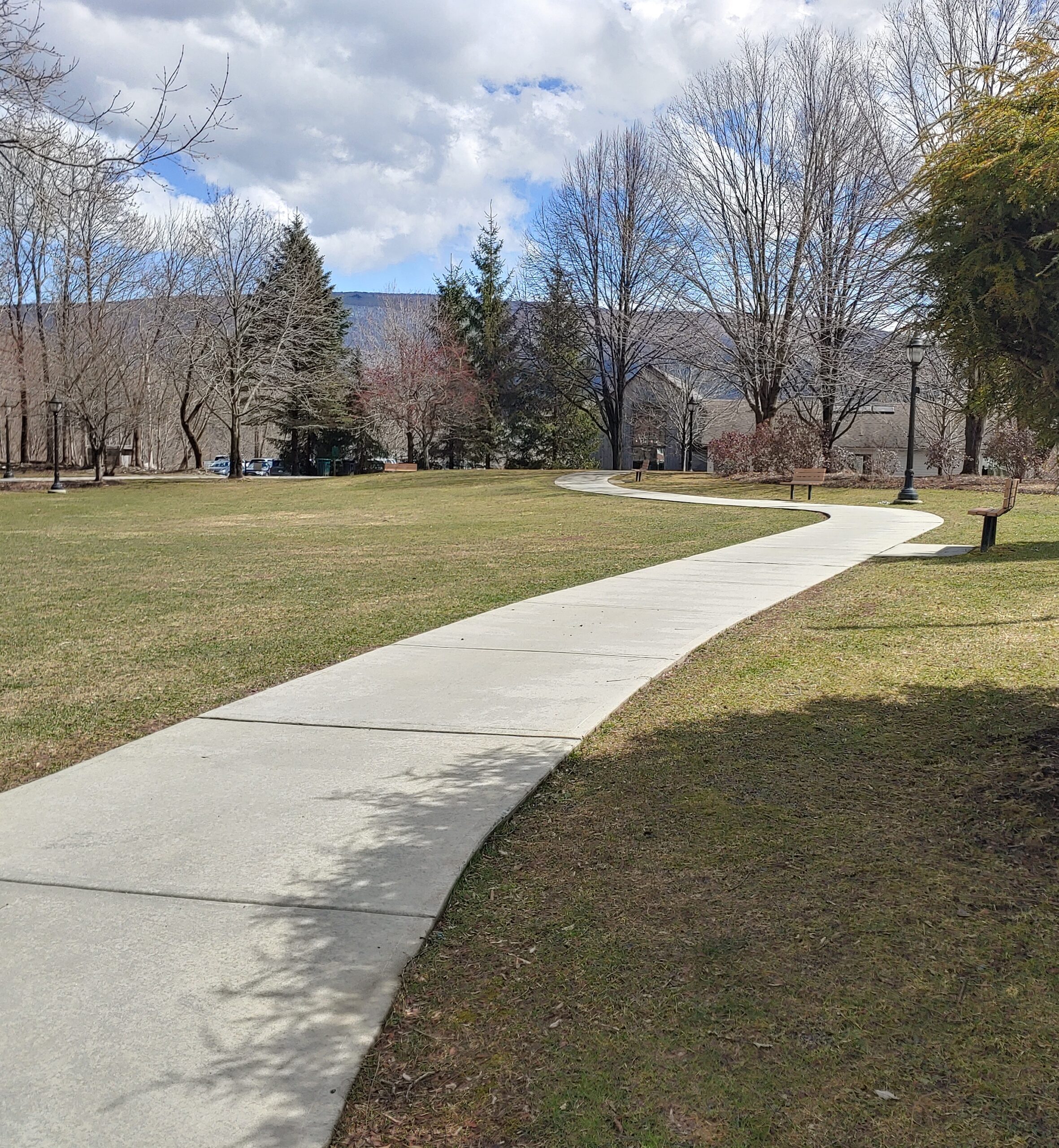
Turning, turning to adapt and adjust to all of life’s changes is part of growing up. None of us can anticipate all events and circumstances that shape our life’s path, so we turn with the bends in road. It’s another thing we can take from this line.

Here’s a third…

No one gets lost in a labyrinth because there’s only one path. It meanders, so we turn, turn, turn as we continue to walk. The turns take us in all directions, but lead to one place only: the center. The labyrinth is a symbol and walking it an act of the spirit. It reminds us that all of life’s turns lead us to one destination: the heart of God.

So turn, turn without fear. You are on the sacred path, never lost to God, always going home.

Labyrinth

Namaste

I bow to you.

The divine light in me bows to the divine light in you.

Namaste.

To bow and to bend isn’t to grovel. It isn’t a debasing action – even when the one receiving the bowing might mistake it for one. It is to honor the other as equal to one’s own self – and to accept the worthiness of self in so doing.

Once we take the ego element out of it, when we let go of thinking our worthiness can only be gained to the loss of another’s worthiness, bowing and bending aren’t so hard to do.

Note well: don’t ask others to bow and bend before you unless you are willing to bow and bend in return...