Category Archives: Biblical Reflection

Hope

Readings: Malachi 3:1-4 or Baruch 5:1-9; Luke 1:68-79; Philippians 1:3-11; Luke 3:1-6

Today in churches throughout the world we light the second purple candle on the Advent wreath—the candle of HOPE. Hope has two meanings in the Bible: tiqvah—anticipation, a sense of eagerly awaiting something; and eipis—confident expectation based on certitude. I love Jim Wallis’ definition of hope as believing in spite of the evidence and then watching the evidence change. 

In the Hebrew scriptures we read of the certain hope of the coming of the Messiah and the restoration of Jerusalem. One of the appointed readings for today is taken from the Apocrypha—the book of Baruch, where in stirring prose Jerusalem is told to look to the east and see the joy that is coming from God. Look, your children are coming, whom you sent away…rejoicing in the glory of God (4:36,37) and continues into today’s reading: “Take off the garment of your sorrow and affliction, O Jerusalem, and put on forever the beauty of the glory from God.(5:1)

In the gospel reading for today we have the magnificent “Benedictus”—” The Song of Zechariah “ (Luke 1:68-79):

“Blessed be the Lord God of Israel, for he has looked favorably on his people and redeemed them.

He has raised up a mighty savior for us in the house of his servant David,

as he spoke through the mouth of his holy prophets from of old.”

The fulfillment of one thousand years of hoping is made manifest this day in the temple—giving certainty to our anticipation of the coming of the Word among us, as if to say—”Believe! The evidence is changing!”

Come, Lord Jesus, Come.

Offered by Bill Albritton, teacher and seeker of the Christ Child.

Where Did I Come From?

Readings: Psalm 72:1-7, 18-19; Isaiah 30:19-26; Acts 13:16-25

“I have found David, son of Jesse, to be a man after my heart, who will carry out all my wishes.” Of this man’s posterity God has brought to Israel a Savior, Jesus, as he promised; before his coming John had already proclaimed a baptism of repentance to all the people of Israel. 

Acts 13:22-24

Candles lit, prayers said, Bibles read…the Christian community of faith approaches the manger through Advent practices that keep us on the dusty road to Bethlehem. Trying our best to walk in faith through a world that celebrates Christmas as a time to acquire new clothes and an excuse to eat and drink, some of us focus on keeping Christ in Christmas rather than on something altogether obvious but often overlooked: Jesus of Nazareth wasn’t Christian. God With Us was born into and fostered by an older faith – a faith he followed devoutly as a rabbi.

With every psalm I read, with the words of the prophets in my heart, in every New Testament account of Jesus, I inherit the blessing of a faith that gave birth to my own spiritual home. The Christian tradition didn’t spring fully grown from nowhere: it was birthed by the Jewish faith as surely as Jesus was born to Mary and Joseph.

May I remember where my faith came from this Advent, and honor those who keep it.

Come, Lord Jesus, Come.

Power

Readings: Psalm 72:1-7, 18-19; Isaiah 4:2-6; Acts 1:12-17, 21-26

May he judge your people with righteousness, and your poor with justice…

May he be like rain that falls on mown grass, like showers that water the earth. Ps. 72: 2, 6

“Let another take his position of overseer.” Acts 1: 20b

Power corrupts if it is attained and exercised for its own sake. Power also exhausts the one who wields it if he or she is not grounded in something far more gracious than personal talent, drive, and energy. It’s why communities of faith pray for those who hold the reins of government – not so much a statement of agreement for a particular agenda, but a recognition that without a connection to something holy it will end in damage.

Today’s psalm reminds us that leaders can choose to rule for the benefit of those who will never have enough money to help them get re-elected, whose influence cannot open political doors. Ruling for the good of those who most need help rather than those who can offer material reward is a road less travelled, but it will make all the difference. The Acts reading implies that the best leader might not be the one who wants it the most: it might be someone whose constancy and service is evident to others.

If I judge leaders by a higher and holier standard of serving the least and last, I must also judge myself by that higher and holier standard. Am I serving the needy in the work I do, or am I serving only those who can reward me in material goods or influence? In the end, the blessing I offer others without seeking reward brings peace. In the end, the blessing I withhold because it doesn’t line my pockets or promote my welfare will shrink my soul in proportion to the harm I do to others.

Come, Lord Jesus, Come.

Steadfast

Readings: Psalm 124; Isaiah 54:1-10; Matthew 24:23-35

“For the mountains may depart and the hills be removed,

but my steadfast love shall not depart from you

and my covenant of peace shall not be removed,”

Says the Lord, who has compassion on you. Isaiah 54:10, NRSV

My Dear Child,

I love you no matter what.

Mount Washington will wear away, but my love never will.

The Atlantic may sweep Beacon Hill out to sea, but my peace will hold you fast.

There is nothing you can do that could make me stop loving you,

No words you can say will make me wish anything but peace for you.

I’m in this forever. XXOO ABBA

Come, Lord Jesus, Come.

The Break

Readings: Psalm 124; Genesis 9:1-17; Hebrews 11:32-40

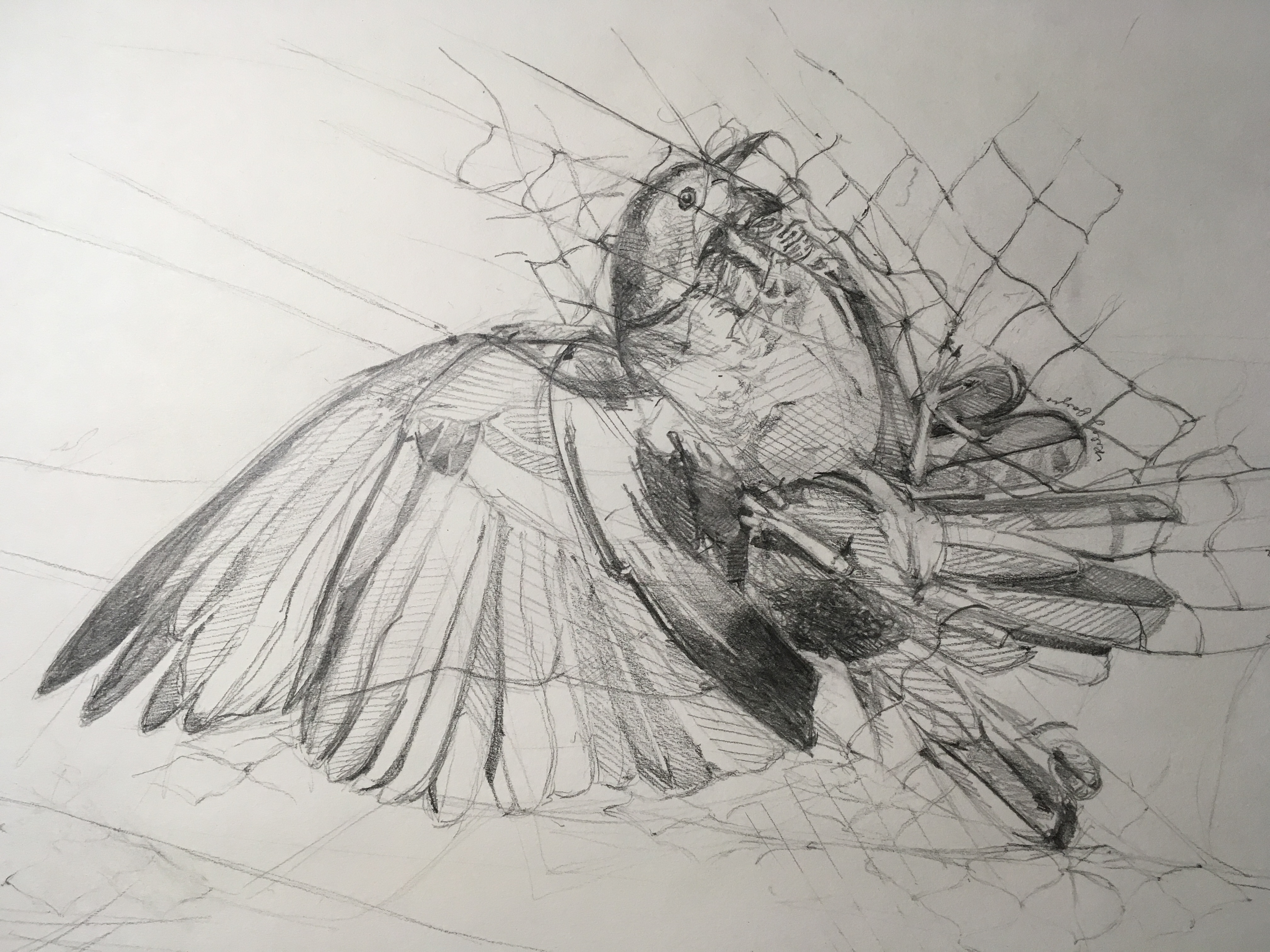
The Break

img_2875

If it had not been the Lord who was on our side – let Israel now say-

If it had not been for the Lord who was on our side,

when our enemies attacked us,

then they would have swallowed us up alive,

when their anger was kindled against us;

then the flood would have swept us away,

the torrent would have gone over us;

then over us would have gone the raging waters.

Blessed be the Lord,

who has not given us

as prey to their teeth.

We have escaped like a bird 

from the snare of the fowlers;

the snare is broken,

and we have escaped.

 Our help is in the name of the Lord,

who made heaven and earth.

Come, Lord Jesus, Come

Offered by Riley Anderson, artist, college learner, seeker of the Christ Child.

Birth…and pain, and death

Readings: Psalm 124; Genesis 8:1-19; Romans 6:1-11

What then do we say? Should we continue in sin in order that grace may abound? By no means! How can we who died to sin go on living in it? Do you not know that all of us who have been baptized into Christ Jesus were baptized into his death? Therefore we have been buried with him by baptism into death, so that, just as Christ was raised from the dead by the glory of the Father, so we too might walk in newness of life. For if we have been united with him in a death like his, we will certainly be united with him in a resurrection like his. We know that our old self was crucified with him so that the body of sin might be destroyed, and we might no longer be enslaved to sin. For whoever has died is freed from sin. But if we have died with Christ, we believe that we will also live with him. We know that Christ, being raised from the dead, will never die again; death no longer has dominion over him. The death he died, he died to sin, once for all; but the life he lives, he lives to God. So you also must consider yourselves dead to sin and alive to God in Christ Jesus.   Romans 6:1-11

I admit it seems odd: all this talk about sin and death and even resurrection when we are supposed to be thinking about a birth of a baby in a stable, surrounded by shepherds and magi and celebrated by a heavenly host. It might cause you to wonder what was going on in the heads of those who chose this passage to be read during Advent. What kind of malcontents insist on putting a damper on this holiday season, when the new regime has promised us that even store clerks will be able to say “Merry Christmas” once again? But I think they knew what they were doing and what they were doing is particularly important for us in these days. It’s not the baby that should be our focus in these days before Christmas: it’s the incarnation. And that’s why death and sin and resurrection are all important to keep in mind in this season when we are plagued by persistent pulls toward petty piety.

I have often thought I would like to play a video of a real birth at a Christmas Eve service. It would help us ground the birth of Jesus in the often harsh realities of the real world. Mary may well have pondered many things in her heart that night, but it was only after she had endured real pain and worry and fear. And that is what incarnation is about. It is about God coming to the pain of our lives. It is about God becoming part of a world in which worry and fear are never far from us. It is to suffer and to die. But as this passage from Romans reminds us, it is also to be raised from the dead and to walk in newness of life. The truth is we can truly experience that newness of life only after we know the reality of pain and suffering and fear. This Advent, let’s understand that this is at least part of what preparing for the birth of Christ is all about. It is only through the pain of childbirth that new life happens. So, let’s acknowledge the concerns and worries we have for ourselves, for those we love, for our world that are part of living in these days. We don’t need to wallow in them, but neither should we ignore them, thinking that somehow they undercut the merriness of Christmas. They are, after all, the reason we need a savior. The incarnation reminds us that God is with us in our all our concerns and worries and suffering, so it is possible to face them. And God leads us through all this to new life. This is our faith. This is our incarnation/resurrection hope.

Come, Lord Jesus, Come.

Offered by Jeff Jones, author, teacher, seeker of the Christ Child.
Waiting Time

Readings: Jeremiah 33:14-16; Psalm 25:1-10; I Thessalonians 3:9-13; Luke 21:25-36

Look at the fig tree and all the trees. As soon as they sprout leaves you can see for yourselves and know that summer is near.

One thing Jesus did so well was to speak in the language of regular people. He talked about farming and shepherding and the natural world, stuff that everyone understood. He pointed to the turn of the seasons and the food coming from the land.

As a farmer, I, too, appreciate Jesus’ words about seeing things coming into season. I look for the first signs of potatoes sprouting up out of the cold ground in the spring. And I long for the blackberries to finally ripen into bursts of sweetness. The kale tastes that much better after the first frost.

It’s a little harder for us now to appreciate Jesus’ agrarian words. Asparagus no longer just appears in the spring when it is growing outside, but all year round. Crisp apples no longer just show up with the crisp fall air.  But we do still see the leaves bud out on the trees. The leaves fall in the autumn and we are reminded of the turning of the seasons and the pattern of the year.

As our natural world cycles so, too, Advent comes to us again, reminding us of the season of waiting, of anticipation. We may no longer have to wait for the season of asparagus or apples, but we do still wait for Jesus, for the Incarnation, for the birth of joy and hope into our broken world.

This year, amidst a fractured world, torn by ugly elections, ongoing war in the Middle East, and moving through the inevitable shortened days of our northern hemisphere, we once again wait. We wait for hope. We wait for light to return. We wait for a Savior who will come and show us again and again what it means to love as God loves and to work for the kingdom of God. We wait. And we shall know the kingdom of God is near.

Come, Lord Jesus, Come.

Offered by Karen Gale, farmer, minister, seeker of the Christ Child.
A Worded Life

Rain fell that night, a fine, whispering rain…

…As Mo had said, writing stories is a kind of magic, too.

[Funke, Cornelia; Inkheart (New York: Scholastic Inc), 2003, pp. 1, 534]

Meggie’s begins with a stranger’s visit on a rainy night. It ends with Meggie’s decision to create new worlds with paper and ink, writing places for readers to visit. In between these lines, storytellers read villains and fairies out of their book worlds into ours through the magic of their voices. But there’s a catch: for everything that comes out of a book, something or someone leaves behind our world to enter it. Behind the words, through the pages and in the chapters, a rich life awaits – a place that some call home and others want to visit. So real is this story world that Meggie thinks that “perhaps there really was something behind the printed story, a world that changed every day just like this one.” (p.529)

I’ve spent thousands of hours in Middle Earth, the Hundred Acre Woods, Inkworld, Hogwarts, Tara, and countless versions of London, New York, and Maine. The ability to create a new reality on the page that changes real life is a powerful gift.

The words I read to myself can change who I am. The words I read to others can do the same, feeding the imaginations of adults and forming a child’s ability to reason. They can reveal marvelous possibilities for tomorrow or they can damage heart and soul. It’s vital to choose the stories I tell wisely.

The same can be said of scripture. It’s a world of love, pain, loss, ignorance, and miracles. But it’s not really just a collection of stories. It is a doorway into the biggest world possible: the one God created, nurtures, and enters to meet us. Not just words on a page, but the Word that created all possible worlds – most especially the beloved cosmos we all call home.

Also many other things…

In the beginning was the Word, and the Word was with God, and the Word was God…

But there are also many other things that Jesus did; if every one of them were written down, I suppose the world itself could not contain the books that would be written. John 1:1, 21:25

Whenever I teach, I end the last class with John’s final words about Jesus. No matter the age and stage of the learners, how short or long the class ran or subject studied, these words have the last word. It’s a beautiful way to end a gospel or close a class, this truth.

Jesus did so much that I never saw or heard about, bringing the grace of God to unknown people and forgotten places. This sentence reminds me that I will never know or appreciate all that God-With-Us did when he walked this earth.

Paired with the opening words, John takes me from God-before-creation to God-in-Jesus. That’s a cosmic trip lasting billions of years, spanning unimaginable distances. The world that holds me could not contain the books that could be written about the beginning of everything – much too much for words to convey.

These words were written after Easter, after Jesus sent the Spirit to be God-within-us, God-walking-with-us, God-everywhere-around-us. Jesus is now with me through the Spirit. Of course the world itself could not contain the books that would be written about Jesus: the story continues to unfold in me, in you, in all that is, and in all that will be. Once again, much too much for words to convey. Isn’t that extraordinary? Isn’t that wonderful?

Photo on 2015-07-13 at 10.10