All posts by Johnna

I am a Christian educator and writer.I have worked in churches, denominational offices, and seminaries. I have a PhD in Theology from Princeton Theological Seminary, with a focus on Practical Theology and educating in faith. In 2010, my book, "How the Other Half Lives: the challenges facing clergy spouses and partners," was published by Pilgrim Press. I believe that words can build doorways that lead to encounters with God through the Spirit.

Look Up and See!

Daily Readings: Psalm 80:1-7; Isaiah 42:10-18; Hebrews 10:32-39

I will lead the blind by a road they do not know, by paths they have not known I will guide them. I will turn the darkness before them into light, the rough places into level ground. These are the things I will do, and I will not forsake them…. Listen, you that are deaf; and you that are blind, look up and see! Isaiah 10: 16, 18, NRSV

Second Isaiah (Isaiah chapters 40-55) was written by an anonymous author in the period immediately before the fall of Babylon in 539 BCE. In it is a description of the faithfulness of God to a people, the Hebrew people, who had been in exile for some 60 years in this foreign land. Here, the prophet addresses a people plagued with hopelessness regarding their future. So, it is curious that the beginning of this pericope starts with singing and praise, “Sing to the Lord a new song, his praise from the end of the earth…!” (Isaiah 42:10a) The prophet is calling the people of Israel, who have been exiled now for two or three generations, to do something new, to “sing a new song,” to rejoice in the praise of God even in the midst of their darkness and despair. 

How many of us from our own places of exile and imprisonment, where we feel alienated from God and from goodness can hear something like this? And yet, we must, we must hear the promise of God because it is clear. “I will lead the blind by a road they do not know, by paths they have not known I will guide them. I will turn the darkness before them into light the rough places into level ground. These are things I will do, and I will not forsake them…” Is this an invitation to a “blind faith?” Perhaps it is, but I ask you, can there be a more life-giving message to cling to in the dark? Can there be anything more worthy of our headlong pursuit than the promises of God?

I am reminded of the wonderful poem by Mary Oliver:

Moments

There are moments that cry out to be fulfilled.

Like, telling someone you love them.

Or giving your money away, all of it.

Your heart is beating, isn’t it?

You’re not in chains, are you?

There is nothing more pathetic than caution

When headlong might save a life, 

Even, possibly, our own. 
(Mary Oliver, Felicity; New York: Penguin Press, 2016, p.9)

For me, these words are a healing salve, the elixir to tide us over as we wait for the light to emerge. As we approach the coming Nativity with anticipation and excitement, let’s look up and see!

Offered by David Fredrickson, God’s beloved child.
Already Happened, Yet To Come

Daily Readings: Psalm 80:1-7; Jeremiah 31:31-34; Hebrews 10:10-18

The days are surely coming, says the Lord, when I will make a new covenant with the house of Israel and the house of Judah. It will not be like the covenant that I made with their ancestors when I took them by the hand to bring them out of the land of Egypt – a covenant that they broke, though I was their husband, says the Lord. But this is the covenant that I will make with the house of Israel after those days, says the Lord: I will put my law within them, and I will write it on their hearts, and I will be their God, and they shall be my people. No longer shall they teach one another or say to each other, “Know the Lord,” for they shall all know me, from the least of them to the greatest, says the Lord, for I will forgive them their iniquity and remember their sin no more. Jeremiah 31:31-34

This promise of the New Covenant, of forgiveness and spiritual renewal, has lingered on my heart for weeks, months, even years.  At times I find myself longing for this promise to become inwardly manifest, for myself to be the object of graceful transformation into a beacon of Christ’s love, compassion, courage, and wisdom – into what one might call a Saint with a capital S.  

But one of the mysteries about God’s Word is that we wrestle with it on multiple levels all at once.  There is a level on which I still anticipate the coming of a yet-unarrived great moment of awakening, when the sunlight of God’s grace will warm my whole being, which I will reflect like the Moon throughout the sky.  One implication of this event is that I will be filled with the strength to consistently live as Christ lived, loving one another as He has loved us, in accordance with his most holy commandments.  

But on another level, Advent reminds me that this is not only a promise of a New Covenant that is yet to come, but also the promise of a New Covenant that has already happened.  It occurred to me powerfully on the drive home today (12/14 as I write this) that the Great Story, the story of God becoming Man that Man might become God, is already written on my heart, in the most tender and loving hand.  I know – I know deep down in my bones – that this story is one I will carry with me until I fade from this earth, a river of living water in my heart.  It is a story sung by all Creation, from the stones to the angels, from the wind to the stars, and it is already my source of strength and renewal.  As The Ghost of Christmas Present remarks to Ebeneezer, “So is it true of the child born in Bethlehem.  He does not live in men’s hearts only one day of the year but in all the days of the year!”  

Offered by Michael Giordano, God’s beloved child.

Either Way

Daily Readings: Isaiah 11:1-9; Micah 4:8-13; Luke 7:31-35

“To what then will I compare the people of this generation, and what are they like? They are like children sitting in the marketplace and calling to one another, ‘We played the flute for you, and you did not dance; we wailed, and you did not weep.’ For John the Baptist has come eating no bread and drinking no wine, and you say, ‘He has a demon’; the Son of Man has come eating and drinking, and you say,’Look, a glutton and a drunkard, a friend of tax collectors and sinners!’ Nevertheless, wisdom is vindicated by all her children.”

If I’m determined to find fault, I’ll find it. If I’m looking to start an argument, I’ll find a way.

If I’m looking for the good in someone, I’ll find it. If I’m looking to connect, I’ll find a way.

When I find Jesus, am I looking to start an argument or looking to connect? Either way, I’ll find it.

Immersed

Daily Readings: Isaiah 11:1-9; Numbers 16:20-35; Acts 28:23-31

For the earth will be full of the knowledge of the Lord as waters cover the sea. Isaiah 11:9, NRSV

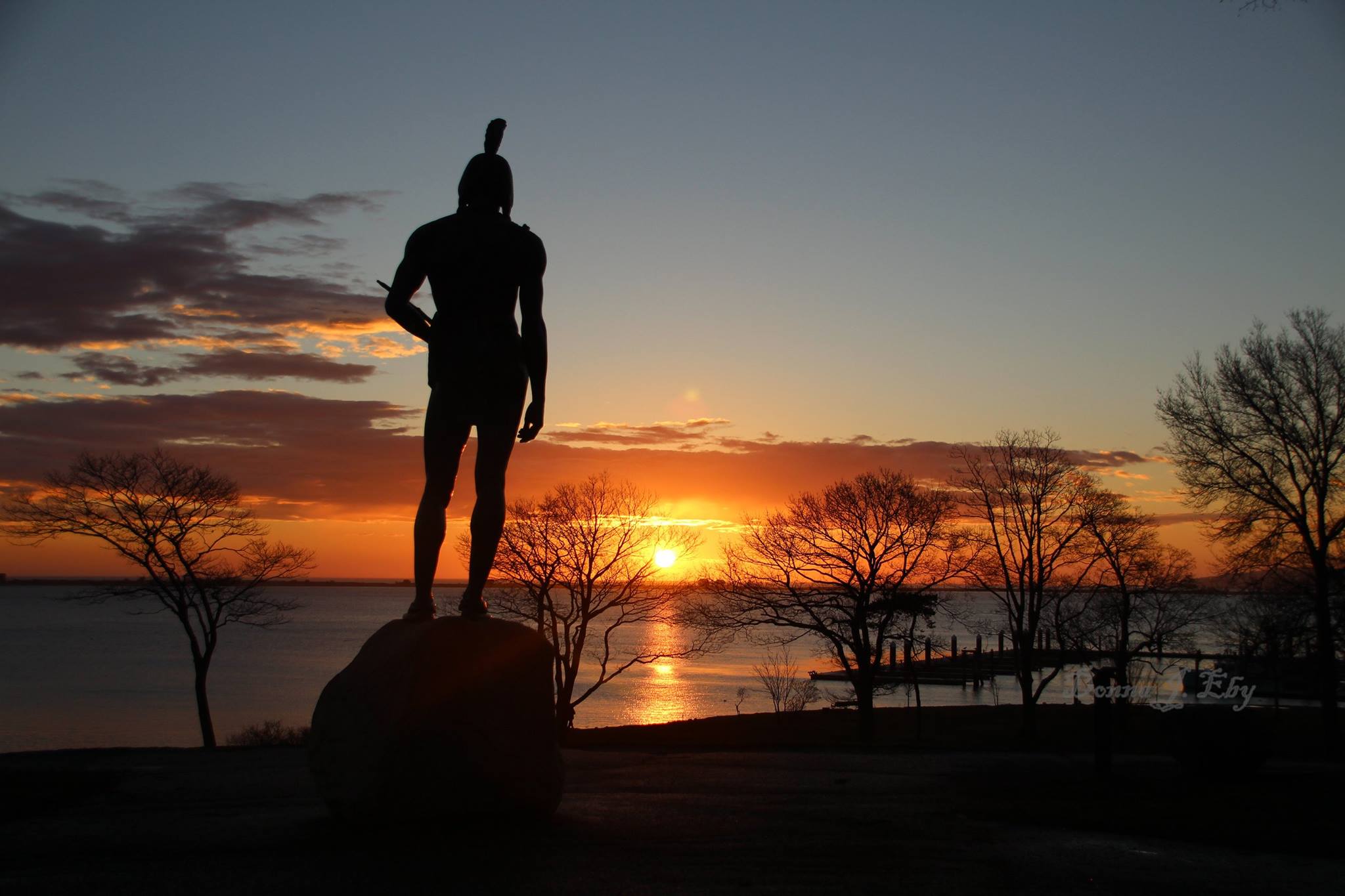
Plymouth Harbor View

Fall back into the ocean (a lake, pool, or bathtub if the seacoast is too distant or the weather too cold). Feel the water on every part of your body. Relax into the water’s gentle sway. This is immersion.

Imagine immersion in the knowledge of God. What would it be like to relax into the gentle pull of it? Every single part of you embraced, every single part of you accepted. Wouldn’t that change everything?

The next time you pray, the next time you read scripture, imagine yourself falling through the words into God’s full embrace – as you would fall into the ocean’s water. Immersion. When you come out, the world will be a different place because you are a different person – full of God’s love and in love with every living thing in the world.

Photograph by Donna Eby.

Words and Images

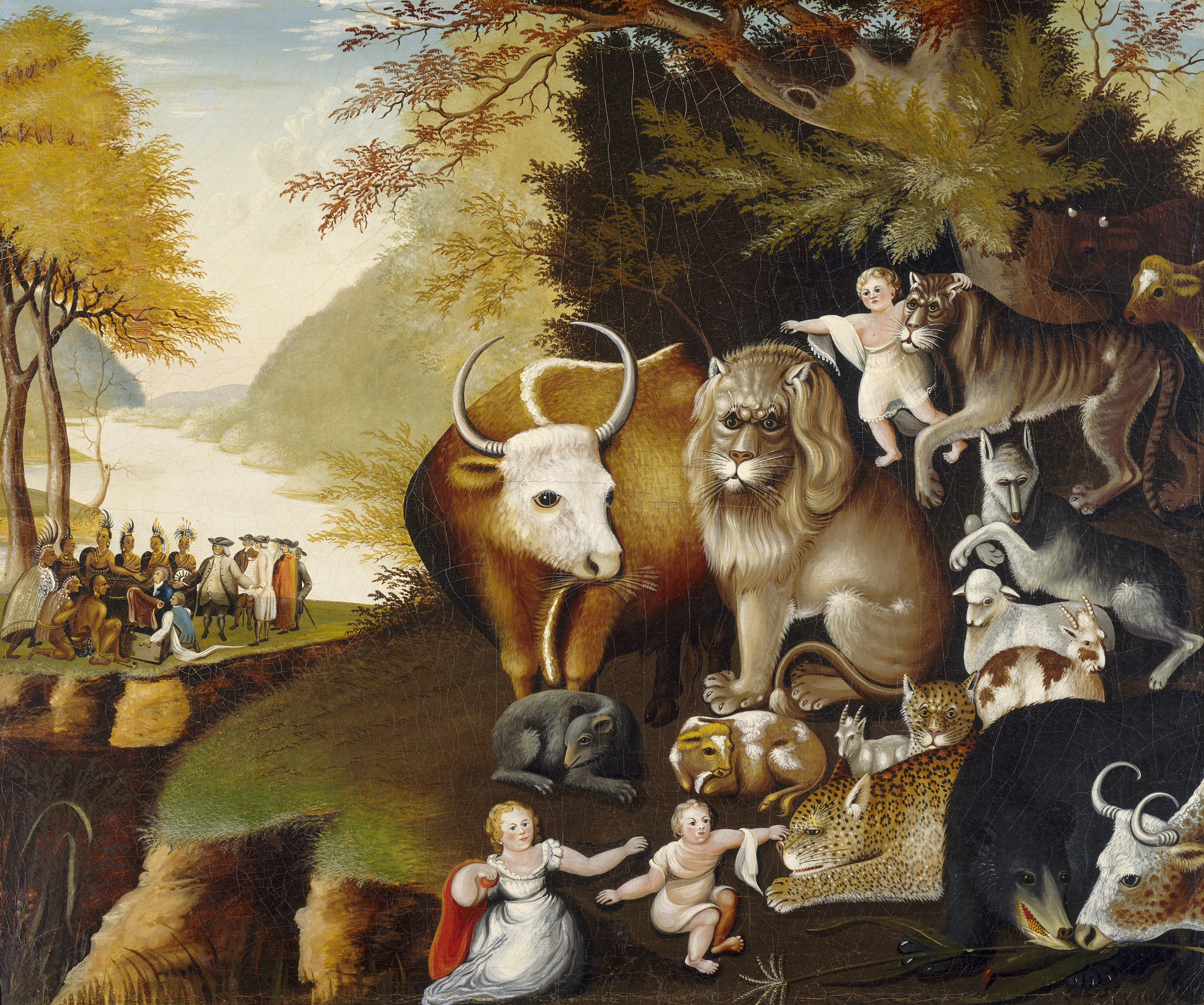
Edward Hicks, The Peacable Kingdom

Daily Readings: Isaiah 11:1-9; Numbers 16:1-19; Hebrews 13:7-17

A shoot shall come out from the stump of Jesse, and a branch shall grow out of the roots. The spirit of the Lord shall rest on him, the spirit of wisdom and understanding,

the spirit of counsel and might, the spirit of knowledge and the fear of the Lord. His delight shall be in the fear of the Lord.

He shall not judge by what his eyes see or decide by what his ears hear; but with righteousness he shall judge the poor, and decide with equity for the meek of the earth; he shall strike the earth with the rod of his mouth, and with the breath of his lips he shall kill the wicked.

Righteousness shall be the belt around his waist, and faithfulness the belt around his loins.

The wolf shall live with the lamb, the leopard shall lie down with the kid, the calf and the lion and the fatling together, and a little child shall lead them. The cow and the bear shall graze, their young shall lie down together; the lion shall eat straw like the ox.

The nursing child shall play over the hole of the asp, and the weaned child shall put its hand on the adder’s den. They will not hurt or destroy on all my holy mountain; for the earth will be full of the knowledge of the Lord as the waters cover the sea.

Isaiah 11:1-9, NRSV

In an age of manipulated images and sampled speech, it’s not wise to judge by sight and sound alone.

Before making snap judgements – or assuming that what I see and hear on the multiple and omnipresent devices can be taken at face value, perhaps I should pause…

close my eyes and ears to the distracting images and sounds…

and ask myself:

what is equitable?

what is not just allowed or expected, but life-giving?

Advent Theme: Joy

Readings: Zephaniah 3:14-20; Isaiah 12:2-6; Philippians 4:4-7; Luke 3:7-18

Rejoice in the Lord always; again I will say, Rejoice. Let your gentleness be known to everyone. The Lord is near. Do not worry about anything, but in everything by prayer and supplication with thanksgiving let your requests be made known to God. And the peace of God, which surpasses all understanding will guard your hearts and minds in Christ Jesus. Philippians 4:4-7, NRSV

Experiencing joy and the ability to rejoice are actions that are not dependent on our outer circumstances as much as they are our inner life. Do we see beauty in the snow falling, even when it means holiday events are cancelled because of it? Can we let go of the internal lists of all that we need to get done today to enjoy a conversation with the person ahead of us in the check-out line? Do we take time to play with the kids and the cat, letting go of whatever burdens we have to bear? If we worry about all that needs to happen and all the things that might not get done, we can’t see the gifts that the day offers. If worry becomes our constant inner companion, we will miss what our lives offer. Joy is found in making room for precious, holy things.

Whatever life’s difficulties we face, worrying won’t help. Giving our fears and worries, our hopes and dreams, over to God in prayer will. It won’t magically remove our troubles, but it certainly grants us a holy, peaceful, and joyful life.

Advent Theme: Joy

Name?

Readings: Isaiah 12:2-6; Amos 9:8-15; Luke 1:57-66

Now the time came for Elizabeth to give birth, and she bore a son. Her neighbors and relatives heard that the Lord had shown his great mercy to her, and they rejoiced with her.

On the eighth day they came to circumcise the child, and they were going to name him Zechariah after his father. But his mother said, “No; he is to be called John” They said to her, “None of your relatives has this name.” Then they began motioning to his father to find out the name he wanted to give him. He asked for a writing tablet and wrote, “His name is John.” And all of them were amazed. Immediately his mouth was opened and his tongue freed, and he began to speak, praising God. Fear came over all their neighbors, and all these things were talked about throughout the entire hill country of Judea. All who heard them pondered them and said, “What then will this child become?” For, indeed, the hand of the Lord was with him. Luke 1:57-66, NRSV

Elizabeth and Zechariah didn’t pick a family name for their son; they gave him the name Zechariah heard in his vision – John. This baby belonged to God first, not them. They were committed to fostering their son to be who he was, not someone the relatives and neighbors expected him to be. The first hurdle was to go against tradition on his naming day.

Raising a child to be who God intends rather than an extension of our own identities, unmet desires, or attempt at immortality is a sometimes scary adventure. Giving a child over to God isn’t an easy thing, but it is a holy one. It’s taking a step into the unknown, trusting that the path with appear. Elizabeth and Zechariah took that first step when they named him, and kept walking.

What’s in a naming? For John’s parents, everything.

Getting Away With It

Readings: Isaiah 12:2-6; Amos 8:4-12; 2 Corinthians 9:1-15

Hear this, you that trample on the needy, and bring to ruin the poor of the land, saying, “When will the new moon be over so that we may sell grain; and the Sabbath, so that we may offer wheat for sale?

“We will make the ephah small and the shekel great, and practice deceit with false balances, buying the poor for silver and the needy for a pair of sandals, and selling the sweepings of the wheat.”

The Lord has sworn by the pride of Jacob: Surely I will never forget any of their deeds. Shall not the land tremble on this account, and everyone mourn who lives in it, and all of it rise like the Nile, and be tossed about and sink again, like the Nile of Egypt?

On that day, says the Lord God, I will make the sun go down at noon, and darken the earth in broad daylight. I will turn your feasts into mourning, and all your songs into lamentation. Amos 8:4-10a, NRSV

A good lawyer and the right connections are enough to get away with harming those who are least likely to fight back. The despicable add to their excess wealth while the poor leave their groceries at the register because their funds were insufficient to bring them home. Far too often, justice is not served.

I’ve lived long enough to know that powerful, wealthy people get away with their schemes, grifts, and thieving in this world. I’ve also lived long enough to know that getting away with it in this world doesn’t mean there aren’t karmic and cosmic consequences. No amount of ill gotten gain will be enough, and the goods taken at the expense of others won’t ever be sufficient. The galas and feasts can’t end spiritual starvation, and the world remains in shadow no matter how sunny the day. Self-created inner hell is the ill-gotten gain no one wants and no one can escape.

Make no mistake: justice should prevail, and real consequences and recompense meted out. But it isn’t only for the sake of those who were cheated: it might be the door out of inner hell for the cheaters.

Am I compassionate enough to pray they walk through it?

I’m Thirsty and I can Sing

Readings: Isaiah 12:2-6; Amos 6:1-8; 2 Corinthians 8:1-15

Have you ever been lost in the wilderness and became so dehydrated and thirsty you thought it was over?  Maybe not.  After all you have your cell phone that can give you directions, survival tips, and encouraging podcasts to keep you going.  But try to imagine this scenario:  

You’ve been wandering around in the wilderness for a very long time, lost and disoriented.  Your tongue is swollen, fuzzy, and stuck to the sides of your cheeks.  Your head is pounding and your vision is blurry.  Suddenly, you stumble upon a high mountain spring flowing with clear sweet water. Odd, it’s almost as if you were drawn there by unseen forces.   You see a metal cup hanging from a hook beside a weathered sign that reads “Free water.  Come and drink, help yourself.”  You can make out more weathered words on the sign, something about a King from Nazareth.  It must be his well.

You look around to see if this is a trick or a mirage.  Is someone scamming you, going to ask for your credit card and six easy payments?  But, against your astute mental capabilities and “with-it-ness”, you give in, grab the cup and start drinking.  Desperation is sometimes why we take risks isn’t it?  

After your first few gulps of fresh clean water, you are so filled with joy you began to sing.  Why not, you’ve come this far haven’t you?  Your voice blasts out over the airwaves – “Ah, sweet mystery of life, at last I’ve found you.”  (In 1936 this song was one of the top-selling singles, recorded by Nelson Eddy and Jeannette MacDonald. Originally written in 1910, It is a poetic exploration of love as the central purpose of human existence. Say that out loud.  Love is the central purpose of human existence.)

Isaiah 12:2-6 says that with joy we will drink deeply from the fountain of salvation, and in that wonderful day we will sing, thanking the Lord, praising His name.  We will be praising Him for His never-ending love and salvation.  Verse six says we will sing to the Lord for he has done wonderful things.  Jesus says “Anyone who is thirsty may come to me!  Anyone who is thirsty may come and drink! For the scriptures declare rivers of living water will flow from his heart.” (John 7:37-38) Whose heart?  The one who drinks, believes and receives the Holy Spirit.   

“Is anyone thirsty?  Come and drink, even if you have no money! Come take your choice of wine or milk – It’s all free!” (Isaiah 55:1 NLT)   

In the passage 2 Corinthians 8:1-15, we learn that many of the members of the churches in Macedonia were dirt poor.  But they drank Jesus’ water and were filled with abundant joy.  Their joy overflowed in rich generosity to each other and the church. This passage talks about how having a willing mind (toward our Savior) is accepted according to what we have, not what we don’t have.  We can open our minds, be willing to accept the free cup of water at the fountain in the wilderness.  We can accept the salvation Jesus Christ came to give us with His birth.   The real reason for this Advent season?  God wrapped up in flesh, holding out the water we need to survive.  We can have joy this Advent season, and every season.   We can be a flood of living water for others lost in the wilderness.  Just think of all that singing!

The Maker of all things loves and wants you!  Take a good long drink.

Offered by Linda Benningfield-Hashman, God’s beloved child.

Advent Theme: Peace

Readings: Psalm 126; Isaiah 35:3-7; Luke 7:18-20

Week Two Advent

Most of us recognize these words (or something close to them) from our Sunday services:

The Peace of the Lord be with you.

And also with you (and with thy spirit).

Let Us Pray

When thoughts are chasing each other around my mind, the chaos makes it almost impossible for me to pray. I get a few words in and they get lost in the internal babble. When everything feels rushed and in constant motion, I can’t find a quiet inner space to pray. Perhaps you have had that same experience. It’s why I begin my day with these words from the Greek Orthodox tradition: Lord, grant me to greet the coming day in peace.

There’s wisdom in praying for peace in the worship service. That peace helps us be present enough to find God within our souls, recognize God in our neighbors, and see the Spirit in our own time and place. That peace makes it possible to make that walk to Bethlehem – and to dance with joy on our journey home.