Tag Archives: Lent2026

Length, Width, Volume

Length: One dimensional

Length x Width= Area: Two dimensional

Length x Width x Height= Volume: Three dimensional

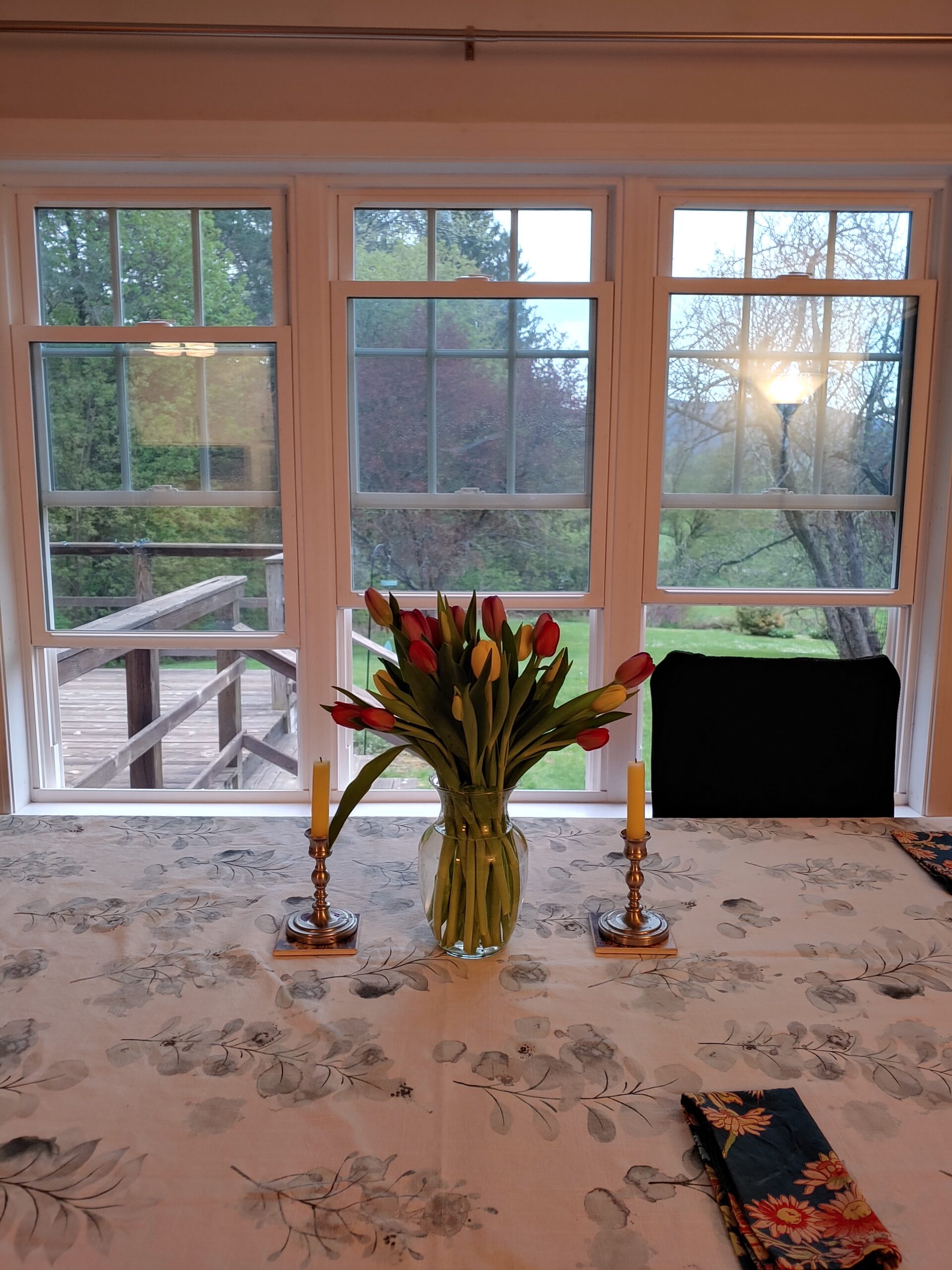
The number gets harder to calculate every time a dimension is added. Writing it down becomes necessary, and a calculator for checking the math (or doing the math in the first place!) is a good idea. After all, the table I’m building won’t come out right if my calculations are off. Putting dinner on the table in my three dimensional life is a whole lot better when that table is steady and solid.
I’ve been wondering if there’s a lesson here for my faith life. The length of it – how long I’ve walked this path. The width of it – The traditions and theologies that have shaped it – in good ways and some not-so-good ways. Those two can only get me so far. I need that third dimension for my faith to take it from a solo experience to something more, something vibrant. What is that third dimension?

Some call it the Body of Christ, others Church, still others the Spirit filled communion of Saints, as well as my favorite: the unbroken chain of prayer through time and place. It’s the living connection between and among those who seek to love God, Self, and Neighbor with who they are, what they have, and what they do. That’s the volume, the dimension that moves the two dimensional into the three, the plans and numbers on the blueprint into the table.

If the company he kept and the disciples he chose are any indication, Jesus found room at that table for any and all who wished to pull up a chair. I guess, in light of that, I can let go of my preferred guest list, be thankful for the table and the nourishment it holds, and do my best to love whomever shows up…
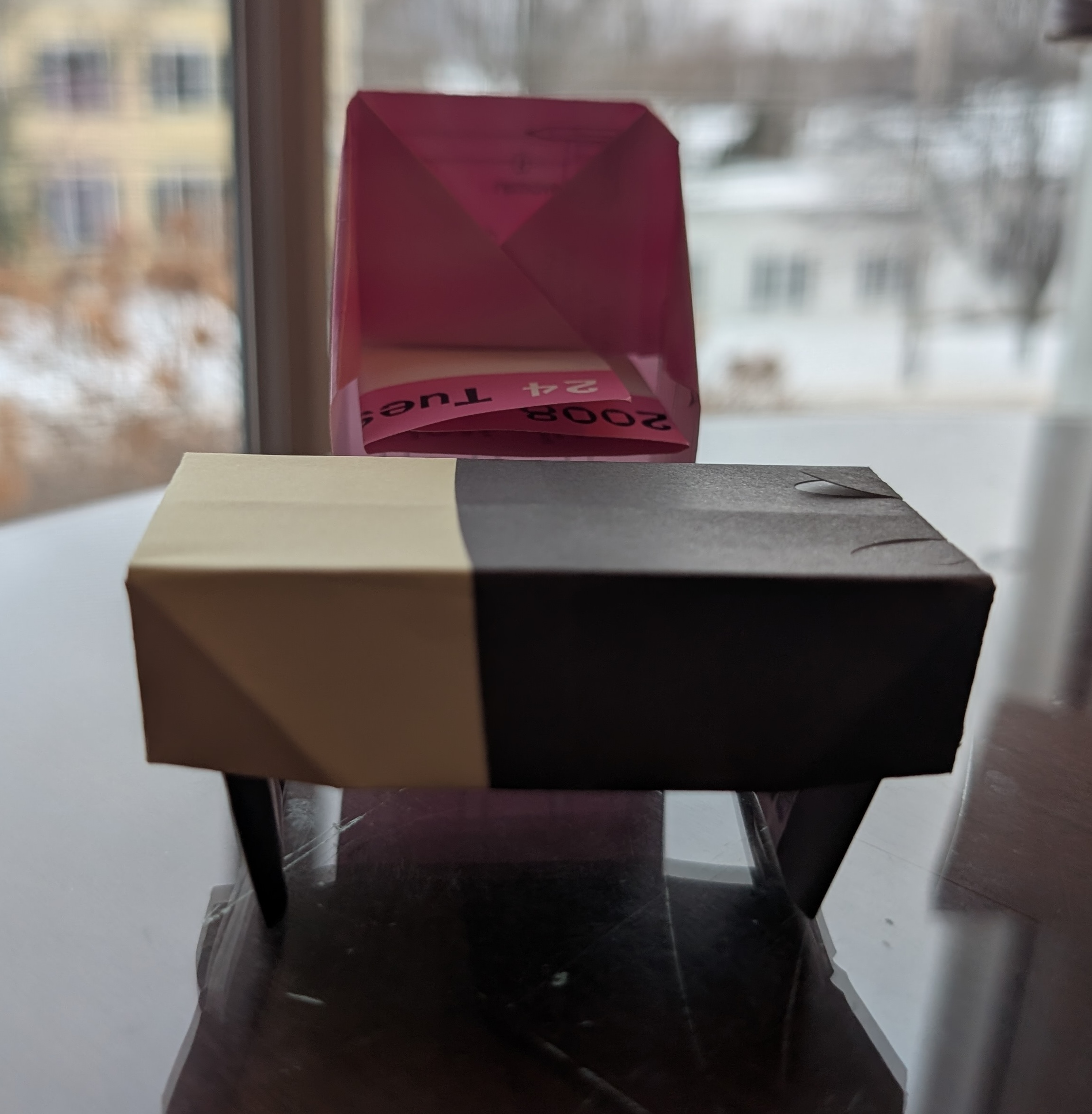
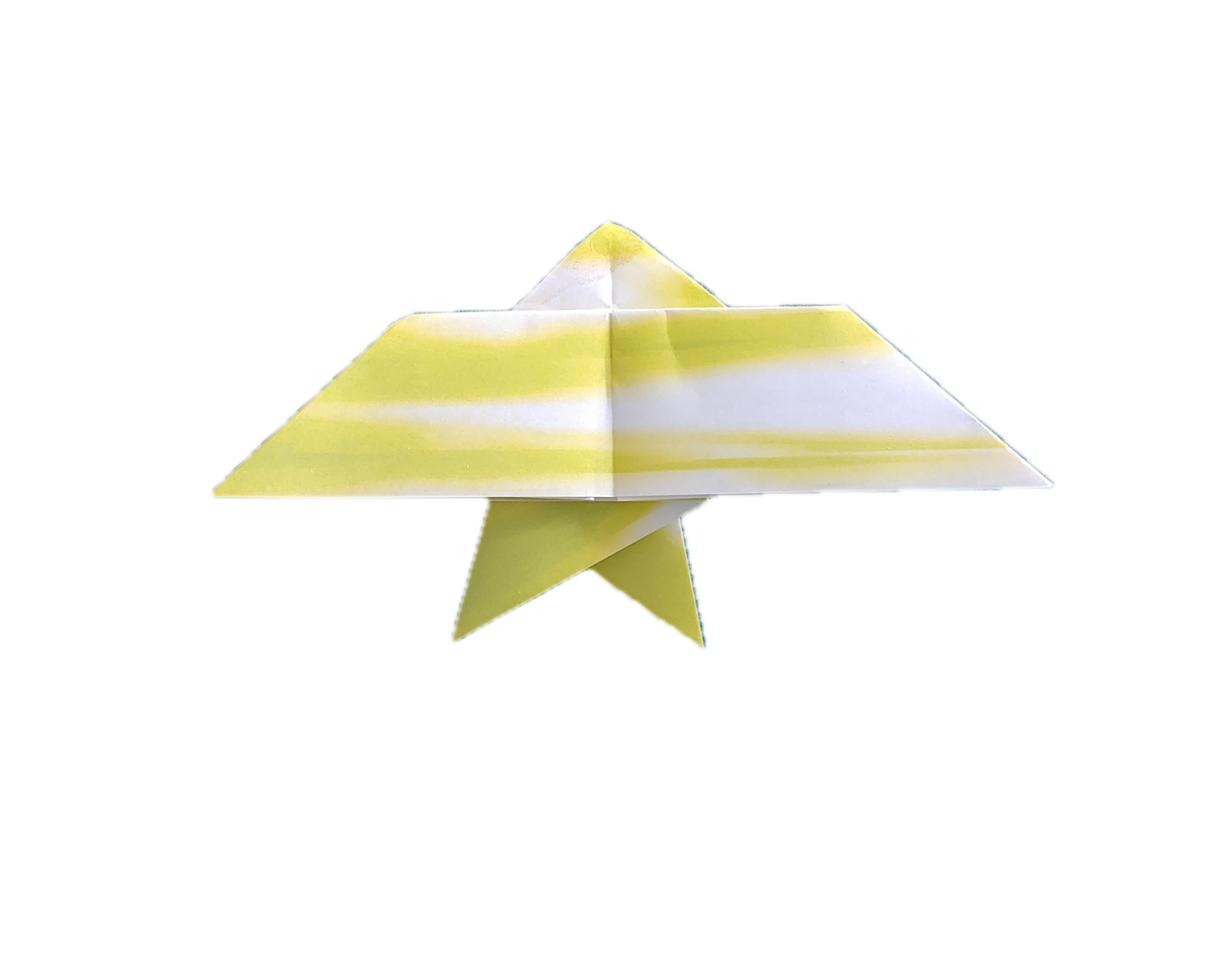
3D paper chair and table

Added Dimension

Plane: A geometric plane is a flat, two dimensional surface that extends infinitely in all directions, having length and width but no depth. Planes are made from three points that are not on the same line (non-collinear). Picture an endless piece of paper…

Picture life as a piece of paper. What do we do with this life, this piece of paper? Do we start with a blank sheet or is something of who we are already written upon it? Are we genetically predetermined to turn out a specific way, or are we shaped by the external forces that we experience? Or is it a combination of the two?

Philosophers, theologians, and scientists have pondered, debated, and fought over such questions, creating theories and intricate systems to support their particular answers. And those are entertaining and important (unless the arguments turn ugly and maim or claim lives – which happens with alarming frequency), as long as they are not mistaken for the life they seek to describe, define, and delineate. Because life is not a two dimensional plane, no matter the length or width of the treatises that have been written throughout history.

Picture life, and the years given us, as a piece of paper that is folded, shaped, gaining depth. Moved by the Spirit, infused with the Image of God from its inception, life becomes an expression of love and beauty. What shape will the folds of your life take, what holiness will be revealed?

The paper that is your life isn’t meant to be a two dimensional plane. It is a deep and holy origami.

Draw the Line

Line: A perfectly straight, continuous path that is infinitely long, and has no width or thickness, representing a path of points extending forever in opposite directions…[also refers to marks, cords, queues, or sequences in various contexts].

____________________________________________________________________________________

In mathematics, lines connect any two dots. Lines have no end and really no beginning, extending beyond the limits of imagination – that’s why arrows are added to their ends in mathematical problems.

If you begin at a point on a piece of paper, you can draw lines moving out from that point in different directions (technically, they are rays, not lines – but let’s not quibble). If you draw a landscape using the lines as guides, you get perspective – depth, three dimensionality, appears in a two dimensional space. If you are an artist, something of the wonder of whom/what you draw is offered to all who see it.

Spiritually speaking, everything begins in God – the origin of all life and lines. Scripture and icons draw lines, verbal and visual, from that beginning. They depict perspective (depth, dimensionality) that offers us something of the wonder of God. Maybe, just maybe, they draw us into the wonder of God, leaving behind on our very lives something that just may offer a glimpse of it to others.

Icon of Saint Matthew

Point of Reference

Let’s begin with a point. Add a second point and we can connect them with a line. Add a third that doesn’t sit on the line and we’ll end up with a triangle when we connect them. Point, line, plane. Non-dimensional, one dimensional, two dimensional. These ideas are the foundation of geometry a la Euclid. There’s really no proof that a point, a line, and a plane exist, but assuming that they do makes all kinds of things possible – and makes it a lot easier to frame out a door, hang a picture, and build a skyscraper.

So what does this have to do with Lent, a time of letting go of what doesn’t matter and loving what does? What is the point, the line, and the plane – the foundation – in all this? Here are the three my faith life assumes:

Point: God is the source of all that is (seen and unseen)

Line: Jesus of Nazareth is God-With-Us

Plane: We are neither God nor Jesus, but we are related to both

Point, line, plane: God, Jesus, Us

And when I note the difference between you and me, when we become neighbors in this space, life goes from a two-dimensional idea to a three dimensional grace-filled reality.

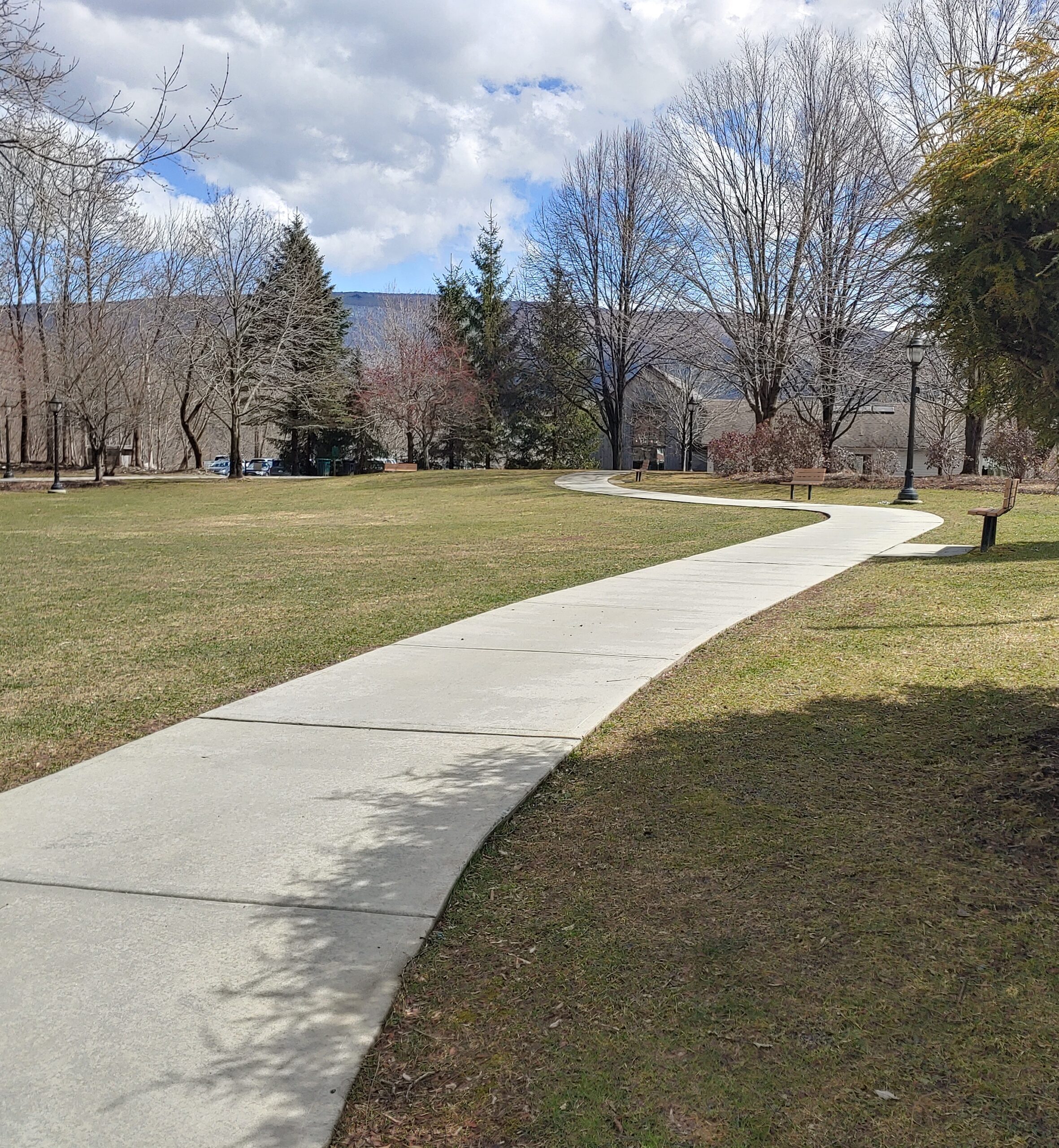
Path, and perspective

[Note: Euclid was a mathematician in Ancient Greece, circa 300b.c. The foundations of geometry can be found in his Elements, as well as in other works.

Also Note: Euclidean geometry isn’t the only geometry. For space/time issues, Euclid and his assumptions give way to other foundations…]

Reality – or Just a Concept?

Point, line, plane. Length, width, volume. Time, space, time/space. Spirit, eternity. Biology, Chemistry, Physics (Theology?). Faith, hope, love. Neighbor, self, God.

How do we understand our own reality? What words, concepts, and images provide the signposts that point us to what is most profoundly and truly real? In this time and in this place, these seem like good and necessary questions.

Next week, Mardi Gras beads and eating way too much rich food will usher in Lent – the time of reflection that is often mistaken for a self-inflicted punishment. At its most profound, this penitential season is meant to help us do two things: let go of what doesn’t matter and love what does.

Lenten words to live by…

So let’s take a look at reality – outer and inner. Let’s figure out what doesn’t matter, letting it go as best we can. Then, let’s figure out how to love what does…