Where there is Poverty

Where there is Poverty and Joy,

there is neither Cupidity nor Avarice. St. Francis, The Admonitions XXVII

[For the complete prayer, click “Walking from Easter to Pentecost with St. Francis]

There is a lot packed into these twelve words, so I’m taking my time with this sentence. Today, just the first four are quite enough.

Poverty is the ability to see what is necessary and what is not – and paring life down to avoid confusing the two. For Francis, that meant giving up everything he owned and trusting that God would hold him fast. For such a leap of faith, he gained a life of joy and peace.

Is my life where poverty lives? If I read the lines right, avarice takes up residence wherever poverty doesn’t. Avarice is that awful compulsion to stuff everything possible into my life’s shopping cart, trying to avoid spiritual bankruptcy with cases of ramen noodles, pricey cars, marble countertops and designer fixtures. There’s never enough of anything, so everything must be grasped at and held in clenched fists; nothing can be spared, even for those in true need. Avarice is malnourishment to the point of starvation, because I’ve stuffed myself full of empty things and have no room for the daily bread that sustains. It’s starvation by excessive consumption.

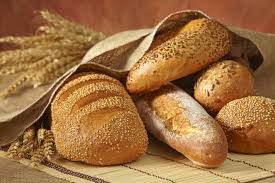
Poverty is choosing daily bread over cotton candy, enough for today over hoarded junk food. When I trust that my life is safe in God’s embrace and in my neighbor’s company, I will rest content with what my labor brings me and I can happily give of what I have to help someone else.
Gracious God, I want to see what is necessary and good. I want to live a generous life. Help me give up everything that keeps me from such a life. Amen.


Where to look…

Where there is Patience and Humility,

there is neither Anger nor Annoyance.

St. Francis, The Admonitions, XXVII 

[for the complete prayer, click “Walking with Francis from Easter to Pentecost” above]

I see anger and annoyance almost daily. Where is patience and humility? Are they hiding somewhere or do I just have to look harder? I certainly don’t see much of them in myself. Then I open A Sense of the Divine: through the Christian Year with St. Francis to the reading for Easter day and read St. Francis:

You are holy, Lord God; you do wonderful things..

You are love, charity; you are wisdom, humility…

You are patience, you are beauty, you are meekness..

I look to God for love and wisdom, patience and humility. As I find it there, I find it here.

Offered by Bill Albritton, seeker of God and prayerful servant to neighbor.


Sources Quoted:

Sister Nan and Father Maximilian Mizzi, The Message of St. Francis (New York: Penguin Studios, 1998), p. 9

Brother Tristam, A Sense of the Divine: Through the Christian Year with St. Francis (Norwich: Canterbury Press, 2002)

Looking for Love…and Wisdom

Where there is Love and Wisdom,

there is neither Fear nor Ignorance.

St. Francis of Assisi

[The Message of St. Francis, New York: Penguin Studio, 1999, p. 9]

There doesn’t seem to be much Love or Wisdom in the air lately – or at least on the air. Fear and Ignorance, though, are readily available on television and computer screens. The airwaves are full of frightened voices and ignorant commentary. Some of it is unintentional – the result of damaged hearts, minds, and spirits. Some of it is intentional – designed to sell listeners on a new product or political opinion. Manipulating the frightened and unaware isn’t particularly difficult, and it is often profitable. But don’t let this fool you: there is a lot more to life in this time and place, it just isn’t as obvious or promoted.

Take today. As I’m typing this meditation at Kiskadee Coffee in Plymouth, Massachusetts, people I know are at work, spending time and effort to bring hope and peace into the lives of countless others:

Temple Beth Jacob has been preparing for tonight’s Holocaust Memorial service, offering something holy and nourishing from the humiliation and murder of millions. Thank you, Ms. Hirschhorn and Rabbi Lawrence Silverman.

Christ Church Parish, Plymouth, is getting the sanctuary prepared to host the Holocaust Memorial service because it’s for the whole community and the temple doesn’t have enough room to fit everyone inside. Thank you, altar guild, for your hospitality.

Two sons are flying back home to spend time with their older brother and to decide how to best serve their aging parents. The conversations won’t be easy and the solutions won’t be simple. Blessings and Peace, Barry, Bryan, and Dave.

A substitute teacher is getting to know her students. She’s the third one they’ve had in the past six or seven weeks because their usual teacher has a serious medical condition. May God give you both strength and a fabulous sense of humor, Ms. Corde` and Mr. Tersegno.

Love a la Francis is as much an act of courage and will as emotion. It is meaning good things for someone else, and sacrificing to offer them. It is also meaning good things for self, and accepting the sacrifice of others when offered and appropriate.

But what are these good things, and how can I tell the difference between something that I willingly sacrifice for and something that is at my expense? I don’t have a definitive answer, but here’s my provisional one:

Good Things foster the mind and spirit.

Sacrifice may be costly, but it enlarges the spirit and broadens the mind; something at my Expense shrinks my soul and takes gratitude out of the world.

If I grow in wisdom, I’m sure my take on this whole thing will change. Here’s hoping I’m brave enough to make the attempt.

Let’s take a walk…

A few years back, I spent my Eastertide with Saint Francis, praying his most beloved prayer and writing about the experience. It was such a blessing that I decided to visit with Francis again, this time seeking him in his other writings. I look forward to conversing with him – new words, new thoughts, many blessings. I hope you come along with me; I’d surely appreciate the company…

Virtue and Vice

Where there is Love and Wisdom,

          there is neither Fear nor Ignorance.

Where there is Patience and Humility,

there is neither Anger nor Annoyance.

Where there is Poverty and Joy,

there is neither Cupidity nor Avarice,

Where there is Peace and Contemplation,

there is neither Care nor Restlessness.

Where there is the fear of God to guard the dwelling,

there no enemy can enter.

Where there is Mercy and Prudence,

there is neither Excess nor Harshness.

(St. Francis, The Admonitions, XXVII)

[Found in:  Sister Nan, extract selector,  introduction by Maximilian Mizzi, The Message of St. Francis, New York: Penguin Studio, 1999, p. 9]

This book is available through Amazon and Barnes and Noble

Be Brave!

You can, you should – and it you’re brave enough to start, you will.

Stephen King

[Daily Peace, Washington, D.C.: National Geographic Society, 2015, April 4]

Stephen King has written dozens of books, some of which could be considered modern masterpieces. Two in particular come to my mind: The Green Mile and Rita Hayworth and the Shawshank Redemption. The first was written as a serial novel, with small sections released every few weeks until the whole story was told. The second was a short story. These are not horror stories, even though both deal with tragedy, inhumanity, and loss. Neither are typical of King’s usual writings – the scary books everyone has come to expect. Both were made into exceptional movies.

I wonder whether it was a difficult thing for King to write these particular tales. In addition to the usual pressure and difficulty of writing a book – creating characters and story lines, putting in enough description and action to keep the story moving, bringing the whole thing to a satisfying and fitting ending – is added the anxiety that comes from offering something unexpected to an audience that is used to the thrill of the macabre. It’s like offering a chocolate raspberry torte to a child expecting a chocolate chip cookie: who knows what the response might be, but disappointment and rejection are just as possible as delight and enthusiasm.

Perhaps the hardest part of trying something new isn’t dreaming it up or doing the research. Maybe the hardest part is putting pen to paper and writing the first word, sentence, paragraph, and page. Making the jump from going to to doing isn’t something that comes from knowing it’s possible to do or even knowing it ought to be done: it’s a leap of faith only the brave or the foolhardy can make.

Perhaps this is true in things beyond writing. Perhaps it’s true of any worthwhile endeavor.

May God grant us all the courage to take the first step.

What’s it worth to you?

The good things in life cost what they cost. The unnecessary things are not worth it at any price. The key is being aware of the difference.

[Holiday and Hanselman, The Daily Stoic, New York: Portfolio/Penguin, 2016, p. 97]

My grandmother spent more money buying groceries than most of her friends. When asked why, she’d always say: You pay at the grocery store or the doctor’s office. One way or another, you pay. She thought it a lot more fun to spend money on food than doctor’s bills. Keeping healthy costs what it costs.

I’ve been buying groceries and making meals for over thirty years now, and spending more at the market than many of my friends and neighbors. I buy things grown and raised locally whenever possible. It adds a good $30 to my grocery bill every couple of weeks, sometimes more. I try my best not to waste any of it – composting vegetable peels, putting stale bread ends out for the squirrels and birds, making stock from chicken and turkey bones, growing herbs and vegetables in season, and making baked goods at home. Eating out or buying pre-prepped food from the market is an occasional act. At the end of the month, I doubt I pay more than anyone else to feed my family – it just takes a lot more time and planning to do it this way. Outside the yearly check-ups, visiting a doctor is very rare. I can’t help thinking my grandmother was right: you pay at the grocery store or the doctor’s office.

What about other good things in life, ones not so easily seen or touched as food on a plate? Fostering the lives of family and friends, spending time with God, enjoying the natural world, covering the basics of food, clothing, and shelter: these good things cost what they cost. Sometimes the cost is in dollars and cents handed over a counter, sometimes the cost is time away from earning money or having fewer possessions and vacations in order to be an involved parent and partner without living in constant exhaustion. Good things cost what they cost.

I can’t tell you what the good things in life cost you. In my own life, I’ve had to choose what was worthwhile and what wasn’t, because there isn’t enough time in the day, energy in my body, or money in my account to have both. I can tell you that the good things have been worth every penny, effort, and minute they cost. A joyful life, the chance to serve others, the beauty of the earth, and the loving God who holds it all.

Growth on an Empty Stomach

What influences the ruling reason that guides your life?

[Holiday and Hanselman, The Daily Stoic, New York: Portfolio/Penguin, 2016, p. 96]

When I say I’m hungry, what I really mean is I want something to eat in the next few minutes; when my husband says he’s hungry, he means he’d like to have something to eat in the next couple of hours. We realized this difference driving from New Jersey to New Hampshire. To keep subsequent road trips pleasant, my husband adopted a new pattern: whenever I said I was hungry, he pulled over at the very next restaurant. It didn’t matter what kind food it served – as long as the place was clean, we stopped for a meal. I also changed my pattern: I made sure to bring snacks so I wouldn’t lose my sense of humor if mealtime was delayed by an hour. If we hadn’t made these adjustments, there would have been a lot more arguments in the car over the years. Low blood sugar affects my mood, my mood affects our relationship.

When I recognize the connection between lack of food and my bad mood, and I can usually compensate for my crankiness; I can keep it as in inner dialogue rather than one between me and whomever might be in the room. Still, it does affect my reasoning. Perhaps this food/feeling/action connection is why gluttony is one of the seven deadly sins – fear of hunger leads to hoarding food at the expense of self, other, and world.

I suspect that everyone has something that undermines their ability to think clearly and act wisely. Lack of sunlight for some, lack of sleep for others, God knows what else for the rest of humanity. Changing behavior to keep things on an even keel is a good option – bring the snacks, pull over at the next restaurant. But personal growth comes when recognition leads to inner dialogue rather than external damage. Accepting with grace the difficulty that can derail judgment and action and working to make sure it doesn’t. To do this can strengthen the spirit and deepen compassion for others – God’s spiritual feast that only comes when the bread doesn’t.

Perhaps it’s for people like me that Jesus reveals himself to be life-giving bread and wine…

Then Jesus said to them, “Very truly, I tell you, it was not Moses who gave you the bread of heaven, but it is my Father who gives you the true bread from heaven. For the bread of God is that which comes down from heaven and gives life to the world.” They said to him, “Sir, give us this bread always.”

Jesus said to them, “I am the bread of life.Whoever comes to me will never be hungry, and whoever believes in me will never be thirsty.” John 6:32-35 NRSV

The Things I Put Up With…

The first great rule of life is to put up with things.

Baltasar Gracian

[Daily Peace, Washington D.C.: National Geographic Society, 2015, March 11]

Baltasar Gracian was a seventeenth century Jesuit priest and philosopher who wrote these and many other words. His Oraculo Manual y Arte de Prudencia was translated from its original baroque Spanish to English by Christopher Maurer in 1994, and gained popularity under its anglicized name – The Art of Worldly Wisdom. It’s currently available  as an ebook and as a printed-and-bound book]

This truth doesn’t mean accepting abuse or neglect – that would be the first great rule of death: it means accepting the bedrock reality that the world doesn’t exist for the convenience of any one person, including me. Sometimes the train will be late, the line at the grocery check-out long, the game cancelled due to rain. Power lines go down. It’s just the way life is. Sometimes there’s someone at fault, but often there really isn’t. The grocery store running out of cilantro isn’t a sign that the world is out to get me.There’s no nefarious plot to deprive me of salsa, just a plain old inconvenience that I can accept with amusement or petulance.

All these things I put up with can teach me patience and grace, opening my eyes to the glorious imperfection that is life on this planet. If I gain enough wisdom I might even discover that these things I put up with are God’s way of giving me the world (and the good sense to know that everyone else gets it, too).

Love is patient, love is kind; it is not envious or boastful or arrogant or rude. It does not insist on its own way; it is not irritable or resentful; it does not rejoice in wrongdoing, but rejoices in the truth. It bears all things, believes all things, hopes all things, endures all things. I Corinthians 13: 4-6 NRSV


Moving into God’s presence through words