The Tree and Its Fruit

Daily Readings: Psalm 21; Genesis 15:1-18; Matthew 12:33-37

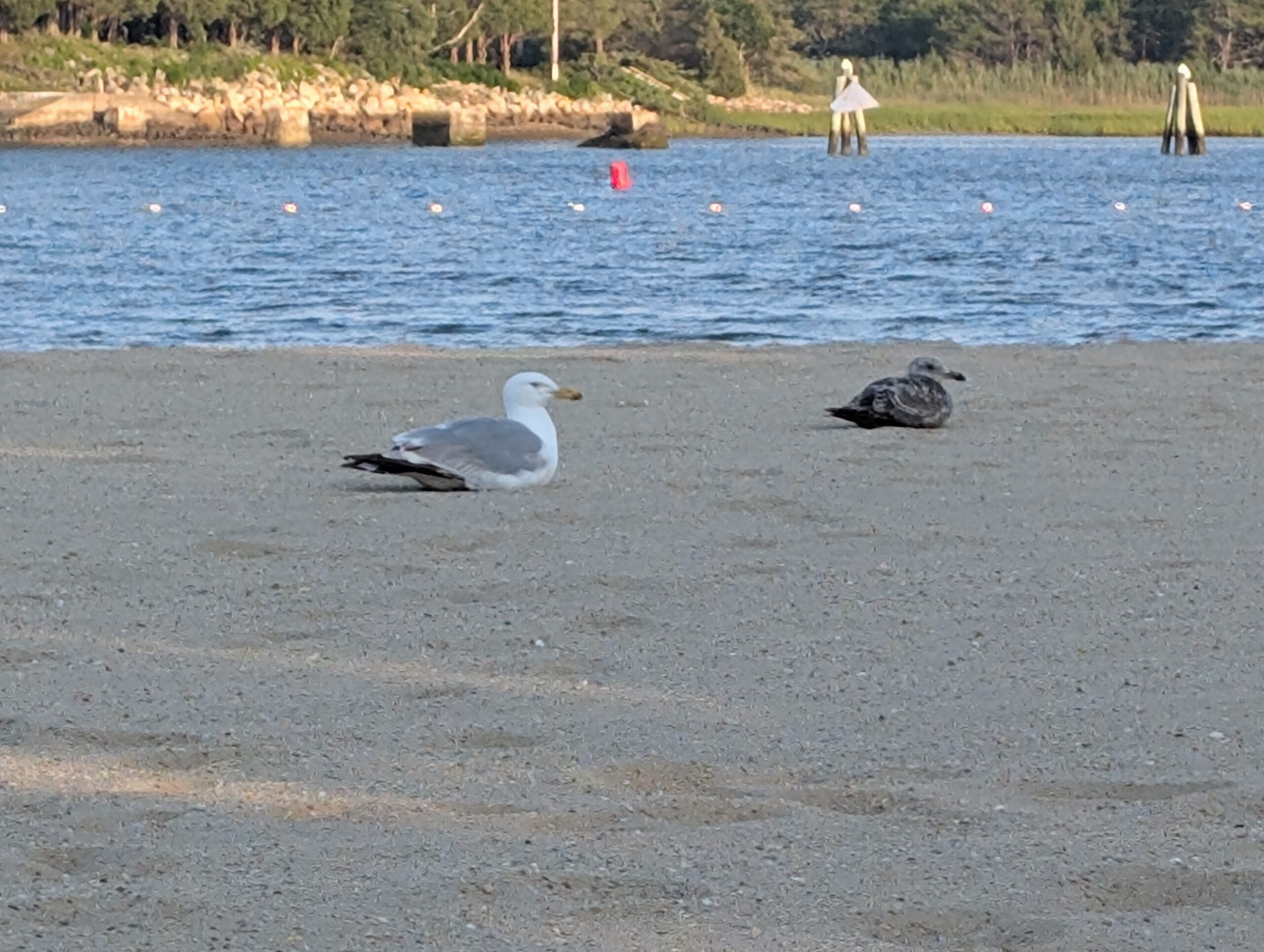
If you grow a healthy tree, you’ll pick healthy fruit. If you grow a diseased tree, you’ll pick a worm-eaten fruit. The fruit tells you about the tree.

You have minds like a snake pit! How do you suppose what you say is worth anything when you are so foul-minded? It’s your heart, not the dictionary, that gives meaning to your words. A good person produces good deeds and words season after season. An evil person is a blight on the orchard. Let me tell you something: Every one of these careless words is going to come back to haunt you. There will be a time of Reckoning. Words are powerful; take them seriously. Words can be your salvation. Words can also be your damnation. Matthew 12:33-37, The Message

We are all beautiful creatures of God and the Spirit, just like trees bearing beautiful fruit, gifts from God. Like trees we require care and guidance to be able to grow and flourish.

There is that phrase often shared and taught by our parents, grandparents, guardians and teachers : Think before you speak. These 4 simple words hold true each and every day, not to be forgotten, but to keep in our hearts and minds always, gently, whenever and wherever we are.

Words can be hurtful if not thought about carefully, leaving a terrible taste like rotten fruit; still, our words can leave a lingering feeling of joy and happiness when spoken with love and caring, like beautiful healthy peaches on their well-cared for trees.

As a classroom substitute, I am especially mindful when helping the 7 young students in their small classroom, with the words I choose when speaking to them, asking how and if I can assist them with their work. Each special needs student is different and needs to be spoken to in an individual way, with a calm and patient tone. There is no place for anger or intolerance, only total understanding of their needs. The students’ classroom teacher has an amazing ability and gift to speak to and teach each of her students in this way; she is an amazing role model for others. She has been a great role model for me as well.

Jesus, when we read his parables through the gospels, continues to be our role model for thoughts, words and actions. With our spoken words chosen with thoughtfulness and kindness, we can all be like healthy trees, bearing vibrant fruit.

Offered by Robin Nielsen, in whom God delights.

On A Mission From God

Daily Readings: Psalm 21; Isaiah 41:14-20; Romans 15:14-21

I need your help in carrying out this highly focused assignment God gave me, this priestly and gospel work of serving the spiritual needs of the non-Jewish outsiders…

I have no interest in giving you a chatty account of my adventures, only the wondrously powerful and transformingly present words and deeds of Christ in me that triggered a believing response among the outsiders. In such ways I have trailblazed a preaching of the Message of Jesus all the way from Jerusalem into northwestern Greece. This has all been pioneer work, bringing the Message only into those places where Jesus was not yet known and worshiped. My text has been,

Those who were never told of him – they’ll see him! Those who’ve never heard of him – they’ll get the message!

Romans 15: 16, 18-21 The Message

It took him time, a blinding come-to-Jesus experience on the road to Damascus, and the courage of Ananias, but Paul got there. He found his mission from God: reaching out to the non-Jewish community that for most of his life he had no wish to encounter much less serve.

I don’t know that it will be the same for most of us, but we share a vital something with Paul’s experience: our mission from God will move us beyond where we think we belong, and teach us to love people we never thought we could, would, or should.

…One more thing…

Daily Readings: Psalm 21; Isaiah 24:1-16a; I Thessalonians 4:1-12

One final word, friends. We ask you – urge you is more like it – that you keep on doing what we told you to do to please God, not in a dogged religious plod, but in a living, spirited dance.

I Thessalonians 4:1-2, The Message

After these words, it’s about sex – or, more precisely, not having sex in a way that harms us physically, emotionally, or spiritually. It’s a plea to take into account the whole person you get naked with. Then it becomes a request to take into account the rest of the community members – even those we don’t know particularly well. In short, live and act as if your life and the lives of all those around you matter. Because they do.

It’s easy to misunderstand what that really is: a full, vibrant, connected life. It’s not a lesser, boring life that pleases God; it’s not giving up the things that bring us pleasure – it’s making sure that pleasure is found within the larger context of a joyful life for everyone.

A good life isn’t a long slog on a rocky road. A good life is a turn on the dance floor. Unpredictable. Breath-taking. A joyful moving in the company of others.

Enjoy!

The Call of the Wild

Daily Readings: Isaiah 11:1-10; Psalm 72:1-7, 18-19; Romans 15:4-13; Matthew 3:1-12

While Jesus was living in the Galilean hills, John, called “the Baptizer,” was preaching in the desert country of Judea. HIs message was simple and austere, like his desert surroundings: “Change your life. God’s kingdom is here.” Mt. 3:1-2, The Message

The popular notion is that John came into Jerusalem wearing the classic sandwich board, “Repent!” We imagine that the Baptist stood on the streets of Jerusalem in front of Herod’s fabulous Temple, across from the Jerusalem Museum of Fine Art and the First Judea Bank building with a bullhorn, shouting, “Prepare the way of the Lord, make his paths straight. . . . You brood of vipers, who warned you to flee from the wrath to come?”

But it didn’t happen that way at all. It’s much more fascinating. Matthew is quite clear. “In those days John the Baptist appeared in the wilderness of Judea.” That’s where he was proclaiming, “Repent.”  So, was he a “voice in the wilderness,” as we say—a lonely coot preaching to the wind and the sand and the bitter rocks? Hardly. “Then,” Matthew says, “the people of Jerusalem and all Judea were going out to him, and all the region along the Jordan, and they were baptized by him in the river Jordan, confessing their sins.” 

The topography of this spiritual encounter is hardly a chance feature of Matthew’s story. Notice the symbolic movement: You have to move out of the city . . . cross a river . . . and enter a desert. And there you will meet a very strange man who will offer to plunge you into the water in an act of purgation, cleansing yourself for your encounter with God.

The call of John reminds me of those early Desert Fathers in Egypt, the first Christian ascetics who went out into the desert. They weren’t just leaving the city and its culture; they were leaving the church. By the time Anthony the Great moved into the desert in 270, the church was already not-enough. Nothing wrong with it, just not-enough. Just gradually getting institutionalized. Again, nothing wrong, but in spiritual development terms, the church was mostly about first-half-of-life issues. Building a moral foundation, rehearsing right from wrong, learning impulse control, making and keeping basic commitments, being a stand-up man, a dutiful woman. 

But when that program crashes, as it always does on the rocks of the middle voyage, we’re ready to hear John. And that is what people like Anthony the Great did. They listened to his call and literally went out into the desert. And, just as the crowds followed John into the wilderness, so ordinary Christians in the third century went streaming out into the wild to sit and pray with Anthony, with Paul of Thebes, and eventually with the Desert Mothers—or ammas—like Sincletica of Alexandria and Sarah of the Desert.

Many people have suggested that we are on the cusp of a new monastic movement, that the weakness of the contemporary church is pushing people out onto the margins—sometimes literally into the wild—to find that something more. Advent is a perfect moment for each of us to hear John’s call and find some wild place where we can encounter the fullness of God. 

Offered by David Anderson, in whom God delights.

Evangelism

Daily Readings: Psalm 72:1-7; Isaiah 40:1-11; John 1:19-28

“Comfort, oh comfort my people, says you God. Speak softly and tenderly to Jerusalem, but also make it very clear that she has served her sentence, that her sin is taken care of – forgiven! She’s been punished enough and more than enough, and now it’s over and done with.”

Thunder in the desert! “Prepare for God’s arrival! Make the road straight and smooth, a highway fit for our God. Fill in the valleys, level off the hills, smooth out the ruts, clear out the rocks. Then God’s bright glory will shine and everyone will see it. Yes. Just as God has said.

“These people are nothing but grass, their love fragile as wildflowers. The grass withers, the wildflowers fade, if God so much as puffs on them. Aren’t these people just so much grass? True, the grass withers and the wildflowers fade, but our God’s Word stands firm and forever.”

Climb a high mountain, Zion. You’re the preacher of good news. Raise your voice. Make it good and loud, Jerusalem. You’re the preacher of good news. Speak loud and clear. Don’t be timid! Tell the cities of Judah, “Look! Your God!” Look at him! God, the Master, comes in power, ready to go into action.

He is going to pay back his enemies and reward those who have loved him. Like a shepherd, he will care for his flock, gathering the lambs in his arms, hugging them as he carries them, leading the nursing ewes to good pasture. The Message, Isaiah 40:1-11

At our weekly mid-week Eucharist, we recently explored evangelism during the homily. This does not seem to be a favorite word among our church members (even though our patron is St. John, the Evangelist). For me, being reared in the south where “Bible thumpers” were plentiful and most of the radio options were either country music or preaching, I was particularly wary of these “types”. I even looked down at them as unsophisticated and shallow. If they only knew the intricacies of our faith, the deep underpinnings of theological study and thought…

Well, Jesus keeps it really simple, does he not? Maybe we don’t have to go shouting  up on a high mountain to bring the good news to others but share I must. Go into all the nations proclaiming the good news was the last directive Jesus gave us in the Gospels—what about this do we not get? If you cringe at the thought of shouting from the mountain tops, as most of us would, I imagine, there are good options. 

Attending a prayer service at our cathedral church in Boston years ago, I read in the service bulletin that evangelism is being with someone in such a way that they know you’ve been with Jesus. That could work for most, I think. At any rate, I’m going to do more of that this Advent.

Offered by Bill Albritton, in whom God delights.

Only Wondrous Things

Daily Readings: Psalm 72:1-7, 18-19; Isaiah 30:19-26; Acts 13:16-25

Blessed be the Lord, the God of Israel, who alone does wondrous things. Blessed be his glorious name forever; may his glory fill the whole earth, Amen and Amen. Psalm 72:18-19, NRSV

Blessed God, Israel’s God, the one and only wonder-working God! Blessed always his blazing glory! All earth brims with his glory. Yes and Yes and Yes. Psalm 72:18-19, The Message

The three most difficult things to say are:

1)I was wrong

2)I need help

3)—wait—wait—Worcestershire sauce

The I need help one is for real for me. I was brought up with a strict Protestant ethic where asking for help was a sign of weakness – who hasn’t been told If you want a job done right, do it yourself? Some of this, I think, is also a male thing. I’m supposed to have the answers not the questions. I’m supposed to know what to do and how to do it (though in all fairness, I  know women who are better at this than I am). Sometimes I just need to get out of the way, kneel down and bless God, the Do-er of wondrous things.

It’s amazing what can happen when we give up being Captain of the World. Turning to God to bless God shifts my focus from all I have got to do during this season to what I get to do with God’s help—what a difference. Praying for the whole earth to be filled with God’s glory sets me in a direction that helps that happen. After all, God only does wondrous things.

Offered by Bill Albritton, in whom God delights.

The Luck of the Draw

Daily Readings: Psalm 72:1-7, 18-19; Isaiah 4:2-6; Acts 1:12-17, 21-26

They nominated two: Joseph Barsabbas, nicknamed Justus, and Matthias. Then they prayed, “You, O God, know every one of us inside and out. Make plain which of these two men you choose to take the place in this ministry and leadership that Judas threw away in order to go his own way.” They then drew straws. Matthias won and was counted in with the eleven apostles.

Acts 1:23-26, The Message

They got it down to two, then they drew straws to decide who would be the apostle to replace Judas. Shouldn’t there have been another round of interviews, perhaps some quiet time to reflect on this rather important decision? Why leave something so important up to chance?

For many years, I thought it was because they didn’t want to be responsible for making the final decision – better for Justus and Matthias to see it as the luck of the draw rather than a judgement on their abilities and souls.

As I’ve gotten older, I think it might have been something different. Matthias and Justus were both deemed capable and worthy. Had the draw gone to Justus, the path would have been different – not better or worse, just different.

Aren’t there times when we face that same thing – a fork in the road with both directions looking equal in worth? Perhaps, at that point, we should just flip a coin and fully embrace the outcome…and trust that the Spirit will bless the road we take.

Freed

Daily Readings: Psalm 124; Isaiah 54:1-10; Matthew 24:23-35

If God hadn’t been for us – all together, now, Israel, sing out! –

If God hadn’t been for us when everyone else went against us, we would have been swallowed alive by their violent anger, swept away by the flood of rage, drowned in the torrent;

We would have lost our lives in the wild, raging water.

Oh, blessed be God! He didn’t go off and leave us. He didn’t abandon us defenseless, helpless as a rabbit in a pack of snarling dogs.

We’ve flown free from their fangs, free of their traps, free as a bird. Their grip is broken; we’re free as a bird in flight.

God’s strong name is our help, the same God who made heaven and earth. Psalm 124, The Message

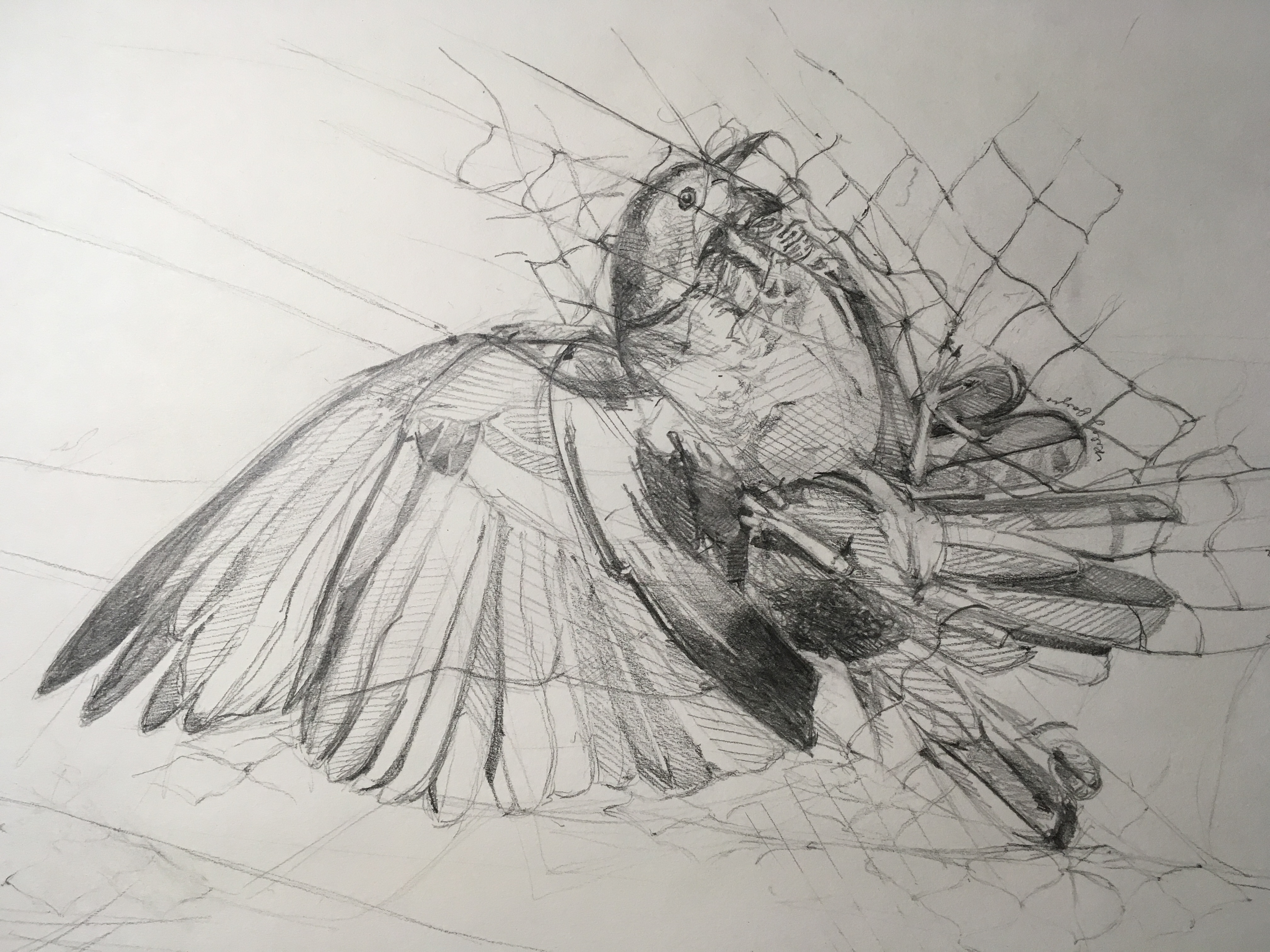
Breaking Free by Riley Anderson

Have you ever felt this: pinned down, unable to move or free yourself? It’s awful to be tangled in a snare, unable to escape into safety.

Have you ever experienced this: someone freeing you so that you can fly again? It’s miraculous when freedom comes instead of pain and death.

Freeing the captives of their snares so that they can take flight. It’s as good an explanation of why God chose to enter human life as any I can think of…

Image by Riley Anderson, in whom God delights (reposted from 2016).

Responsible

Daily Readings: Psalm 124; Genesis 9:1-17; Hebrews 11:32-40

God blessed Noah and his sons and said to them, “Be fruitful and multiply and fill the earth. The fear and dread of you shall rest on every animal of the earth and on every bird of the air, on everything that creeps on the ground and on all the fish of the sea; into your hand they are delivered. Genesis 9:1-2, NRSV

God blessed Noah and his sons: He said, “Prosper! Reproduce! Fill the Earth! Every living creature – birds, animals, fish – will fall under your spell and be afraid of you. You’re responsible for them. Genesis 9:1-3a, The Message

The living things we claim also claim us. We are responsible for the animals in our lives. When we bring home that new puppy or kitten, when we buy the tank and the goldfish, we take on the responsibility to feed them, keep them healthy, and offer them our love and attention. Because they depend on us, we must be dependable. It takes time and resources, and a lot of affection, to be responsible.

Franklin

The same holds true for the animals who feed and clothe us. We are responsible for providing them with good lives, with adequate food, shelter, and space to live well before they end up on our tables. This, too, costs – either a price tag at the grocery store or the effort and resources to raise them ourselves.

The animals that nourish us – emotionally or physically – are connected to who we are in a spiritual sense (As are the plants and other humans). We are part of a great, sacred whole. When we act responsibly, we bless creation. When we do not, we harm not only the animals we treat poorly: we harm creation and our own lives. Let’s not do that.

Ebbtide

But God Remembered…

Daily Readings: Psalm 124; Genesis 8:1-19; Romans 6:1-11

But God remembered Noah and all the wild animals and all the domestic animals that were with him in the ark. And God made a wind blow over the earth and the waters subsided; the fountains of the deep and the windows of the heavens were closed, the rain from the heavens was restrained, and the waters gradually receded from the earth.

Genesis 8:1-3a, NRSV

But God Remembered…

That word but confronts all those times we feel forgotten and forsaken, all those times our spirits are low and our hope is all but gone. There are those times in life when it is hard to gather the energy we need to keep on going, all but impossible to endure the tribulations that confront us. It is then that the word but is important. It means despite what we have endured, regardless of how we feel, there is another possibility for us.

But God remembered…

That possibility rests in the remembering of God. God remembers the care with which our world and everything in it—all creation—were formed. God remembers that it was good. And God remembers us. That is good, too. What makes it even better is that God’s remembering isn’t just about the past. It also leads to the future—and a promise. God’s promise was a promise to care. That caring came in a pledge that As long as the earth endures, seedtime and harvest, cold and heat, summer and winter, day and night shall not cease (Genesis 8:22).

It may seem strange to begin the season of Advent reflecting on Genesis. But there is a thread that ties the two together, a thread that runs through the entire Bible. Advent is a time for us to remember—to remember that God remembered and still does. God remembered Noah; God remembered people in need of a savior; God remembers us and our need for a savior. Advent is a time for us to remember God’s remembering. It is only when we do so that we can prepare ourselves to fully receive that great gift of Christ.

Remember.

Offered by Jeff Jones, in whom God delights.

Moving into God’s presence through words