Sustained Thankfulness

The big meal is twenty hours past, and the fridge is full of leftovers. Two of the eight around the yesterday’s table have already headed back to their homes and weekend activities. For the first time that I can remember, Advent isn’t starting three days after Thanksgiving – there’s a week in between that usually isn’t, and I’m at loose ends for its presence.

How to spend this week wisely? Instead of filling it up, I’ve decided to keep it open – keep the Advent activities at bay for the week and enjoy the time to reflect on what I’m most thankful for these days. It’s nothing grand, just the usual things. That’s okay; I suspect the same is true for most everyone else, too…

I hope your week is peaceful, your gratitude deep, and your life the richer for both.

Dimly

One of the wonderful things about a coastal town is the breathtakingly expansive nature of the ocean. Water stretches for miles in the distance, and I can see it all from where I am standing.

The same is true of the mountains.

I know I can’t see forever, even on a clear day, but it seems like I can.

But it’s the beauty of the other days that sticks with me, the foggy and cloud-filled ones.

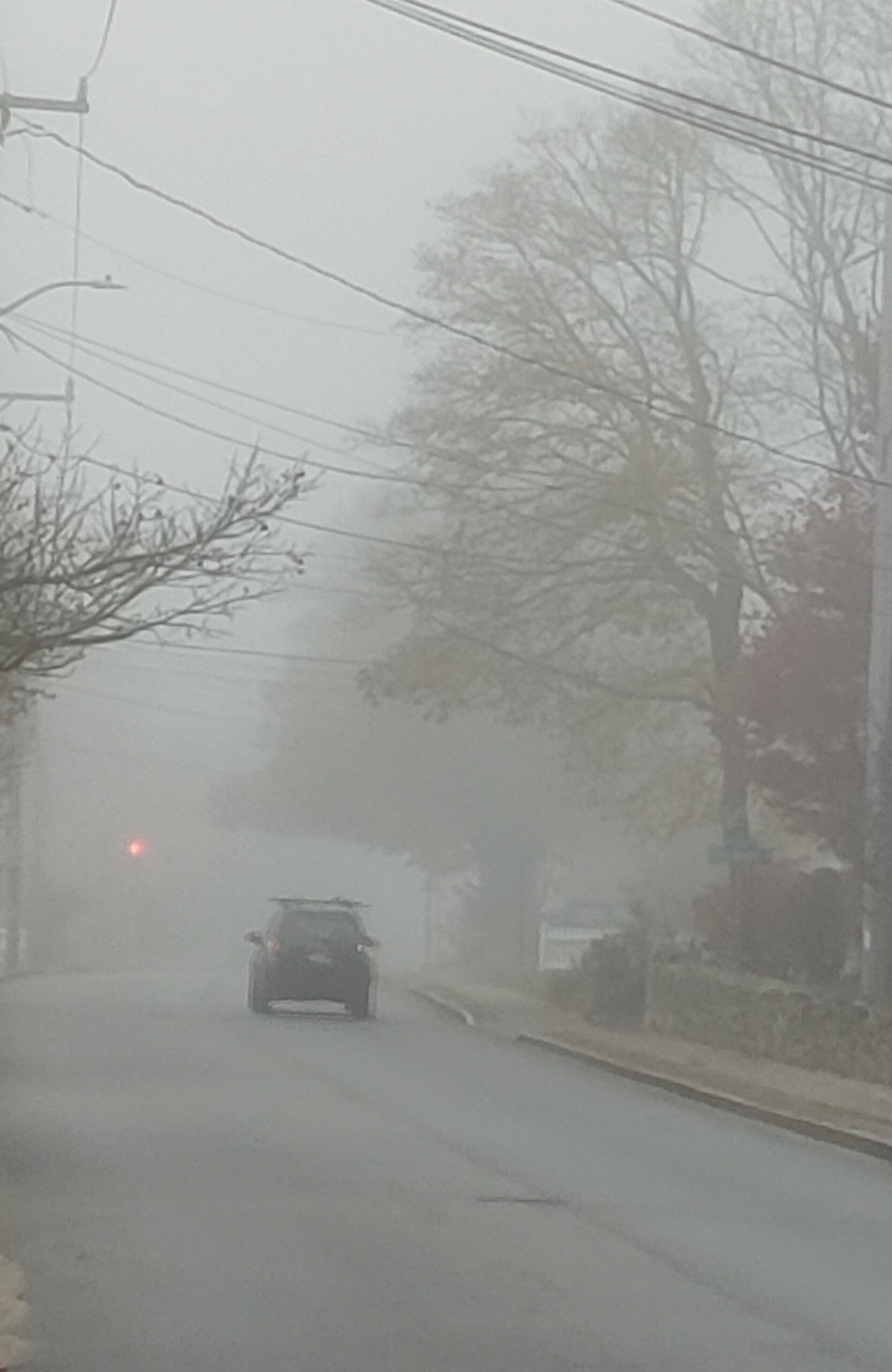
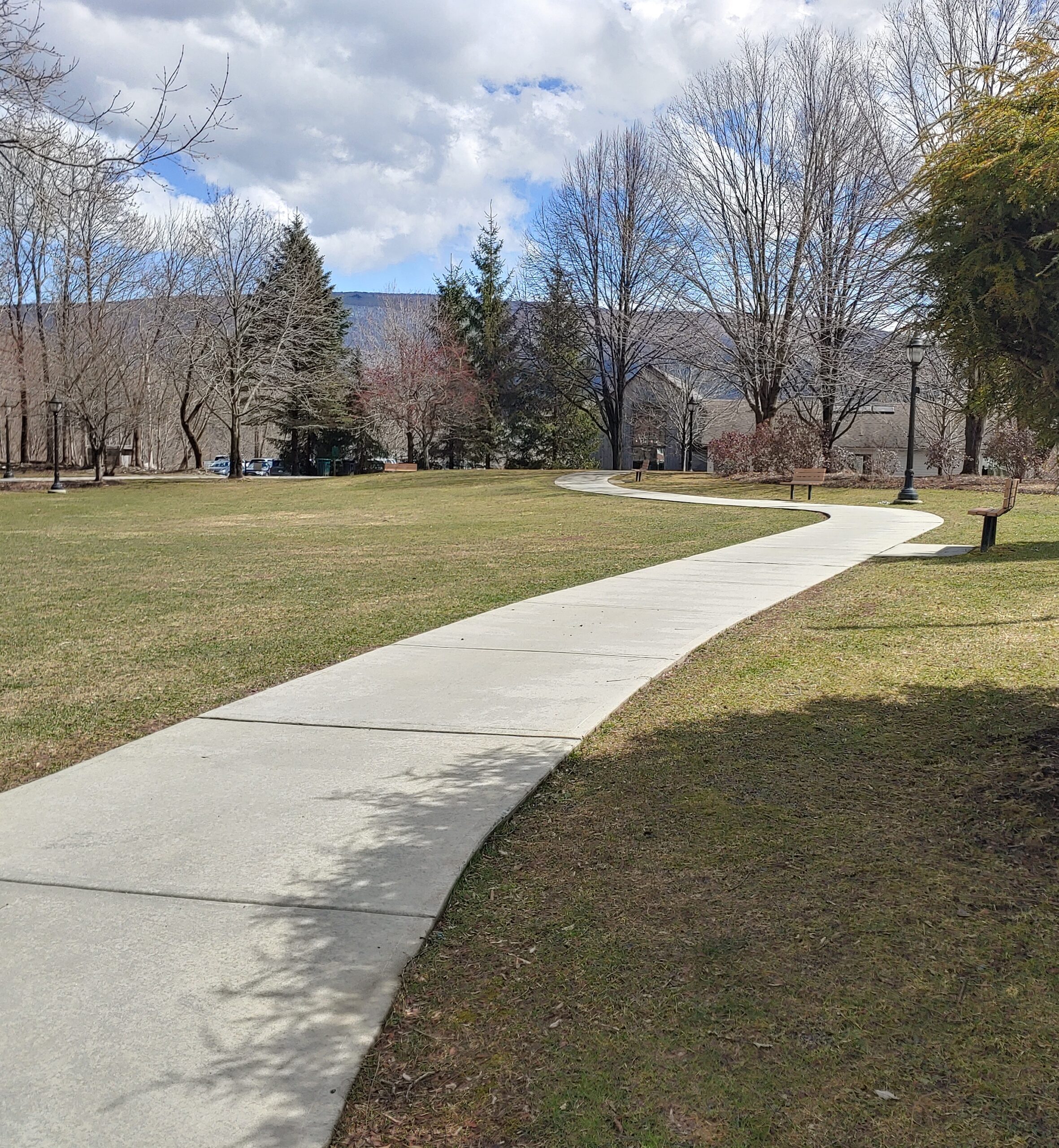
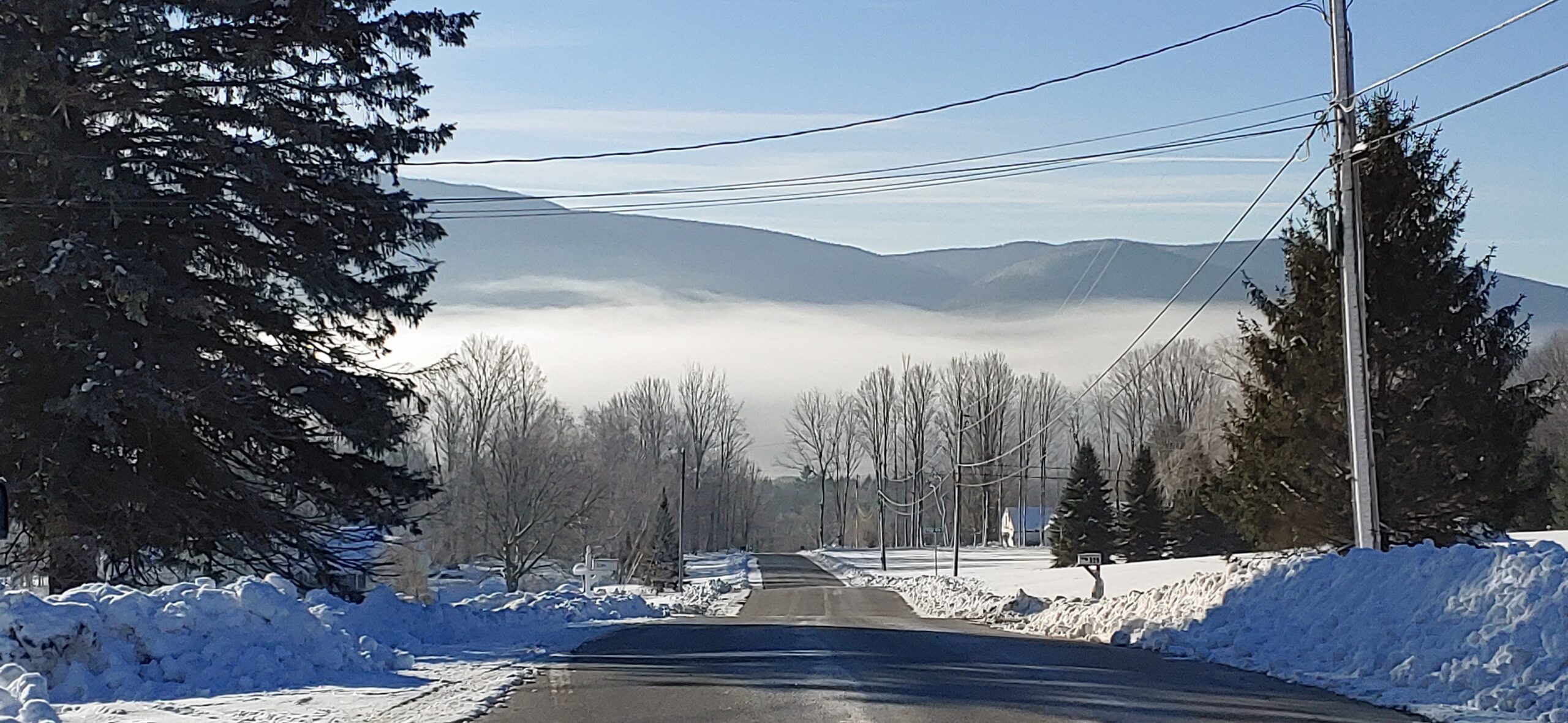
This is High Street yesterday – a foggy morning that obscures everything that is more than a hundred feet away. I know what’s up the road – I lived just a few hundred yards from here for two decades – but I can’t see it.

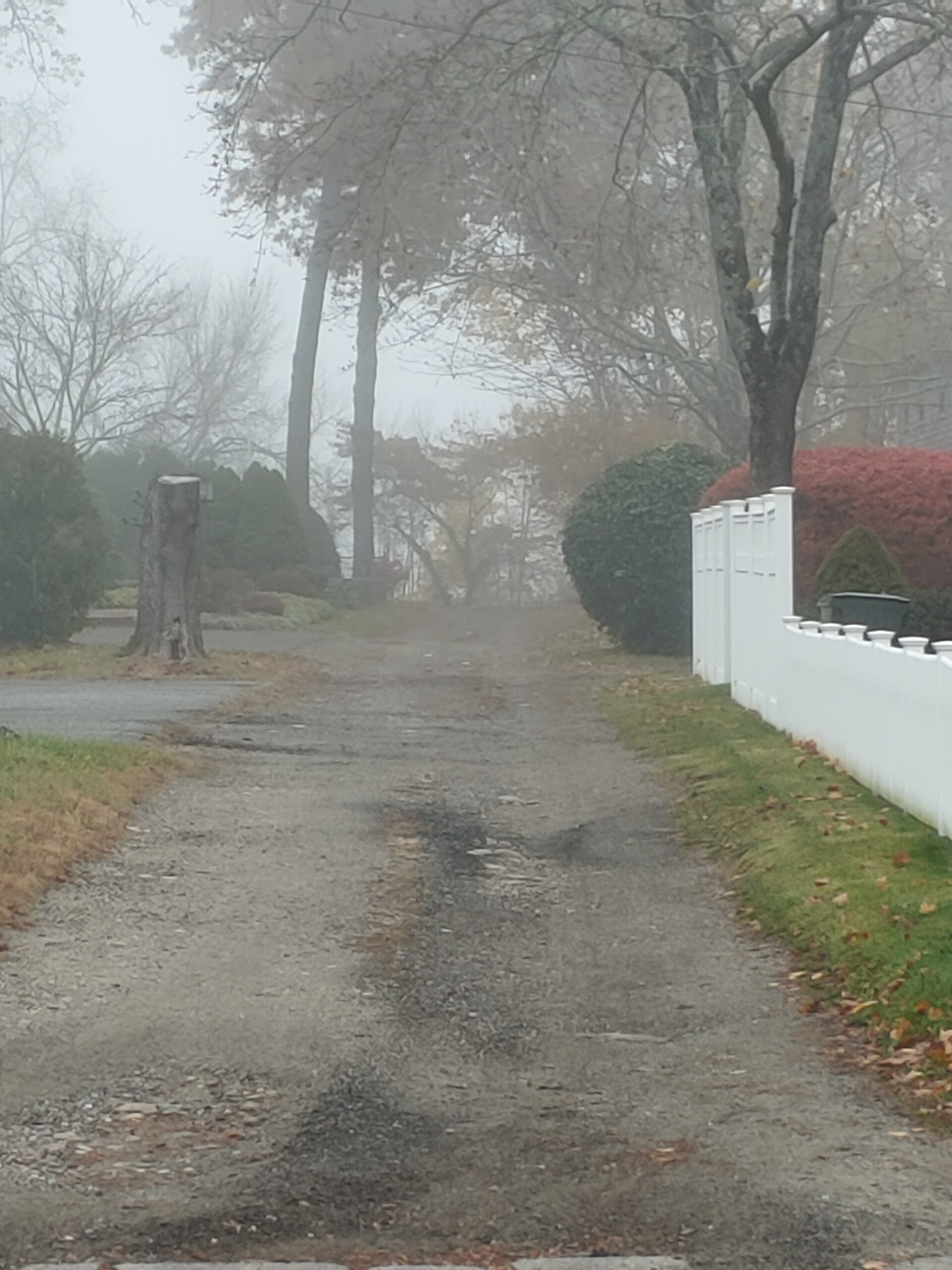
Just across the street, Ladner Street was also wrapped in mystery:

There is beauty in the mystery of a partial view, just as there is a grandness to an unobscured view. I love both – one cannot be mistaken for the other, and seeing both is a glimpse of something more important and expansive than I can express in words.

Encounters with God, large and small, are more akin to the glimpses of life through fog or mist – beautiful, but in no way all-encompassing. This doesn’t mean that they are untrue or faulty, it just means that they are not complete. One person cannot behold God fully, and one person’s vision of God does not dictate or encompass all the visions of God that are possible. That’s not a problem – unless and until a beautiful and partial view is mistaken for a full one…

For now we see in a mirror, dimly, but then we will see face to face.

I Cor. 13:12a

The Back Page of My Day Planner

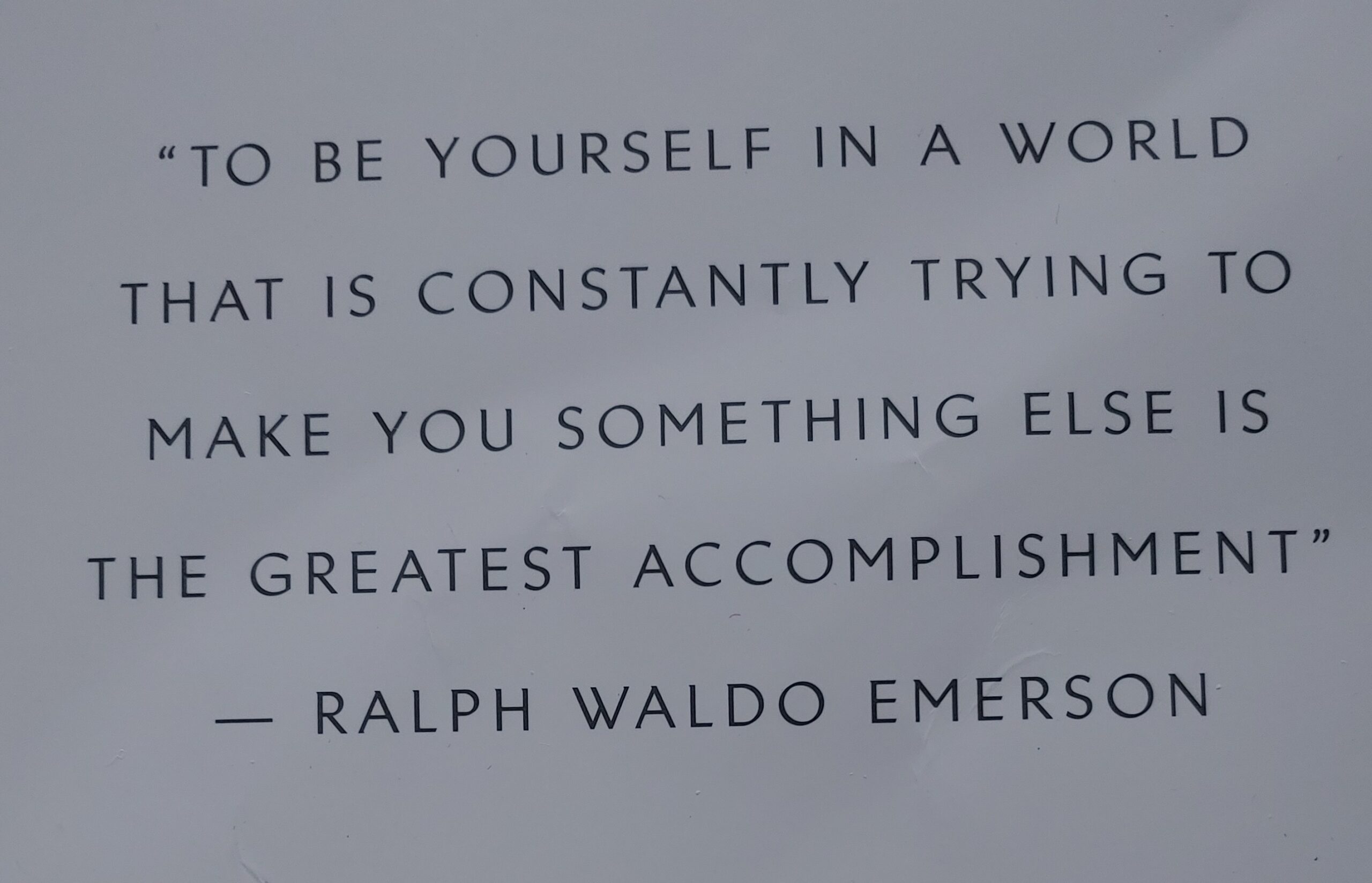
Emerson has a point. It isn’t easy to grow into the person you are rather than the person someone else – or society – wants and expects you to be. Other ways to put it: To thine own self be true; Be yourself: everyone else is taken. It requires courage, patience, and strength of character.

Being yourself is a Big Idea, but not a complete or sufficient one. It can easily become an excuse for selfish behavior and a disregard for the value of others. If I were to fill out this big idea, I guess it would be along these lines:

Be yourself – a unique gift to the world that is always connected to every other person. And remember to help others be the selves they were meant to be as well.

Big Idea: Common Genetics

If you enter the Hall of Human Life in Boston’s Museum of Science, you can check your vital signs, test your balance, see if your social network is strong enough to foster emotional and cognitive health, watch chicks hatch, check out a beehive, and see cotton-top tamarins. You will also find a display that shows how much of our own DNA is shared with other species. Just a few:

Trees: 50%

Zebrafish: 70%

Dog: 86%

Cats: 90%

Chimpanzee: 99%

We have a lot in common with the other life that inhabits our little blue planet. In an evolutionary sense, we are kindred, related by the common building blocks that govern our growth and traits. At the same time, we are a diverse bunch, having different needs and adapting to our home planet in different ways over millions of years.

I guess this shouldn’t be surprising. Painters have been using the same colors, creating wildly different pieces – Munch and O’Keefe. Musicians have done the same with sound – Simone and Bach. How could it be otherwise in creating life?

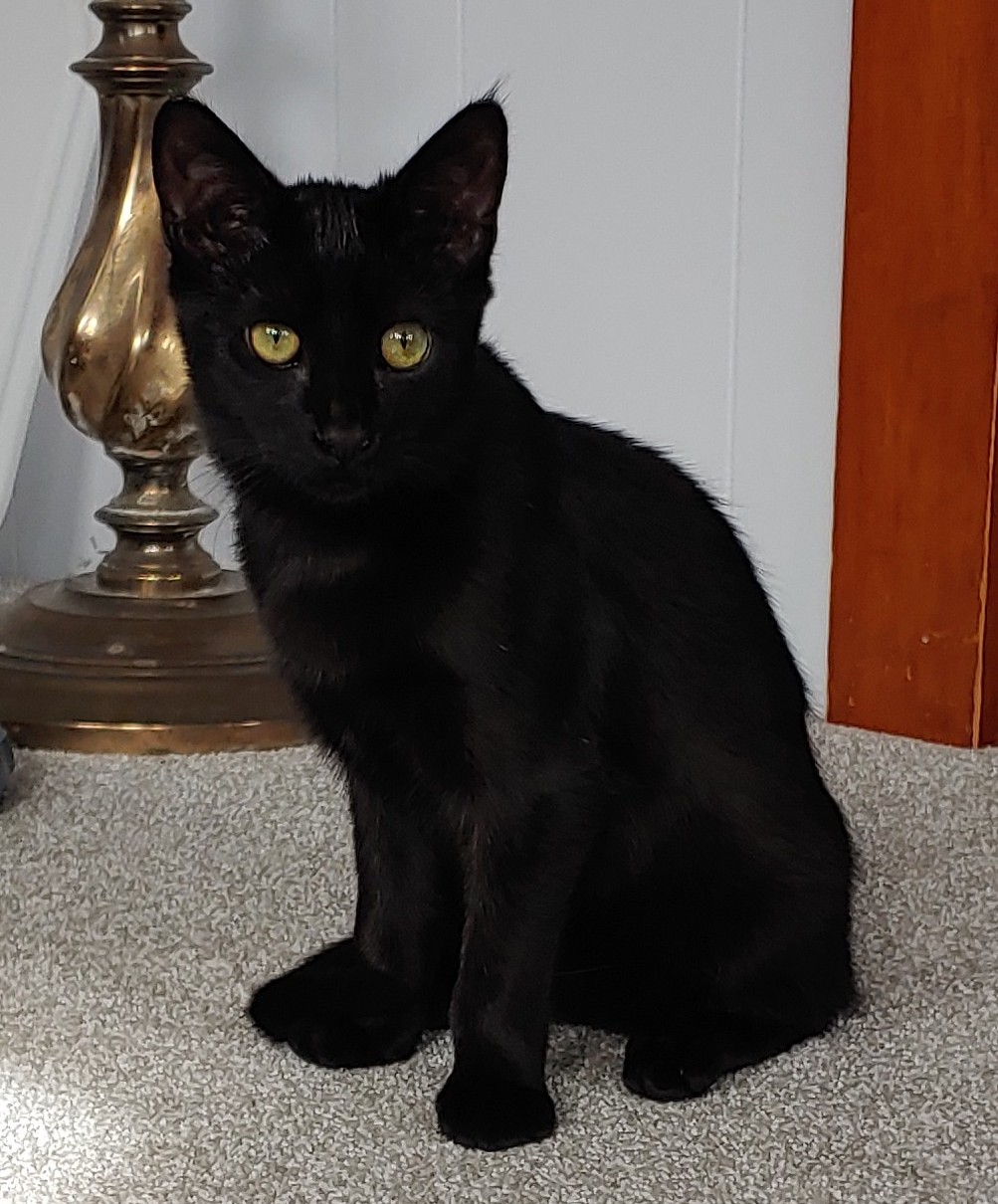
Franklin

Going Around In Elipses

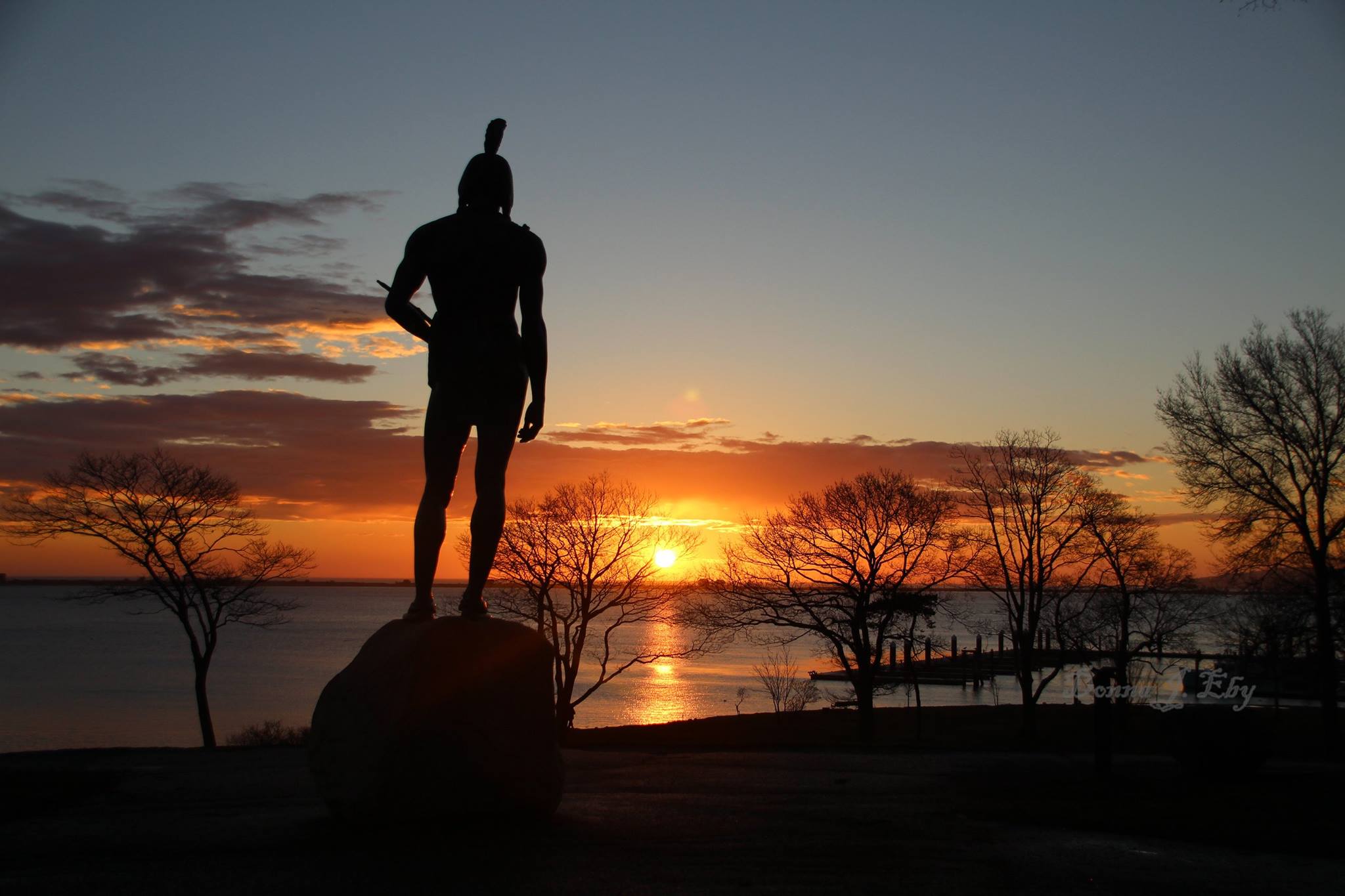
Plymouth Sunrise, by Donna Eby

In the 4th century BCE, the Pythagoreans proposed a radical idea: the Earth was not stationary, but moving. In the 3rd century BCE, Aristarchus of Samos proposed a heliocentric model of the solar system: the sun as the center point, and the Earth moving around it in circles.

Ptolemy proposed a geocentric model, and he worked out the math to accompany it. It was a complex system, but was the predominant one for hundreds of years. This was the model incorporated into theology – humanity as the focus of all creation, living on the unmoving center of the entire creation.

Fast forward to the 1500’s, and Renaissance mathematician Nicolaus Copernicus proposes the Heliocentric Model once again. Then come Kepler and Galileo. Based on what is mathematically simpler and more elegant, Kepler proposes elliptical orbits rather than circular ones; Galileo comes along with supporting evidence seen through his telescope. In spite of theological objections and suppression, the geocentric model is eventually rejected. In spite of preconceived notions, observational data and advanced mathematics displace Earth from the center of all things to its current position: orbiter around a sun, and one planet among billions.

Humanity no longer inhabits the immovable center of creation, and the universe does not revolve around humanity’s home. Such displacement isn’t the end of the world, it’s the beginning of a new perspective on a much larger reality – one that incorporates our particular species on our small planet without pretending it’s the only reason the entire cosmos came into being. As a species, it’s similar to the shift that children have when they realize that their parents had lives before and beyond their own.

What a wonderful, big idea: that the universe is about more than just one particular part, and that its mystery and majesty are not limited to human knowledge or imagination. God’s creation is not governed by human preference for circles rather than ellipses, but governed by its own internal structure.

I think going around in ellipses rather than living on an immovable focal point is endlessly interesting. I love the fact that I am a part of something so big, something that has made room for me and every other life form. Just because the world doesn’t revolve around any one of us doesn’t mean we aren’t valuable – it just means everyone else is valuable, too.

Big Idea: Relativity

Einstein’s theory of general relativity didn’t mean that everything is relative – that nothing is sure, or that there’s no real way to value one thing over another. Einstein’s theory is that everything is connected, Related not relative. The Butterfly Effect and John Donne’s poem are both pointing to the same truth as Einstein’s theory: that everything is related to everything else.

One particular negative example comes to mind for me. Our friend Ben Suddard’s oyster beds were damaged by the run-off of all the chemical fertilizers used in towns twenty miles upstream from the bay. The connection wasn’t obvious, but it was real and powerful.

There are many examples on the positive side as well. But one of the most profound for me: nothing in creation is unrelated to the Creator. Perhaps that’s why one of the names for Jesus is God-With-Us…

The Big Idea

It’s the run-up to Thanksgiving, and a good time to think about ideas and people who have changed the world in amazing ways – philosophers, holy ones, scientists, artists of all kinds, healers, and keepers of our world.

For the next few weeks, I’m taking a page from Kobi Yamada’s and Mae Besom’s book, What Do You Do With An Idea? (Seattle, Washington: Compendium, 2013). I’m going to give it some thought, be open to new directions and actions, and see where it all goes.

You are more than welcome to join me…

Arriving

We have taken the road through the psalms of Ascent, and now we reach the end.

But it’s never really the end, is it? Because there are always places that call to us, that put our feet back on the road.

Even if where we go next is a familiar place, the road and the ascent has changed us. We aren’t really going back to who and where we were – we are walking into the wonder of a time and place that we see more clearly for having left.

Every place we call home is a temporary dwelling place; our time is limited and we move on.

But before we set out again, let’s dwell in the place that is the reason for our journey: the house of the Lord.

Come, bless the Lord, all you servants of the Lord, who stand by night in the house of the Lord!

Lift up your hands to the holy place, and bless the Lord.

May the Lord, maker of heaven and earth, bless you from Zion.

Psalm 134, NRSV, A Song of Ascents

Bless the Lord for all the challenges we face on our journeys – they teach us patience and give us strength.

Bless the Lord for the everything-is-falling-into-place times: we see the beauty around us more easily for them.

Bless the Lord for the work we have been given to do – we appreciate rest more because of it, and we have the chance to honor creation through it.

Bless the Lord for the journey. Bless the Lord for journey’s end. Bless the Lord. Make us a blessing. Bless.

In Memory of June Smith

June was that rare person who could be busy with five different things and never be too busy or in too much of a hurry to talk with you. On several occasions, when I was one of many guests in her home, June managed to feed a crowd and keep up a conversation that was always gracious and never seemed rushed. I’m not sure how she did that, but I’m so grateful I got to experience it. I always left her house and her presence with a lighter heart and a grateful spirit.

My life is richer for June’s presence in it, and I am grateful to God for the time I got to spend with her.

How Very Good

How very good and pleasant it is when kindred live together in unity!

It is like the precious oil on the head, running down upon the beard, on the beard of Aaron, running down over the collar of his robes.

It is like the dew of Hermon, which falls on the mountains of Zion.

For there the Lord ordained his blessing, life forevermore.

Psalm 133, NRSV. A Song of Ascents

There isn’t much unity right now, especially in Israel and the Ukraine. It isn’t oil that’s running, it’s blood. The world is too small – and there are too many people and too many life-taking tools – for us to pretend that we are all anything but kin. We are bound together in our common breath, our common need for nourishing food, adequate clothing, sturdy shelter, and our common right for a life without violence. So how do we get to that place from this one?

My thoughts right now:

Prayer is a good place to begin – a prayer for those in harm’s way, and a prayer that those in power seek peaceful solutions. I’ll continue praying, and remembering this: prayer isn’t a good place to end.

Act in ways that foster peace and justice in my everyday life. Keep a calm, inviting home. Let go of frustration that is fruitless and petty – waiting a few extra minutes in a line, getting cut off on the traffic circle, and extending courtesy and compassion to those who cannot or will not do the same for me.

Put my resources to good use. Send aid to areas that desperately need it, not just once but for as long as it takes for the situation to improve.

Keep the to-do lists and work/social obligations reasonable; the time squeeze narrows my focus and allows me to eliminate anything beyond my own preoccupations.

That’s enough to be going on with.

Moving into God’s presence through words