Thanks for the Inconvenience

My husband and I were up late on Monday assembling our new Ikea bed. After measuring the room and trying several different models, we chose a Hemnes. We threw in the four large underbed storage drawers, making the bed a space saver as well as a comfortable place to sleep. All the boxes fit in the car, the directions were easy to understand, and we managed to get the whole thing together before midnight – quite an accomplishment for two spatially challenged individuals.

My husband was the first to notice the problem. While the bed fit into the space beautifully, there wasn’t enough room on the sides to pull the drawers out. Either we give up the storage drawers or we reconfigure the room for the first time in five years.

We haven’t decided what we’ll do yet. One way or the other, it hasn’t turned out the way we thought it would. It’s certainly not a devastating dilemma, just an inconvenience and an opportunity to choose storage or furniture placement status quo.

We’ve been laughing about the whole thing these past couple of days – an unexpected blessing courtesy of our spatial shortcomings. The chance to enjoy inconvenience together doesn’t happen so often that I don’t recognize its benefits.

Teach me to treat all that comes to me throughout the day with peace of soul…

Prayer at the Beginning of the Day, A Manual of Eastern Orthodox Prayers, New York: St. Vladimir’s Seminary Press, 1991, p. 20

Big Blue Marble

The Earth’s a big blue marble when you see it from up there

The sun and moon declare her beauty’s very rare.

Big Blue Marble theme song

It’s a little over two miles from where we parked to the end of canal. With sunny skies and a brisk breeze at our backs, we set out for the farthest point on the Cape Cod Canal path. A few cyclists, the odd fisherman, and a handful of other walkers shared this extraordinary place and time with us.

A cormorant fanned her wings, standing on a seaweed covered rock; seagulls caught updrafts, skillfully hovering in place. Almost invisible sparrows emerged from the sea grass just a few feet away from us. We left the Sagamore bridge at a bend in the path before we could see the beacon that marked the path’s end. Spiderwebs filled the spaces between the breakwater rocks, sheltered from the ocean currents, blowing sands, and gusting wind.

We spoke a few words out on the breakwater, sharing a few amazing particulars in the vast beauty of ocean, sky, and land. Most of the time, we listened to the wind and water, two small creatures keeping silent before the mystery of nature.

On the walk back, we gathered up the pieces of our everyday life we’d left along the way. Lunch ideas, guesses on when we would get back to the car, and afternoon plans were reclaimed as the bridge and traffic sounds reappeared. The couple of hours spent walking settled into place, a piece of the day among other pieces. Time moved us along its path.

But our walk wasn’t just a way to get from one point to another, and it wasn’t just a photo opportunity – nothing so common as either of these. When the blindness that prevents us from seeing the beauty of this place is healed, when we know we are a part of Life’s story, and when we bow down in gratitude for our small and fleeting part in it? It’s a walk in Eden and a glimpse of heaven.

I am grateful beyond words.

In the company of friends

All who live and visit here shall be friends.

Kindliness and harmony shall be the watchwords.

Welleran Poltarnees, A House Blessing (Seattle, Washington: Blue Lantern Books, 1994) p. 6

For the past few Halloweens, friends have come for dinner, relaxing, catching up, and enjoying the visiting witches and ghosts that brighten our door. There were ten of us this year. For some, it’s the latest in a long line of Halloweens spent together here or there; for others, the first time. But it would be quite a trick to tell them apart. It was a room full of good listeners and good storytellers, with a natural give and take among those who were meeting for the first time and those who’ve known each other for decades.

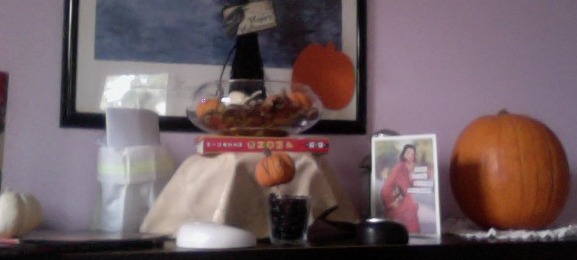
When the last friend headed home, I looked around the room with its candles, books, origami bats and pumpkins. I cannot say why, but I knew that something of God’s presence had come to dinner. The kindness of friends, a time set apart, a little something to eat and drink. Just your garden variety encounter with the love that binds the universe together found in the company of friends, family, and holy strangers at the door.

halloween 2015

How to begin?

Mickey Cray had been out of work ever since a dead iguana fell from a palm tree and hit him on the head…

…”Me, too, Lucille.”

[Carl Hiaasen, Chomp, (New York: Alfred A. Knopf), 2012, pp. 1, 290]

Like real life, it’s full of secrets and sacrifice. Money and fame change people, but so do kindness and courage. The second rate reality star gets chomped by a long list of critters and insects and stumbles into helpfulness. A family faces medical bills and two young people become friends for life. Not too dark, not to sweet.

There’s an art to starting a story, and how we begin telling our own tales can intrigue or bore ourselves and others. If we think our lives are dull, we will use flat words written with broken pencils. If we see our lives as adventures, a dead iguana may start the whole thing moving. This goes double for our faith stories: how we feel about them will come across in how we tell them to ourselves and others. Are there a few dead iguanas, flashes of light and thunder, brave children foiling evil plots, something that we can’t quite tame that makes the heart beat? I certainly hope so!

How will you begin your story? How will you tell me all about your sacred life? I wonder. There’s no real beginning and no real end, but there are always places to start and specific chapters to end. If I were telling you my story, I’d begin like this:

Is an eighty-six year old man strong enough to get my head above water? I hope so, because Pastor Chase is taking a long time, and this is only the first of three dunks in my Merrymeeting Lake baptism…

A Worded Life

Rain fell that night, a fine, whispering rain…

…As Mo had said, writing stories is a kind of magic, too.

[Funke, Cornelia; Inkheart (New York: Scholastic Inc), 2003, pp. 1, 534]

Meggie’s begins with a stranger’s visit on a rainy night. It ends with Meggie’s decision to create new worlds with paper and ink, writing places for readers to visit. In between these lines, storytellers read villains and fairies out of their book worlds into ours through the magic of their voices. But there’s a catch: for everything that comes out of a book, something or someone leaves behind our world to enter it. Behind the words, through the pages and in the chapters, a rich life awaits – a place that some call home and others want to visit. So real is this story world that Meggie thinks that “perhaps there really was something behind the printed story, a world that changed every day just like this one.” (p.529)

I’ve spent thousands of hours in Middle Earth, the Hundred Acre Woods, Inkworld, Hogwarts, Tara, and countless versions of London, New York, and Maine. The ability to create a new reality on the page that changes real life is a powerful gift.

The words I read to myself can change who I am. The words I read to others can do the same, feeding the imaginations of adults and forming a child’s ability to reason. They can reveal marvelous possibilities for tomorrow or they can damage heart and soul. It’s vital to choose the stories I tell wisely.

The same can be said of scripture. It’s a world of love, pain, loss, ignorance, and miracles. But it’s not really just a collection of stories. It is a doorway into the biggest world possible: the one God created, nurtures, and enters to meet us. Not just words on a page, but the Word that created all possible worlds – most especially the beloved cosmos we all call home.

Also many other things…

In the beginning was the Word, and the Word was with God, and the Word was God…

But there are also many other things that Jesus did; if every one of them were written down, I suppose the world itself could not contain the books that would be written. John 1:1, 21:25

Whenever I teach, I end the last class with John’s final words about Jesus. No matter the age and stage of the learners, how short or long the class ran or subject studied, these words have the last word. It’s a beautiful way to end a gospel or close a class, this truth.

Jesus did so much that I never saw or heard about, bringing the grace of God to unknown people and forgotten places. This sentence reminds me that I will never know or appreciate all that God-With-Us did when he walked this earth.

Paired with the opening words, John takes me from God-before-creation to God-in-Jesus. That’s a cosmic trip lasting billions of years, spanning unimaginable distances. The world that holds me could not contain the books that could be written about the beginning of everything – much too much for words to convey.

These words were written after Easter, after Jesus sent the Spirit to be God-within-us, God-walking-with-us, God-everywhere-around-us. Jesus is now with me through the Spirit. Of course the world itself could not contain the books that would be written about Jesus: the story continues to unfold in me, in you, in all that is, and in all that will be. Once again, much too much for words to convey. Isn’t that extraordinary? Isn’t that wonderful?

Photo on 2015-07-13 at 10.10

The Bad Beginning of a Long Journey

If you are interested in stories with happy endings, you would be better off reading some other book…

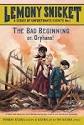
The car drove farther and farther away, until Justice Strauss was merely a speck in the darkness, and it seemed to the children that they were moving in an aberrant – the word “aberrant” here means “very, very wrong, and causing much grief” – direction. (Lemony Snicket, A Series of Unfortunate Events, The Bad Beginning (New York, NY: Harpercollins publishers, 1999)

search

It’s the story of the Baudelaire orphans trying to survive the fiendish plots of Count Olaf with life, health, and inheritance intact. As the three children get older, they grow from seeing everyone as either all good or all evil to seeing everyone (themselves included) as a mixture of light and dark, good and evil. Along the way, some good people make costly mistakes and a few villains find the courage to do what’s right. There is a lot of gray, and not all the questions are answered.

Like most of us, the Baudelaire children gradually come to realize that not everyone is willing to do the right thing. Some lack courage, others can’t figure out what the right thing is, and still others prefer worldly gain over personal sacrifice. Not everything gets resolved, and the three children don’t get a clear happy ending. What they get are moments of decision and the strength to accept the consequences of their actions. They make mistakes, they cause pain, and they grow up enough to withhold snap judgements about the actions of others.

At the end of the series, the children face an uncertain future together, willing to help others even at their own cost. They accept the world for all the hurts it has brought, and they accept their own inability to create a perfectly happy ending for everyone they love.

There isn’t anything particularly religious in this book or the twelve others in the series, but moving from a child’s simplistic view of people as all good or all bad to a more nuanced perspective is a sure sign of maturity. If such maturity evokes compassion for self and others, it is a journey of faith. If it ends in the rigid condemnation of others and personal despair, it’s a glimpse of hell.

Thank you, Lemony Snicket, for the ethics lesson, and for all the big and small words that took me on the journey.


In the beginning when God created the heavens and the earth, the earth was a formless void and darkness covered the face of the deep, while a wind from God swept over the face of the waters…And Joseph died, being one hundred ten years old; he was embalmed and placed in a coffin in Egypt. Genesis 1:1, 50:26


It begins with the beginning of everything: space, time, matter, elements, life. It ends with the end of a single man dying in the foreign land that sheltered his whole family. It doesn’t get bigger than a universe whose size is beyond imagination. It doesn’t get more personal and specific than the last words and final resting place of a single human. Genesis stretches from our infinite creator and to our universal and very specific experience of death.

There are so many ideas about why God created, and why God chose to make the great, big world that is our cosmic home. I think it’s one of the reasons we tell our sacred stories, writing them down as our best attempt to give those who follow us a glimpse of how we saw God moving across the depths of our souls.

There are just as many ideas about why God made us, and why we all die. Saying goodbye to our holy, mortal flesh is another reason we tell our sacred stories, writing them down as our best attempt to give those who follow us a glimpse of our return to the God who made us.

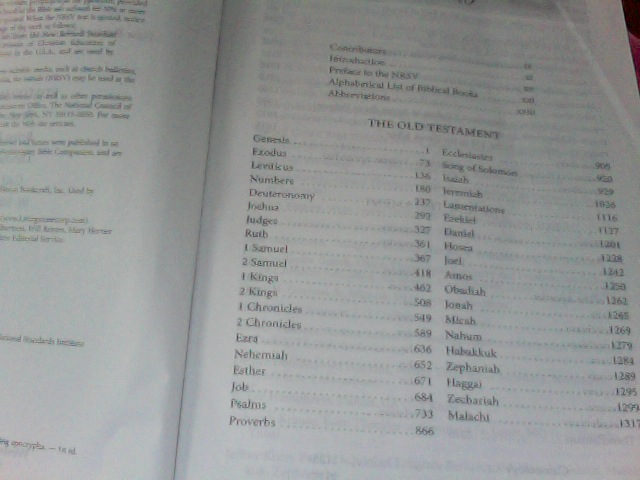
The Bible is a magnificent library, full of books written by men and women who found God waiting for them on mountains, in shrubs and jail cells, in the belly of a big fish, and in the birth of a baby boy. If I had to sum it all up, this talking with and listening for God, it’s this:

The universe is very big, and you are very small.

You belong to the entire cosmos, and you are precious.

I love you so much.

I love everything and everyone else, too.

You are never lost to me.

The words aren’t really the point; they are an invitation to fall into the arms of God. I doubt I’ll ever receive another such beautiful invitation.

Running Away, Coming Home

Once there was a little bunny who wanted to run away…

…”Have a carrot,” said the mother bunny.

The Runaway Bunny

I’ve read these words hundreds of times to nieces, nephews, and sons. I’ve admired Clement Hurd’s black and white sketches and full color illustrations with many toddlers, their little hands pointing out the little bunny in his boat, flower, and fish disguises. I’m on my second copy now – the first was loved to tatters before my younger son turned two.

I’ve read these words to hundreds of Sunday school children and their parents. I’ve read them to hundreds more sitting in pews in half a dozen churches. It’s one of the best interpretations of Psalm 139 I’ve ever found, and the simplest. Like the little bunny, most of us try to run away from God’s love and care, changing identities to avoid the holiness of our unique lives. Fortunately, God comes looking for us, bringing us home.

If you have the time, read all about the little bunny who wanted to run away. Pull out your Bible and look up Psalm 139, the grown-up poem about the same thing. Take God’s hand and come on home.

O Lord, you have searched me and known me…

You search out my path and my lying down, and are acquainted with all my ways…

If I take the wings of the morning and settle at the farthest limits of the sea, even there your hand shall lead me…

I come to the end – I am still with you. Psalm 139:1, 3, 9, 18b NRSV

Brown, Margaret Wise; The Runaway Bunny (New York: HarperCollins Publishers), 1942

ottableofcontents


Opening Sentences, Parting Words

boarbooks

I may not be able to judge a book by its cover, but the words that come before its first period often determine whether I will take a book home or put it back on the shelf. A surprising turn of phrase or an intriguing question are enough to keep me reading. Sometimes the first sentence stands on its own, other times it takes some explaining. Somehow, it leads me to the last few words and the final punctuation mark: period, question mark, exclamation point.

The last words in a book are the door out of its world and back into my own. I don’t read them until I read all the words that came before them – why spoil the surprise? But I do like to go back and read the first sentence again before I put the book away, seeking again the words that began the whole adventure. Do the opening sentence and the final one have anything in common? Could the story in between be something other than what it was?

Sacred or secular, stories begin and end. But the best don’t really end because they have taken residence in the story that is my life. Over the next few weeks, I’ll share some of my favorite beginnings and endings. I hope you enjoy them. Perhaps, if you are feeling bold, you will share some of your own favorites…

In the beginning was the Word, and the Word was with God, and the Word was God…

…But there are also many other things that Jesus did; if every one of them were written down, I suppose the world itself could not contain the books that would be written. John 1:1, John 21:25

Rain fell that night, a fine, whispering rain…

…As Mo had said, writing stories is a kind of magic, too. Cornelia Funke, Inkheart

In those days, there were prophets in Israel…

…Warm and gold the sunlight lay over Greece. Robert Nathan, Jonah

Mickey Cray had been out of work ever since a dead iguana fell from a palm tree and hit him on the head…

…”Me, too, Lucille.” Carl Hiaasen, Chomp

In the beginning, when God created the heavens and the earth, the earth was a formless void and darkness covered the face of the deep, while a wind from God swept over the face of the waters…

…And Joseph died, being one hundred ten years old; he was embalmed  and placed in a coffin in Egypt. Genesis 1:1, 50:26

Once there was a little bunny who wanted to run away…

…”Have a carrot,” said the mother bunny. Margaret Wise Brown, The Runaway Bunny

If you are interested in stories with happy endings, you would be better off reading some other book…

…The car drove farther and farther away, until Justice Strauss was merely a speck in the darkness, and it seemed to the children that they were moving in an aberrant – the word “aberrant” here means “very, very wrong, and causing much grief” – direction. Lemony Snickett, The Bad Beginning

The revelation of Jesus Christ, which God gave him to show his servants what must soon take place; he made it known by sending his angel to his servant John, who testified to the word of God and to the testimony of Jesus Christ, even to all that he saw…

The grace of the Lord Jesus be with all the saints. Amen. Revelation 1:1, 22:21


Bibliography:

The Holy Bible, NRSV

Brown, Margaret Wise; The Runaway Bunny (New York: HarperCollins Publishers), 1942

Funke, Cornelia; Inkheart (New York: Scholastic Inc), 2003

Hiassen, Carl; Chomp (New York: Alfred A. Knopf), 2012

Nathan, Robert; Jonah (New York: Robert M. Mcbride & Company), 1925

Snicket, Lemony; The Bad Beginning “A Series of Unfortunate Events” (New York: HarperCollins Publishers), 1999
Moving into God’s presence through words