Out of the depths I cry to you, O Lord. Lord, hear my voice! Ps. 130:1
The children lit the vigil candles. The cantor sang a wordless song simple enough for even those of us unfamiliar with the melody to join in.
Lamentations biblical and spontaneous were lifted to God. Prayers of hope and safety chanted in Hebrew joined them. People stood and named friends and family members in Israel; some accounted for, some lost, some who died violently.
My husband and I added our prayers and presence, part of the gathering at the synagogue last night. For our neighbors, Alison and Michael, for their family, and for all whose lives will be forever changed because of hatred and the desperation of the soul that generates it.
Out of the depths I cry to you, O Lord. Lord, hear my voice!
The Lord will keep your going out and your coming in from this time on and forevermore. [Psalm 121:8, NRSV]
There were no streetlights near my home when I was in my teen years. On cloudy nights, or ones when there was no moon to light the way, darkness covered everything. One such night, I was walking back from a friend’s house after neighbors were in bed, lights off. About a third of the way home, before I made the turn and could see my house, my friend shut off her porch light. In that moment, a thousand yards from home, everything disappeared. After a moment or two of standing still, I continued on my way. Instead of seeing, I listened to the sound of my feet on the road; when the sound of my steps changed, I knew I had strayed off the road. I tapped my toes against the ground until I found pavement again, then kept on walking. Eventually, I rounded the corner and could see the porch light of my own home.
It’s this lost in the dark experience that I think of when I read this psalm. When I find myself in a dark place – in the existential, spiritual, emotional sense – I remember that night. Finding my way didn’t require sight, just enough trust to put one foot in front of the other until I rounded a corner and the light reappeared. My life is kept by God, coming in or going out; I may lose my way in the dark, but I’m never lost to God.
I life my eyes to the hills – from where will my help come?
My help comes from the Lord, who made heaven and earth.
He will not let your foot be moved; he who keeps you will not slumber.
He who keeps Israel will neither slumber nor sleep.
The Lord is your keeper; the Lord is your shade at your right hand.
The sun shall not strike you by day, nor the moon by night.
The Lord will keep you from all evil; he will keep your life.
The Lord will keep your going out and your coming in from this time on and forevermore.
Psalm 121, NRSV
[Note: In the King James translation, the first verse was changed from a question to a statement – a beautiful statement of faith, but not what was written in Psalm 121. This is part of an ongoing series. For more information, click A Song of Ascents above.]
Where do I look for help when I’m in trouble? Whence cometh my help, to put more of a King James spin on it. Whom do I trust with my very life, in all circumstances? It’s a critical question, and the answer is always a statement of faith, even when God’s presence has sustained me through past difficulties. I will trust in God when I need help, just as I trust in God when things are going well.
Once I give my answer in this psalm, I find myself in good company. All of a sudden, there’s another voice, assuring me of God’s faithfulness. Someone else is with me in all of this, someone else is telling me that God will keep my life: I won’t be alone through any of it. I’m not the only one who cries for help, and mine isn’t the only life held by God. My neighbor in faith is with me, and we are both beloved children of the one who created and sustains this universe.
God, self, and neighbor in this mysterious and holy creation. Bound together in all circumstances. Not a one of us alone.
What shall be given to you? And what more shall be done to you, you deceitful tongue?
A warrior’s sharp arrows,
with glowing coals of the broom tree!
Woe is me, that I am an alien in Meshech,
that I must live among the tents of Kedar.
Too long have I had my dwelling among those who hate peace.
I am for peace;
but when I speak, they are for war.
Psalm 120, Psalm of Ascent, NRSV
The same emotional state that causes a child’s tantrum can also take hold of an adult. Reason and offers of compromise, even apologies, won’t resolve it – in fact, they may have the opposite effect, causing the one throwing the fit to ratchet up the anger. Destruction becomes the goal, damn the cost. And the cost is high.
What happens when it takes hold of a group, when words and actions cannot redirect the swell of damaging energy and emotion? When mob mentality takes hold and directs violence outward, aiming at specific individuals or groups? Large scale or small, that’s war.
Sometimes, in this emotionally charged and divisive age, it feels like peaceable words and actions are useless. But that’s not true. As individuals, we may not be able to put an end to the thirst for war and destruction, but we can certainly make sure we don’t add to it. Maintaining a state of non-reaction, of peace, bears witness and has its effect. Who knows – it may be the way God answers our prayers for peace. And it just might keep us sane and hopeful.
Keep speaking peace.
[This is the first in a series on the Psalms of Ascent. For more information, click above…]
Psalms 120-134 are walking hymns, sung by pilgrims making their way toward (and up) to Jerusalem for one of the three yearly festivals. Who knows if they were composed for this purpose, for priests ascending the stairway of the Temple, or written for different purposes and assigned this role?
I live in a valley between two mountain ranges, and my home is at the top of one steep hill. Ascending and descending are part of every walk I take out my door, no matter the direction I go. I can’t think of a better place to be to sing these songs…
[For more on this series, click A Song of Ascents above.]
Jesus, the Blessed Child of God, is merciful. Showing mercy is different from having pity. Pity connotes distance, even looking down upon…Mercy comes from a compassionate heart; it comes from a desire to be an equal. Henri Nouwen
[Nouwen, Henri J.M.; Bread for the Journey; San Francisco, CA: HarperSanFrancisco, 1985, May 28th excerpt.]
Lord, have mercy. Christ, have Mercy. Lord, have mercy. [Kyrie Eleison]
Lord Jesus Christ, Son of God, have mercy on me.
If Henri Nouwen is right, then asking for mercy is a request for more than forgiveness of transgressions: it is seeking the company of someone who restores our dignity and fragile sense of self worth instead of stripping it away from us. This is a revolutionary request that can transform our inner lives as we seek to make amends for our shortcomings in our outer ones. We expand instead of contract – and perhaps we will dare to show mercy to others so that they may expand as well.
[This is one writing in an ongoing series. For more information, click Daily Meds above…]
For the last thirty years or so, I’ve spent part of my mornings delving into various daily readings and meditations. Buechner and Rohr writings arrive daily in my email; the words of Nouwen and L’Engle are in book form on my shelves; Ryan Holiday and Stephen Hanselman have given me Stoic quotes and some points to ponder. National Geographic has gone one better, adding beautiful images to a marvelous and diverse collection of quotes.
I have missed many days over the past few decades, and a few months at a shot on occasion. Still, I return to my daily readings because they give me a time and a space to be quiet and listen to the hopes, dreams, thoughts, and prayers of another.
Over the next few weeks, I’ll share some of my favorites. Perhaps you will do the same…
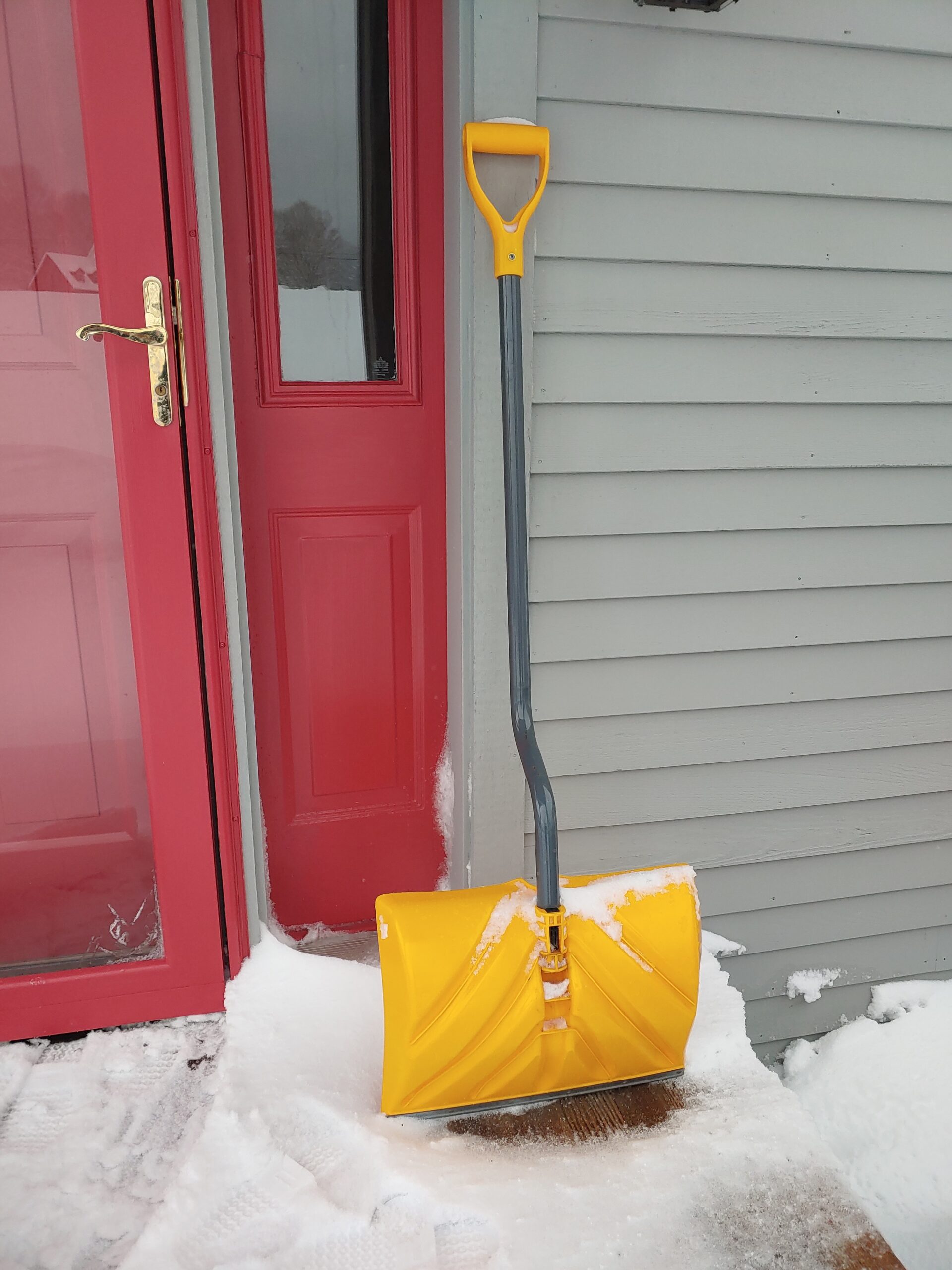
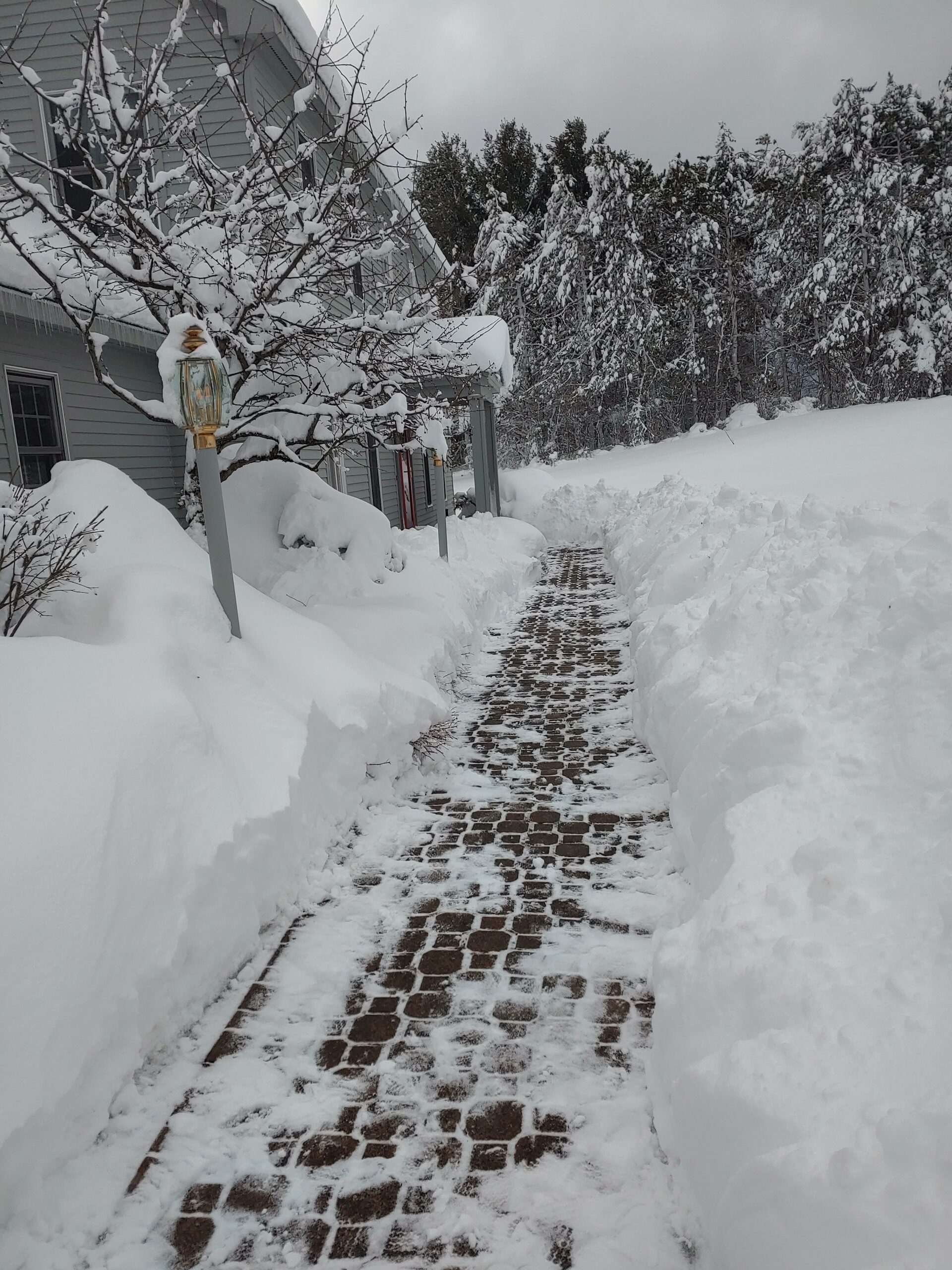
It took almost two days for the storm to wind down to a few floating flakes. Twelve hours into it, I took a shovel to the four inches of snow piled up on the front porch and the ten inches on the walkway. When another half a foot accumulated a few hours later, my husband cleared the porch and walk. The next morning, the walk was buried in another foot of snow. I pushed through the snow blocking the door and went out for round three of shoveling.
It took a lot of bending and heavy lifting to clear a path the first time, and all that work disappeared as the snow continued to fall. All that was accomplished with three rounds of shoveling was the restoration of a way in and out of the house. Such work is usually only noticed when it hasn’t been done, and the path is blocked.
I experience centering prayer in much the same way – a lot of work without much in the way of discernible accomplishment. But it keeps the way clear, getting me beyond my own small internal world and allowing me to welcome others into it. And that is no small thing…
The Path Through
Letting go of what doesn’t matter: some tangible gain for my every effort.
Loving what does: anything that gets me beyond my own small world – and allows others into it.
Grant us, therefore, gracious Lord, so to eat the flesh of thy dear Son Jesus Christ, and to drink his blood, that we may evermore dwell in him, and he in us.
[For full prayer, click Humble Access above.]
Exactly what are we doing when we take part in communion/eucharist/mass? Remembering, honoring, participating in Jesus’ last meal with his disciples? Are the bread/wafers and wine/grape juice symbolic, connecting us to something larger? Do these common elements somehow change into the body and blood of Christ? Our answers to such questions depend on our particular traditions and our life experience. There is no single correct answer because there is no single way to experience communion with God and with the people who join with us in this sacred act.
It matters how we approach the bread and wine, but not because our theology needs to be affirmed or corrected. It matters because we are seeking something much bigger than a correct understanding. We are seeking what God in Christ offers: living in the love of God, and the love of God living within us.
Indwelling – God in us and us in God – is the point. The theological particulars of how we understand this can provide a doorway into this indwelling, or they can be a wall that keeps us out.