Category Archives: Prayer

Hoping

God in my hoping

The small park across from my grandparents’ house had seven trees – tall, with limbs just low enough to reach, strong enough to bear my weight, offering a few comfortable places to sit and enjoy the view. I loved the climbing, and I loved taking in my own little piece of the world from a leafy perch. The rough feel of bark and the constant, gentle swaying were so different from my usual feet-on-the-unbending-ground reality. Mindfulness was a tree climbing requirement; carelessness was rewarded with a quick and sometimes painful return to the dust of the earth. I loved the trees all the more for spending time in their embrace, and I loved the ground all the more for spending time away from it.

Some people may consider hoping just day-dreaming, wishing against all good sense that gravity won’t shatter the ideas we throw into the air. I think it’s much more tangible. Hoping is tree climbing. It’s making an effort to leave behind the well-trodden ground and usual vantage point, to find a resting place that bends and sways and moves me even when I am at rest. True hoping requires mindfulness if it is to be more than wishing. But like climbing a tree, it offers something for the effort: love for the time spent in its lofty embrace, and greater love for the grounded daily life for being away from it. If it ends in greater love for the effort, God is in my hoping indeed.
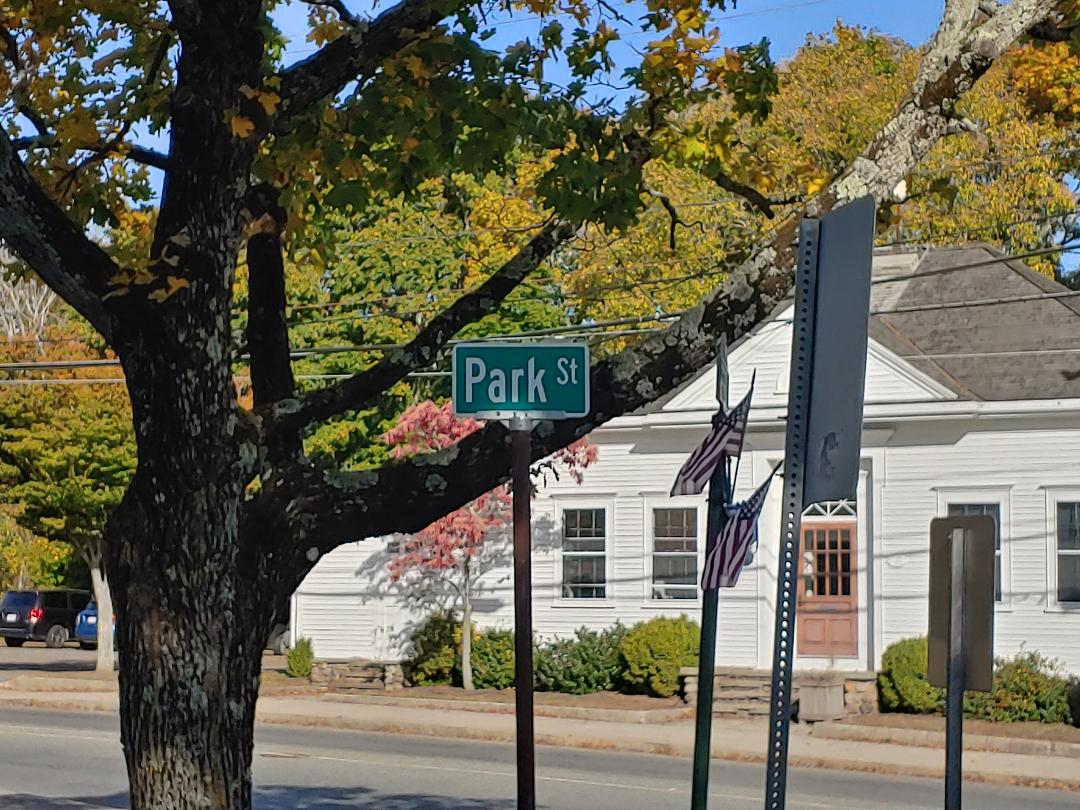
[Photos by Jared Fredrickson]
 

Prayers from the Hebrides: Watching

God in my sleeping, God in my waking,

God in my watching, God in my hoping.

I’m sure it wasn’t the original intention, but asking God to be in my watching brings screen time to mind. How would my life change if I allowed God into that time? Would I fill my time with violent images, insulting speech, and all the ads that come along for the ride?

Why is it that I invite God in my watching when I am reading, working, walking, and weeding – but I haven’t done the same for my screen time?

With cold weather on its way and a pandemic keeping me at home, it’s time to send God that invitation.

Waking Up

God in my sleeping, God in my waking, God in my watching, God in my hoping. 

[For the full prayer, click Prayers of the Hebrides above]

It doesn’t happen often, waking up in the middle of the night. A combination of seasonal allergy sniffles, ambulance sirens, and an upcoming project had me awake at 3am a few days back. After half an hour of trying to get back to sleep, I gave in and got up.  At 5:30am, I finally dozed off, adding another hour to my night’s sleep.

I wish I could say that I did something productive with that 2+ hours of being awake, but I didn’t. I watched the end of a movie I’d already seen, then flipped back and forth between ER reruns and Guy Fieri’s Triple D. I didn’t commit to sleep and I didn’t commit to waking: I just passed the time, waiting for my yesterday to end and my new day to begin.

When I wake up in the morning, I say the same prayer: God, grant me to greet the coming day in peace. In all things, help me to rely upon thy holy will. In every hour of the day, reveal thy will to me….Why didn’t I do the same when waking in the middle of the night? If I’m honest, I’d say that I didn’t have God penciled in. Between sleeping and my scheduled waking time, God showed up, as always. I just didn’t open the door.

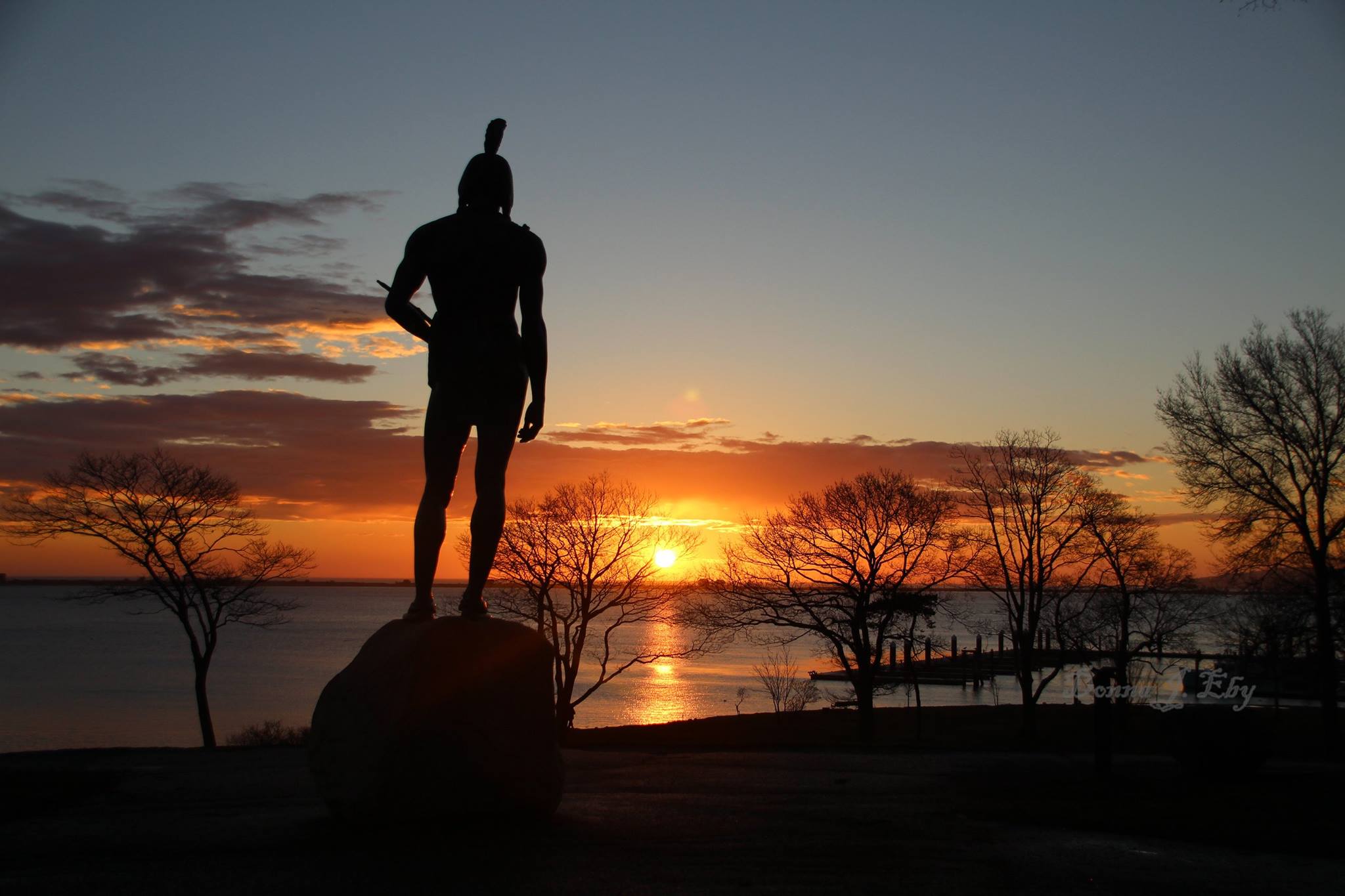
[Sunrise in Plymouth Photo by Donna Eby]


Now I Lay Me Down To Sleep

God in my sleeping, God in my waking,

God in my watching, God in my hoping.

[For the whole prayer, click Prayers From the Hebrides above.]

God In My Sleeping

Sleep is where we work out what’s been lying heavy on our hearts, minds, and souls. In a dreamscape, our minds aren’t quite so narrow, and we can take a swim in the creative sea of images common to humanity – the collective unconscious. Sometimes, solutions come from this deep place, surfacing in our conscious when we are ready for them.

The usual rules don’t apply in our world of sleep. We don’t have the same boundaries, and our sense of self is, perhaps, just a bit more permeable and open to change. But that openness might be to darkness just as much as it is to light.

If I need God anywhere, it’s when I am open to things in this deep, deeply human land we call sleep. No matter how old, I’m young enough to pray this child’s prayer:

Now I lay me down to sleep,

I pray the Lord my soul to keep,

Angels guard me through the night (If I die before I wake),

And wake me in the morning light (I pray the Lord my soul to take.).


What Am I Thinking?

God In My Thinking

There’s a spiritual exercise that a professor of mine used to recommend: every time you encounter another person, visualize Christ in the space in between – the space that connects or divides that is normally thought of as empty. For her, it was a way to remember that there are no meetings that occur in a world absent of God.

Asking God to be in my thinking is asking a lot more than God’s presence in my behavior. I can think all kinds of awful things about someone and still act with kindness. It would be an act, of course – my inner reality would still be harsh, critical, and judgmental.

God in my thinking places my mind within God’s grace and love, and asks that something of that grace and love be the foundation of what goes on within it.  Without such a foundation, my keenest thoughts and most creative ideas can be used for ill as easily as for good.

 [Image by Margaret Hill]

God, preserve me from intellect without love. And preserve the world, too. Amen.

God In My Speaking

God to enfold me,          God to surround me,         

God in my speaking,          God in my thinking.

[The Eye of the Eagle, David Adam; London, United Kingdom: Triangle, 1990, p. 83]

God in my speaking: not just in the words that come from my mouth, but the ones that come from my pen/keyboard. It’s easy to forget that words may have unintended consequences as well as intended ones. Kind words, loving words – even taken out of context, they do no harm. The same cannot be said of harsh words, insulting words. Neither kind can be taken back. I would do well to remember this.

May my speaking be sincere. May my humor be without rancor or bitterness. May the words of my mouth and the words of my fingers be acceptable in thy sight. Please, God.


God To Surround Me

What surrounded me today?  Images on screens, traffic, Ikea shoppers, clothes on the drying racks.

What surrounded you?

I wish I had taken the time to ask for God’s presence in what I saw on various screens, on routes 495 and 24, in the aisles at Ikea, and in my bedroom. But I didn’t.

Lucky for me, God is willing to work with what’s here rather than waiting for the state of my soul to improve.

That’s true for everyone,  including you.

Thank God.

The Deer’s Cry, The Pilgrim, Rita Connolly, Shaun Davey, 1994

Prayer from the Hebrides: God To Enfold Me

God to enfold me

God to surround me,

God in my speaking,

God in my thinking.

[Prayer from the Hebrides, 1st stanza. David Adam, The Eye of the Eagle, London: Triangle, 1990, p. 83. For full prayer, click “Prayer of the Hebrides” above.]

David Adam offers this prayer with these instructions: Pray it regularly with the use of your imagination.

There are days when it is only with my imagination that I can speak these four words – God to enfold me. What I assume is God’s embrace isn’t always what God’s embrace is. God enfolds me in ways that I cannot grasp. Like the air that enfolds me and gives me life, God may be invisible even when I am enveloped in a divine embrace.

The imagination I need isn’t a flight of fancy; imagination is opening my eyes to see what my spiritual blindness has hidden from me. Imagination can remind me that the face of God that I cannot see and the embrace of God that I do not feel aren’t because God is absent. I cannot see and I do not feel because I have’t opened my eyes or allowed myself to be held.

Solitary

Alone 

Lying, thinking

Last night

How to find my soul a home

Where water is not thirsty

And bread loaf is not a stone

I came up with one thing

And I don’t believe I’m wrong

That nobody,

But nobody

Can make it out here alone

Alone, all alone

Nobody, but nobody

Can make it out here alone.

There are some millionaires

With money they can’t use

Their wives run round like banshees

Their children sing the blues

They’ve got expensive doctors

To cure their hearts of stone.

But nobody

No nobody

Can make it out here alone.

Alone, all alone

Nobody, but nobody

Can make it out here alone.

Now if you listen closely

I’ll tell you what I know

Storm clouds are gathering

The wind is gonna blow

The race of man is suffering

And I can hear the moan,

Cause nobody

But nobody

Can make it out here alone.

Alone, all alone

Nobody, but nobody

Can make it out here alone.

[Maya Angelou, PoemsAlone; New York: Bantam Books, 1986, pp.69-70]

Dependence, independence, interdependence. We do our best to move from our childish dependence on others as we grow – at least as far as getting ourselves dressed, making our beds, and doing our chores. We strive for independence – making enough money to keep a roof over our heads, clothes on our backs, and food on the table. That’s all well and good, as far as it goes.

The problem is when we mistake interdependence – the truth that no one makes it out here alone – for weakness rather than a bedrock truth of life on this planet.

Interdependence. From our first breath to our last, we can’t make it out here alone. We are not self-created; we are not self-sustained; even in death, we are part of the life of this cosmos. I don’t question this. My big question: do I accept my interdependence and live in a way that increases the joy and love in the world, or in a way that decreases it?


Rumi’s Star

A Star Without A Name

When a baby is taken from the wet nurse,

it easily forgets her

and starts eating solid food.

Seeds feed awhile on ground,

then lift up into the sun.

So you should taste the filtered light

and work your way toward wisdom

with no personal covering.

That’s how you came here, like a star

without a name. Move across the nightsky

with those anonymous lights.

[Rumi, Say I Am You, John Moyne and Coleman Barks, trans.; Athens, GA: MAYPOP, 1994, p. 59]

My friend Eldon firmly believed that the name you were given influenced the person you would become. Unlike a rose, Eldon wouldn’t be the same (man) under any other name. He has a point.

God’s name isn’t spoken or written out in Hebrew – assigning a name might lead to the erroneous conviction that any human mind or heart could encompass all that God is (was/will be). It’s a valid point.

Maybe it’s not such a bad idea to embrace a nameless state, just as before we were born and grown. We might have an easier time remembering that we cannot be contained by whatever letters comprise our monikers; and we might dare believe that the infinite God dwells within us as surely as in the limitless beyond. Just maybe, our life’s point.