Category Archives: Biblical Reflection

Doorway

Readings: Psalm 85:1-2, 8-13; Hosea 6:1-6, 1 Thessalonians 1:2-10

“Come, let us return to the Lord; for it is he who has torn, and he will heal us;

he has struck down, and he will bind us up. After two days he will revive us; on the third day he will raise us up, that we may live before him.

Let us know, let us press on to know the Lord; his appearing is as sure as the dawn; he will come to us like the showers, like the spring rains that water the earth.”

What shall I do with you, O Ephraim? What shall I do with you, O Judah? Your love is like a morning cloud, like the dew that goes away early. Therefore I have hewn them by the prophets, I have killed them by the words of my mouth, and my judgment goes forth as the light.

For I desire steadfast love and not sacrifice, the knowledge of God rather than burnt offerings. [Hosea 6:1-6, NRSV]

Irrational: Believing that all my problems will simply dissolve into a puddle of happiness and security because I profess faith in God is about as realistic as believing that the world is flat. Sure, it looks flat from where I’m standing – but my lack of a wider perspective doesn’t change the shape of the planet I call home.

Rational: Accepting that wishes and my best efforts to do the right thing won’t change the fundamental truth that suffering and loss will be woven into the fabric of my life makes it difficult to assign to God the pettiness of vindictive action on those who share my faith and those who most certainly do not. How can I square the love of God with the notion that all the good things in life and all the hard things are just so many gold stars and F’s I’ve earned in some cosmic grading system? Sometimes, it’s easier to let go of those thorny scripture passages in favor of trusting my own common sense and and sense of justice. Or at least cherry picking the acceptable and leaving the embarrassing.

non-Rational: Perhaps I’ve missed the point because I’ve mistaken the purpose. Holy writ is holy because its words create a doorway. If the beauty, ugliness, reassurance, and doubt it offers gets me to stand still, even for just a moment, a miracle has surely happened. It only takes that moment for the Spirit to enter, embrace the imperfect child I am, and draw me into a love so deep that I cannot find its limits.

Sometimes, standing before the door scripture builds can feel like death – and death at the hands of God, no less. And maybe it is. It’s the tearing and striking down of a faith too small to hold me or God. But I’ll only know that in retrospect. The question is: am I willing to stand before whatever door I’m offered to get there?

Ready

Readings: Psalm 79; Micah 5:1-5a; Luke 21:34-38

Redeemer

Eternal

Almighty God and Father

Devotion

Your faithful servant

Lord, make me ready

let me stand before you on this day

with my heart uplifted to you.

With the promise of life eternal

I remain your faithful servant.

Offered by Susan Sorrento, designer and scrapbooker bound for Bethlehem.

Luke 21:34-36, NRSV

“Be on guard so that your hearts are not weighed down with dissipation and drunkenness and the worries of this life, and that day does not catch you unexpectedly, like a trap. For it will come upon all who live on the face of the whole earth. Be alert at all times, praying that you may have the strength to escape all these things that will take place, and to stand before the Son of Man.”


The In Crowd

Readings: Psalm 79; Micah 4:6-13; Revelation 18:1-10

In that day, says the Lord, I will assemble the lame and gather those who have been driven away, and those whom I have afflicted.

The lame I will make the remnant, and those who were cast off, a strong nation; and the Lord will reign over them in Mount Zion now and forevermore. [Micah 4:6-7, NRSV]

It’s the beautiful people, the wealthy and famous ones; it’s the ones with open concept homes, tastefully decorated; it’s the best and brightest, and the camera-ready: the In Crowd. The ones who don’t suffer in comparison, who don’t fall short, the ones who look the part, that make up that In Crowd. It’s not the ones who get picked last for kick ball, the ones who can’t afford the amenities, the ones without beauty or grace, or those who don’t get the joke. Outsiders don’t get in the In Crowd.

But that’s not really how the universe works, because the universe is God’s beloved creation. In the small, lower case sense, reality may be defined and limited by our superficial and inadequate standards. In the true, broader sense, it isn’t up to our limited judgement and prejudices. Those we would exclude from the In crowd, those of us excluded from the In crowd, are gathered and honored, valued not for external factors but for their very existence. God delights in every single life. There are no exceptions.

Happily, there are no ins and outs for God. There’s just the crowd and the invitation: join the party.

Making Enemies?

Readings: Psalm 79; Micah 4:1-5; Revelation 15:1-8

Return sevenfold into the bosom or our neighbors the taunts with which they taunted you, O Lord! Then we your people, the flock of your pasture, will give thanks to you forever; from generation to generation we will recount your praise. [Psalm 79:12-13, NRSV]

He shall judge between many peoples, and shall arbitrate between strong nations far away; they shall beat their swords into ploughshares, and their spears into pruning hooks;

nation shall not lift up sword against nation, neither shall they learn war any more; but they shall all sit under their own vines and fig trees, and no one shall make them afraid; for the mouth of the Lord of hosts has spoken.

For all the peoples walk, each in the name of its god, but we will walk in the name of the Lord our God forever and ever. [Micah 4:3-5, NRSV]

I love the psalms for many reasons. They are beautiful verses, bringing comfort in difficult times and give words for the joy and praise I offer God. But they are honest, giving voice to my worst fears and prejudices. If it’s a feeling I can have, it’s turned into verse somewhere in the psalms. That’s what psalm 79 is – an articulation of primal, authentic feelings. Authentic, not necessarily admirable. Wishing those whose words make me feel small and unworthy a taste of their own medicine isn’t exactly commendable, is it?

But that’s the psalms’ secret: offering up my worst, most fearful feelings to God rather than throwing it at my neighbor gives me a way to let them go before I return damage for damage. It gives me a choice of not making enemies of my neighbors.

Walking in faith isn’t running over the faiths of others, punishing them for their misunderstandings about God and life (as if I don’t misunderstand all the time); walking in faith is meaning good things for my neighbors, alleviating fear rather than adding to it.

Please God, give me the strength and wisdom to walk in faith and love. Amen.


The Counter-Attraction of Advent

Readings: Isaiah 64:1-9; Psalm 80:1-7, 17-19; I Corinthians 1:3-9; Mark 13:24-37

“But in those days, after that suffering, the sun will be darkened, and the moon will not give its light, and the stars will be falling from heaven, and the powers in the heavens will be shaken. Then they will see ‘the Son of Man coming in clouds’ with great power and glory. Then he will send out the angels, and gather his elect from the four winds, from the ends of the earth to the ends of heaven. [Mark 13:24-27, NRSV]

I am drawn to Advent like a moth to the flame.

As the endless, tedious Sundays after Pentecost grind to an end I cannot wait to turn purple. But why? Why do I long for gospels of darkened suns and blotted moons? Why pine for prophecies of doom-cum-dawn? Why raise my hand for a helping of judgment?

My family says it’s my Nordic noir, the shadowed world of Ingmar Bergman, August Strindberg, even Henry Mankell. Maybe, but there are legions of non-Scandinavians who love this season’s art of darkness. It’s because we need to know that the whole of our lives, the whole of the world, is good—and not just the best, well-lit bits.

In the first creation story of Genesis, God separates the Light and the Darkness, naming them Day and Night (1:4-5). This is the eternal cycle of light and dark that is the backdrop of all creation. Every day passes into night. Every year is equally split between the two. And every human heart holds both its light and (how could it be otherwise?) its shadow—if we dare to meet it. Unless we can understand the Night, even befriend it, we are missing exactly half the action—and, as it turns out, the most powerful half! For, like Jacob at the river Jabbok, it is what we meet and wrestle in the darkness that holds the power to bless us.

That or something like it, bigger even than I know, is why I am so attracted to the days and nights of Advent. As the earth makes its final December descent, Advent pulls us into the great big shadow, the planet’s and our own. There we meet an apocalyptic Jesus—as in the gospel for today—warning of a time when the sun will be darkened and the moon will not give its light. I’ve studied those words, preached on those words, and I still have no earthly idea what they mean. Doesn’t matter. Advent bypasses the brain and simply wallops the heart. I know what that kind of black-out feels like, and the eschatological preacher is painting this chiaroscuro canvas, calling me to repentance. You must change your life. Now, while you yet have time.

I don’t believe in some Hieronymus Bosch vision of judgment, but this stabs my heart. I know about regret, remorse, lost time. Whatever I “believe” or don’t, I feel the urgency of this moment, and the hope hidden in all true judgment, the promise that change is still possible and love has not given up on me yet.

When he first came to live with us, an exile from Manhattan at the beginning of the plague, my five year-old grandson was afraid to go down into the basement at night. His room, his parents’ room was down there so it was often necessary, but he wouldn’t go without a hand to hold. If someone had turned on the light at the bottom of the stairs it was all right, and the hall just beyond was well lit. It was just that fearful descent and the well of darkness at the bottom. It gave me such deep joy to take Dashiell’s hand and accompany him on such an important journey. Now that he is no longer afraid I am a little wistful.

Advent is the hand I hold to make that same descent. It is primitive exposure therapy, like the bronze serpent raised on a pole. When I fear darkness, I am to turn into it, flee into the stories of apocalypse and warning and judgment, because, paradoxically, they are the only source of actual hope.

If you take those awesome downward steps, one day you will come to know the sweetness of the light because you are, in Robert Frost’s words, “one acquainted with the night.”

Offered by David R. Anderson, priest, preacher, grandfather bound for Bethlehem. [www.findingyoursoul.com]

Fire and Ice

Some say the world will end in fire,

Some say in ice.

From what I’ve tasted of desire,

I hold with those who favor fire.

But if it had to perish twice,

I think I know enough of hate

To say that for destruction ice

Is also great

And would suffice.

[Robert Frost, Fire and Ice, New Enlarged Anthology of Robert Frost’s Poems (Louis Untermeyer, intro and commentary); New York: Washington Square Press, 1971, p. 242]

Heat-of-the-moment or premeditated? A destructive act is world-ending, either way. A cursory glance at the news, with the violence of one against another encouraged or supported by those whose words and ideologies are spewed from a safe distance, remind me that fire and ice are not mutually exclusive in destruction.

In Biblical terms, hardness of heart brings about such things. Raising a hand against another in anger and the cold calculations designed to gain and maintain personal advantage at another’s expense spring from the same place: a heart without compassion.

God, help me this day to live with compassion in my heart. I’m not strong enough or wise enough to do it on my own. Please. Amen.

A new heart I will give you, and a new spirit I will put within you; and I will remove from you body the heart of stone and give you a heart of flesh. Ezekiel 36:26, NRSV


Neruda’s Flowers

Ode to some yellow flowers

Rolling its blues against another blue,

the sea, and against the sky

some yellow flowers.

October is on its way.

And although 

the sea may well be important, with its unfolding

myths, its purpose and its risings,

when the gold of a single

yellow plant

explodes

in the sand

your eyes

are bound

to the soil.

They flee the wide sea and its heavings.

                    We are dust and to dust return.

                     In the end we’re

                   neither air, nor fire, nor water,

                   just

dirt.

neither more nor less, just dirt,

and maybe

some yellow flowers.

[Neruda, Odes to common things; New York: Bulfinch Press, 1994, p. 57]

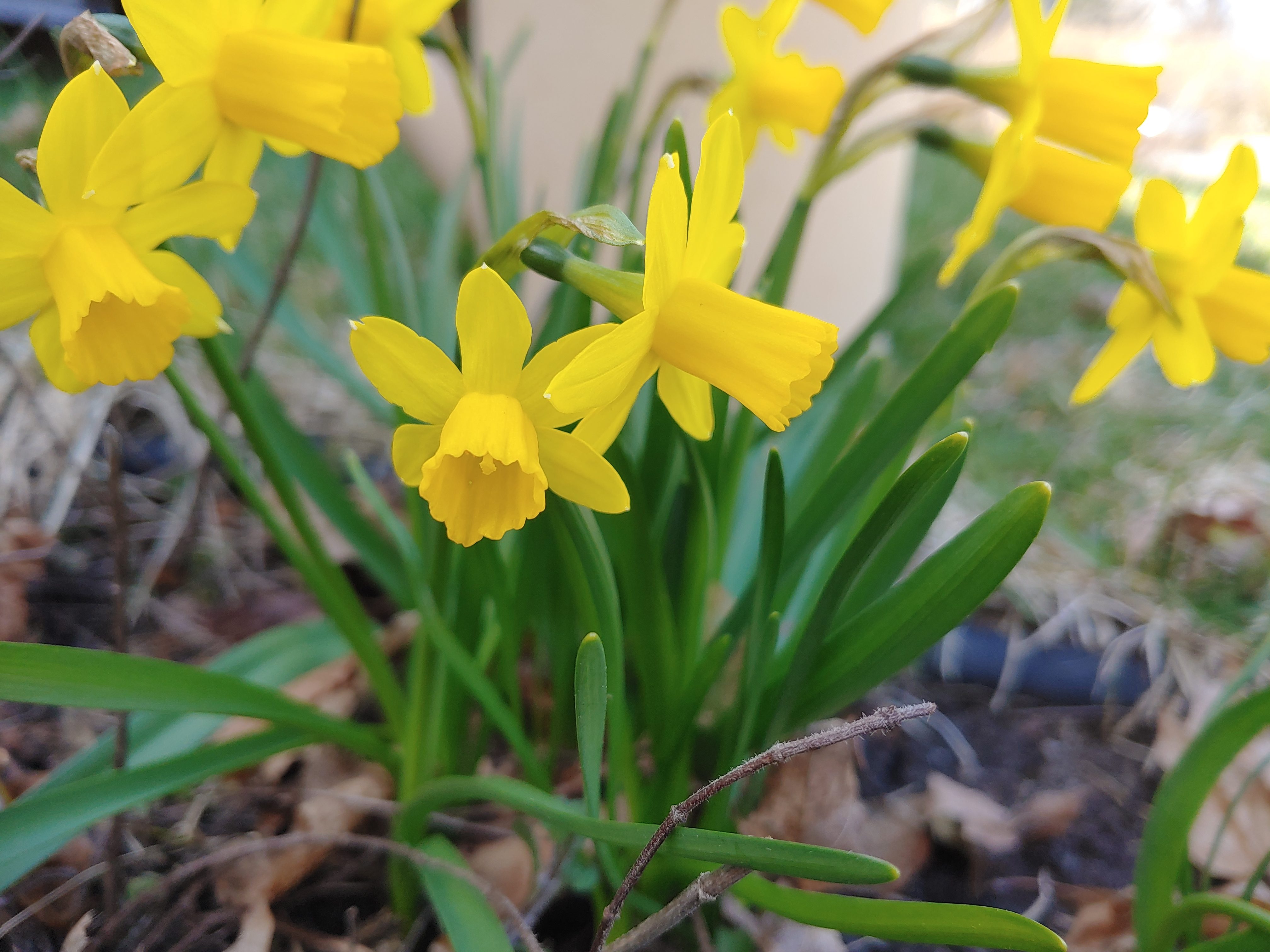
Neither more nor less than dirt – an Ash Wednesday sentiment. It’s true, too, in its own way. We are no more nor are we any less than ashes and dirt. Except we are also God’s beloved. Neruda never states that, at least not explicitly. Still, there are the yellow flowers. Perhaps, just perhaps, they are a glimpse of divine love.

Contemporary Announcement (1983)

Contemporary Announcement 

Ring the big bells,

cook the cow, 

put on your silver locket.

The landlord is knocking on the door

and I’ve got the rent in my pocket.

Douse the lights,

Hold your breath,

take my heart in your hand.

I lost my job two weeks ago

and rent day’s here again.

[Maya Angelou, Contemporary Announcement; Shaker, Why Don’t You Sing?; New York: Random House, 1983]

That wonderful feeling when there’s enough money to cover the basics: food, clothing, shelter. The dread and shame when there’s not enough money to cover the basics: food clothing, shelter. In just two paragraphs and a word short of a full deck’s count, Maya Angelou puts us in that rented apartment.

These words are being lived out by millions today, thirty plus years after Angelou published them. Will we ever learn that poverty is not a moral shortcoming or a character flaw?

Jesus, Saint Francis, and Gandhi all figured that out. I have hope the rest of us can, too.


What are you listening to?

Listen To The Mustn’ts

Listen to the MUSTN’TS, child

Listen to the DONT’S

Listen to the SHOULDN’TS

The IMPOSSIBLES, the WON’TS

Listen to the NEVER HAVES

Then listen close to me – 

Anything can happen, child,

ANYTHING can be.

Shel Silverstein, Where the Sidewalk Ends; New York: HarperCollins Publishers, 1974

Children aren’t old enough to know what can and cannot happen. Anything is possible because immutable laws, probability, and rigidity of thinking haven’t arrived quite yet.

On one level, Silverstein is wrong. No matter how hard I flap my arms, I won’t achieve lift-off.

On the deepest level, Silverstein is spot on: miracles happen every day, and nothing can be taken for granted. It’s amazing that I forget this, considering I claim these words as gospel truth:

But there are also many other things that Jesus did; if every one of them were written down, I suppose that the world itself could not contain the books that would be written. (John 21:25, NRSV)

Upper Case, lower case

VIII

There are four doors which open on the skies.

The first is truth, by which the living word

Goes forth to seek the spirit and be heard;

Lost in the universe, the spirit lies.

Then justice with her veiled and quiet eyes

Stands at the second portal; at the third,

Faith and her sparrow, the immortal bird;

And the last gate is love’s, to paradise.

These are the doors by which the mighty pass.

Yet in the wall there is one wicket more,

With rusty hinges and a splintered floor,

A shattered sill half hidden in the grass.

Small is the gateway as the Scriptures tell;

Its name is pity, and God loves it well.

Truth, Justice, Faith, and Love: often, their importance is conveyed by capitalizing their first letters. Yet Nathan keeps them lower case – except for Faith, and that only because it is the first word of the line.

Pity is something different. Just about anyone can show pity, although we might call it by its fancier name: compassion.

I wonder. With the four big ones in lower case, just like pity, perhaps Nathan is trying to tell me something about who God is, and how I expect to be drawn into God’s holiness. Jesus, God-With-Us, embodies all of them. Maybe Nathan’s point is that while I won’t discount the value of Truth, Justice, Faith, and Love, I just might overlook pity.  That would be a shame, because Jesus certainly did not.

Then Jesus went about all the cities and villages, teaching in their synagogues, and proclaiming the good news of the kingdom, and curing every disease and every sickness. When he saw the crowds, he had compassion for them, because they were harassed and helpless, like sheep without a shepherd. (Mt. 9:35-36)

Then Jesus mad a circuit of all the towns and villages. He taught in their meeting places, reported kingdom news, and healed their diseased bodies, healed their bruised and hurt lives. When he looked out over the crowds, his heart broke. So confused and aimless they were, like sheep with no shepherd. (Mt. 9:35-36, The Message)

Lord Have Mercy, Christ Have Mercy. Lord Have Mercy.

[Robert Nathan, A Winter Tide, VIII; New York: Alfred A. Knopf, 1940, p. 10]