Category Archives: Biblical Reflection

Tuning In

Offered by Bill Albritton, teacher, singer, prayerful writer…

There is no speech, nor are there words; their voice is not heard.

When I was a young lad, sitting through a sermon on a hot Sunday morning in  Tennessee wasn’t always a very pleasant experience. Yet I will never forget one such experience when the preacher started out his homily with something like: God’s voice is everywhere. He went on to say that God is talking to each of us all the time. He used the analogy of radio waves being all around us that morning but we don’t hear them because we don’t have radios turned on and tuned in. And then he said something like: We need to tune in to God’s station to receive God’s message to us. 

As Johnna suggested in the first verse of this magnificent Psalm, it is good to get our heads up and look around in order to appreciate the Creator’s handiwork. Perhaps it is good to spend time tuning in as well.

I know I need to be doing more of it, and that means I can’t be doing all the talking. Crosby, Stills, Nash, and Young asked the musical question back in the early ’80’s: when everyone is talking and no one is listening, how can we decide? 

Indeed.

[Quote from Crosby, Stills, and Nash; Daylight AgainDaylight Again, 1982; Rudy Records, Devonshire Sound and Sea West; recorded 1980-1981]


No Speech, No Words

There is no speech, nor are there words;

their voice is not heard;

yet their voice goes out through all the earth, and their words to the end of the world.

Psalm 19: 3-4, NRSV

A blue jay landed on my back window ledge last night, clicking his feet against the screen and cocking his head. No words, but the request was clear: fill up the feeder, please. The jade plant out back started drooping a few days back – too much rainwater had gathered in the bottom of the pot and needed draining. A cacophony in the trees begins, then moves to the shrubs and trees in the neighboring yards: all kinds of birds raising the alarm because an owl or hawk is near by.

None of these instances involve words or discernible speech, but the message was as clear as if spoken in perfect English. If such as these are clear, how can the diversity of life on this planet be any less understood: None of this is self-made. All of this has a creator.

Lord, open my eyes, ears, hands, and mind to all that you have made, all that you are making, and all that is to come. Amen.

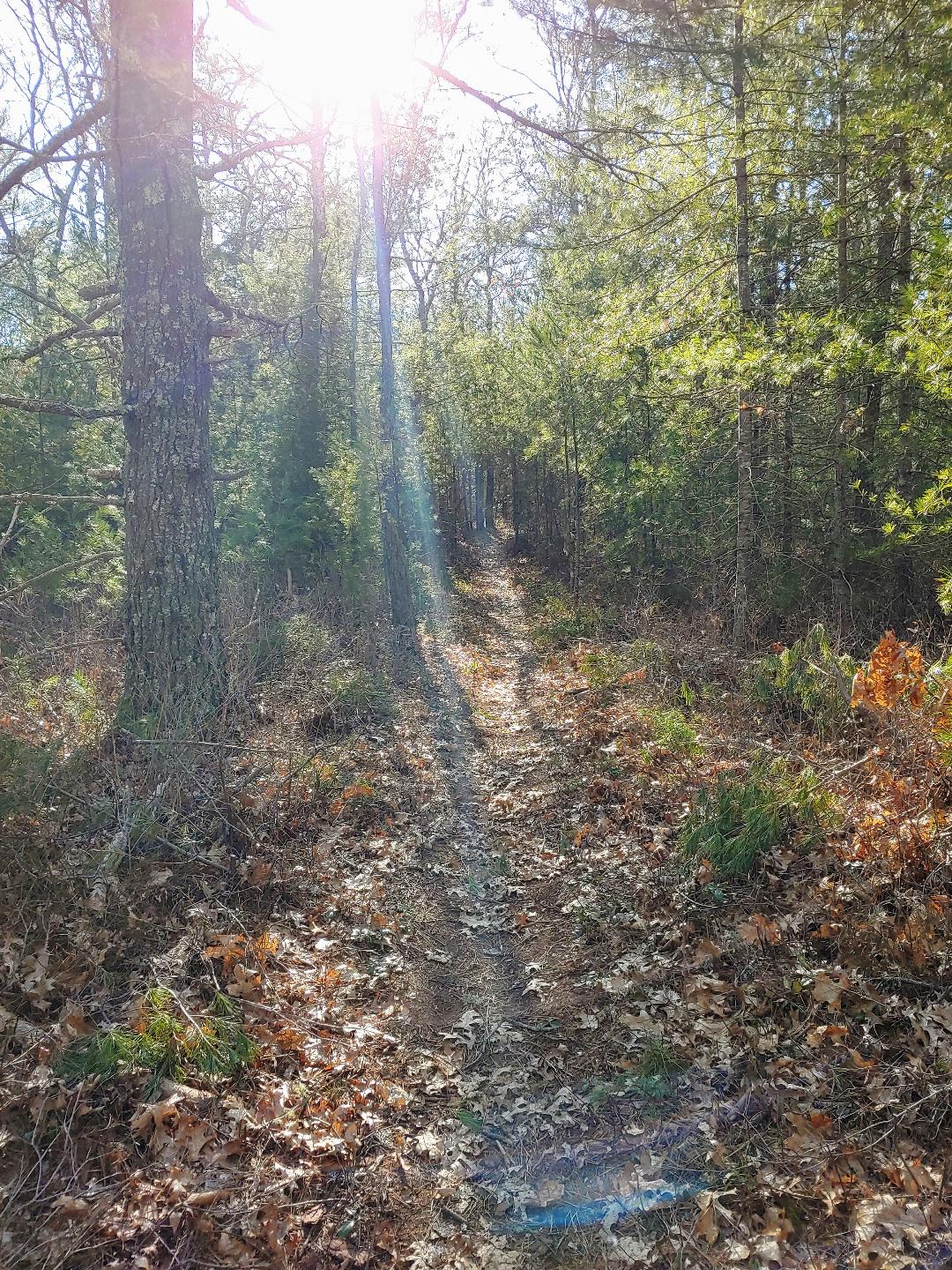
 Minot Trail, photo by Jared Fredrickson

Day to Day

The heavens are telling the glory of God; and the firmament proclaims his handiwork.

Day to day pours forth speech, and night to night declares knowledge.

There is no speech, nor are there words; their voice is not heard; yet their voice goes out through all the earth, and their words to the end of the world. [Ps. 19:1-4, NRSV]

[For the complete text, click Psalm 19 above.]

It isn’t like a train that only shows up for a few seconds a couple of times a day. Day to day, night to night, the heavens are telling us about God. The whole creation, in all times and places, bears witness to the God who created it all in the first place.

Whether it’s a snow squall, a cloudless sky, lightning and thunder raging, or just a sliver of moonlight filtering through the clouds, revelation is offered every hour of every day and every second of every night. What language could be grander than the heavens above our heads? What time better than all the time?

Lord, give me eyes to see and ears to hear what the heavens profess. Amen.

Psalm 19

The heavens are telling the glory of God;

and the firmament proclaims his handiwork.

Walking down the street and looking at the other people walking by; waiting in line at airport security; pushing a cart down the grocery aisle: why is almost everybody looking down? At phones, their feet, the sidewalk, luggage – what is so fascinating that so few glance upward?

I am grateful for two feet planted firmly on the ground, but there’s so much more to see beyond my own toes. The glory of the constantly changing color of the sky in all kinds of weather; clouds that reveal and conceal, morphing into shapes familiar and unidentifiable; stars and planets emerging in deepening dark and fading in coming light.

God offers the beauty of the heavens, sometimes calm and other times fearsome. It sings in my heart and resonates deep in my bones. It can bring perspective, beckoning me to let go of my own pettiness and the meanness of others in favor of living in awe.

Proclamation at its best requires no words.

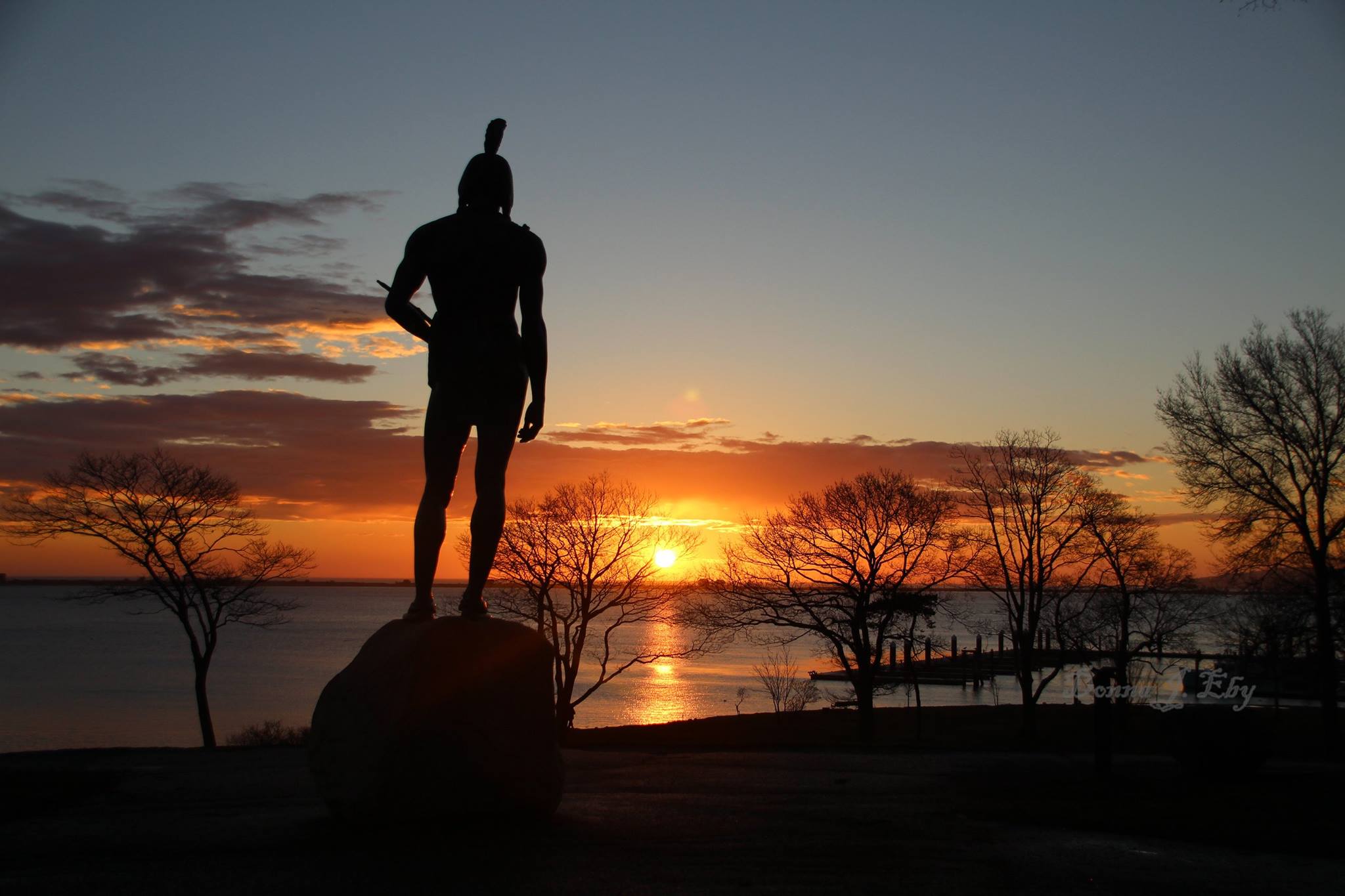
 photo by Donna Eby

[Psalm 19 can be found in its entirety by clicking “psalm 19” above.]

Deep Inside My Bones

“I will put my laws in their minds, and write them on their hearts,

and I will be their God, and they shall be my people.

And they shall not teach one another or say to each other, ‘Know the Lord,’

for they shall all know me, from the least of them to the greatest.

Hebrews 8:10b-11, NRSV

Are you enough? Are you loved, and lovable? Do you know, REALLY know, that God delights in you?

YES is the true answer: you are enough, you are loved and lovable, and you are a delight to God. Know this, accept this, inscribe this in your head and on your heart. This is the law of love that guides life and gives us all we need to embody love in our outer actions and inner thoughts. We won’t do it perfectly, and we might not always do it happily, but we can and will do it. And that, my friend, is reason enough to rejoice.

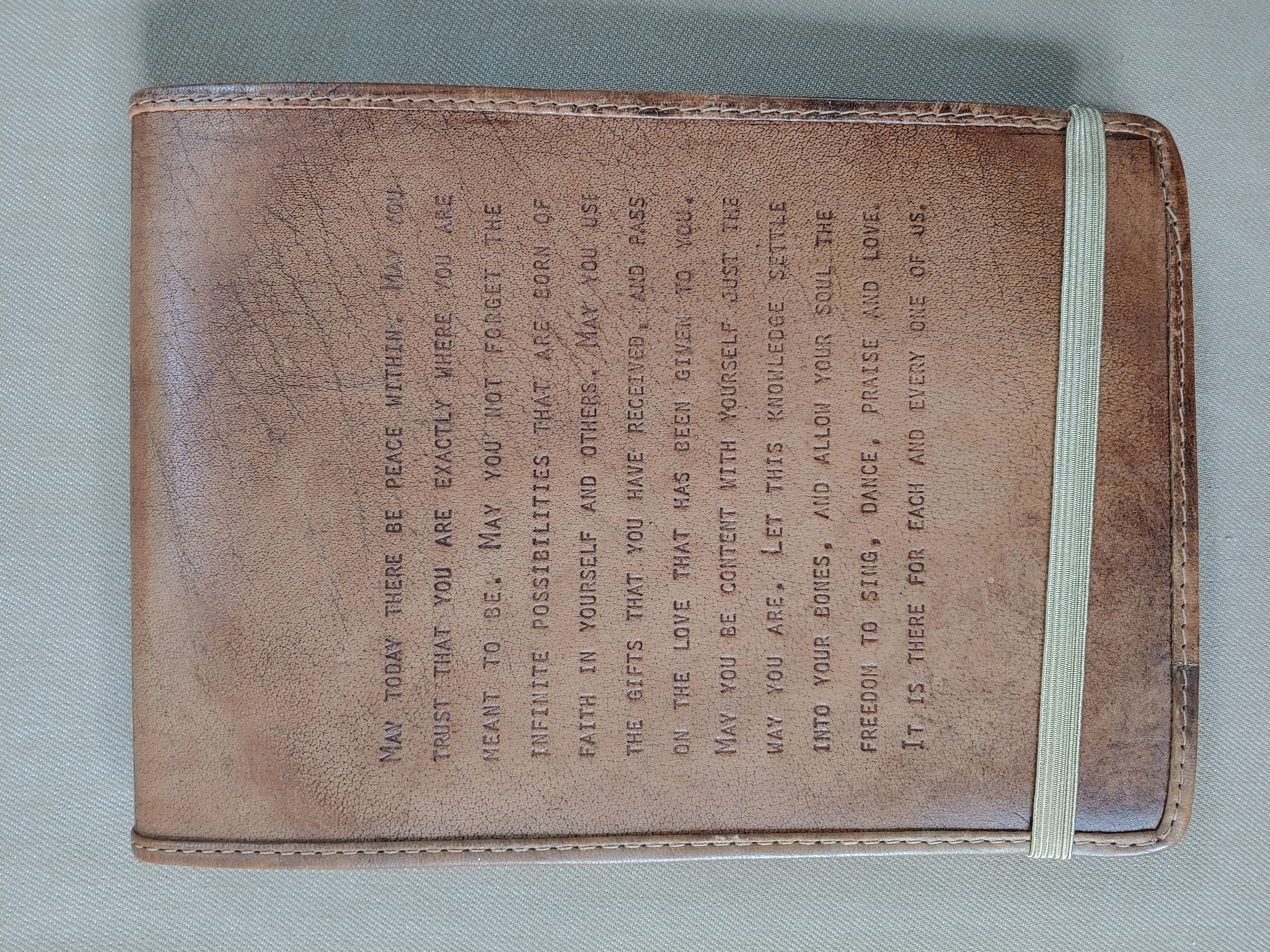
Let this knowledge settle into your bones, and allow your soul the freedom to sing, dance, praise and love.

[The Deer’s Cry]

In the Fullness of Time

But when the fullness of time had come, God sent his son, born of a woman…(Galatians 4:4a, NRSV)

It’s a beautiful expression pointing to a holy reality. In the fullness of time…

…Moses saw a burning bush and recognized it as God’s presence.

…Jacob sees angels ascending and descending a ladder to heaven, and knew the presence of God was in that place.

…Abraham and Sarah host three strangers who are God’s own messengers (or the Old Testament Trinity, if you are an icon buff).

…Mary is visited by an angel.

…God With Us is born in Bethlehem.

That’s what the fullness of time is – the awareness that all of time leads to God entering our world, and seeking us out.

If God appears in the fullness of time, then it’s not much of a stretch to imagine God seeking you or me out. After all, it’s already happened. So what is the fullness of time for you? How do you finish the sentence: In the fullness of time….


Other Things…

Now Jesus did many other signs in the presence of his disciples, which are not written in this book. But these are written so that you may come to believe that Jesus is the Messiah, the son of God, and that through believing you may have life in his name. John 20:30-31, NRSV

This is the end of today’s Gospel offering – the story of Jesus appearing to his disciples, of Thomas’ absence at that time, his doubt and his eventual acceptance of Jesus resurrected once he had seen Jesus for himself. The gospel reminds us that what we read in scripture is just a partial account: there was more to the story, things we will never read or have read to us. What was handed down wasn’t to relate everything that Jesus ever said or did; what was handed down was for us to make a doorway of words and images – a way for us to enter the truth, meet Jesus, and gain life. They are the words that end chapter 20.

But there are also many other things that Jesus did; if every one of them were written down, I suppose the world itself could not contain the books that would be written. John 21:25, NRSV

This is the end of John’s Gospel, similar to the ones above, but rarely ever read in church – the lectionary reading ends a couple of verses short of them. Maybe it’s because these words are so similar to the ones ending chapter 20? Did the similarities between the passages make them appear to be exactly the same, not worth a second reading? Perhaps, perhaps not. Either way, what sets them apart is remarkable.

The first words are about the disciples, and about Jesus appearing in resurrected form to them. They are written for all of us, so that we may encounter Jesus and be forever changed by him. They are our linguistic doorway into truth and life.

The second words go way beyond that. Two differences stand out to me, but there are sure to be more:

Jesus did other things beyond the presence of his disciples, his followers, and us – so many things that the world itself isn’t big enough to contain an account of them. Jesus isn’t limited to the Christian record, the church and its history, the fellowship through time and space. It’s a well phrased reminder that we cannot and should not try to set limits on how God manifests, even within the limits of our own space and time. 

Jesus manifests in ways that the world cannot contain because within each and every living thing is a world of mystery and untold depth. The cosmic scope of the universe finds its reflection in the cosmic scope of our own inner landscapes – the dwelling place of the Spirit within. It takes a lifetime to scratch the surface; perhaps part of the joy of eternity is a deep dive into these worlds, and a complete sharing of them with God and all God’s beloved children.

I think the differences make them both worth reading.
What Will We Do With It?

A few years back, someone I know downed several drinks at a local bar, got into the driver’s seat, and plowed her car into a very large tree. She would have died due to blood loss, but the steering wheel pinned her against the seat so tightly that it acted like a tourniquet. She didn’t walk away from it, but she survived. Against all odds, life had given her a second chance and left her with one simple question: what will you do with it?

Most second chances aren’t that dramatic. They are more in the another chance at work after irresponsible behavior, the opportunity to turn a failing grade into a passing one, forgiveness that keeps alive a relationship category. Dramatic or garden variety, second chances all lead to the same question: what will you do with it?

Easter has come again, our second chance to love God, love neighbor, and love ourselves. With it comes the question: what will we do with it?

We will answer it with how we live the rest of our lives.

Accomplished

So is my word that goes forth from my mouth;* it will not return to me empty;

But it will accomplish that which I have purposed,* and prosper in that for which I sent it.

[The Second Song of Isaiah, BCP pp. 86-87 (Is. 55: 6-11)]

It is Good Friday today, called “good” in the tradition of describing all things powerful and potentially deadly as positive. The act of crucifixion, the death of God on a cross, was not required by God; the idea that God’s anger or holiness required the blood of an innocent man to pay the price for the evil of others feels more like a way of avoiding the truth: humanity put Jesus on the cross.

From God’s side, crucifixion wasn’t a requirement. But God works with this broken world and its fearful people, bringing holiness and forgiveness out of even the worst acts. Since humans chose the cross as a response to God With Us, God hallowed even that.

Good Friday is good because God accomplished what was intended in incarnation. As it was, so it is, and always shall be. Even when the means could have been other that what humanity chose.

Conservation of Spiritual Matter

So is my word that goes forth from my mouth;* it will not return to me empty;

But it will accomplish that which I have purposed,* and prosper in that for which I sent it.

[Canticle 10: The Second Song of Isaiah, Isaiah 55:6-11, BCP pp. 86-87]

It’s one of the basics of science: the law of the conservation of energy. The gist is that energy cannot be created or destroyed – it can only change from one form to another. Of course, this is assuming that we take a really long view, taking into account the entire cosmos when we apply this principle. Nothing in God’s creation can be lost, but things can change form – energy to matter, matter back to energy.

This law has been put to the test countless times by creating an enclosed system that can be monitored and measured – biospheres, bell jar ecosystems, etc. Nothing lost, nothing gained in such a system. But what about this life we live outside such controlled experiments?

The word of God doesn’t dissipate, and it doesn’t fail. Perhaps it changes form, adapting to the realities that we create in ways that foster love and compassion. Ignored in one manifestation, perhaps it assumes another – one that we can understand and accept. Perhaps the word of God will keep manifesting in new ways, constantly seeking us out, patiently offering us a part in bringing about the transformation of all that is into the holy reality it is meant to be.

All we have to do is keep an eye out for it, and love accordingly.