All posts by Johnna

I am a Christian educator and writer.I have worked in churches, denominational offices, and seminaries. I have a PhD in Theology from Princeton Theological Seminary, with a focus on Practical Theology and educating in faith. In 2010, my book, "How the Other Half Lives: the challenges facing clergy spouses and partners," was published by Pilgrim Press. I believe that words can build doorways that lead to encounters with God through the Spirit.

Swept Away

Readings: Psalm 124; Isaiah 54:1-10; Matthew 24:23-35

If it had not been for the Lord who was on our side – let Israel now say-

if it had not been for the Lord who was on our side, when our enemies attacked us, then they would have swallowed us up alive, when their anger was kindled against us;

then the flood would have swept us away, the torrent would have gone over us; then over us would have gone the raging waters.

Blessed be the Lord, who has not given us as prey to their teeth.

We have escaped like a bird from the snare of the fowlers; the snare is broken, and we have escaped.

Our help is in the Lord, who made heaven and earth. 

Psalm 124, NRSV

Anger, whether our own or directed at us, can knock us off our feet with its strength and sheer breadth. It is a torrential emotion, making enemies of those who release it and those who find themselves standing downstream from it. Left unchecked, it floods our lives with destruction. In its wake, we often feel like we only have two choices: drown or send our own tidal wave of anger back. Either way, the result is devastating.

But that’s a false choice, isn’t it? There is a third way. When we remember that the one who made heaven and earth holds us fast, we remember that no flood of anger can sweep us out of God’s loving embrace. Our spirits are safe. We don’t have to be overwhelmed, and we don’t have to send our own flash flood of anger to inflict damage on those who would hurt us. We can stop the flood of destruction simply by standing fast.

Even better: we can have compassion for the ones who destroy their own inner lives just as surely as they attempt to destroy us. By the grace of God, we may even be able to retaliate with peace and love instead of hurt and anger. It may take some time and patience to withhold our anger, but isn’t the possibility of stopping the raging waters worth the effort?

Lord, hold me fast as I walk home to Bethlehem. Amen.

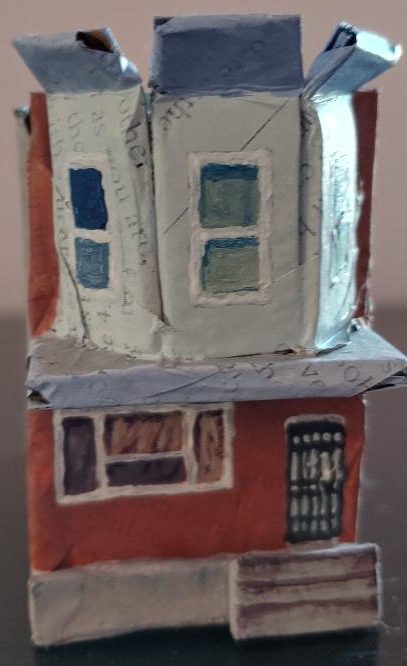
[Rowhouse by Colin Fredrickson]
The Break

Readings: Psalm 124; Genesis 9:1-17; Hebrews 11:32-40

If it had not been for the Lord who was on our side – let Israel now say-

if it had not been for the Lord who was on our side, when our enemies attacked us, then they would have swallowed us up alive,

when their anger was kindled against us; then the flood would have swept us away,

the torrent would have gone over us;

then over us would have gone the raging waters.

Blessed be the Lord, who has not given us as prey to their teeth.

We have escaped like a bird from the snare of the fowlers; the snare is broken, and we have escaped.

Our help is in the name of the Lord, who made heaven and earth.

Psalm 124, NRSV

[Reposted from 2016.]

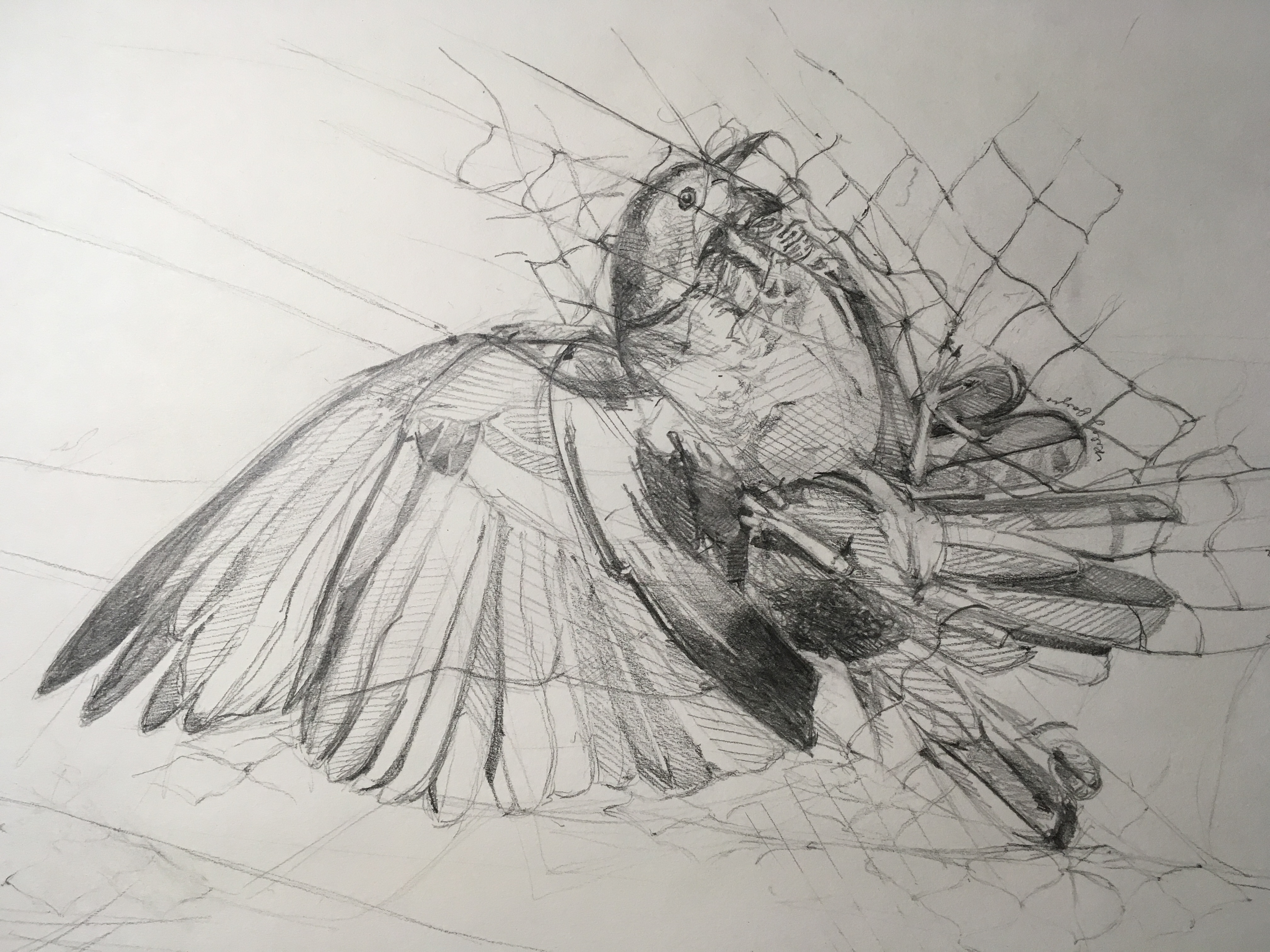
Art offered by Riley Anderson, artist, walking home to Bethlehem.

[Rowhouse, by Colin Fredrickson]

Truth in Two Lines

Readings: Psalm 124; Genesis 8:1-19; Romans 6:1-11

If the Lord had not been on our side, *

let Israel now say;

If the Lord had not been on our side, *

when enemies rose up against us;

Then would they have swallowed us up alive *

in their fierce anger toward us;

Then would the waters have overwhelmed us *

and the torrent gone over us;

Then would the raging waters *

have gone right over us.

Blessed be the Lord! *

he has not given us over to be a prey for their teeth.

We have escaped like a bird from the snare of the fowler; *

the snare is broken, and we have escaped.

Our help is in the Name of the Lord, *

the maker of heaven and earth. [Psalm 124, NRSV]

Those of you who love the office of Compline as I do will recognize verse 8 of Psalm 124 in the opening versicle and response;

Officiant: Our help is in the Name of the Lord;

People: The maker of heaven and earth.

It’s all right there, isn’t it? In the liturgy designed by John Calvin for use in his churches at Strasburg and Geneva, the services began with this versicle and response. Calvin chose it because he understood that in these two brief lines, the truth about the gathered community is summed up perhaps better than any one sentence could possibly do. (1)

The Psalm itself is broken into three parts: a recollection of God’s faithful deliverance in the past, the praise of the people for that deliverance, and a corporate declaration of trust. There is only one way a Psalm like this gets written, and that is as a reflection of a journey with God over time, lots of time. And that is the beauty of it for us. Through the toils and tests of our lives and the life of our community we see only a speck, an infinitesimal sample of what the Almighty knows and has seen. Yet we can close our eyes at the end of a long day, before we go off to the unknown world of sleep and in that moment claim words of truth that only an eternal perspective can fully grasp. It’s all right there, isn’t it? The content of our faith and our lives is right there in these simple words of trust. May they be your guiding light during this beautiful, dark season of Advent.

(1 James L. Mays, InterpretationPsalms, John Knox Press, Louisville, KY, 1994, p. 397)

Offered by Dave Fredrickson, spiritual director and pastor, walking home to Bethlehem.

[Rowhouse, 2018-2019, by Colin Fredrickson]

Walk in the Light

Daily Readings: Isaiah 2:1-5; Psalm 122; Romans 13:11-14; Matthew 24: 36-44

In the days to come the mountain of the Lord’s house shall be established as the highest of mountains, and shall be raised above the hills; all nations shall stream to it.

Many peoples shall come and say, “Come, let us go up to the mountain of the Lord, to the house of the God of Jacob; that he may teach us his ways and that we may walk in his paths.”

For out of Zion shall go forth instruction, and the word of the Lord from Jerusalem. He shall judged between the nations, and shall arbitrate for many peoples; they shall beat their swords into ploughshares, and their spears into pruning hooks; nation shall not lift up sword against nation, neither shall they learn war anymore.

O house of Jacob, come, let us walk in the light of the Lord!

Isaiah 2:1-5, NRSV

The Lord’s house may crown the highest mountain in holy light, but the hills that surround it are real – lesser realities and smaller aspirations that diminish and darken human existence. That just may be the point. Isaiah’s vision of peace among peoples isn’t a dream of perfection standing alone: it’s reached by people walking toward God’s house from the imperfect, hilly places in which all of humanity lives.

Darkness and light suffuse the path we walk. Our feet take us through shadowy hills on the way to the high place where all we see before us is God’s light. We won’t get there unless we leave the hills behind, walking in trust when the shadows darken our way and rejoicing in every glimpse of light that draws us on.

Take heart; we don’t walk alone along an unknown path. We are walking home together, beloved children of God, on the road Isaiah and so many others walked long ago.

Guide my feet, O God, on the long road home to Bethlehem. Amen.

[Rowhouse, by Colin Fredrickson]

For the sake of the house of the Lord our God…

Readings: Psalm 122; Genesis 6:11-22; Matthew 24:1-22

I was glad when they said to me, “Let us go to the house of the Lord!” Our feet are standing within your gates, O Jerusalem…

Pray for the peace of Jerusalem: “May they prosper who love you. Peace be within your walls, and security within your towers.”

For the sake of my relatives and friends I will say, “Peace be within you.” For the sake of the house of the Lord our God, I will seek your good.  [Psalm 122:1-2, 6-9, NRSV]

Jerusalem hasn’t been a city of peace for much of its history. Even now, it sees more than its share of violence – some of it religiously motivated. It is a sacred city to all the Abrahamic faiths – Judaism, Islam, and Christianity. Each of these faiths is a close relative of the others, but followers of those faiths have attacked one another in the name of the God they all share.

This psalm gets me to wondering: what would happen if everyone whose faith claimed Jerusalem wished each other well? What would the world be like if, for the sake of the house of the Lord our God, we sought the good for all of Abraham’s children?

Can we have enough trust in God to bless Jerusalem’s children of other faiths? Can we say to everyone, peace be within your walls?Human frailty may prevent us from offering such a radical blessing on our own behalf, but perhaps, just perhaps, for the sake of the house of the Lord our God, we might find the strength to attempt it.

Lord Jesus, come to my home. Amen.

[Rowhouse by Colin Fredrickson]
Faith

Readings: Psalm 122; Genesis 6:1-10, Hebrews 11:1-7

11 Now faith is the assurance of things hoped for, the conviction of things not seen. Indeed, by faith our ancestors received approval. By faith we understand that the worlds were prepared by the word of God, so that what is seen was made from things that are not visible. By faith Abel offered to God a more acceptable sacrifice than Cain’s. Through this he received approval as righteous, God himself giving approval to his gifts; he died, but through his faith he still speaks. By faith Enoch was taken so that he did not experience death; and “he was not found, because God had taken him.” For it was attested before he was taken away that “he had pleased God.” And without faith it is impossible to please God, for whoever would approach him must believe that he exists and that he rewards those who seek him. By faith Noah, warned by God about events as yet unseen, respected the warning and built an ark to save his household; by this he condemned the world and became an heir to the righteousness that is in accordance with faith. Hebrews 11:1-7

Faith. It’s a strange word, really. More often than not it gets tossed around without much thought being given to its meaning. On any given day we might be urged to have faith in some product that will make us look younger, faith that our dreams will be realized or even faith that the nerdy techie will work wonders on our virus-ridden computer so that it will begin to function properly again. Even talking about faith in God is open to all sorts of possibilities. What does it really mean to have faith in God? Is it belief in a particular doctrine? Is it confidence that if you live the right kind of life you will go to heaven when you die? What is it about God that we are to have faith in?

One of my all-time favorite songs asks if we have faith in God above, implying that the Bible tells us so. It goes on, claiming that the Father, Son and Holy Ghost all caught the last train for the coast. Even though I like this song, I’m not big on its theology. A “God above” is to me a distant and aloof God. A God that would catch any train to get out of town is in my way of thinking a God that is willing to abandon us. And yet, there are times God does seem distant and aloof; there are times we feel abandoned by God.

Advent offers a different perspective and one I believe is a genuine source of faith. It’s not about distance and abandonment; it’s about presence and incarnation. It’s about a God who is here with us, at work in us and among us. A God whose one great desire is to redeem not just us, but all creation—to make it all good as it is intended to be. It’s about a God who is doing all that right now and every day of our lives, even when we feel God is distant and we have been abandoned. Advent is about incarnation. Incarnation is about an ever-present God, who actually became one of us. And this passage reminds us that all we need to be about is seeking this God—not finding, not obeying, not believing, not even feeling good about our relationship with this God, just seeking.

I pray this Advent will be a time of seeking for me and for you.

Offered by Jeff Jones, pastor, writer, traveler walking home to Bethlehem.

[Don McLean, Classics, American Pie (new version), Freeman, Burgess, and Butler, producers, 1992. Purchased from Amazon Video]

[Rowhouse, 2018-2019Colin Fredrickson, Artist]


Advent 2019

My usual focus: the journey to Bethlehem, following in the footsteps of Mary and Joseph, shepherds, angels, and (eventually) Magi. But from a theological standpoint, Advent and Christmas aren’t about the distance I travel: it’s about God coming to this creation I call home and being born into this family of humanity. Emmanuel means God With Us – God coming to us as one of us, entering our homes and our lives so that we might make room for what is holy and life-giving.

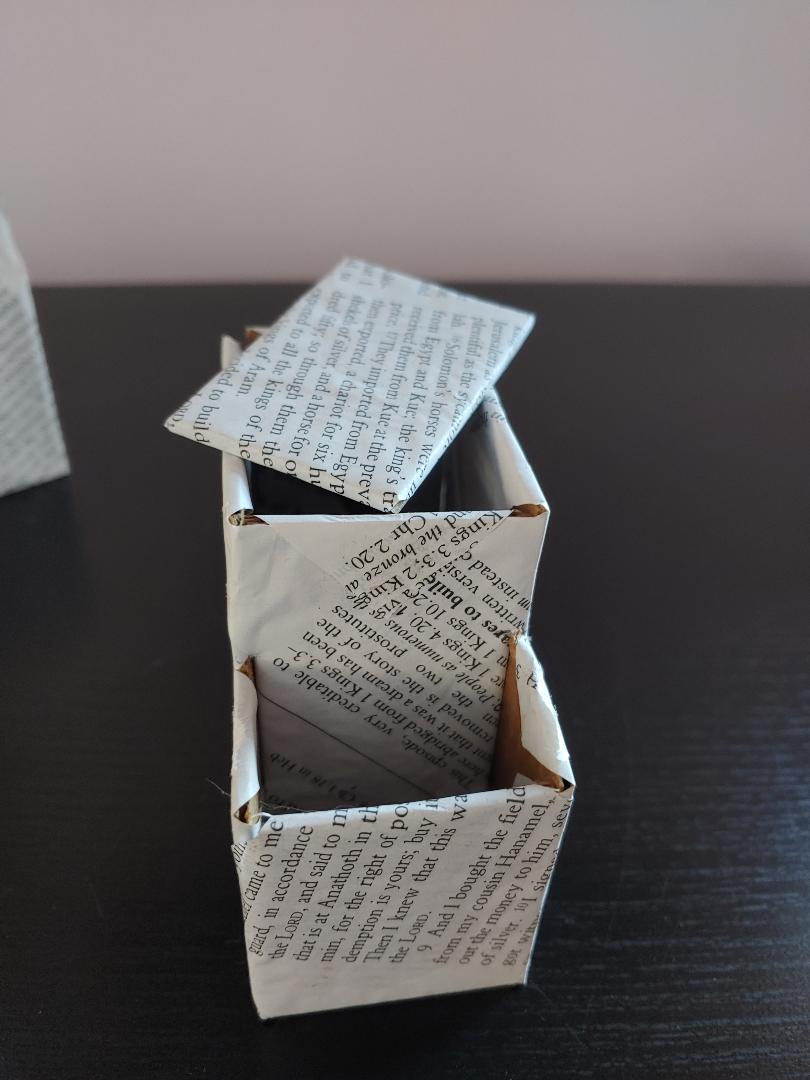
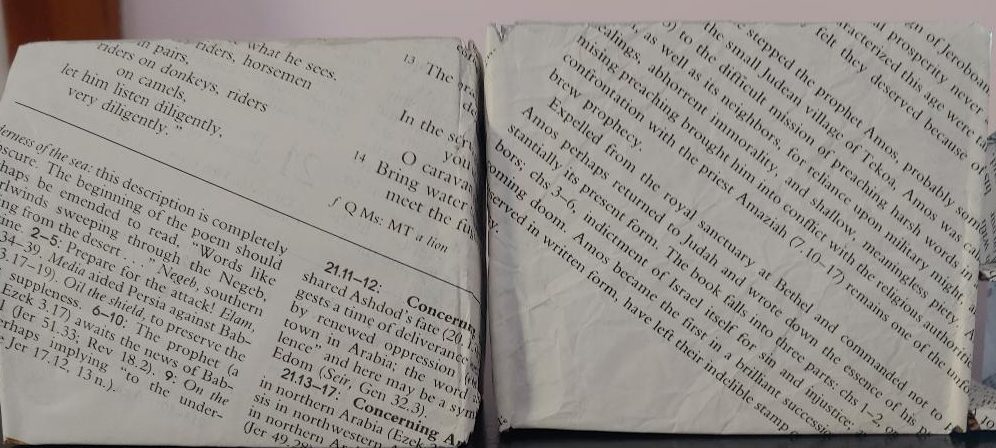
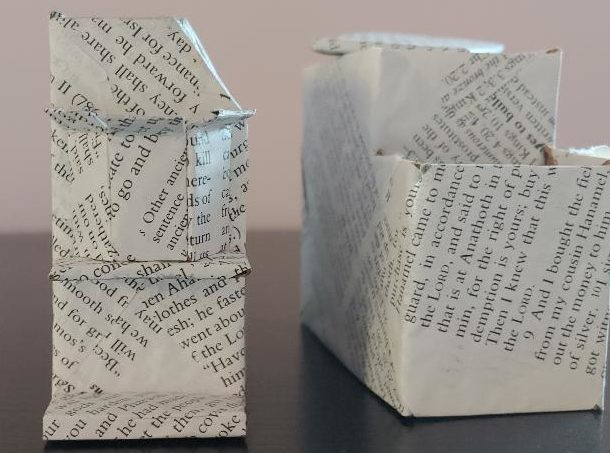
Usually, images of candles accompany the writings for Advent. But this year, they will be houses – Jesus coming to live in yours and mine. For each week in Advent, a new one will be added – houses constructed of cardboard, wrapped in scripture, shaped and painted like the row houses found in Philadelphia’s older neighborhoods. These were created from cardboard boxes already used, and from the pages of an NRSV Bible falling apart from years of use. I hope they speak to you of faith and hope, and remind you that God dwells in your home just as surely as anywhere else.

Row Houses, Unfinished by Colin Fredrickson, 2017-2019


Daily devotionals begin November 29th, the prayerful offerings of so many of God’s beloved children.

For the Beauty and Bounty

For the beauty and the bounty of this place I call home, Lord, I thank you. May I live in gratitude for  your creation, and be a good caretaker of my own little part of it.

 Common Sage in my front yard.

 Rosemary

[Liz Story, Simple Gifts, The Carols of Christmas: A Windham Hill Collection; Windham Hill Records, 2003]

A View From Below

[Photo by Jared Fredrickson, 2019]

I pass under this tree half a dozen times a week, on my way to the library, grocery store, or out for a daily walk. I’ve admired its leaves as I’ve walked toward it, and I’ve appreciated its shade in the summer. But I don’t know that I’ve looked up from beneath it. Until my son walked with me, showing me how to take pictures with my new smart phone. It was when Jared raised his camera to take this picture that I looked up and saw how blue the sky looked against the golden leaves. How could I have passed under these branches so many times, blind to their graceful stretching?

A bird’s-eye view can be amazing, and I love seeing things from above. But if this picture is any indication, a groundhog’s-eye view offers its own beauty.

Today, I am thankful for my view from below.

[Photo by Jared Fredrickson, 2019]

Incalculable

The effect of one good-hearted person is incalculable.

 Oscar Arias Sanchez

[Nobel Peace Prize winner, former president of Costa Rica who worked for peace and justice throughout South America]

It doesn’t take millions of dollars or an Ivy League education to change the world. Those things can be helpful, sure enough, but true change is accomplished because it is rooted in the compassionate heart of an individual or group. It’s not really that surprising, if I give it some thought.

The catch: the good-hearted person may never see the change he or she effected. Isn’t that a wonderful truth? The good done remains a mystery to the one who began the whole thing.

It brings to mind another saying: there’s no end to the good you can accomplish – as long as you don’t mind who gets the credit…

May I be thankful enough for what I have and who I am to be unconcerned with receiving credit for the good I might do…