All posts by Johnna

I am a Christian educator and writer.I have worked in churches, denominational offices, and seminaries. I have a PhD in Theology from Princeton Theological Seminary, with a focus on Practical Theology and educating in faith. In 2010, my book, "How the Other Half Lives: the challenges facing clergy spouses and partners," was published by Pilgrim Press. I believe that words can build doorways that lead to encounters with God through the Spirit.

Whence?

I life my eyes to the hills – from where will my help come?

My help comes from the Lord, who made heaven and earth.

He will not let your foot be moved; he who keeps you will not slumber.

He who keeps Israel will neither slumber nor sleep.

The Lord is your keeper; the Lord is your shade at your right hand.

The sun shall not strike you by day, nor the moon by night.

The Lord will keep you from all evil; he will keep your life.

The Lord will keep your going out and your coming in from this time on and forevermore.

Psalm 121, NRSV

[Note: In the King James translation, the first verse was changed from a question to a statement – a beautiful statement of faith, but not what was written in Psalm 121. This is part of an ongoing series. For more information, click A Song of Ascents above.]

Where do I look for help when I’m in trouble? Whence cometh my help, to put more of a King James spin on it. Whom do I trust with my very life, in all circumstances? It’s a critical question, and the answer is always a statement of faith, even when God’s presence has sustained me through past difficulties. I will trust in God when I need help, just as I trust in God when things are going well.

Once I give my answer in this psalm, I find myself in good company. All of a sudden, there’s another voice, assuring me of God’s faithfulness. Someone else is with me in all of this, someone else is telling me that God will keep my life: I won’t be alone through any of it. I’m not the only one who cries for help, and mine isn’t the only life held by God. My neighbor in faith is with me, and we are both beloved children of the one who created and sustains this universe.

God, self, and neighbor in this mysterious and holy creation. Bound together in all circumstances. Not a one of us alone.

Marvelous.
Psalm 120

In my distress I cry to the Lord,

that he may answer me:

“Deliver me, O Lord, from lying lips,

from a deceitful tongue.”

What shall be given to you? And what more shall be done to you, you deceitful tongue?

A warrior’s sharp arrows,

with glowing coals of the broom tree!

Woe is me, that I am an alien in Meshech,

that I must live among the tents of Kedar.

Too long have I had my dwelling among those who hate peace.

I am for peace;

but when I speak, they are for war.

Psalm 120, Psalm of Ascent, NRSV

The same emotional state that causes a child’s tantrum can also take hold of an adult. Reason and offers of compromise, even apologies, won’t resolve it – in fact, they may have the opposite effect, causing the one throwing the fit to ratchet up the anger. Destruction becomes the goal, damn the cost. And the cost is high.

What happens when it takes hold of a group, when words and actions cannot redirect the swell of damaging energy and emotion? When mob mentality takes hold and directs violence outward, aiming at specific individuals or groups? Large scale or small, that’s war.

Sometimes, in this emotionally charged and divisive age, it feels like peaceable words and actions are useless. But that’s not true. As individuals, we may not be able to put an end to the thirst for war and destruction, but we can certainly make sure we don’t add to it. Maintaining a state of non-reaction, of peace, bears witness and has its effect. Who knows – it may be the way God answers our prayers for peace. And it just might keep us sane and hopeful.

Keep speaking peace.

[This is the first in a series on the Psalms of Ascent. For more information, click above…]

Songs to Walk By

Psalms 120-134 are walking hymns, sung by pilgrims making their way toward (and up) to Jerusalem for one of the three yearly festivals. Who knows if they were composed for this purpose, for priests ascending the stairway of the Temple, or written for different purposes and assigned this role?

I live in a valley between two mountain ranges, and my home is at the top of one steep hill. Ascending and descending are part of every walk I take out my door, no matter the direction I go. I can’t think of a better place to be to sing these songs…

[For more on this series, click A Song of Ascents above.]

Care of Souls

Philosophy is spiritual formation, care of the soul. Some need more care than others, just as some have a better metabolism or were born taller than others. The more forgiving and tolerant you can be of others – the more aware of your various privileges and advantages – the more helpful and patient you will be. Ryan Holiday and Stephen Hanselman

[The Daily Stoic, New York: Portfolio/Penguin, 2016, p. 225]

When I worked in catering, I memorized various ways to set up tables in a space because it wasn’t something I could do with ease. Eventually, I got proficient at setting up a room without memorization – but it took years and a lot of practice, and patient coworkers willing to show me how.

When my patience is tested due to someone else’s inability in something that comes easily to me, I do my best to remember the patience of others – and to remember that it isn’t just a set of skills or a completed task at stake: it’s the care of souls.

The Eye of the Beholder

The universe is full of magical things patiently waiting for our wits to grow sharper. Eden Philpott’s, English poet, novelist, and playwright

I suspect that beauty, magic, and holiness have surrounded me since I took my first breath. Darkness and cruelty, too. How ironic that I expect the latter and not so much the former…

[Quote from Daily Peace, Washington, D.C.:National Geographic Society, 2016.]

Choose Them Wisely

A word doesn’t merely say something, it does something. It brings something into being. It makes something happen. What do writers want their books to make happen?

I wish that I had told my writing students to give some thought to what they wanted their books to make happen inside the people who read them…

[Frederick Buechner; Listening to Your Life; San Francisco: HarperSanFrancisco, 1992, July 22/23 excerpts. Also online.]

What do I want my words to make happen inside the people who read them? If I’m writing a sermon, meditation, or Sunday school lesson, I want to offer just a glimpse of the marvelous and holy world that surrounds us and that lives inside us. The focus of my doctoral work was born in asking and answering that question.

Words open doors within our souls. They give voice to our deepest emotions, and they offer a particular perspective – a way of seeing life. They are tools that allow us to communicate, and they are also weavers of reality. They are powerful. They can heal and harm because they become part of the inner voice that speaks to us of our value from waking to sleeping – and sometimes even in our dreams.

Scripture is sacred because it is a word-constructed doorway that the Spirit draws us through into the love of God. Scripture is sacred because it is a word-constructed means to loving our neighbors more fully. It is the Living Word because it does something for us and with us.

It’s no wonder that Jesus is called the Word Made Flesh.

This is the disciple who is testifying to these things and has written them down, and we know that his testimony is true. But there are also many other things that Jesus did; if every one of them were written down, I suppose the world itself could not contain the books that would be written. John21:24,25

Life Changing

If we could see the miracle of a single flower clearly, our whole life would change. Buddha

[July 20, Daily Peace; Washington, D.C.: National Geographic Society, 2016]

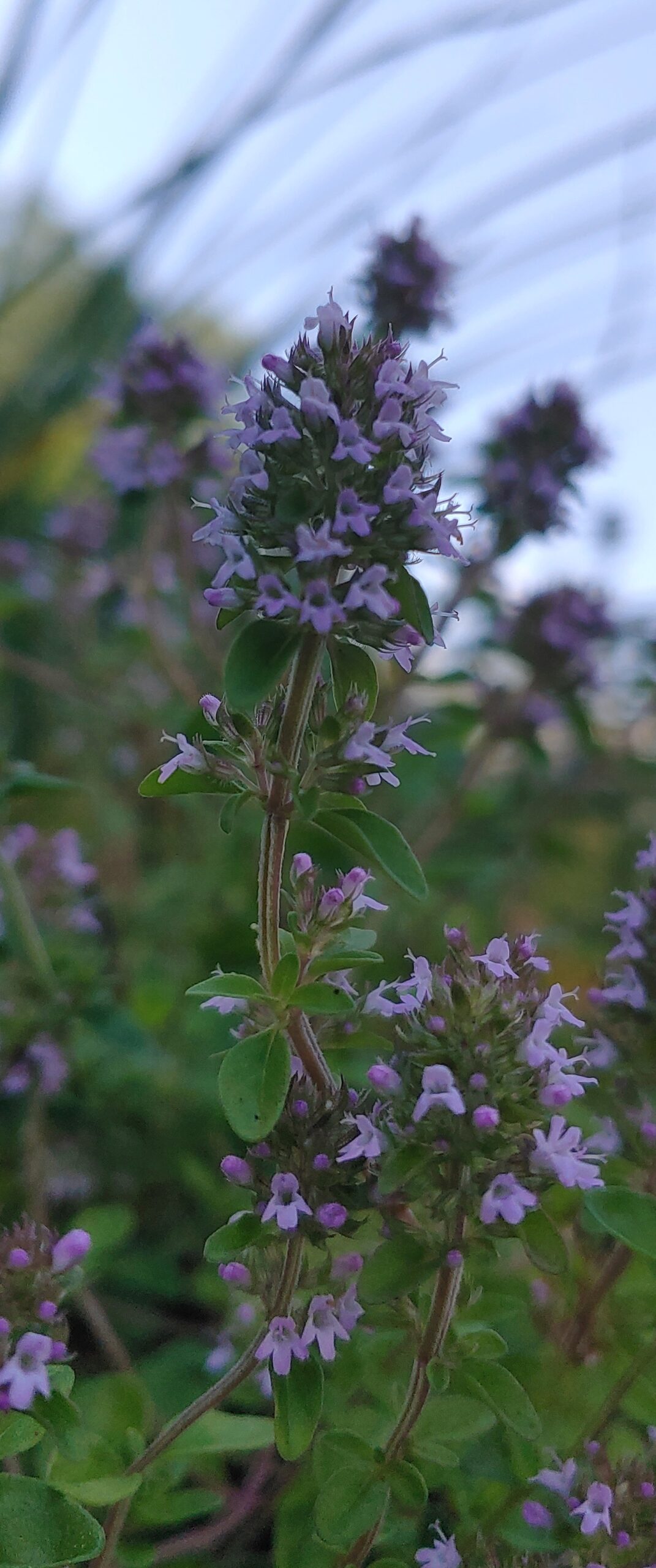
It’s been a rainy, flooding, smoky, humid July in Vermont. For the past few days, I’ve had the added pleasure of a summer cold. But the sun came out today, and today’s Daily Peace quote prompted me to step out onto the back deck. The dozens of Jerusalem artichoke flowers I could see each had at least one bee. My potted thyme is also covered in blooms.

These are not rare species. They are as common as can be. In a world that values what is rare and delicate, it’s easy to undervalue, underestimate, and overlook the beauty in the common and hardy. It’s a peculiar and pervasive blindness – and one I might have kept had the words of the Buddha not intervened.

No Thanks Necessary

When you’ve done well and another has benefitted by it, why like a fool do you look for a third thing on top – credit for the good deed or a favor in return? Marcus Aurelius, Meditations 7.73

One of the main differences between icons and other paintings: icons are never signed. The person who writes an icon is creating beauty as an expression of prayer and faith – an expression that is designed to foster the prayers and faith of the ones who stand before it. An iconographer is creating something that is meant to be moved through – a beautiful means to a holy encounter with God. Signing it, taking credit for it, might impede that moving through and defeat the purpose of the icon.

If I think of everything I do as creating something beautiful as an expression of prayer and faith, I won’t need to claim credit or expect recognition and thanks. Seeking that third thing just might defeat the purpose of the act – and it certainly won’t help it.

[Quote from The Daily Stoic; Ryan Holiday and Stephen Hanselman; New York: Portfolio/Penguin, 2016, July 15th; Icon of Saint Matthew]

Expected

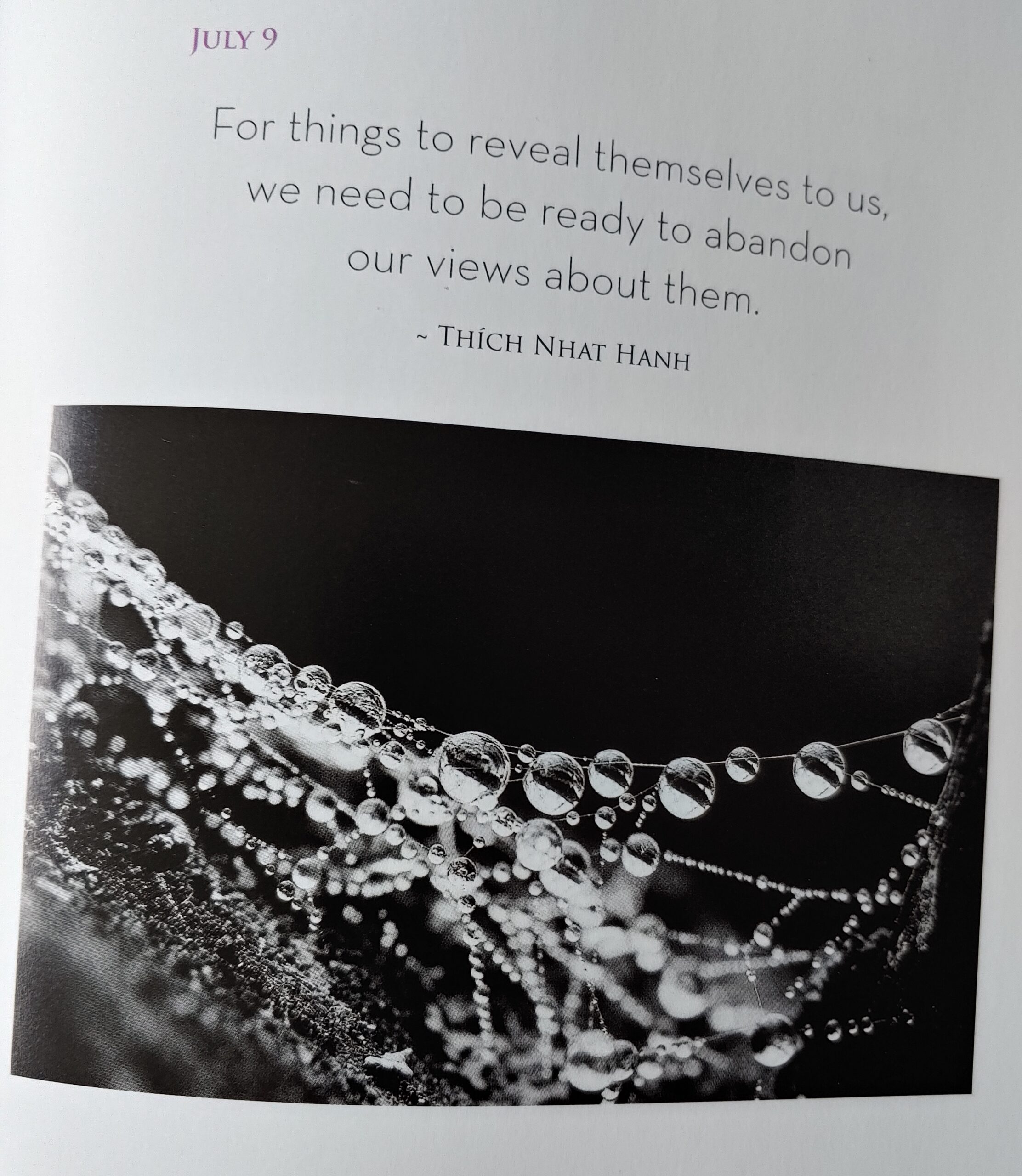
My assumptions will prevent me from a deeper understanding of almost everything – even if those assumptions were fairly accurate at some point. If I expect to find only weeds in an untended garden bed, I’ll be blind to the wild strawberries and chives gracing the space.

The same is true of God: how can I encounter God if I’m not willing to admit that any idea I have about God is partial, and may prevent me from living into a love so marvelous that it is beyond words to express?

Sadly, this unwillingness to let go of my current view of God is often commended as remaining true to the faith rather than seen as what it is: ignorance.

Learning For A Reason

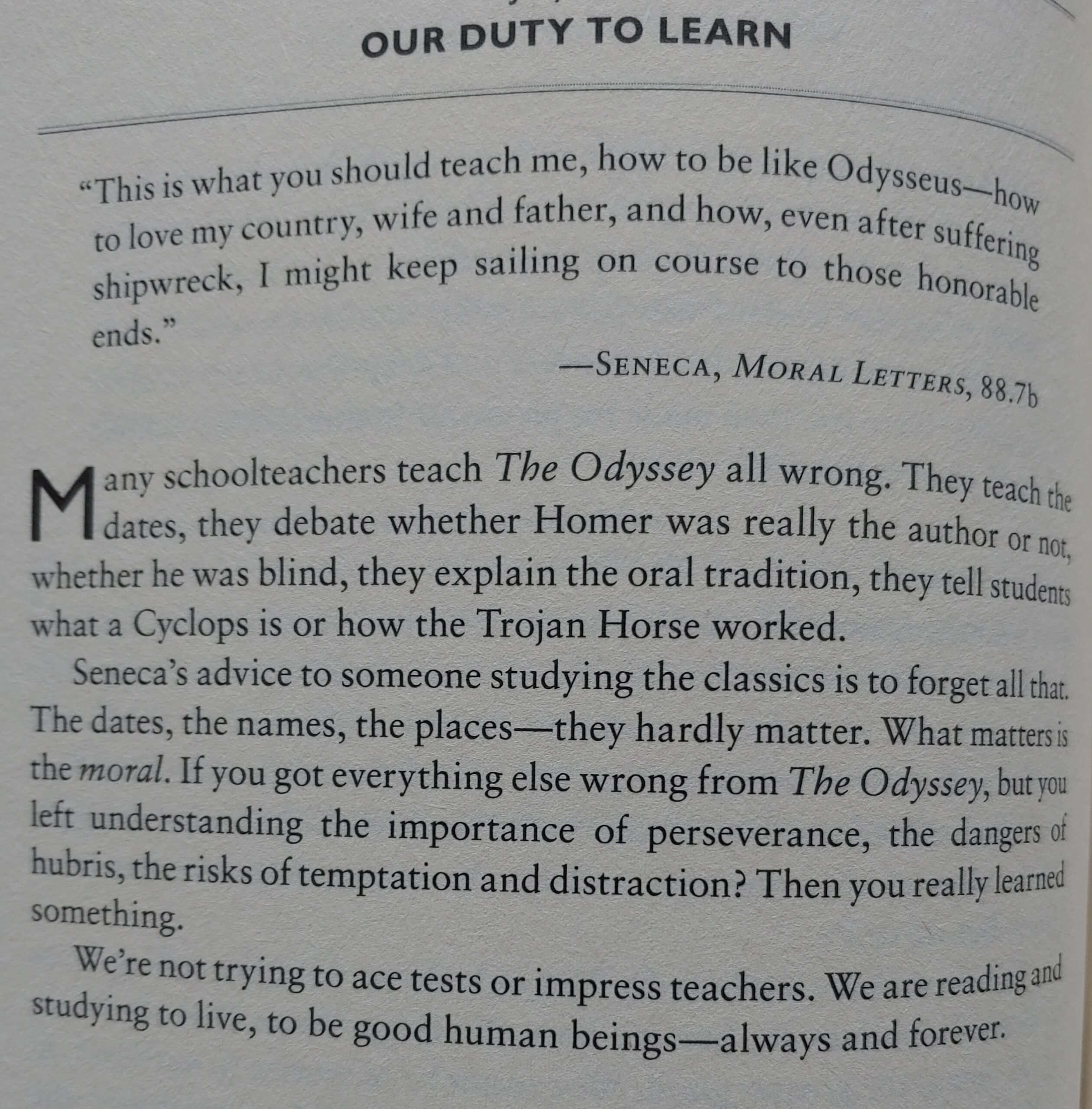
The Daily Stoic; Ryan Holiday and Stephen Hanselman; New York: Penguin, 2016, p. 204

The difference between learning in a way that leads to a fruitful life for self and the world and learning that doesn’t go that way is the difference between wisdom and knowledge. A genius may use her or his knowledge and skills for irrelevant or harmful ends; a wise man or woman uses his or her skills in a way that deepens the spirit and gladdens the world.

There are evil geniuses, but no evil wise ones. Something to think about…