I am a Christian educator and writer.I have worked in churches, denominational offices, and seminaries. I have a PhD in Theology from Princeton Theological Seminary, with a focus on Practical Theology and educating in faith. In 2010, my book, "How the Other Half Lives: the challenges facing clergy spouses and partners," was published by Pilgrim Press. I believe that words can build doorways that lead to encounters with God through the Spirit.
Ology, attached to the end of a word, means the study of. It comes from the Greek word logia, meaning words or sayings.
Logia means sayings or words, a collection of writings, sayings, or oracles. It’s a common enough term in theological studies and philosophical traditions. It’s related to the Greek word, logos.
Logos means the word, the source, the rational principle that underlies things. The Word. It’s also one of the names given to the man Jesus, the incarnation of the source (God), and the principle that underlies all life.
Descent Into Hell
Biology is the study of life; most of us, happily or unhappily, ended up taking it in high school. If we pull a six degrees to Kevin Bacon, Biology moves from -ology to logia to logos in three degrees. If we take it back to the original root, then Biology isthe word of life.
If we approached biology, and all the other ologies, as the word of instead of the field or study of, perhaps we would let go of the teenage boredom that still blinds us and see it for what it truly is: a window into the sanctity of all life.
I can recall a lot of my early life because I moved from place to place. The trash cans floating down the street after a flood were in Mississippi, so I was three years old (1967). Christmas with my grandparents was right before I turned four, during the weeks between Mississippi and Hawaii (also 1967). I was four when I used to see Mr. Yokoyama (1968) walk to work – that was in Hawaii. Stopping at a Texas rest stop to have a drink of water happened when I was barely five (Winter 1969)- it was during the drive across country on the move back to the mainland. Where I was and when I was are easier to determine because the wheres changed every year and a half.
sp TI ac ME e
But there were some years when too many moves in too short a time blur together. My sister and I were in three different school systems in three different states one year – and ended it in a return to one of them to finish the school term. I lived in four different places in two states between my first and second semesters in seminary. Few of the details from those times are solid enough to grasp, and all that remains is a cloudiness that hangs between two more distinct times and spaces.
StPiAmCeE
Space and time are intertwined, sometimes offering clarity and sometimes made more obscure because of that entanglement. Sometimes this melding anchors my life, sometimes it unmoors it. Either way, it reveals just how profound spacetime is in life.
There’s a lesson here, if I care to learn it. This life grows in particular space and time. The walls and roof that keep me warm, the chairs drawn up to the table for a meal, and the spot I occupy when I pray are where I seek God, and where God meets me. The ordinary time that finds me at work, making dinner, or gathering myself for prayer before anyone else is awake is when I encounter neighbor, self, and God. It makes it a lot easier to let go of the illusion that none of the particulars really matter; it also makes it a whole lot easier to love those particulars, imperfect and ultimately transitory as they may be…
My high school chemistry teacher, Helen Steele, was a source of revelation: she taught me about molecules. A quick definition: Molecules are composed of atoms, which are made of protons, neutrons, and electrons. Molecules are the fundamental components of matter.
That’s amazing in itself, but learning that wasn’t revelatory. It was when she pointed to the enormous lab table at the front of the class and said this: that table is mostly empty space because space makes up the vast majority of molecules. The table that weighed several hundred pounds was mostly made up of the space between protons, neutrons, and electrons – just as the cosmos is largely made up of space between planets and galaxies. It’s in this place in between the invisible molecular level and the vast cosmic scale that the space is hidden in the solidity of a table.
For the rest of my tenth grade year, every time I saw that lab table, I knew I was in the presence of the mysterious, that Mystery created and surrounded that scratched, charcoal colored piece of furniture. Learning about how molecules came together or separated into new combinations, and how those combinations of mostly-made-of-space molecules manifested into salt, water, soil, rock, and everything else I could see just added to the mystery of it all.
Life, in all its many forms, is composed of the empty space between and among the atoms that come together in molecular structures. Even now, my heart beats faster just thinking about it. And that empty space, that space between, is a sacred one. That’s the vision of reality that Helen Steele offered.
I never told her how important that larger view of the world was to me, and I never shared it with my classmates or other school friends. It didn’t seem like something they would understand or value. I left a different kind of empty space between myself and them in keeping silent about it.
One January morning, seated in a science classroom at the University of New Hampshire, geology professor Cecil J. Schneer would offer a similar glimpse of the Mystery – this time in the History of Science. At the end of the first class, I let go of being embarrassed by how profoundly his lecture moved me and I thanked him for the revelation. I sent my words into that empty space, and a connection was created. I think it’s one of the moments that nudged me toward seminary and a the work of pointing out to others the mysteries that surround and fill life.
For more information about molecules, check out McGill University’s Office for Science and Society: What is a Molecule. (www.mcgill.ca)
According to Isaac Newton, absolute time exists independently from anyone perceiving it, and it progresses at a constant pace throughout the universe.
According to Albert Einstein, time is not absolute, but intertwined with space and affected by gravity and speed (he also believed that the separation of past, present, and future was a “stubbornly persistent illusion”).
Stephen Hawking held that time began at the Big Bang, along with everything else.
The arrow of time moves from the past toward the future. There is no reversing of time’s arrow.
In my everyday life, time behaves as Newton’s independent dimension. It marches on, regardless of what’s going on in my life. I age a year at the same rate, whether I’m twenty going on twenty-one or eighty-four going on eighty-five. The clocks keep ticking and I move from cradle to grave.
But at the extremes – subatomic or cosmically large – time gets wonky. It’s so married to space that it becomes one half of a compound name: spacetime (space/time, space-time, you get the drift).
But scientists aren’t the only ones vexed by time. Philosophers and theologians were dealing with this headache long before modernity: is time an internal sense of duration, or an ordered relation of events? Is the time I experience, which isn’t quite so orderly or constant [sitting in traffic for 20 minutes feels a lot longer than watching a 45ish minute episode of Doctor Who (Okay, the old ones were 25 minutes, but you get the Time And Relative Dimensions In Space drift)], as real as the time that passes in orderly minutes and hours? How does God fit into time, stand outside of time, create time, enter time, redeem time, sustain time? What about past, present, and future – are they real, or something that helps me keep what I’ve done, what I’m doing, and what I might do in some kind of order? Yikes!
But if I take a deep breath, then really consider time, something emerges out of all this talk – something as profound as it is simple: my time is limited. Whether time exists in creation or outside it really doesn’t affect the reality of my own personal expiration date. My moments pass and cannot be regained. Soon enough, I’ll return to the dust from which I was made.
A lot of things I might consider important drop away when I accept and embrace the limited time I have on this earth. Letting go of jealousy, sarcasm, and one-upmanship becomes easier. Loving what does count – love, kindness, joy, others – just might get a little easier, too.
Length x Width x Height= Volume: Three dimensional
The number gets harder to calculate every time a dimension is added. Writing it down becomes necessary, and a calculator for checking the math (or doing the math in the first place!) is a good idea. After all, the table I’m building won’t come out right if my calculations are off. Putting dinner on the table in my three dimensional life is a whole lot better when that table is steady and solid.
I’ve been wondering if there’s a lesson here for my faith life. The length of it – how long I’ve walked this path. The width of it – The traditions and theologies that have shaped it – in good ways and some not-so-good ways. Those two can only get me so far. I need that third dimension for my faith to take it from a solo experience to something more, something vibrant. What is that third dimension?
Some call it the Body of Christ, others Church, still others the Spirit filled communion of Saints, as well as my favorite: the unbroken chain of prayer through time and place. It’s the living connection between and among those who seek to love God, Self, and Neighbor with who they are, what they have, and what they do. That’s the volume, the dimension that moves the two dimensional into the three, the plans and numbers on the blueprint into the table.
If the company he kept and the disciples he chose are any indication, Jesus found room at that table for any and all who wished to pull up a chair. I guess, in light of that, I can let go of my preferred guest list, be thankful for the table and the nourishment it holds, and do my best to love whomever shows up…
Plane: A geometric plane is a flat, two dimensional surface that extends infinitely in all directions, having lengthand width but no depth. Planes are made from three points that are not on the same line (non-collinear). Picture an endless piece of paper…
Picture life as a piece of paper. What do we do with this life, this piece of paper? Do we start with a blank sheet or is something of who we are already written upon it? Are we genetically predetermined to turn out a specific way, or are we shaped by the external forces that we experience? Or is it a combination of the two?
Philosophers, theologians, and scientists have pondered, debated, and fought over such questions, creating theories and intricate systems to support their particular answers. And those are entertaining and important (unless the arguments turn ugly and maim or claim lives – which happens with alarming frequency), as long as they are not mistaken for the life they seek to describe, define, and delineate. Because life is not a two dimensional plane, no matter the length or width of the treatises that have been written throughout history.
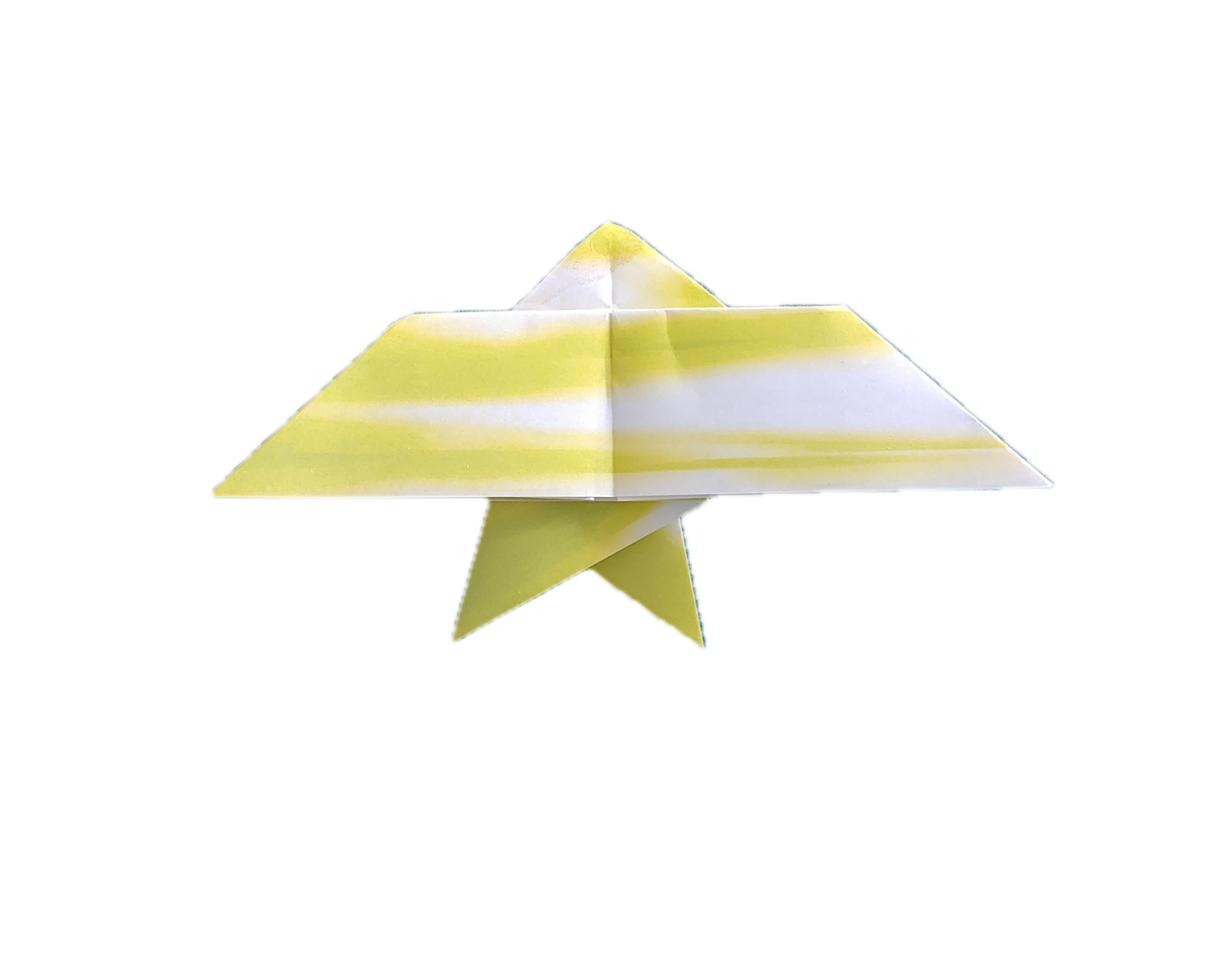
Picture life, and the years given us, as a piece of paper that is folded, shaped, gaining depth. Moved by the Spirit, infused with the Image of God from its inception, life becomes an expression of love and beauty. What shape will the folds of your life take, what holiness will be revealed?
The paper that is your life isn’t meant to be a two dimensional plane. It is a deep and holy origami.
Line: A perfectly straight, continuous path that is infinitely long, and has no width or thickness, representing a path of points extending forever in opposite directions…[also refers to marks, cords, queues, or sequences in various contexts].
In mathematics, lines connect any two dots. Lines have no end and really no beginning, extending beyond the limits of imagination – that’s why arrows are added to their ends in mathematical problems.
If you begin at a point on a piece of paper, you can draw lines moving out from that point in different directions (technically, they are rays, not lines – but let’s not quibble). If you draw a landscape using the lines as guides, you get perspective – depth, three dimensionality, appears in a two dimensional space. If you are an artist, something of the wonder of whom/what you draw is offered to all who see it.
Spiritually speaking, everything begins in God – the origin of all life and lines. Scripture and icons draw lines, verbal and visual, from that beginning. They depict perspective (depth, dimensionality) that offers us something of the wonder of God. Maybe, just maybe, they draw us into the wonder of God, leaving behind on our very lives something that just may offer a glimpse of it to others.
Let’s begin with a point. Add a second point and we can connect them with a line. Add a third that doesn’t sit on the line and we’ll end up with a triangle when we connect them. Point, line, plane. Non-dimensional, one dimensional, two dimensional. These ideas are the foundation of geometry a la Euclid. There’s really no proof that a point, a line, and a plane exist, but assuming that they do makes all kinds of things possible – and makes it a lot easier to frame out a door, hang a picture, and build a skyscraper.
So what does this have to do with Lent, a time of letting go of what doesn’t matter and loving what does? What is the point, the line, and the plane – the foundation – in all this? Here are the three my faith life assumes:
Point: God is the source of all that is (seen and unseen)
Line: Jesus of Nazareth is God-With-Us
Plane: We are neither God nor Jesus, but we are related to both
Point, line, plane: God, Jesus, Us
And when I note the difference between you and me, when we become neighbors in this space, life goes from a two-dimensional idea to a three dimensional grace-filled reality.
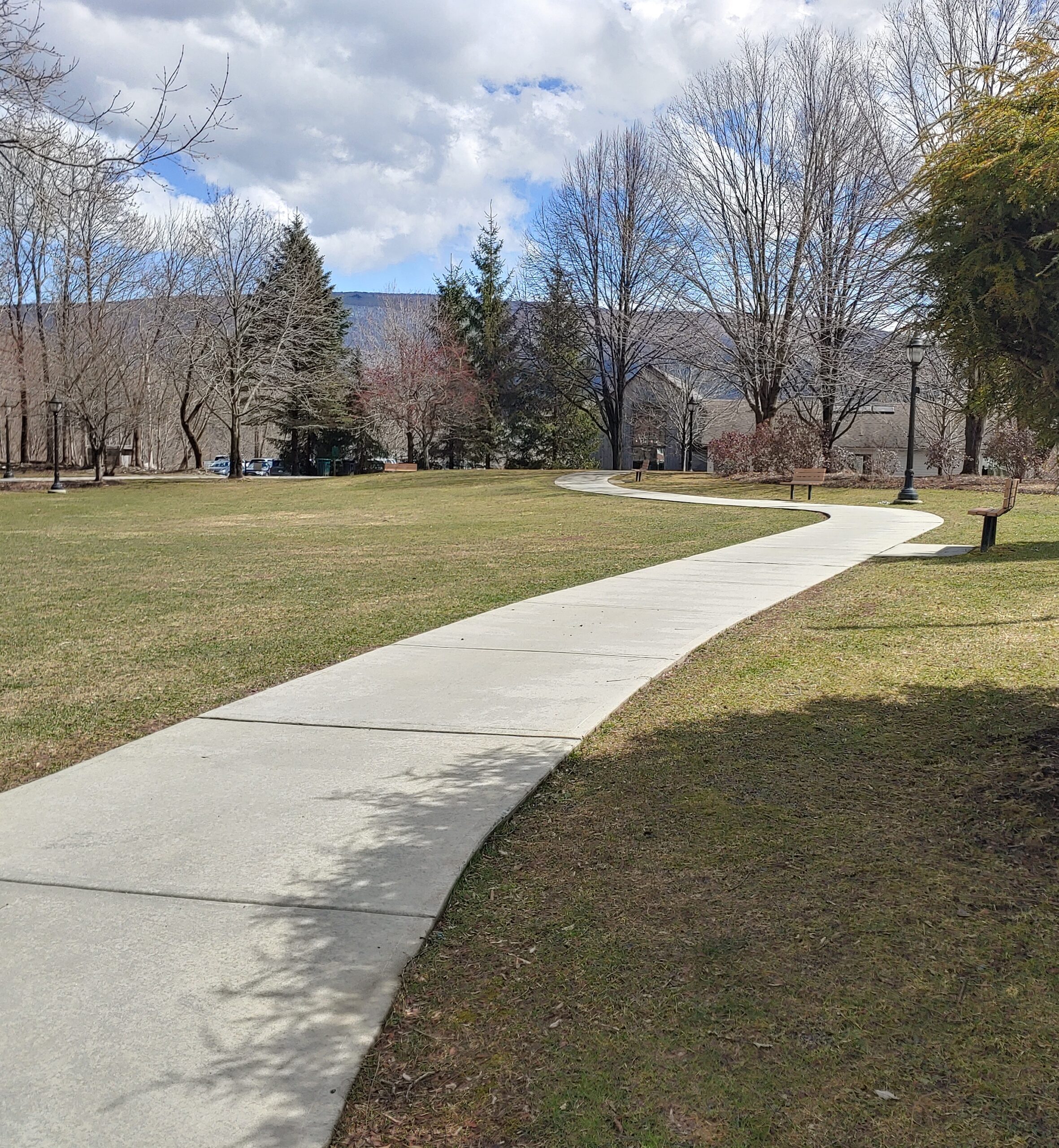
Path, and perspective
[Note: Euclid was a mathematician in Ancient Greece,circa 300b.c. The foundations of geometry can be found in his Elements, as well as in other works.
Also Note: Euclidean geometry isn’t the only geometry. For space/time issues, Euclid and his assumptions give way to other foundations…]
Point, line, plane. Length, width, volume. Time, space, time/space. Spirit, eternity. Biology, Chemistry, Physics (Theology?). Faith, hope, love. Neighbor, self, God.
How do we understand our own reality? What words, concepts, and images provide the signposts that point us to what is most profoundly and truly real? In this time and in this place, these seem like good and necessary questions.
Next week, Mardi Gras beads and eating way too much rich food will usher in Lent – the time of reflection that is often mistaken for a self-inflicted punishment. At its most profound, this penitential season is meant to help us do two things: let go of what doesn’t matter and love what does.
Lenten words to live by…
So let’s take a look at reality – outer and inner. Let’s figure out what doesn’t matter, letting it go as best we can. Then, let’s figure out how to love what does…
Fred Rogers didn’t have a television show as much as he had a televised children’s ministry (he was an ordained Presbyterian minister). His goal was to offer a gentle space and time for fostering the spirits of all children. He made things with items found around the house – cardboard boxes and tubes, crayons, and construction paper. He kept a routine, providing stability every time he walked in the front door, took off his jacket, and put on his sweater and sneakers. Off the air, he was an advocate for children’s rights and the beneficial use of broadcast airtime.
This year, the opening theme to Mr Roger’s Neighborhood was featured in a Super Bowl ad for a mortgage company, complete with a pan-over of a neighborhood similar to the one that started the PBS show. Lady Gaga provided the vocals. It’s a lovely couple of vignettes that tug at the emotions, Redfin showing up on a phone at the start, with Rocket Mortgage and Own the Dream tagline at the end.
This isn’t the first time songs that defined and inspired generations have been used to sell products. Many artists have had their music featured in ads – The Rolling Stones and The Beatles come to mind. Willingly or unwillingly, artists find their music hawking all kinds of products. But something about hearing the opening to Mr. Roger’s Neighborhood hits in a different part of the heart and spirit. At least for me.
I’m convinced that the Holy Spirit is nowhere near as picky as I am when it comes to showing up. Love and the Sacred break into our world in the most ordinary and freaky places. If we have eyes to see and ears to hear, Love for Neighbor, Self, and God surrounds us.
If the Super Bowl ad convinces one person to reach out in love and service to someone else, does it matter that it was all meant to fill the company coffers?
What if the Super Bowl ad damages one soul because it equates being a neighbor with consumerism?
To learn more about Mr. Rogers, visit misterrogers.org