What We Hand Down

My sons got their summer reading assignments a few days back; Colin and the rest of the seniors will read The Alchemist (Paulo Coelho, Alan R. Clarke, trans.; New York: HarperCollins, 1993) while Jared and the incoming 8th graders will read The Contender (Robert Lipsyte; New York: Harper Collins, 2003, reissue of the 1967 novel). They’ll have a home on our tilted, currently-being-read bookshelf for the next few weeks. When Colin is done with The Alchemist, it will return to its usual spot until I reread it in another year or so. The fate of Jared’s book is yet to be determined. If he loves it, it will stay; if he couldn’t care one way or the other, it will go to the library. Only what’s really valued remains in our family collection – everything else is released, finding a life in someone else’s hands and heart.

Words are important, holy even. A book, a poem, a saying, a song can change our inner worlds and the outer worlds we call home. The words that transcend their particular time and place earn the title classic, or the adjective masterpiece. Libraries all over the world offer these to their borrowers because in some indescribable way they enrich human life through their beauty and truth. These words that touch the best part of us, they are our verbal inheritance and our linguistic legacy – gifts from the past for our present, handed down from us to the future. Who we were, who we are, who we will be: all these found in the words, in the books, in the countless libraries.

There’s a library handed down in almost every time and place, such a common experience in this literate age that we take no note of it. It’s a collection, sometimes collections, of our encounters with God and neighbor. It’s a record of mistakes and tragedy, a song of praise and beauty and gratitude for the blessings of life. Sometimes it’s poetry, prose, history, and personal letters; it’s available in all kinds of languages and in all kinds of cultures. Extraordinary and common. Whether Buddhist, Hindu, Jewish, Muslim, or Christian, sacred scripture is handed down. It’s the deepest expression of our longing for God and our love (or lack of love) for one another, handed down in paperback and hardcover, downloaded on a Kindle or heard on tape.

For whatever reason, we often think of this library as a single book – impressive and weighty, but not particularly helpful. Such a tragedy to have the library of the soul at our fingertips, freely given but rarely opened…

ottableofcontentsPerhaps that’s the biggest lesson a library can teach: all the voices of the past, in all the words of today, have no power to transform us and our world unless we delve into them. All the voices of the present will have no power to bless future generations unless we hand them down.
Pumpkins, Weeds

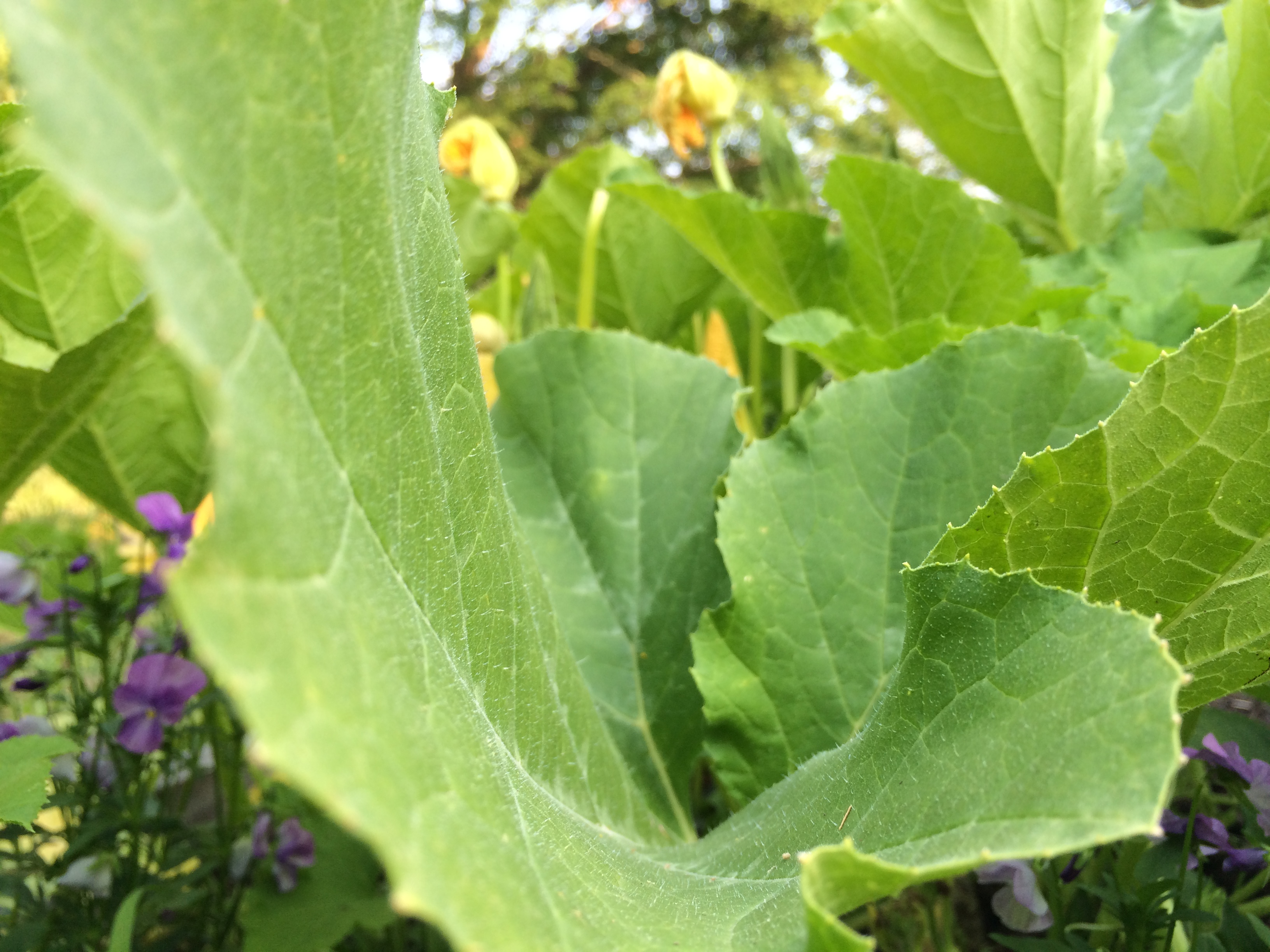
IMG_3838The pumpkins seeds the Tabor teens planted on a cool April morning are now plants with huge leaves and dozens of light orange blossoms. Nine green and growing pumpkins are attached to the several vines that began at the back of the library garden and now flow several feet beyond its border.

In another part of the learning garden, crab grass is trying to choke the life out of pansies and peppers. Sunny days and timely rain fall on the just and unjust alike – feeding the weeds as well as the flowers and vegetables.

I spend a couple of hours each week pulling weeds and tending the pumpkin patch. Both sections of the garden are full of life – one full of unwanted growth, the other overflowing with more bounty than I’d ever imagined.

When the weeds are pulled, I drop them in my blue bucket and haul them to the compost pile at the far corner of the library grounds. They join the grass clippings, decomposing leaves, and shrub trimmings. They aren’t much good at the moment, but in time they will break down into a compost that will nourish the garden – fertilizer that strengthens rather than weeds that weaken. Nothing is useless, nothing forever a weed.

I hope the same may be true of the weedy selfishness and choking ignorance that grow in my heart…

For A Time

boarbooksI don’t buy many new books. Whenever possible, I borrow new stories from the library. If I love it, I’ll buy a copy; if not, I return it with no cost but the time it took to read. This keeps my shelves at home full of books I love and empty of ones I don’t, and it keeps the mental and physical clutter down to a minimum.

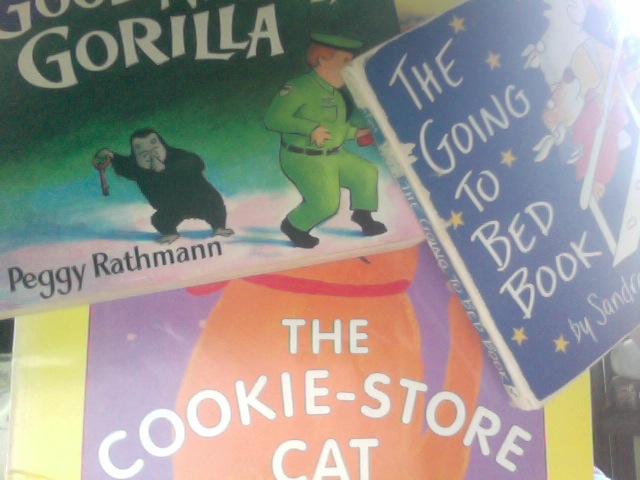
In years past, I did the same with books for my growing sons. Our favorites have shelf space at home. Outgrown favorites are passed on to the library or neighbors, giving them a life beyond our family. Our board book copies of A Very Hungry Caterpillar and Sheep Out to Eat, with duplicates of Harry the Dirty Dog and Mike Mulligan and His Steam Shovel are in the hands of other children, passing on the blessing they gave to me and my sons. The stories and pictures are still in our hearts and minds, and we can always borrow a copy if we feel nostalgic.

My older son will begin his senior year in September, my younger his eighth grade year. Both are well on their way to adulthood, no longer children who need me to read stories. I can’t put my sons on a shelf or stop them from growing up. Soon they will live lives beyond my home and help. Even if I could, I wouldn’t. Like library books, they aren’t mine: I’ve borrowed them for a brief time, keeping them safe and enjoying the adventures they bring. Besides, they are written on my heart and soul – no need to keep them when the time comes to let them go.

For everything there is a season, and a time for every matter under heaven. Ecclesiastes 3:1

M.A.R.

It’s short for Municipal Appropriation Requirement, and it’s what makes a public library public rather than private. The idea: what is important shouldn’t be left to chance or to the capricious generosity of private patrons. Because a library provides a necessary service for its town, it should be adequately funded through the town government. When a Massachusetts town funds its library properly – providing funding for materials, staff, and adequate hours of operation – it meets its M.A.R. and is certified by the state.

With certification, the local town library becomes the doorway into a whole system of lending libraries. Teachers borrow materials for their classrooms, students get free copies of required books, and avid readers check out the latest Dan Brown novel. Movies, music, magazines, ebooks – it’s all yours for the checking out. If any library in the network has it, you can get it through your local library. Membership has privileges far beyond what can be found on the shelves, all for ensuring that the town funds its own library’s basic services.

I think the same is true in life. If I invest in the basics, the whole world opens up. Food, clothing, shelter, and loving support from family and friends on the individual level, adequate town services on the communal one. Many people I’ll never know made sure that the M.A.R. was met when I was a child, opening a door to the world for me. Now it’s my turn to do the same for children I’ll never know.

It may not seem like a big thing – not particularly expensive or headline grabbing. But look closer. The whole world waits on the other side of the door – a way to honor God by honoring the neighbor on my street and the neighbor not even born yet. I’d call that a blessing, if not a certification miracle…


Pauses

The lightning and thunder have passed, and the downpour is now a soft rain. Everything’s plugged back in. The two hour electric hiatus is over.

Aunt Norma’s memorial service was on Saturday morning in Eliot, Maine. My three cousins and three siblings have taken up their routines again, as have my parents. The three hours for remembering and sharing as a family are over.

Not much causes a significant pause these days: sickness, vacation, birth, death, weather, a weekly church service for some. The blue laws are long gone. Society no longer has a mandated sabbath that offers a weekly break in business-as-usual. Only a major happening or presentation puts a comma in life’s sentence these days.

A big exception to this is a library. Walking through its doors is walking out of the world’s busyness. Books, chairs, artwork, and people of all ages inhabit this calm and quiet place. Without raised voices or a show of strength, librarians keep the peace and help each person find just the right poem or novel. The only quick footsteps come as little children find their seats for story time. It is a gentle place, quietly offering the knowledge of the ages to patrons of every age.

For whatever reason, usually I’m unwilling to grow or change without a lot of noise and flash; I might even convince myself that I can’t grow or change without blaring and glaring events. But my weekly walk through the library doors – the place of still, small voices – begs to differ. Great big worlds are beckoning quietly – an invitation to pause and grow hiding in my weekly schedule. It is a place for seeing God’s great big world and finding my place in it. How about you?

The World is Quiet Here

It’s a line from Lemony Snicket’s A Series of Unfortunate Events. It’s about the many libraries that can be found in that thirteen book series, and about finding a safe place. The series is full of adventures, with people using their talents and knowledge for both good and evil ends. Read one way, it’s a well written story about three orphans trying to escape the nefarious plots of Count Olaf. Read another, it’s a parable about ethics, moving from a very simple “some people are all good, and others are all bad” understanding to a more nuanced “good people in desperate circumstances may act in hurtful ways, and bad people may not be irredeemable evil.”

From The Bad Beginning to The End, the Baudelaire orphans find themselves in libraries of all kinds. They are able to save themselves many times by using something they found in books. In the tenth book a stranger asks them to trust him by saying this:

 “I know that having a good vocabulary doesn’t guarantee that I’m a good person,” the boy said. “But it does mean I’ve read a great deal. And in my experience, well-read people are less likely to be evil.” (Lemony Snicket, The Slippery Slope, New York: HarperCollins publishers, 2003, p. 95)

Are well-read people less likely to be evil? Can someone who reads Othello and Our Town, who is familiar with Gatsby and Aragorn, who has seen The Very Hungry Caterpillar change into a butterfly and The Road Not Taken make all the difference easily disregard the sanctity of life in all its forms? In The Slippery Slope, Lemony Snicket answers it through Violet and Klaus Baudelaire:

 Neither of them were entirely convinced by what the masked scout had said. There are, of course, plenty of evil people who have read a great many books, and plenty of very kind people who seem to have found some other method of spending their time. But the Baudelaires knew that there was a kind of truth to the boy’s statement…(pp. 95-96)

What makes a good life? What does evil look like? Is there a God? Where did this universe come from? What is truth? Giant questions that have been answered in many ways throughout history. These and so many more are waiting in libraries around the world, quiet places that allow us to hear the whispered answers of the past, understand our own time, and dream about a better future.

Knowledge is not the same as wisdom, and information can be used for evil as well as good; words can inspire compassion and sacrifice in the service of others, and can be used to justify hatred and murder. But I think there is some kind of truth to the boy’s statement, too. Those who spend time in a library are bound to find themselves in the stacks. Where the world is quiet, the soul is likely to speak peace more often than violence.

Let me know what you think…

Blue Dot Blindness

I re-shelved children’s books at Wareham Free Library’s this morning, returning dozens of picture books, audio books, and serial books to their homes. It’s a peaceful activity that lets me see new books by favorite authors and revisit favorite books my sons have long outgrown. But today, I had an extra task: find and pull out any books with blue dots on their covers. The Onset branch of the library is reopening in a couple of weeks, and the blue dot books belong there.

I didn’t think finding them would be much of a challenge. The dot itself is on the cover near the spine, big and bright enough to stand out. The children’s librarian found a whole bunch of them, but I only managed to spot four. Two were in the “P” section, just around the Junie B. Jones books. The third was a Thomas the Tank Engine book, one among many. The fourth was hiding on the “W” shelf, spine to the back of the shelf, page edges to the front. It felt good to find them, but I’m sure I missed more than I found.

I checked many shelves, pulling books out enough to check for the blue dots without taking them all the way out. Maybe that was the problem – the books were neither in my hands or in their places, lost in an in-between space. Was I really looking at the books, or just going through the motions to get to the end of the shelf? I’m not sure.

Nothing makes me as blind as just going through the motions. I won’t see much when I’m not really looking. Books with blue dots or life, I’ll miss it if I don’t take it in my hands.

Origami Wisdom

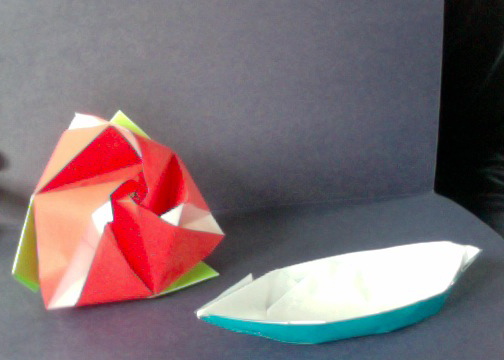
origami

Last week, I went to Rachel Held Evans’ workshop: How To Turn Hate Mail Into Origami. She confessed to giving more time and emotional weight to the few negative comments than the many positive ones that come her way. This isn’t surprising because the brain is hardwired to notice threats – a life-saving tactic when dealing with lions, tigers, and bears without getting eaten, but not so good for coping with blog rants. So she prints out the hurtful comments and folds them up, making flowers and foxes out of scathing Amazon book reviews and hurtful tweets. Reviews come and go, she said. Spend at least as much time on the positive comments as the negative, apologize when what you write is wrong. Focus on the writing rather than the reaction. Stay grounded in what’s real: family, friends, the life you live and love. Develop a tough hide, but don’t lose your tender heart. Fold the bad into origami boats and trees.

When I saw Rachel’s origami, I couldn’t see the criticisms and insults. The words weren’t in any kind of readable order, and much of the writing was folded inward, invisible to the eye. Not gone, just not the focus or the final creation. It takes time and attention to create origami out of insult and hurt, but it takes almost as much time and attention to create origami out of blank paper. Since most of us are no longer blank pages, and nearly all of us have some hurt inked on our lives, folding these into something beautiful isn’t just a good coping mechanism: It’s a symbol of how even imperfect and damaged lives are made new and beautiful when held in loving, wise hands.

[Rachel Held Evans is a blog writer (rachelheldevans.com) and the author of Faith Unraveled: How a Girl Who Knew All the Answers Learned to Ask the Questions, Searching For Sunday: Loving, Leaving, and Finding the Church, and A Year of Biblical Womanhood: How a Liberated Woman Found Herself Sitting on Her Roof, Covering Her Head, and Calling Her Husband ‘Master’.]

Amen at dying

and it is in dying that we are born to eternal life.

Amen.

It’s the way of things. Last year’s hollyhocks died, offering the seeds that sprouted new plants a few weeks back. Sometime soon, the caterpillars munching the maple leaves in my back yard will inter their pipe cleaner bodies and emerge with soft, furry wings. Each of us dies throughout our lives, going from one stage to the next – infant to toddler, child to adult. We let go of people when they die, and they will let go of us when it is our turn. There’s no other door to new life, death alone provides entry. It’s just so hard to go through, leaving everything behind for who knows what.

I accept this truth, and I make my peace with it every time death claims someone I love. In my soul I know that no one is lost to God, even when lost to me, but I mourn all of them. Every atom in this blessed universe is held fast, but not in the form I know and miss. One day it will be my form, this life I know and love, that I must give over to death. It’s hard to imagine when or how this will come, sitting on my sofa right now, typing these words. But the door of death will open, granting me passage into eternal life.

When my time comes, I hope I have the faith to greet it with peace. In that moment, I want to say amen: let it be. With so many people I love on the other side, with these words of saint Francis on my heart, in grateful thanks for those I leave behind, I’ll die to all I know and trust my eternity to the embrace of God.

Lord, Make me an instrument of Thy Peace; where there is hatred, let me sow love; where there is injury, pardon; where there is doubt, faith; where there is despair, hope; where there is darkness, light; and where there is sadness, joy. O Divine Master, Grant that I may not so much seek to be consoled, as to console; to be understood, as to understand; to be loved, as to love. For it is in giving that we receive; it is in pardoning that we are pardoned; and it is in dying that we are born to eternal life. Amen.

Double or Nothing

It is in pardoning that we are pardoned.

Pardon me is so easy to say when passing in a crowded hallway or reaching for a salt shaker and nearly impossible to utter when real hurt or damage has been done (Is it because someone refusing to pardon a passing stranger or outstretched arm commits a bigger offense?). How do I ask for forgiveness when the damage is profound or even irreparable? The unspoken words pound the walls of my head and heart, bruising and battering me in their escape attempts. Why can’t I let them out, especially when they are the only reparation I can make for the harm I’ve done?

When I’m on the receiving end of this pain equation, I have no trouble getting words out; the question is, what words will I release into the world? Speak to send the pain I feel into the heart and soul of another, or speak to release us both from pain given and received? Retribution or restoration spoken and heard: the choice is mine.

I know pardon given and received opens the door to a blessing built for two, damager and damaged, even in tragic circumstances. Pardon unrequested and unrequited bars the door. It’s double or nothing: the door is too big to admit an either/or blessing.

Lord, Make me an instrument of Thy Peace; where there is hatred, let me sow love; where there is injury, pardon; where there is doubt, faith; where there is despair, hope; where there is darkness, light; and where there is sadness, joy. O Divine Master, Grant that I may not so much seek to be consoled, as to console; to be understood, as to understand; to be loved, as to love. For it is in giving that we receive; it is in pardoning that we are pardoned; and it is in dying that we are born to eternal life. Amen.

This prayer is attributed to Saint Francis. He was born in 1181 or 1182 into a wealthy family in Assisi, Umbria. He grew up in comfort, turned into a rowdy youth, and eventually looked for glory on the battlefield. His life plan altered when he encountered God. In prayer, he heard God tell him to rebuild the church. He devoted himself to a life of prayer, poverty and service. He is the founder of the Order of Friars Minor (OFM), usually called the Franciscans. He died in 1226 after a life of prayer, poverty, and service. His life, work, and words have inspired countless numbers of people.

Moving into God’s presence through words