Category Archives: observation

Finding the Rhythm


The time signature in a musical piece sets the rhythm – common time, three-quarter time, etc. It gives a frame for the notes, directions on how they work together in time, and keeps everyone singing and playing the various parts working together to transform dark spots on white paper into melody and harmony. It’s the touchpoint for improvisation, the place of reference for scat singing and jazz solos. When I dance, it directs my feet; it provides the when and how often for clapping.

It’s usually easy enough to find the rhythm that the time signature sets. But every so often, it isn’t so easy. I can’t quite find the underlying beat, and the pattern of the notes escapes me. Turning on the radio at the end of a song or during a guitar solo; a cappella chanting; some modern classical music that changes rhythm unexpectedly and often: these can throw me off, and it takes more than a few seconds to find my way in the piece. I have to wait until I can feel the structure and pattern in the music. It’s unsettling.

My spiritual life feels that way sometimes. The time signature changes throughout my life, and it throws me off until I find the rhythm; I’ve tuned in somewhere in the middle instead of at the start (more honestly, I tuned out for the beginning part!); someone’s offering a riff on faith, and I miss its connection to the standard version.

Finding the rhythm of the Spirit may take some time, and I may not catch on as quickly as I’d like – I may even clap in the wrong places. But given time and a little patience, I’ll find my place in the music. I may appreciate the time signature all the more for having missed it.

[The Book of LoveShall We Dance?, Peter Gabriel, 2004]
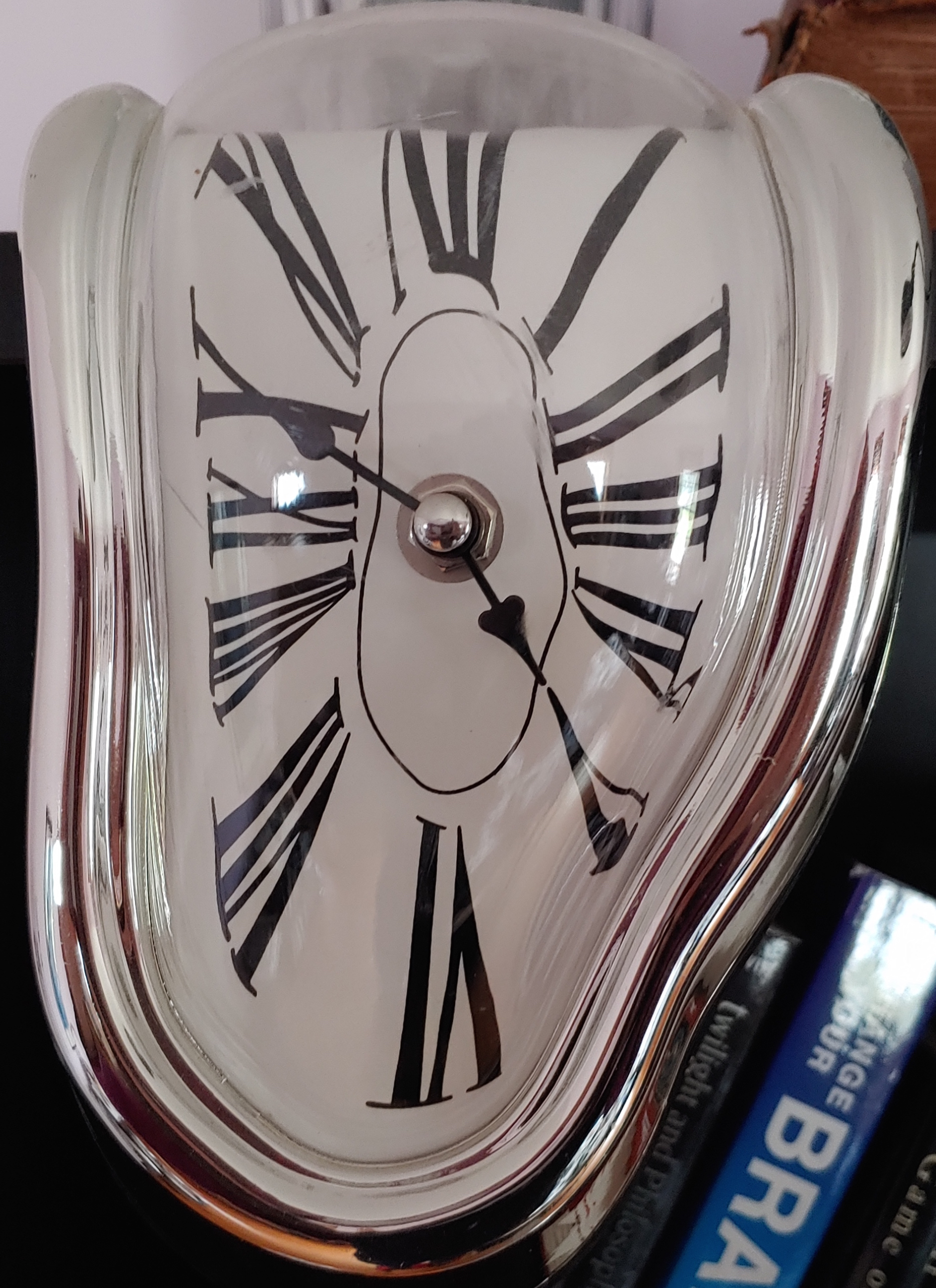
Zeno’s Paradox of the Arrow: Time and Motion

Zeno’s Arrow Paradox…in so many words…

An archer shoots an arrow at a target. For the arrow to move, it must change its position – otherwise, it can’t get from one place to another. It must change the position it occupies.

In any one instant of time, the arrow is neither moving to where it is (it’s already there) or moving to where it is not (it isn’t there yet).

In other words, in every instant of time, there is no motion happening: the arrow isn’t moving.

If everything is motionless at every instant, and time is composed of every instant, then motion is impossible.

There are solutions to this paradox, of course. The obvious one: The arrow moves in reality, so the conclusion that motion is impossible is clearly wrong. There’s something wrong with how the whole thing is set up because reality contradicts Zeno’s conclusion, but it’s really hard to spot the problem. Mathematical solutions are also available (for some of these, check out The Internet Encyclopedia of Philosophy). But it’s the time aspect that I’m interested in.


Sometimes, it feels like life is Zeno’s arrow – stuck in place in moment after moment. Sometimes, it feels like it’s impossible to move through the instances, seconds, minutes, hours, and decades that mark the passing of our lives. We can easily see arrows flying from an archer’s bow to a target, but we can’t easily see the trajectory or movement of our lives from birth to death. Life’s movement through time isn’t as easy to spot as a flying arrow.

If I just look at this moment, even this day, it may appear that my life isn’t going anywhere. But if I step back, gaze beyond the momentary to take in the past and look toward the future, it’s quite simple to see its motion through time.

Zeno’s paradox is fun to play with, and in a sense, provides me with an answer to its larger life application. Like an arrow, I didn’t launch myself into life. I believe God did that. Like an arrow, I am moving through this life, but I can’t see where the flight ends. But I trust the archer to make of my life’s instances a holy and purposeful arc that lands me safely in eternity’s embrace.

Time and Tide Wait for No One

My grandparents had this saying in cross stitch, hanging in their Lone Star Avenue home (No Man, of course, but I doubt either time or tide takes gender into account). It’s a truth often ignored: not one of us can stop time from flowing onward any more than we can stop the ebb and flow of the tide. What we cannot stop, slow, or accelerate moves us from infancy to our last breath. We can mark its passing and we can work with its movement, but we cannot rewind it, pause it, or skip ahead of its present offering. Time’s gifts are offered when they are offered. It is up to us to make of these gifts a life of love.

 [photo by Jared Fredrickson]

The cross stitch was half of a set – its companion hung next to it:

Cleaning and scrubbing can wait ’til tomorrow…for babies grow up, we’ve learned to our sorrow…so quiet down cobwebs…dust go to sleep…I’m rocking my baby and babies don’t keep. 

The irony of this saying: it is when we stop doing the day’s mundane tasks that we most notice the need to complete them. To live in the presence of new life, to lay aside the many tasks by which we are judged, is a blessing that comes at the price of work’s incompletion.

Life isn’t convenient and it doesn’t wait until the chores are done and the desk is cleared. The passage of time is one of the greatest incentives we have to focus on what is vital rather than what is merely important.

[For more on this series, click It’s About Time above.]

Other Things…

Now Jesus did many other signs in the presence of his disciples, which are not written in this book. But these are written so that you may come to believe that Jesus is the Messiah, the son of God, and that through believing you may have life in his name. John 20:30-31, NRSV

This is the end of today’s Gospel offering – the story of Jesus appearing to his disciples, of Thomas’ absence at that time, his doubt and his eventual acceptance of Jesus resurrected once he had seen Jesus for himself. The gospel reminds us that what we read in scripture is just a partial account: there was more to the story, things we will never read or have read to us. What was handed down wasn’t to relate everything that Jesus ever said or did; what was handed down was for us to make a doorway of words and images – a way for us to enter the truth, meet Jesus, and gain life. They are the words that end chapter 20.

But there are also many other things that Jesus did; if every one of them were written down, I suppose the world itself could not contain the books that would be written. John 21:25, NRSV

This is the end of John’s Gospel, similar to the ones above, but rarely ever read in church – the lectionary reading ends a couple of verses short of them. Maybe it’s because these words are so similar to the ones ending chapter 20? Did the similarities between the passages make them appear to be exactly the same, not worth a second reading? Perhaps, perhaps not. Either way, what sets them apart is remarkable.

The first words are about the disciples, and about Jesus appearing in resurrected form to them. They are written for all of us, so that we may encounter Jesus and be forever changed by him. They are our linguistic doorway into truth and life.

The second words go way beyond that. Two differences stand out to me, but there are sure to be more:

Jesus did other things beyond the presence of his disciples, his followers, and us – so many things that the world itself isn’t big enough to contain an account of them. Jesus isn’t limited to the Christian record, the church and its history, the fellowship through time and space. It’s a well phrased reminder that we cannot and should not try to set limits on how God manifests, even within the limits of our own space and time. 

Jesus manifests in ways that the world cannot contain because within each and every living thing is a world of mystery and untold depth. The cosmic scope of the universe finds its reflection in the cosmic scope of our own inner landscapes – the dwelling place of the Spirit within. It takes a lifetime to scratch the surface; perhaps part of the joy of eternity is a deep dive into these worlds, and a complete sharing of them with God and all God’s beloved children.

I think the differences make them both worth reading.

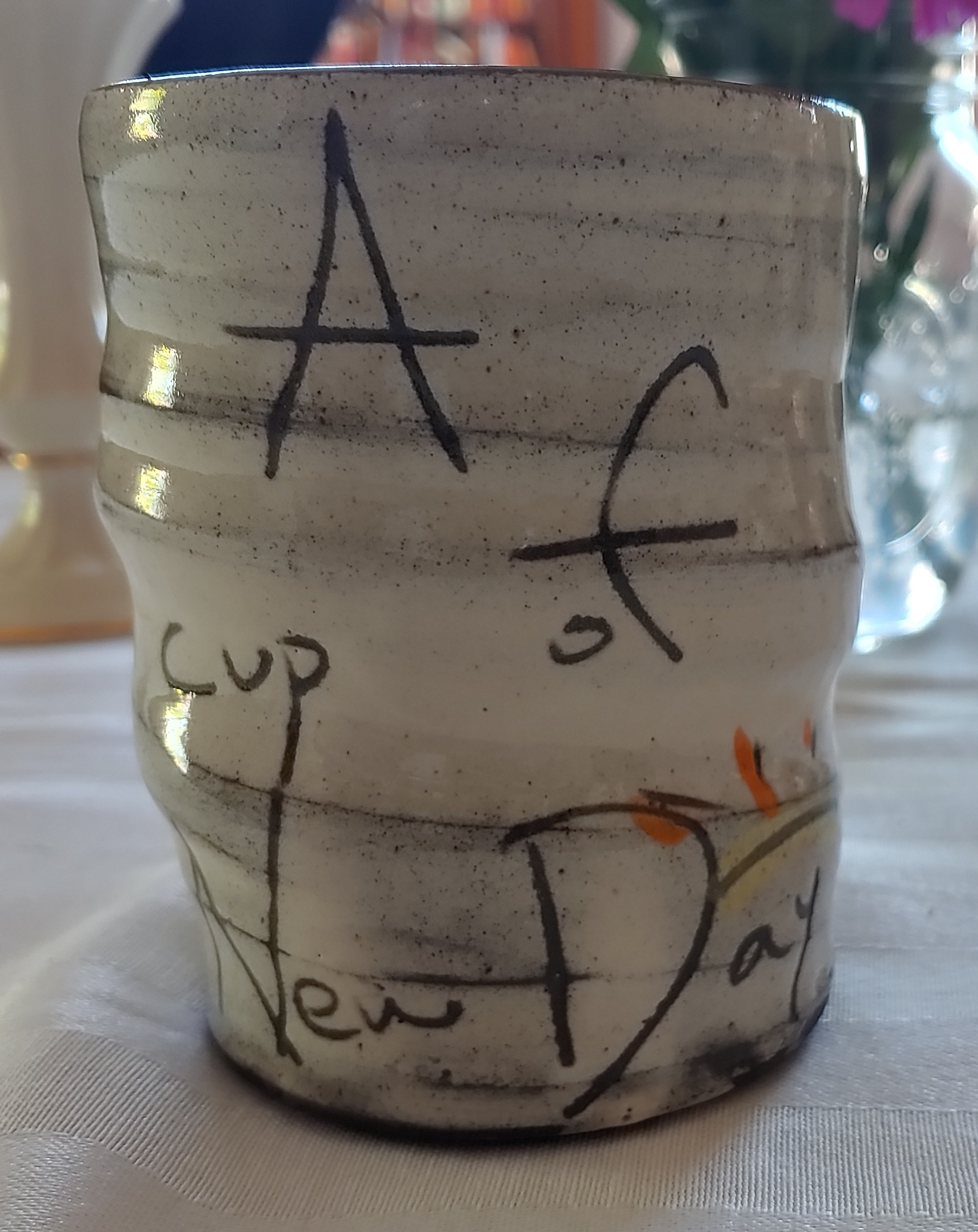
New Life

They’re everywhere, these signs of Spring and life renewed. Flowers adding yellows, purples, and whites to the brown leftovers of last year’s growing season; lengthening days and rising temperatures that encourage us to leave our jackets and mittens on their hooks; chives, oregano, and thyme cut in the yard rather than bought at Shaw’s. It’s time to rake the mulched leaves out of the garden beds, thankful for the protection last year’s growth offered.

I’d like to do the same in the spiritual sense. It’s time to clear my mind, heart, and soul of last year’s growth, not because it wasn’t fruitful but to make room for what’s emerging. It’ll take some work, some time, and trust in God – that’s true of almost everything.

I can’t wait to see what new life will grow this year.

Conservation of Spiritual Matter

So is my word that goes forth from my mouth;* it will not return to me empty;

But it will accomplish that which I have purposed,* and prosper in that for which I sent it.

[Canticle 10: The Second Song of Isaiah, Isaiah 55:6-11, BCP pp. 86-87]

It’s one of the basics of science: the law of the conservation of energy. The gist is that energy cannot be created or destroyed – it can only change from one form to another. Of course, this is assuming that we take a really long view, taking into account the entire cosmos when we apply this principle. Nothing in God’s creation can be lost, but things can change form – energy to matter, matter back to energy.

This law has been put to the test countless times by creating an enclosed system that can be monitored and measured – biospheres, bell jar ecosystems, etc. Nothing lost, nothing gained in such a system. But what about this life we live outside such controlled experiments?

The word of God doesn’t dissipate, and it doesn’t fail. Perhaps it changes form, adapting to the realities that we create in ways that foster love and compassion. Ignored in one manifestation, perhaps it assumes another – one that we can understand and accept. Perhaps the word of God will keep manifesting in new ways, constantly seeking us out, patiently offering us a part in bringing about the transformation of all that is into the holy reality it is meant to be.

All we have to do is keep an eye out for it, and love accordingly.

The Truth, In Word and Image

Debbie keeps it in a frame – a card her longtime friend sent to her years back. If you knew Debbie, you’d know this card is so much like her – an equestrian, a good woman, and just enough of a renegade to keep life interesting. That’s the specifics of why this card is so great.

In a general sense, it’s also amazing – a great message to all the girls who will grow up to be women, and all the women who grew from the girls they once were…

Life is an adventure. Be a good companion to those who join you in all the ups and downs – kind, considerate, and prayerful.

Just as important: dare to break the rules that need breaking, don’t be afraid to show strength and courage, and have a hell of a lot of fun.

You are a delight to God. Don’t let anyone tell you otherwise – even your own inner critic.

You go, girl!

Thinking of You

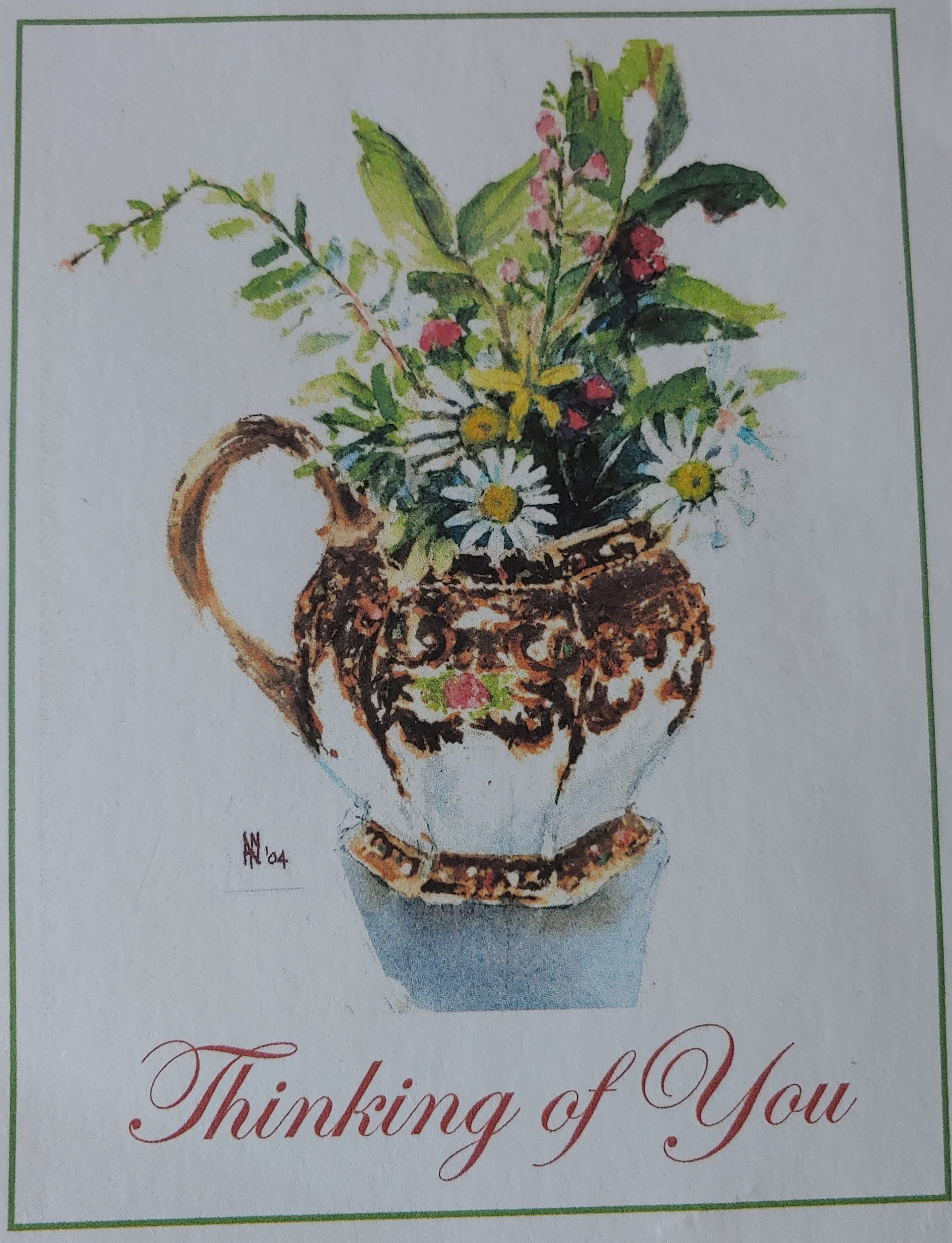
The note came from a friend, with only one sentence inside: This picture has me thinking of you, literally. She’d seen my teapot of blooming nasturtiums; it might have made a leaky mess as a teapot due to a small crack, but it made a wonderful plant pot.

I firmly believe that we aren’t put on this earth for a single purpose, and that our beautiful souls and our God given gifts may find surprising ways to shower love on our neighbors. But even more, I believe that our flaws, our cracks, will point us toward something beautiful that we may never have found without them.

At the Moment

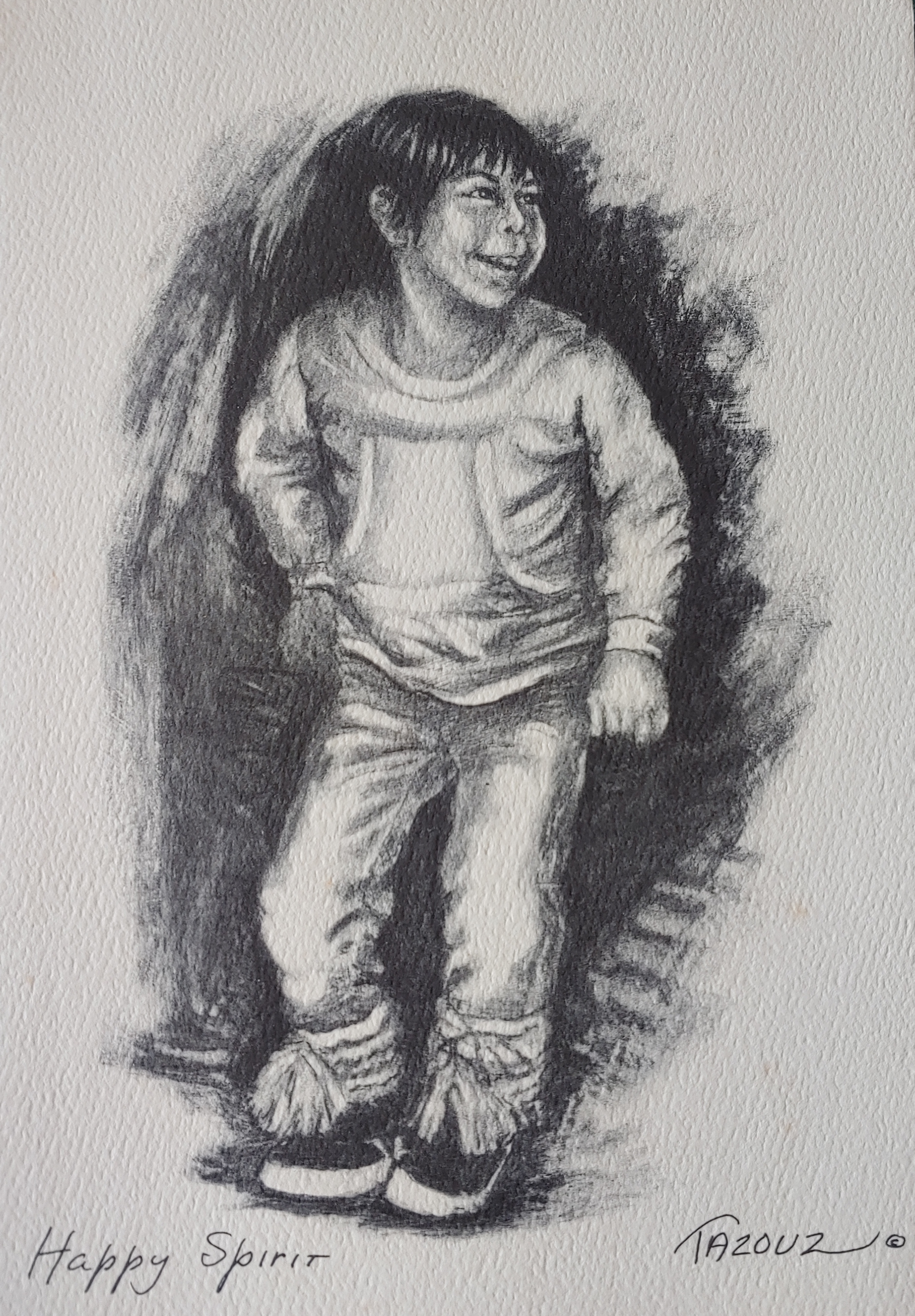
[Happy Spirit, Tazouz]

She was in residence when I visited Gallery in the Sun nine years ago, living and working in one of the buildings DeGrazia made for just such a person and purpose. She said she wasn’t going to be there long, but loved being there at the moment.

I love the sheer joy she captured in this charcoal drawing. It isn’t just the smile; it’s the light in the little boy’s eyes, and the dance in his body. He is the embodiment of finding happiness in the moment – and offering that happiness back to the world.

None of us are going to be here long. That’s just reality. So why not love being here at the moment? Find the joy and you just may find yourself dancing, too.

Gallery In The Sun

La Paloma, by Ettore DeGrazia

[To see more of DeGrazia’s work, go to the Gallery In The Sun, www.degrazia.org]

Everything is thoughtfully artful there – even the floors, made with natural stone and cholla cactus slices. DeGrazia sculpted, painted, and constructed this space for the creation of art and the fostering of the human spirit. It is a sanctuary in the Tucson desert, offering quiet and shade. It is an art museum, a studio with artists-in-residence, and a gift shop.

I’d never heard of Ettore DeGrazia until I visited his gallery with my two sons in 2012, but I’d seen many of his images – on Christmas cards, prints, and in a few magazines. I had no clue of the breadth of his work, of his concern that art education be made available to everyone, or his biography. Nameless until that point, true, but still a quiet presence in my life.

I could say the same for the Holy Spirit on most days. Not named or recognized in more than a sense of beauty, peace, and purpose, but patiently and dependably present. On the days that I recognize and name the Spirit, I catch a glimpse of the breadth of grace and holiness that I so often overlook. La Paloma.

It seems fitting that I chose DeGrazia’s La Paloma the day I could put a name and a history to the paintings; it reminds me of my limited awareness and the unlimited graciousness that alights just within its bounds.