Category Archives: gratitude

Promises, Promises

Something new is coming into the world today. In front of family and friends, two people will come together and promise to live a life in common and to walk through this world together. They promise to celebrate their blessings together, share burdens, and each include the other in their plans, dreams, and griefs. Sometimes the sheer magnitude of these promises gets lost in lace, flowers, champagne, and romantic music – all lovely things, but trivial in comparison. The word marriage doesn’t seem nearly big enough to hold such promises, but I guess it does just as well as any other word.

I offered and received those promises almost twenty-three years ago. Through half a dozen moves, graduate school programs, raising children, and doing our best to serve God and neighbor, I’ve had the blessing of a loving companion. It hasn’t always been easy and we haven’t always been our best or kindest, but it has always been a grace and blessing.

For Grace and Tommy, I wish a wonderful wedding and a love rooted in compassion and humor. I have no idea what adventures are in store for them, but I know they will be uniquely their own. Blessings for the journey!

Trying to Remember

Remembering now his work of redemption, and offering to you this sacrifice of thanksgiving:

We celebrate his death and resurrection, as we await the day of his coming.

[Prayer C, The Book of Common Prayer. For complete prayer, click “prayer C” above]

There have been so many battles over the word sacrifice when it appears (or doesn’t) in a communion or eucharistic prayer. On the Roman Catholic side, sacrifice; on the Protestant Reformed side, no sacrifice. The big question that governs the whole argument: is the sacrifice of Jesus a one-and-done or does it recur every time there is a Mass/Eucharist said? The Anglican church split the difference, choosing their words carefully to allow believers on both sides to worship comfortably together – a clear example of valuing practice and compromise over theological clarity.

I was a lot more invested in this theological sticking point in seminary classrooms than I ever was in church or at prayer. I’ve seen people with superb theology that haven’t a lick of compassion or gratitude. I’ve seen superb theology lead to a love for humanity that accomplished extraordinary things. I’ve seen the same in people without a single interest in theology. Right theology doesn’t seem to be the guiding factor in a life lived with love or without. I think remembering might.

If I remember the love of God seen so clearly in the life of Jesus, I just might try to love my neighbor and myself in that same way.  If I see in his death and resurrection the inevitable return of all beings to the love of God, I just might see holiness and blessing in every single day of my life. If that’s not something to celebrate, what on earth is?

Giver and Gift

And so, Father, we who have been redeemed by him, and made a new people by water and the Spirit, now bring before you these gifts. Sanctify them by your Holy Spirit to be the Body and Blood of Jesus Christ our Lord.

There’s a sentence that’s sometimes said before the offering is taken up. The gist: whatever we offer to God comes from what God has given us. At such words and at such a time, this most basic question must be asked and answered: is it the gift that matters, or the love that the giver expresses in the gift?

I think love determines the answer to this question most of the time. If I’m the receiver, it’s the giver that determines the answer: any gift given by a beloved is a worthy gift (how many parents have refrigerator artwork that is beautiful only to their eyes?). If I’m the giver, it’s the gift I offer: is it something that is an expression of love and sacrifice?

There isn’t a single thing in this universe that I can offer to God that isn’t already God’s own. But offering something, finding a way to give my love a concrete vessel, is something only I can give. If I give it as one among many, I am bound to those who also offer their hearts and gifts to God.

For some inexplicable reason, that’s more than enough for God.

[For the complete prayer, click “Prayer C” above.]

New World(s)

She knows she passed two of the exams and will find out about two more soon. The fifth will take some work. Her reward: a high school equivalency diploma. Such a small piece of paper, such a tremendous difference. Opportunities requiring that piece of paper open up for her; better jobs and possibilities for ongoing education are hers.

But something else is happening, something invisible to most of the world. Her internal script is being rewritten. The one that names her Drop-Out, Quitter, Incapable is discarded. Hard Worker, Graduate, Capable, and Dedicated are the new adjectives found in the new script. She is made new again.

I believe miracles happen every day, but I don’t notice most of them. But God has let me see this one, and my world is forever changed because I’ve beheld it.


The Stores Not Shopped

Sid Wainer’s, Barnes & Noble, L.L. Bean, Ikea,  and Trader Joe’s are my favorite places to shop. I also love going to the King Arthur Flour Baking Center for a class and some time in their store. I can spend hours in used book shops, pulling out dusty hardbacks and reading their faded inscriptions, loving words penned by strangers I’ll never meet. In the past few weeks, I’ve shopped for groceries and bought a book that my older son needed for a class. I found a pair of Land’s End pants and a winter jacket for my younger son, replacements for the ones he outgrew this winter. My husband and I picked up a few hardware necessities at Lowe’s, and I replaced the necessary toiletries at CVS. But that’s about it, because I’m taking a shopping break for Lent this year. It’s not a crazy or drastic change – I’m still buying food and I haven’t extended the shopping hiatus beyond myself. Until Easter, I’m living with what I have and living without what I don’t.

Here’s what I’ve found so far:

I don’t  miss buying stuff. I’d rather have an uncluttered home than a lot of possessions.

If I don’t go into stores that do not sell necessities, I won’t be tempted to buy the little extras.

I have a better idea of what I already own, and how much of it I don’t use. Spring cleaning this year will involve sorting through clothes outgrown or rarely worn, and I’ll donate the kitchen gadgets no one uses.

I’m not one to spend a lot of money shopping, but I’m surprised how many things I buy without much thought or appreciation. When Easter comes, I’ll return to Ikea for housewares and I’ll pick up a book at Barnes & Noble every so often. But I’ll try to be mindful about whatever I buy, everyday necessities or occasional splurges – more aware of the value of things and less likely to mistake an extravagance for a necessity.


Over a plate and a glass

I went to a funeral today. I didn’t know the man who died, but I’ve known his daughter for years. She is a gift to the town I call home, a sure and steady force for common sense and community service. Today was a chance to offer her my condolences, and to offer a prayer of thanks for the life of her father.

After the church and graveside prayers have all been said, family and friends stay together for one last holy act: sharing a meal. There are stories and memories best told over a loaded plate and a full cup, heard  most gratefully over the scrape of forks and clinking of glasses. This meal that honors a life and its loss isn’t just a nice extra. It is the first act of a family who will gather together and continue to grow, not with but because of the one who is no longer present.

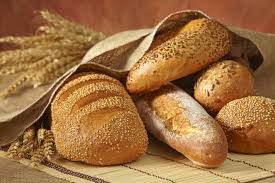
I’m a stranger to the family, so I did not share their meal and stories today. But sometime soon, I’ll chop onions and carrots for soup and make a loaf of bread. I’ll pick up a bottle of wine. I’ll offer these small things to a daughter who buried her father, and I’ll tell her that I am thankful for the man who brought her into this world – a delight to God and a gift to this world. Could I say such words without the food? Perhaps. But they seem easier to say and easier to hear over a plate and a glass than on their own.

One For The Blog

As far as I know, I was the only bartender who went to Princeton Seminary in the ’90’s. Either no one else had tended bar, or no one else would admit to it. It’s too bad, in either case: my time behind the bar gave me admission to the inner and outer lives of so many people. I have no idea how many secrets they told me – fears, hopes, embarrassments, family troubles, and a handful of come-to-Jesus stories. All these treasures given to me in exchange for a Beefeater, a Bud, a Cabernet, and a tip.

Grandpa Pete drank himself to death, so my parents didn’t have alcohol in the house much – just a glass of wine on Thanksgiving, a New Year’s toast, and a six pack when relatives came over to paint, paper, or repair. My husband and I enjoy wine and beer at home and the occasional mixed drink in a restaurant, but we aren’t exactly heavy hitters. We’ve both seen too many lives ruined by excessive drinking to tip the bottle too often. In moderation, alcohol loosens tongues, encourages self-disclosure, and is a sure sign of hospitality; in excess, alcohol is an excuse for verbal abuse, physical intimidation, and violence – the power of fermentation.

I enjoy having a glass of wine while I make dinner. I treasure the times my husband and I lingered at the table after dinner, splitting the last glass of rioja by candlelight. Wine in hand, I delve deeper into the grace of the moment, and I’m more aware of the wonders of food and companionship. It’s not a necessity, but it’s surely a nicety.

There’s truth in wine (In vino, veritas). Jesus shared wine with his closest friends and his betrayer, and the coming of the Holy Spirit looked to all the world like a bunch of early morning drunks. It’s a marvelous thing to let loose and see the world through more appreciative eyes. It’s a terrible thing to drink away reality and excuse cruelty with a bottle. Hidden compassion and undercover violence are both given out with that drink. Which one do I choose?

Lord, keep watch over me. Amen.

All Work and No Play

…makes Johnna a dull girl. Doing a good day’s work isn’t the same as cramming two day’s worth of work into a single marathon workday. I want to be a hard worker, not a workaholic…

…and I’ve been busy for days – leading classes, working on library projects and programs, hosting a dinner for twenty last night with my husband. With a blizzard keeping me home today, I could have gotten a jump on several writing projects, summer garden plans, and packed away all the dishes from last night’s party. But my husband and son are also home, so we did some computer work and filled the bird feeder. We got the most of the post-party work done, putting furniture and dishes back in their usual places. But we also played a couple of games, took a daily news quiz, and went outside to feel the snow and wind. For the first time in my life, I saw lightning and heard thunder while walking in a blizzard – amazing and scary and unforgettable. 

Had I done more work today, I’d have lived a lesser life. Sometimes the blessing is in the work I’ve left undone.

Taking an Active Step

Readings: Psalm 146:5-10; 2 Peter 3:11-18; Luke 3:1-18

5 Happy are those whose help is in the God of Jacob,

whose help is in the Lord, their God,

6 who made heaven and earth, the sea and all that is in them,

who keeps faith forever;

7 who executes justice for the oppressed; who gives food to the hungry.

The Lord sets the prisoners free;

8 the Lord opens the eyes of the blind. The Lord lifts up those who are bowed down; the Lord loves the righteous.

9 The Lord watches over the strangers; he upholds the orphan and the widow; but the way of the wicked he brings to ruin.

10 The Lord will reign forever, your God, O Zion, for all generations.

Praise the Lord!

The psalmist is human, subject to life’s vicissitudes as are all of us.  In the Psalter we read that he experienced heartache, anger, frustration, fear, even numbness.  We sense that he felt these emotions deeply.  Many of us are experiencing deep emotion as we grapple with the tenor of the recent presidential campaign and try to recalibrate our lives to a reality that we either wish to ignore or want to believe doesn’t exist.

Yet Psalm 146 is an expression of the psalmist’s optimism.  “Praise the Lord, O my soul!”  he starts in verse 1 and ends “Praise the Lord!” in verse 10.  It is a hopeful message.  He continues in verse 5, “Happy is he who has the God of Jacob for his help.” 

He exhorts us in verses 7-9 to remember the oppressed and marginalized, feed the hungry, help open people’s eyes [to iniquity], assist strangers, relieve the pain of loneliness in others.

My law partner and I had a conversation about how to react to the election.  We acknowledged how easy it is to descend to the depths of despair at the nation’s seeming lack of a moral compass.  But it was he, who is not a religious man, who suggested we react positively by doing something to advance the human condition.  Whether by writing a check to the Anti-Defamation League, the Southern Poverty Law Center, or some other charity that is a force for good, or getting personally involved in charitable work, such an act would help lift us out of the fog and into the divine light the psalmist sees.

God allows us to immure ourselves in the hell of our choosing; or we can live into the circumstances that have been wrought, meet the challenge, and choose to do something to move humanity forward to that Omega Point that the great mystic Teilhard de Chardin saw all of creation converging upon.

Vaclav Havel, who knew his own form of government oppression, wrote, “Hope is the deep orientation of the human soul that can be held at the darkest times.”

Let us continue to pray for our president, our president-elect, our Congress and our Supreme Court, those venerable institutions in which we necessarily place our national trust.  And then let’s take an active step by doing something to advance the human condition, being a force for good in society in an outpouring of love, hope and peace in the name of the Prince of Peace.

Come, Lord Jesus, come.

Offered by Bryan Fredrickson, contemplative, lawyer, seeker of the Christ Child.
If not for a stranger…

Readings: Psalm 146:5-10; Ruth 4:13-17; 2 Peter 3:11-18

Happy are those whose help is in the God of Jacob,

whose hope is in the Lord their God,

The Lord watches over the strangers;

he upholds the orphan and the widow…Psalm 146:5, 9

[The Lord] shall be to you a restorer of life and a nourisher of your old age; for your daughter-in-law who loves you, who is more to you than seven sons, has borne him…” They named him Obed; he became the father of Jesse, the father of David. Ruth 4:15, 17

There seems to be more fear in the air these days. People who are a different hue, who speak another language, and who wear scarves in a different way are looked at with suspicion rather than healthy curiosity and care. It’s almost as if we’ve decided that those who are like us will invariably bring positive things to our lives and the others negative things.  Have we decided it’s acceptable to preemptively assign ill intention to anyone we don’t know or don’t resemble? Do we only want blessings from those who look, speak, and act just like us?

I hope not. In my life, blessing has been just as likely to come from an unexpected place, an unknown person, a stranger. My most fervent prayers are usually answered in ways I cannot anticipate. Surprise is always involved.

This shouldn’t surprise me, though. David ruled and served Israel by the grace of a Moabite widow whose love and care took her far from home and safety. A stranger in her mother-in-law’s land, Ruth blesses the nation with her faith and her child, Obed.

What would have happened if Naomi and Boaz hadn’t welcomed the stranger? Where would they be without Ruth? Where would we be?

Lord, help me to welcome the stranger, care for the lost, and see in their eyes your love. Amen.

Come, Lord Jesus, Come.