All posts by Johnna

I am a Christian educator and writer.I have worked in churches, denominational offices, and seminaries. I have a PhD in Theology from Princeton Theological Seminary, with a focus on Practical Theology and educating in faith. In 2010, my book, "How the Other Half Lives: the challenges facing clergy spouses and partners," was published by Pilgrim Press. I believe that words can build doorways that lead to encounters with God through the Spirit.

There is neither Cupidity…

Where there is Poverty and Joy,

there is neither Cupidity nor Avarice.

St. Francis, The Admonitions, XXVII

Merriam-Webster has one of my favorite websites – Word of the Day, language games, and access to a world class dictionary and thesaurus. There are also short essays so well written that just about any subject is made interesting. As an avid reader and habitual writer, www.merriam-webster.com is a verbal playground. So as I was pondering what to write about Cupidity, I took a look at Merriam-Webster’s definition. The first one: inordinate desire for wealth. The second: strong desire, lust.

When I first read Francis’ words, I paired poverty with avarice and cupidity with joy – an instance of chiasmus, with the word pairings making an “X” when connected by lines. In that case, it’s the second definition of Cupidity that serves as Joy’s opposite. Lust is desiring someone as an object for fulfilling sexual desires; it turns the desired person into a thing rather than honoring that person as a companion in an intimate physical expression of joy. God knows the news is full of cupidity these days – sad tales of women and men intimidated and threatened if they refused to submit to unwanted advances. Such actions are harmful, draining joy from future relationships as well as bringing pain in current circumstances.

I think that first impression is right, but incomplete: all four words relate, either as companions or as contrasting qualities. Merriam-Webster’s first definition of Cupidity is about seeking wealth without thought for its consequences or its true worth. With no thought to what is necessary and life-giving, cupidity is the absence of poverty just as surely as it is joy – and avarice is cupidity in action.

Why is it that sex and wealth, such powerful forces, can lead to a life in ruins or a taste of heaven on earth?

Poverty and Joy

Where there is Poverty and Joy,

there is neither Cupidity nor Avarice.

St. Francis, Admonitions XXVII

I’ve never considered poverty and joy natural companions, but I can see how Poverty and Joy are. Poverty is the ability to separate what is necessary from what is not, and Joy is the gift that comes with choosing the necessary.

Why is it that I’m willing to spend so much time and energy chasing after the unnecessary things when they cost me Joy?

Dear Lord, give me the wisdom to know what is necessary and what is not – and the common sense to choose Joy over unnecessary things. Amen.

[For the complete prayer, click “Walking with Francis from Easter to Pentecost”]

Where there is Poverty

Where there is Poverty and Joy,

there is neither Cupidity nor Avarice. St. Francis, The Admonitions XXVII

[For the complete prayer, click “Walking from Easter to Pentecost with St. Francis]

There is a lot packed into these twelve words, so I’m taking my time with this sentence. Today, just the first four are quite enough.

Poverty is the ability to see what is necessary and what is not – and paring life down to avoid confusing the two. For Francis, that meant giving up everything he owned and trusting that God would hold him fast. For such a leap of faith, he gained a life of joy and peace.

Is my life where poverty lives? If I read the lines right, avarice takes up residence wherever poverty doesn’t. Avarice is that awful compulsion to stuff everything possible into my life’s shopping cart, trying to avoid spiritual bankruptcy with cases of ramen noodles, pricey cars, marble countertops and designer fixtures. There’s never enough of anything, so everything must be grasped at and held in clenched fists; nothing can be spared, even for those in true need. Avarice is malnourishment to the point of starvation, because I’ve stuffed myself full of empty things and have no room for the daily bread that sustains. It’s starvation by excessive consumption.

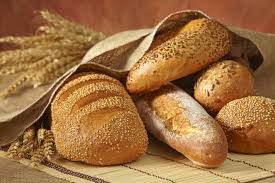
Poverty is choosing daily bread over cotton candy, enough for today over hoarded junk food. When I trust that my life is safe in God’s embrace and in my neighbor’s company, I will rest content with what my labor brings me and I can happily give of what I have to help someone else.

Gracious God, I want to see what is necessary and good. I want to live a generous life. Help me give up everything that keeps me from such a life. Amen.

Where to look…

Where there is Patience and Humility,

there is neither Anger nor Annoyance.

St. Francis, The Admonitions, XXVII 

[for the complete prayer, click “Walking with Francis from Easter to Pentecost” above]

I see anger and annoyance almost daily. Where is patience and humility? Are they hiding somewhere or do I just have to look harder? I certainly don’t see much of them in myself. Then I open A Sense of the Divine: through the Christian Year with St. Francis to the reading for Easter day and read St. Francis:

You are holy, Lord God; you do wonderful things..

You are love, charity; you are wisdom, humility…

You are patience, you are beauty, you are meekness..

I look to God for love and wisdom, patience and humility. As I find it there, I find it here.

Offered by Bill Albritton, seeker of God and prayerful servant to neighbor.


Sources Quoted:

Sister Nan and Father Maximilian Mizzi, The Message of St. Francis (New York: Penguin Studios, 1998), p. 9

Brother Tristam, A Sense of the Divine: Through the Christian Year with St. Francis (Norwich: Canterbury Press, 2002)

Looking for Love…and Wisdom

Where there is Love and Wisdom,

there is neither Fear nor Ignorance.

St. Francis of Assisi

[The Message of St. Francis, New York: Penguin Studio, 1999, p. 9]

There doesn’t seem to be much Love or Wisdom in the air lately – or at least on the air. Fear and Ignorance, though, are readily available on television and computer screens. The airwaves are full of frightened voices and ignorant commentary. Some of it is unintentional – the result of damaged hearts, minds, and spirits. Some of it is intentional – designed to sell listeners on a new product or political opinion. Manipulating the frightened and unaware isn’t particularly difficult, and it is often profitable. But don’t let this fool you: there is a lot more to life in this time and place, it just isn’t as obvious or promoted.

Take today. As I’m typing this meditation at Kiskadee Coffee in Plymouth, Massachusetts, people I know are at work, spending time and effort to bring hope and peace into the lives of countless others:

Temple Beth Jacob has been preparing for tonight’s Holocaust Memorial service, offering something holy and nourishing from the humiliation and murder of millions. Thank you, Ms. Hirschhorn and Rabbi Lawrence Silverman.

Christ Church Parish, Plymouth, is getting the sanctuary prepared to host the Holocaust Memorial service because it’s for the whole community and the temple doesn’t have enough room to fit everyone inside. Thank you, altar guild, for your hospitality.

Two sons are flying back home to spend time with their older brother and to decide how to best serve their aging parents. The conversations won’t be easy and the solutions won’t be simple. Blessings and Peace, Barry, Bryan, and Dave.

A substitute teacher is getting to know her students. She’s the third one they’ve had in the past six or seven weeks because their usual teacher has a serious medical condition. May God give you both strength and a fabulous sense of humor, Ms. Corde` and Mr. Tersegno.

Love a la Francis is as much an act of courage and will as emotion. It is meaning good things for someone else, and sacrificing to offer them. It is also meaning good things for self, and accepting the sacrifice of others when offered and appropriate.

But what are these good things, and how can I tell the difference between something that I willingly sacrifice for and something that is at my expense? I don’t have a definitive answer, but here’s my provisional one:

Good Things foster the mind and spirit.

Sacrifice may be costly, but it enlarges the spirit and broadens the mind; something at my Expense shrinks my soul and takes gratitude out of the world.

If I grow in wisdom, I’m sure my take on this whole thing will change. Here’s hoping I’m brave enough to make the attempt.

Let’s take a walk…

A few years back, I spent my Eastertide with Saint Francis, praying his most beloved prayer and writing about the experience. It was such a blessing that I decided to visit with Francis again, this time seeking him in his other writings. I look forward to conversing with him – new words, new thoughts, many blessings. I hope you come along with me; I’d surely appreciate the company…

Virtue and Vice

Where there is Love and Wisdom,

          there is neither Fear nor Ignorance.

Where there is Patience and Humility,

there is neither Anger nor Annoyance.

Where there is Poverty and Joy,

there is neither Cupidity nor Avarice,

Where there is Peace and Contemplation,

there is neither Care nor Restlessness.

Where there is the fear of God to guard the dwelling,

there no enemy can enter.

Where there is Mercy and Prudence,

there is neither Excess nor Harshness.

(St. Francis, The Admonitions, XXVII)

[Found in:  Sister Nan, extract selector,  introduction by Maximilian Mizzi, The Message of St. Francis, New York: Penguin Studio, 1999, p. 9]

This book is available through Amazon and Barnes and Noble

Be Brave!

You can, you should – and it you’re brave enough to start, you will.

Stephen King

[Daily Peace, Washington, D.C.: National Geographic Society, 2015, April 4]

Stephen King has written dozens of books, some of which could be considered modern masterpieces. Two in particular come to my mind: The Green Mile and Rita Hayworth and the Shawshank Redemption. The first was written as a serial novel, with small sections released every few weeks until the whole story was told. The second was a short story. These are not horror stories, even though both deal with tragedy, inhumanity, and loss. Neither are typical of King’s usual writings – the scary books everyone has come to expect. Both were made into exceptional movies.

I wonder whether it was a difficult thing for King to write these particular tales. In addition to the usual pressure and difficulty of writing a book – creating characters and story lines, putting in enough description and action to keep the story moving, bringing the whole thing to a satisfying and fitting ending – is added the anxiety that comes from offering something unexpected to an audience that is used to the thrill of the macabre. It’s like offering a chocolate raspberry torte to a child expecting a chocolate chip cookie: who knows what the response might be, but disappointment and rejection are just as possible as delight and enthusiasm.

Perhaps the hardest part of trying something new isn’t dreaming it up or doing the research. Maybe the hardest part is putting pen to paper and writing the first word, sentence, paragraph, and page. Making the jump from going to to doing isn’t something that comes from knowing it’s possible to do or even knowing it ought to be done: it’s a leap of faith only the brave or the foolhardy can make.

Perhaps this is true in things beyond writing. Perhaps it’s true of any worthwhile endeavor.

May God grant us all the courage to take the first step.

What’s it worth to you?

The good things in life cost what they cost. The unnecessary things are not worth it at any price. The key is being aware of the difference.

[Holiday and Hanselman, The Daily Stoic, New York: Portfolio/Penguin, 2016, p. 97]

My grandmother spent more money buying groceries than most of her friends. When asked why, she’d always say: You pay at the grocery store or the doctor’s office. One way or another, you pay. She thought it a lot more fun to spend money on food than doctor’s bills. Keeping healthy costs what it costs.

I’ve been buying groceries and making meals for over thirty years now, and spending more at the market than many of my friends and neighbors. I buy things grown and raised locally whenever possible. It adds a good $30 to my grocery bill every couple of weeks, sometimes more. I try my best not to waste any of it – composting vegetable peels, putting stale bread ends out for the squirrels and birds, making stock from chicken and turkey bones, growing herbs and vegetables in season, and making baked goods at home. Eating out or buying pre-prepped food from the market is an occasional act. At the end of the month, I doubt I pay more than anyone else to feed my family – it just takes a lot more time and planning to do it this way. Outside the yearly check-ups, visiting a doctor is very rare. I can’t help thinking my grandmother was right: you pay at the grocery store or the doctor’s office.

What about other good things in life, ones not so easily seen or touched as food on a plate? Fostering the lives of family and friends, spending time with God, enjoying the natural world, covering the basics of food, clothing, and shelter: these good things cost what they cost. Sometimes the cost is in dollars and cents handed over a counter, sometimes the cost is time away from earning money or having fewer possessions and vacations in order to be an involved parent and partner without living in constant exhaustion. Good things cost what they cost.

I can’t tell you what the good things in life cost you. In my own life, I’ve had to choose what was worthwhile and what wasn’t, because there isn’t enough time in the day, energy in my body, or money in my account to have both. I can tell you that the good things have been worth every penny, effort, and minute they cost. A joyful life, the chance to serve others, the beauty of the earth, and the loving God who holds it all.