All posts by Johnna

I am a Christian educator and writer.I have worked in churches, denominational offices, and seminaries. I have a PhD in Theology from Princeton Theological Seminary, with a focus on Practical Theology and educating in faith. In 2010, my book, "How the Other Half Lives: the challenges facing clergy spouses and partners," was published by Pilgrim Press. I believe that words can build doorways that lead to encounters with God through the Spirit.

Rest in Peace/ It is what it is

It seems an odd placement, a post about death followed by a post about the mutability of reality. Death is immutable – there’s no getting around it, no sliding on past it, no wishing it to be undone. This is true of so many things in our lives because we cannot control the universe, the orbit of our tiny planet, the family we are born into, or the time and place of our births. These things are what they are. But how we respond to them is well within our control. We can choose whether these unchanging realities prompt us to expand our minds, hearts, and spirits – or whether they prompt us to contract them. Our choice in this changes our lives in profound ways.
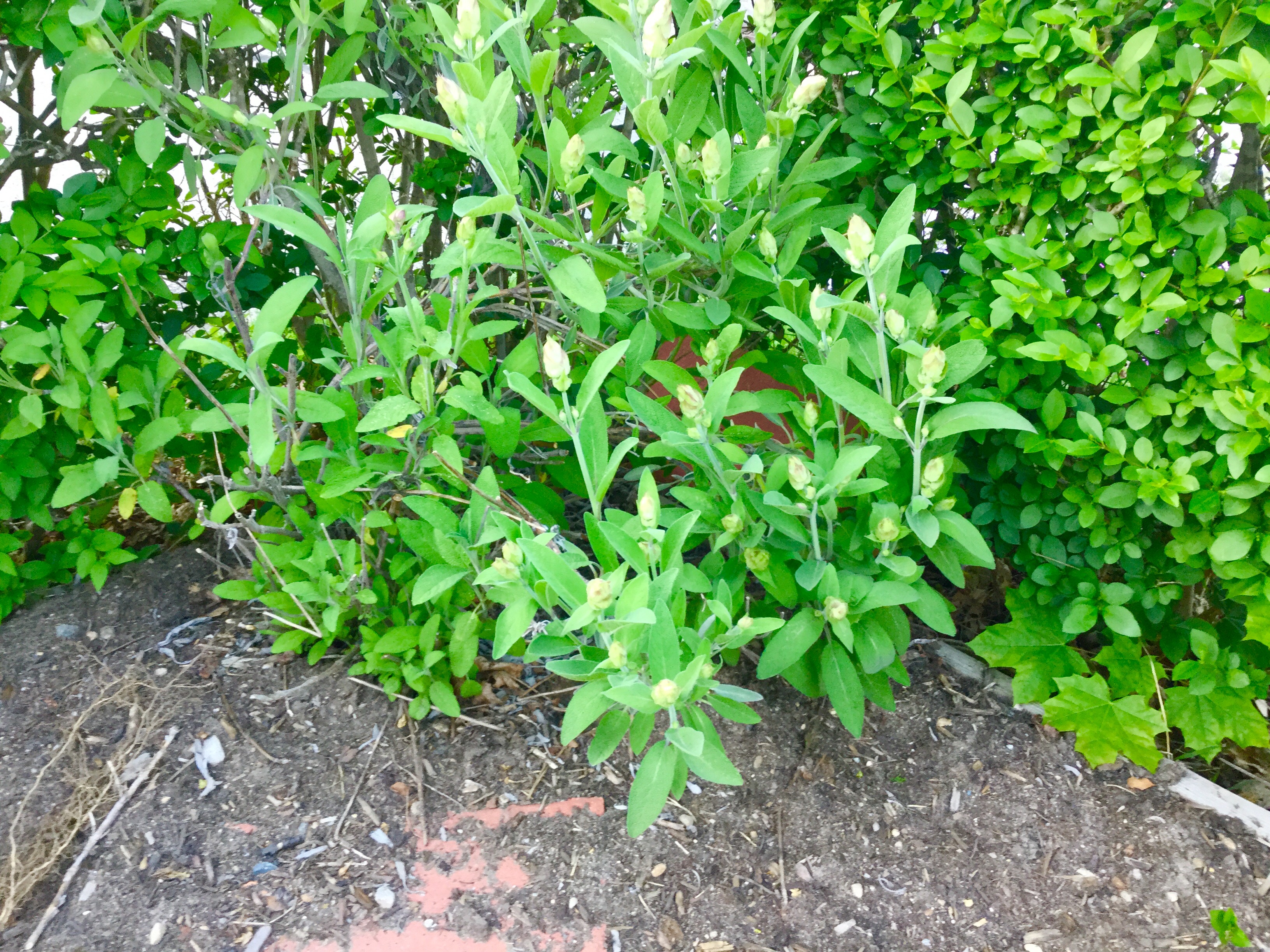
Contraction: The thought of dying causes us to shrink back from life, hoard our minutes, days, and hours like misers do their coins. We try not to get too close to anyone, knowing that some day death will part them from us. We put every effort into avoiding our own aging. Our lives, and the life of the world are the lesser for such a choice.
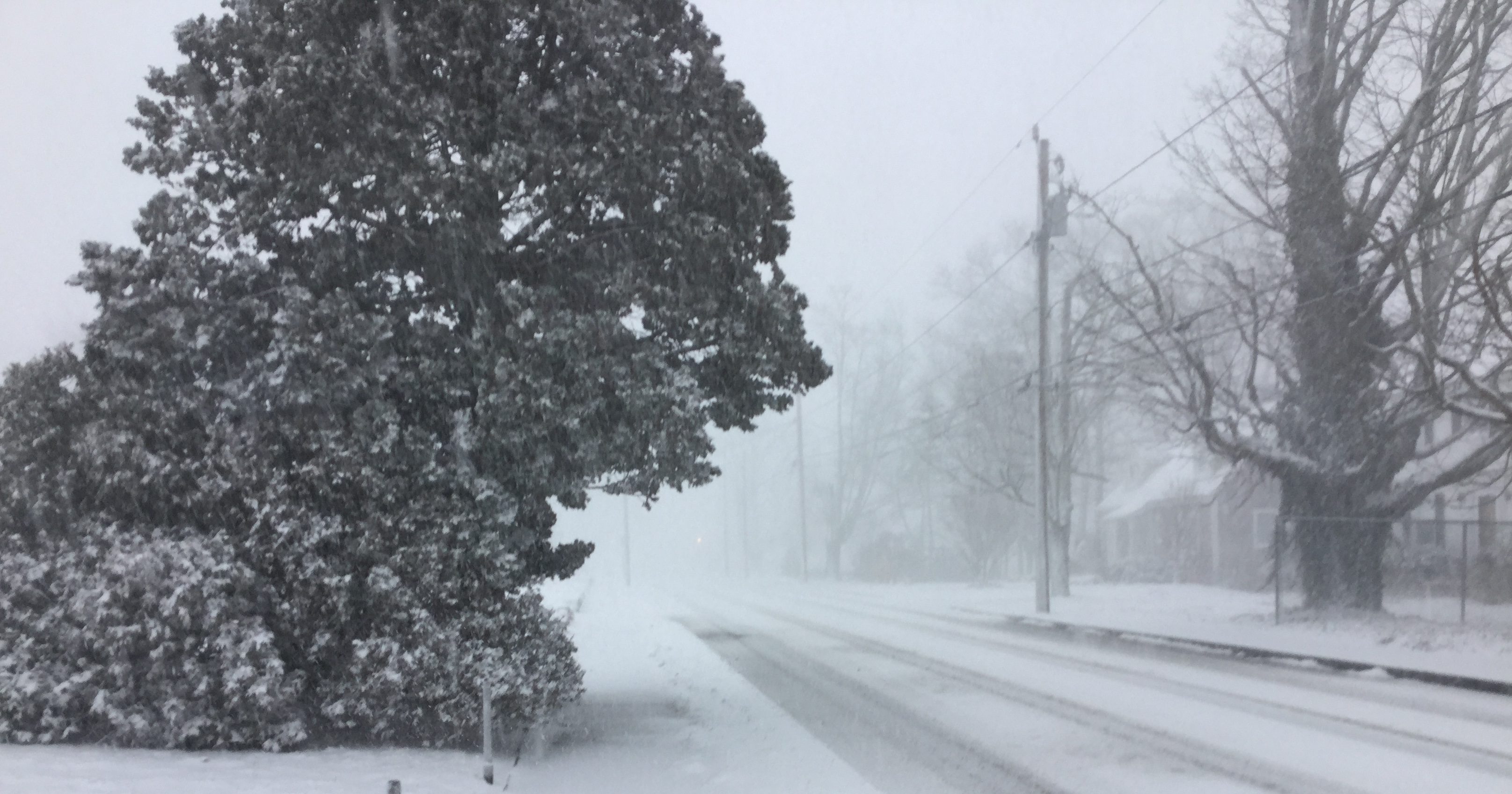
Blizzard Beauty, 2017

Expansion: The thought of dying causes us to embrace life, spending our minutes, days, and hours on this precious earth with appreciation, generosity, and joy. We risk getting close to others because some day death will part them from us. We accept aging with all its gifts and challenges because it has things to offer us that a life of perpetual adolescence cannot. Our lives, and the life of the world, are the richer for such a choice.

Whatever choice we make, however many times we choose one or the other, we are always loved by God. It’s more a matter of whether our living days reflect that love – a warm heart, a curious mind, a trusting spirit.

Perhaps this time and place is what it is in many ways because we made such a choice.

Lord, help me choose the life you have given me this day. Guide my steps, lend compassion to my thoughts and actions, hold my hand when I’m afraid. Amen.
It Is What It Is

It is what it is.

I’ve heard it used in two almost opposing ways.

As a starting point: Begin with how things are and grow from this reality a new and better one.

As the last word: Don’t bother to put in any effort because what is cannot be changed (and I’m not responsible for trying).

The first doesn’t deny reality; it confirms the way things are and affirms that it can be changed for the better. It’s a great truth.

The second doesn’t deny reality, either: it denies that it can be otherwise. In denying the mutable nature of all things, it’s one of the biggest falsehoods ever spoken.

Requiescat in pace/Rest in Peace/R.I.P

I’ve seen these words- Latin, English, abbreviated – on grave markers, obituaries, cards handed out at funerals, and on T-shirts. Rest in Peace. What does it mean to ask that a loved one rest in peace?

Perhaps it’s similar to my memory of running into the open arms of my mother when I was a three year old. Maybe it’s the feeling of total acceptance and joy when my father tossed me into the air and spun me around. Either way, the return was a delight to parent and child alike. If such things happen here, what awaits at the return to God?

Falling into the embrace of God is my best shot at describing death; everyone who has ever felt lost, grief-stricken, bereft, or broken returns to the arms of the one who loves completely. When I say rest in peace, I’m not praying for an eternal night’s sleep: I’m giving back to God loved ones and strangers alike, letting go of the limited love and incomplete understanding I had for them as they let go of this mortal life.

Rest from your troubles. Let go of your limits. These prayers I offer when I say rest in peace.

Priscilla, Rest in Peace.

Through Thick and Thin

I what it means: continuing on regardless of difficulty or condition. But I didn’t know where the phrase came from until I looked it up on The Phrase Finder (www.phrases.org.uk). Originally, the saying was through thicket and thin wood – a description of the English countryside and a reference to the difficulties of traversing it. It shows up in the 1600’s and got shortened sometime between then and now, obscuring its literal meaning.

For better or for worse, in sickness and in health, for richer and for poorer – things I promised to weather with my husband over twenty-four years ago. If we decide to renew our vows (as we did on our 10th anniversary), I think I’ll swap these words for through thicket and thin wood. Perhaps because they aren’t so familiar as the words in the wedding ceremony, they offer something new and precious. Walking through thicket and thin wood together may bring with it unexpected difficulties and arguments, but it brings with it an appreciation of the beauty that surrounds us every step of the way. Perhaps I’ll face the obstacles gladly for the glimpse of the living world that surrounds us and the deepening of the love that binds us together that only comes from the walk.

[The Phrase Finder was founded by Gary Martin in 1997, an outcome of post-graduate studies at Sheffield Hallam University. It’s a marvelous site, including original sources and helpful references for further study. www.phrases.org.uk]


Damned if you do, damned if you don’t…

My doctoral advisor called them dime-between-seat-cushion dilemmas: making an attempt to retrieve the dime requires moving the cushion, which makes the dime slide farther down between the cushions; not making an attempt keeps the dime in place, but still doesn’t get the dime out. Either way, the dime remains beyond reach. Dimeless if you reach for the dime, dimeless if you don’t.

Of course, there are other ways to get the dime. If you happen to have a thin blade, you could come up from beneath the coin and try to pop it up and out. If you don’t mind pulling the cushions apart, you can let the dime fall to the bottom of the chair and then pick it up – assuming that the cushions are removable and the dime doesn’t fall out of reach into the coils beneath. You could tip the whole piece of furniture upside down and give it a good shake. But sometimes the rescue requires too much effort or unavailable tools, and the dime remains beyond reach.

Sometimes, it seems like a life of faith is presented as a dime-between-seat-cushion reality: no matter what you do or do not do, it remains beyond reach. So rules come in as a tool to pop it from underneath, and theological treatises offer seat cushion removal instructions. For those of a revolutionary bent, leaders can be found who will tell you to flip the whole thing upside down and let gravity do its thing. But when one or all of these are attempted, the best outcome is a dime you can hold in your hand and the question you hold in your heart: was such a small thing worth such effort? Damned if you do, damned if you don’t.

The problem with all this isn’t the various methods or means of dime-from-cushion removal; the problem is reducing a life of faith to something so small that it can easily fall and get lost between the cracks. You and I will lose our way, and it may feel like parts of our faith drop away like coins in a torn pocket. But these small things, even when they seem so big, aren’t our lives of faith – and they certainly aren’t the entirety of who we are. Whether we try to retrieve them or not, whether they remain beyond our grasp or not, we can be sure that God will offer us a hand and take us home: loved if we do, love if we don’t.

Fixin’ to get ready…


“Fixin’ to Get Ready” Tomorrow

A previous rector at our parish had a picture of Scarlett O’Hara (Vivien Leigh) of “Gone with the Wind” fame with the caption of the last line in the 1936 Margaret Mitchell novel: After all, tomorrow is another day. He was a procrastinator.
There are lots of quotes about tomorrow – the most famous, I suppose, is Shakespeare’s from MacBeth (spoken by MacBeth):
Tomorrow, and tomorrow, and tomorrow,
Creeps in this petty pace from day to day, 
To the last syllable of recorded time…
And then there’s that wonderful song from the musical, “Annie,” with the refrain: Tomorrow! tomorrow! I love ya, tomorrow! You’re always a day away!
It seems many have come to the obvious conclusion that tomorrow never comes. It may be another day, but it never arrives. Can you imagine saying Hooray, tomorrow is here? Or more like whoops, tomorrow is here? Of course, Notomorrow is always today when it arrives.
Growing up in Tennessee we had an expression that called out the acts of procrastinating, wishful thinking,  suffering from paralysis of analysis. We said that during those times we were fixin to get ready not actually getting things done but thinking about doing so. Making plans is a good thingmaking plans to make plans, maybe notthat’s like fixin’ to get ready tomorrow.
Present-centeredness, living in the moment, the now, being mindful—whatever we call it, doesn’t come easy. Sitting with my retired friends in Florida during lunch, what is often the topic of conversation? Yes, you know, what are we going to have for dinner?
There is an old story about the clock who was depressed thinking about all the ticks it would have to tick during its life and the clock psychologist who told it  just tick one tick at a time. 
Most clocks I know dont even tick anymoreall that time spent on something that is no longer even exists. As Mark Twain said: I’m an old man and have known a great many troubles, but most of them never happened.
Sometimes (often), I need to insert another expression into my thinking; carpe diem! Today I posted a quote from a prayer by St. Francis de Sales when I sent out the daily prayer list: Do not fear what may happen tomorrow. The same loving God who cares for you today will care for you tomorrow and every day.
In this new year may we seize the day.
Offered by Bill Albritton, child of God, maker of plans, rarely procrastinates.

Many Happy Returns (of the day)

I ran across this saying for the first time in high school, in a book written by an English author. It’s not something I say out loud very often, but I write it in birthday cards all the time.

Many happy returns – the interest gained by a life well lived. I don’t think it’s meant to be an economic saying (may you earn a lot of interest from your stock portfolio) as much as a hope that you will be aware of the wonderful things your life offers you. May you notice the love of your friends and family; may you appreciate the sight of woodpeckers on the suet feeder and cardinals perched upon snowy  branches. May you take the time to honor what this universe offers you – the deepening of your spirit through the easy and difficult circumstances that greet you each day.

May you know that you are a delight to God – and that the entire universe was changed because you came into being.

Many Happy Returns – for the day of your birth and every other day!

Happy Birthday, Larry Ganem, wherever you are…

Common Expressions…

They are everywhere – on mugs and posters, in novels, and spoken by morning show hosts. These common expressions pepper our conversations. We hand them down to our children and toss them back and forth with neighbors and strangers alike. Some are almost universally understood, others only known within a particular region. I thought it might be fun to give them a second look…

Bang A Uey 

It’s New Englandese (specifically, Boston area) for make a U-turn, turn around. I use it on occasion and hear others use it every so often – but only in New England or from New Englanders who’ve moved elsewhere. It even showed up in the GPS vocabulary when the TomTom “Boston Driver” voice was activated. It’s what I have to do when I’m heading in the opposite direction from where I need to go.

Bang a Uey. Turn around. I can’t and won’t do this unless I know and admit that I’m going in exactly the wrong direction. To get where I want to be, I have to do an about-face, turn the wheel and put the destination in front of the dashboard rather than in the rearview mirror. There’s no easier way to make the necessary change of direction.

When I have to do this in the larger sense, bang a Uey can be said in just one word: repent.

Endings and Beginnings…

Some look at birthdays and the turning of one calendar year into another as significant – bringing new realities and possibilities into being, taking stock of what was to begin the journey into what will be. Others see such days as much like any other – just randomly assigned holidays with no intrinsic value beyond what our imaginations or superstitions assign to them. In my almost fifty-five years on this planet, I’ve gone back and forth between the two. The older I get, the more I believe it doesn’t really matter which side I land on: what matters is the reasoning behind it and the actions that spring out of it.

Birthdays and New Year as significant: These days encourage reflection and can serve to spur me into action because I can’t hide in my daily unthinking routine. And there’s usually cake…

Birthdays and New Year as not intrinsically more significant than any other day: Every day is a new beginning, an opportunity to reflect on life and see in my daily activities the grace of God and the miracle of this life.

Whatever side I land on in 2019, I hope to waken each day with the sure knowledge and deep appreciation for this fragile, imperfect, holy life I’ve been given; I hope to waken each day with the sure knowledge and deep appreciation for the fragile, imperfect, holy lives of everyone I encounter. May I find enough love and wisdom to live this out in 2019.

Happy New Year! Amen.