All posts by Johnna

I am a Christian educator and writer.I have worked in churches, denominational offices, and seminaries. I have a PhD in Theology from Princeton Theological Seminary, with a focus on Practical Theology and educating in faith. In 2010, my book, "How the Other Half Lives: the challenges facing clergy spouses and partners," was published by Pilgrim Press. I believe that words can build doorways that lead to encounters with God through the Spirit.

What are you listening to?

Listen To The Mustn’ts

Listen to the MUSTN’TS, child

Listen to the DONT’S

Listen to the SHOULDN’TS

The IMPOSSIBLES, the WON’TS

Listen to the NEVER HAVES

Then listen close to me – 

Anything can happen, child,

ANYTHING can be.

Shel Silverstein, Where the Sidewalk Ends; New York: HarperCollins Publishers, 1974

Children aren’t old enough to know what can and cannot happen. Anything is possible because immutable laws, probability, and rigidity of thinking haven’t arrived quite yet.

On one level, Silverstein is wrong. No matter how hard I flap my arms, I won’t achieve lift-off.

On the deepest level, Silverstein is spot on: miracles happen every day, and nothing can be taken for granted. It’s amazing that I forget this, considering I claim these words as gospel truth:

But there are also many other things that Jesus did; if every one of them were written down, I suppose that the world itself could not contain the books that would be written. (John 21:25, NRSV)

Upper Case, lower case

VIII

There are four doors which open on the skies.

The first is truth, by which the living word

Goes forth to seek the spirit and be heard;

Lost in the universe, the spirit lies.

Then justice with her veiled and quiet eyes

Stands at the second portal; at the third,

Faith and her sparrow, the immortal bird;

And the last gate is love’s, to paradise.

These are the doors by which the mighty pass.

Yet in the wall there is one wicket more,

With rusty hinges and a splintered floor,

A shattered sill half hidden in the grass.

Small is the gateway as the Scriptures tell;

Its name is pity, and God loves it well.

Truth, Justice, Faith, and Love: often, their importance is conveyed by capitalizing their first letters. Yet Nathan keeps them lower case – except for Faith, and that only because it is the first word of the line.

Pity is something different. Just about anyone can show pity, although we might call it by its fancier name: compassion.

I wonder. With the four big ones in lower case, just like pity, perhaps Nathan is trying to tell me something about who God is, and how I expect to be drawn into God’s holiness. Jesus, God-With-Us, embodies all of them. Maybe Nathan’s point is that while I won’t discount the value of Truth, Justice, Faith, and Love, I just might overlook pity.  That would be a shame, because Jesus certainly did not.

Then Jesus went about all the cities and villages, teaching in their synagogues, and proclaiming the good news of the kingdom, and curing every disease and every sickness. When he saw the crowds, he had compassion for them, because they were harassed and helpless, like sheep without a shepherd. (Mt. 9:35-36)

Then Jesus mad a circuit of all the towns and villages. He taught in their meeting places, reported kingdom news, and healed their diseased bodies, healed their bruised and hurt lives. When he looked out over the crowds, his heart broke. So confused and aimless they were, like sheep with no shepherd. (Mt. 9:35-36, The Message)

Lord Have Mercy, Christ Have Mercy. Lord Have Mercy.

[Robert Nathan, A Winter Tide, VIII; New York: Alfred A. Knopf, 1940, p. 10]
Use our sorrows

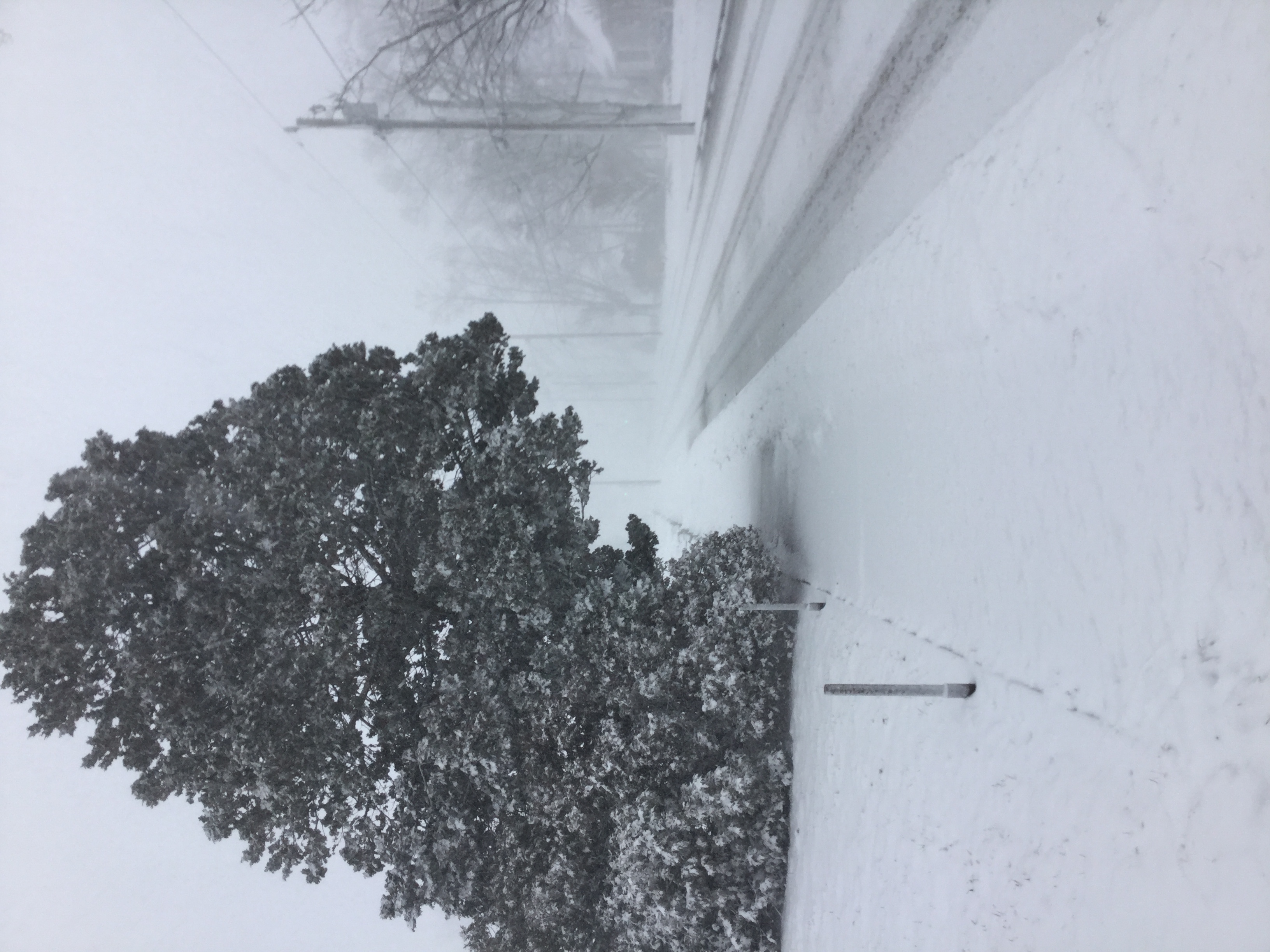
I pulled Robert Nathan’s A Winter Tide off the shelf this morning; Nathan wrote these poems in the 1930’s, and they reflect his growing concern with Nazism and war. Some are hopeful, some not so much. Like most of us, Nathan surely had hope-filled days and days when hope was absent. Either way, I love his words.

Looking through the poems today, after finishing The Book of Joy just yesterday, I see something else in Nathan’s poems: an expression of re-framing, of accepting the darkness of life in the 1930’s and trying to draw from it whatever gifts it offers. Not such a bad thing to do. I hope a life of joy came out of it for Nathan.

III

It would be wiser, since we live in fear,

To use our sorrows to correct our ways.

If winter be the color of our days,

Then learn of winter to be still and clear.

The greener spring, the new and happy year

Is not for us but for the birds to praise;

It is the snow that over autumn lays

Its quiet hand that  is our teacher here.

For see, it has its lessons for the soul:

Look how the tree with piety keeps fast

The bud and blossom hidden in the bole.

So bear the winter with its frosty blast,

And seek, beneath the season of our grief,

The spring unending and the waiting leaf.

[Nathan, Robert; A Winter Tide, III, New York: Alfred A. Knopf, 1940, p. 5]

photo by Jared Fredrickson


A Thousand New Roads

Any Chance Meeting

In every gathering, in any chance meeting

on the street, there is a shine,

an elegance rising-up.

Today, I recognized that that jewel-like beauty

is the presence, our loving confusion,

the glow in which watery clay

gets brighter than fire,

the one we call the Friend.

I begged, “Is there a way into you,

a ladder?”

“Your head is the ladder.

Bring it down under your feet.”

The mind, this globe

of awareness, is a starry universe that when

you push off from it with your foot,

a thousand new roads come clear, as you yourself

do at dawn, sailing through light.

Rumi, Any Chance MeetingSay I Am You, Athens, GA: Maypop, 1994, p. 29

The mind is a globe of awareness, a starry universe indeed. But it isn’t the be-all or end-all: it’s the push-off point. The thousand new roads aren’t inside it  because roads are meant for walking, not contemplating while sitting in place.

Rumi’s Guest-House

This being human is a guest-house.

Every morning a new arrival

A joy, a depression, a meanness

some momentary awareness comes

as an unexpected visitor.

Welcome and entertain them all!

Even if they’re a crowd of sorrows,

who violently sweep your house

empty of its furniture,

still, treat each guest honorably.

He may be clearing you out

for some new delight.

The dark thought, the shame, the malice,

meet them at the door laughing,

and invite them in.

Be grateful for whoever comes,

because each has been sent

as a guide from beyond.

Rumi (John Moyne and Coleman Barks, trans.), Say I Am YouThe Guest-House, Athens, GA: Maypop, 1994, p.41

Until I learn the lesson each encounter with life offers to teach me, the lesson will keep showing up on my doorstep. Until I can greet each emotion and thought with compassion and humor, I refuse the joy they carry in their pockets.

At fifty-six years of age,  it’s well past time to be grateful for everything.

A Generous Spirit

The Archbishop had uses a beautiful phrase to describe this way of being in the world: “becoming an oasis of peace, a pool of serenity that ripples out to all of those around us.” (p. 274)

 [New York: Avery, 2016]

So do not worry about tomorrow, for tomorrow will bring worries of its own. Today’s trouble is enough for today. Do not judge, so that you may not be judged. For with the judgment you make you will be judged, and the measure you give will be the measure you get. (Matthew 6:34-7:1, NRSV)

The usual phrasing of scripture is to put the first two sentences with a previous grouping – consider the lilies of the field. The second begins a new chapter. But for today, I’m playing with the usual divisions – a bit of midrash in light of Bishop Tutu’s comment about generosity of spirit.

Easy to be with. Comfortable in her/his own skin. Grounded. Laughs easily and often. Life-giving. All different ways of touching on the same thing: a generous spirit. Not perfect, nor expecting perfection from others. Living the day that presents itself, not wishing for the day that didn’t.  Aware of the unique gift each day is, but willing to let it go at day’s end – how else can a new day be embraced with all its beauty and holiness?

I’ve had the great good fortune to know several such people in my life. They have been my mentors, my friends, and my touchstones; they taught me to see in this life/this day/this moment a glimpse of God’s presence. In their words, actions, and presence, a transforming truth radiated:

If you can find God in the here and now, you have no reason to look elsewhere or elsewhen: if you can’t find God in the here and now, you won’t find God anywhere or anywhen else.

Thank you, Elisabeth Hewitt, Cullen Story, Horatio Chase, Grace and Albert Wood. You helped me see the life in my days.

Unexpected Gifts

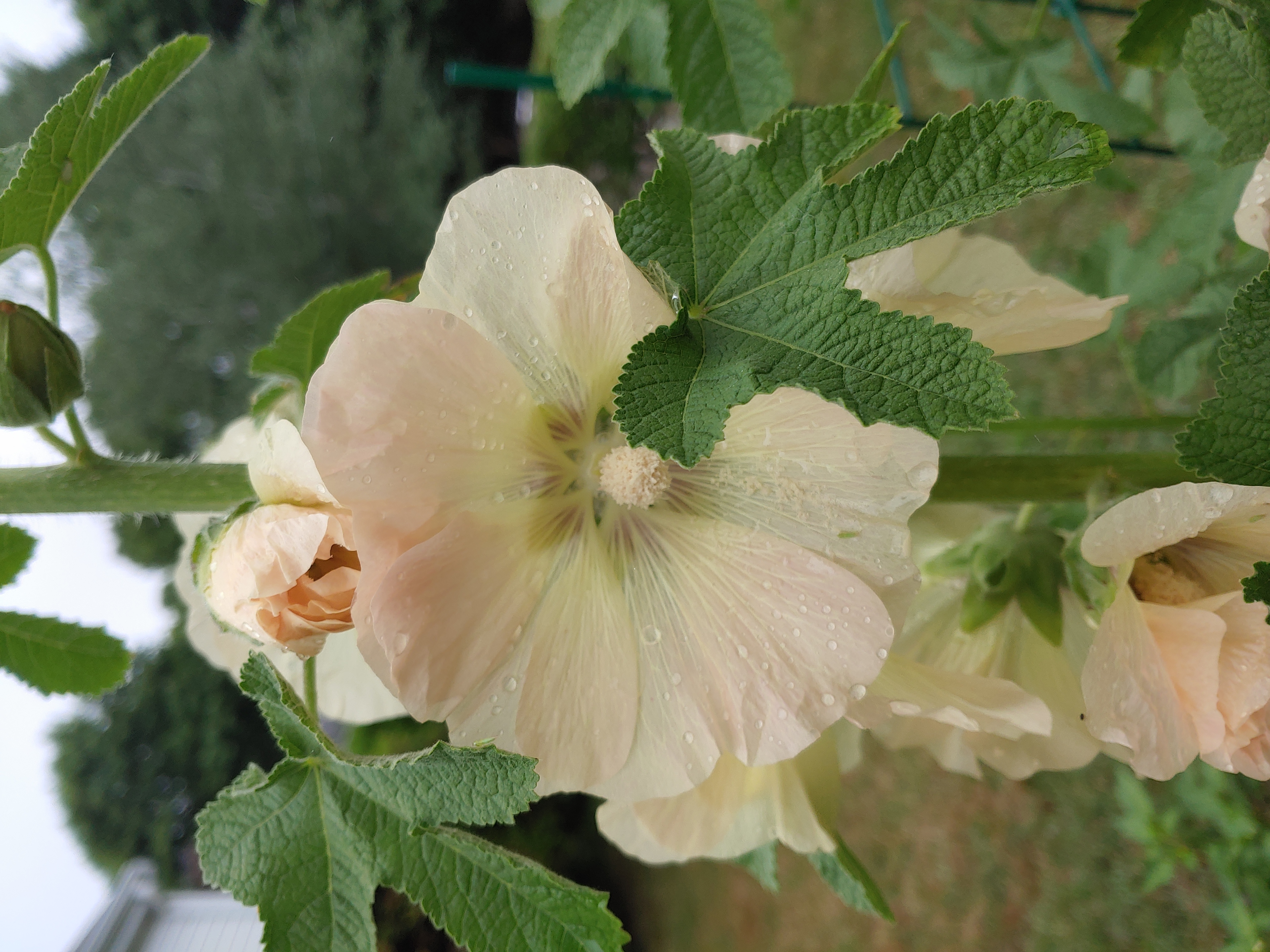
Seventeen years ago, I ordered heirloom hollyhocks from Burpee – three red and three yellow. Once the first summer passed, they bloomed faithfully every year. Being an heirloom variety, they reseeded themselves as well. But after the first five years, they didn’t stay the same: along with the red and yellow flowers, cross-pollination created blossoms of varying colors. About five years back, the original red and yellow didn’t return. Reseeding also caused a migration: plants grow halfway up the walkway rather than at the end, and a few have come up in my neighbor’s flower beds.

There’s something wonderful about a world that fosters change and growth in unexpected ways. I haven’t had a hand in the hollyhocks that grace my front walk in any meaningful way – a little weeding, watering, and feeding is all I’ve done. But these plants have been transformed through their own innate capacity. How wonderful is that!

There’s a generosity to nature that’s hard to deny when $19.95 spent seventeen years ago yields such beauty. Constantly growing and changing, constant in reappearance. But if I didn’t know where it all began, I doubt I’d appreciate this ever-transforming botanical miracle…

Orienting

[ Photo by Jared Fredrickson] 

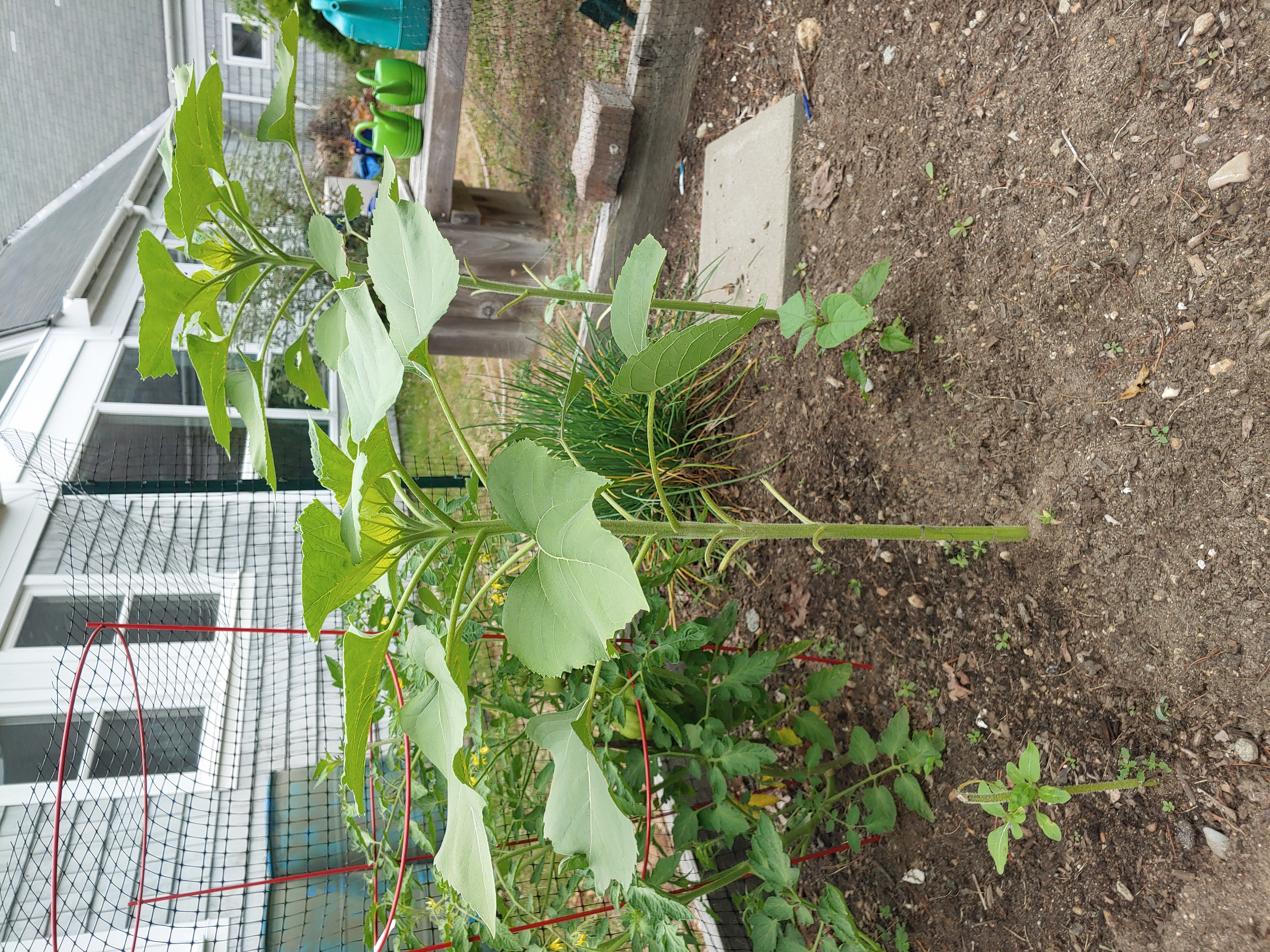
The weeds in the garden were well on their way to taking over the bed, so I spent an hour pulling them away from the tomatoes, chives, snow peas, and sunflowers. When I began, the sun was just peeking over the roof line; when I finished up, it was well on its way to the middle of the sky.

I don’t usually pay much attention to this daily arc through the sky – unless it’s to seek shade or because the sun’s heat is doing its best to turn my skin pink. But today, I began my weeding at the base of the sunflowers. In the hour I spent in the garden, the sunflowers changed their orientation: all of them began facing one direction and turned their faces to another by the time I stopped pulling weeds. The sun had moved, and they changed their orientation to continue facing it, following the life-giving light.

When I water the garden this evening, the sunflowers will be facing in the opposite direction to their morning orientation. It’s why they are called sunflowers, I suppose: though grounded in one particular place, they turn with the sun’s movement. If that isn’t an every day miracle, I don’t know what is.

It struck me that I can do the same thing. I cannot move from the particular time and circumstance that set the parameters of my life’s span, but I can choose my orientation. I can choose to be moved by something life-giving beyond myself. And within this very small, brief, and specific life span I call my own, I can choose to act accordingly.

Lord, keep my eyes and heart open. Only with your help can I look beyond myself and act with compassion for all the life you’ve created. Amen.


The One Thing

The Buddha supposedly said, “What is that one thing, which when you possess, you have all other virtues? It is compassion.”

The Book of Joy (pp.251-252)

After the Dalai Lama recounts watching an exhausted mother stay up all night to tend her toddler and baby during a flight, he remarks that he might not have the patience to do that. Douglas Abrams continues by writing: The Dalai Lama’s comment echoed a topic I have discussed with quite a few religious seekers and parents: It probably takes many years of monastic practice to equal the spiritual growth generated by one sleepless night with a sick child. (p.253)

Living a monastic life, rising early and stopping at regular intervals for prayers, interrupts whatever else is being done.  Outside of critical work (tending the sick, recuperating, etc.), no activity is considered important enough to skip the daily cycle of prayers.

In either case, something beyond our own aims and goals sets our parameters. We are asked to be fully present for someone (a child or God) else, and we are relieved of being the center of our own universe. We invest ourselves in someone beyond our limited human life.  When this is done in love and for love, it offers us a joyful life.

Perhaps, with this life, we will stretch our compassion to include those well beyond our own family and faith. At the same time, perhaps we will stretch our compassion to include ourselves.

God, self, neighbor.  Holiness and joy all boil down to these same three things. Thank God.