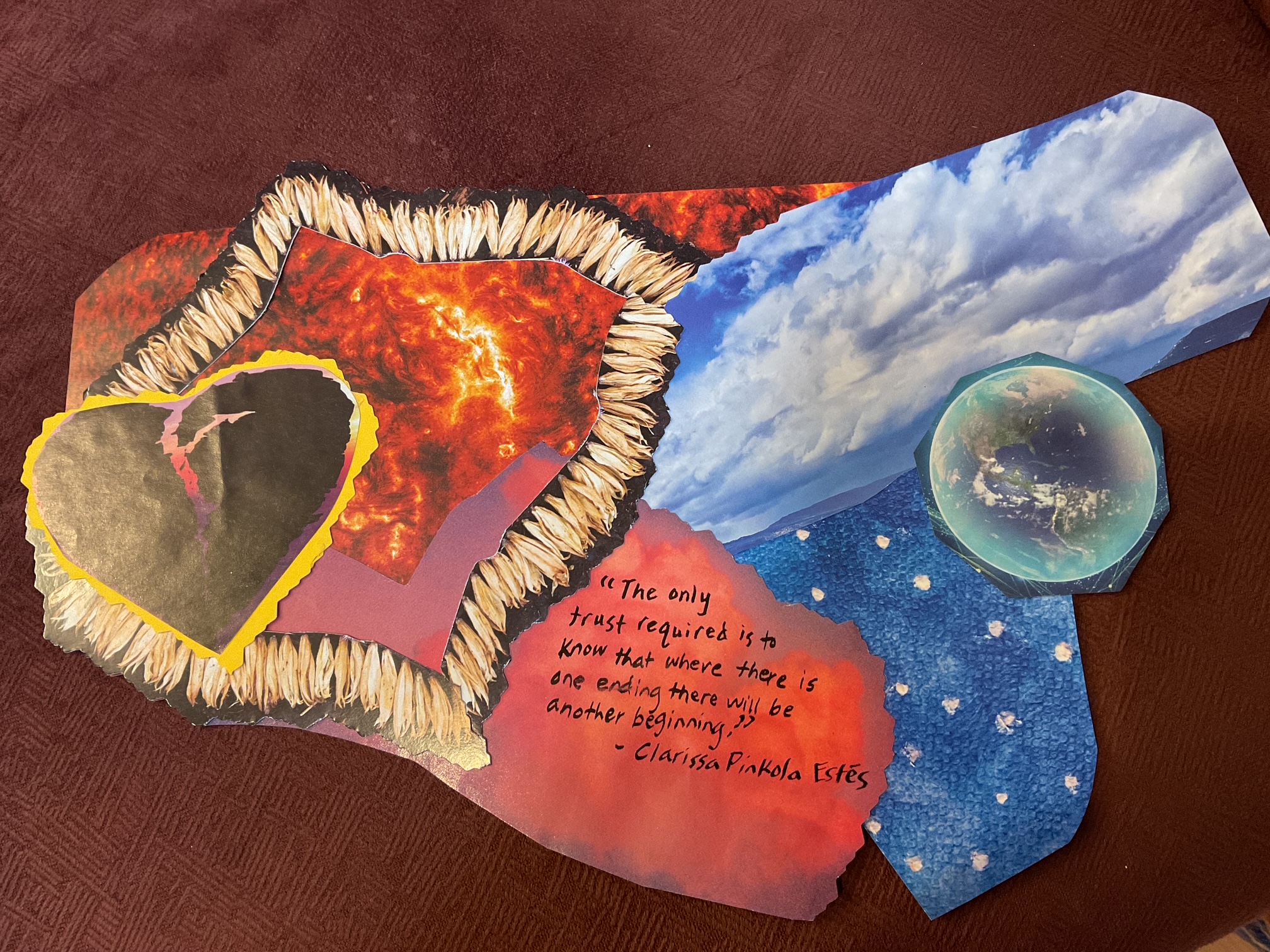
Monthly Archives: December 2025

God With Us, God Among Us

Daily Readings: Psalm 42; Isaiah 29:17-24; Acts 5:12-16

Dignify those who are down on their luck; you’ll feel good – that’s what God does. Psalm 42:1, The Message

Christmas does not begin in perfection. It begins in longing.

Psalm 42 speaks aloud what many carry quietly into this season: thirst of the soul, exhaustion of hope, tears that keep time through the night. And yet this longing is personal. It is not a crowd crying out, it is a soul. God meets us not as a mass of humanity, but heart by heart. Christmas proclaims that God knows the shape of your ache and draws near.

Isaiah widens the circle. God’s promise is to a people being remade together. The land becomes fruitful, the confused gain understanding, the gentle are lifted up. This restoration is communal. God heals not in isolation, but in relationship, reweaving trust where it has been torn. Christmas announces that no one is forgotten and no one is restored alone.

Then Acts shows us what God-with-us looks like when faith becomes flesh in the world. The people bring the sick into the streets. They carry one another. They make space. Healing happens in public, shared places. God works through proximity, through hands willing to lift, through doors left open, through a community daring to believe that mercy belongs to everyone. The miracle is not only that shadows heal, but that people place one another where healing can happen.

This is the church revealed at Christmas, not a building lit beautifully, but a body moving together. A community that holds sorrow without fear, joy without possession, and hope without conditions. We need one another because God has chosen to come among us that way. God shows up personally, but never privately. Grace always makes room.

So, this Christmas, let us bring our thirst,

our weakness,

and one another.

Let us be the place where despair is carried,

where understanding grows,

where God is encountered

not alone,

but together.

For Christ is born not only to us, but among us. 

Community, by Donna Eby

God With Us, God Among Us

We come thirsty,

souls dry as winter fields,

carrying prayers worn thin by waiting.

You meet us there

not as a crowd,

but as hearts called by name.

You hear the ache behind our songs,

count the tears we never learned to share.

Still, You draw near.

Still, You say, Hope lives here.

You promise what we cannot yet see,

barren ground turning green,

confusion loosening its grip,

gentleness finding room to breathe.

You restore not one by one,

but side by side.

You are born among us,

in streets where the fragile are carried,

in hands that lift what cannot walk alone,

in shadows stretched by faith and trust.

Healing moves through closeness,

through courage,

through love made visible.

You show us we need each other.

That grace is not hoarded,

that mercy makes space.

The church is not walls or words,

but a people who carry,

who wait together,

who believe no one is beyond Your reach.

So, hold us, Christ,

as we hold one another.

Let our longing become prayer,

our gathering become light.

For You are not only born to us,

You are born among us.

Offered by Donna Eby, in whom God delights.

Beautiful Impermanence

Daily Readings: Isaiah 35:1-10; Psalm 146: 3-10; James 5:7-10; Matthew 11:2-11

Don’t put your life in the hands of experts who know nothing of life, of salvation life.

Mere humans don’t have what it takes; when they die, their projects die with them.

Instead, get help from the God of Jacob, put your hope in God and know real blessing!

God made the sky and soil, sea and all the fish in it. He always does what he says – he defends the wronged, he feeds the hungry. God frees the prisoners – he gives sight to the blind, he lifts up the fallen. God loves good people, protects strangers, takes the side of orphans and widows, but makes short work of the wicked.

God’s in charge – always. Zion’s God is God for good! Hallelujah!

Psalm 146:3-10, The Message

Sewing new valances for the kitchen windows; reformatting a year’s worth of curriculum and writing another; canning the two pounds of cranberries sitting on my cupboard. There’s nothing wrong with working on such projects, as long as I realize and accept that none of them are going to matter much beyond a limited number of people for a short period of time. There’s an impermanence about them that cannot be changed – foolishly denied, yes, but not changed.

What if I embrace the impermanence, seek to make of my work and life something beautiful, holy? I guess that life would reflect God’s priorities: defending the wronged, lifting up the fallen, freeing the prisoners, feeding the hungry. Such a life may not be considered successful or even worth much by the larger society, but what do cultural experts know of true life?

I want my life to be a sand mandala. I want to create it out of love and care and live it as a spiritual practice. When the time comes, I want to say a prayer, draw a line through it, and let it be swept away.

Impermanence, photographer and subjects unidentified

Sand mandalas are created by Tibetan buddhist monks as a spiritual practice and a reminder of life’s beauty and impermanence.

Every Ending Is Also A Beginning

Beginning In Ending

Daily Readings:Psalm 146:5-10; 2 Peter 3:11-18; Luke 3:1-18

The winnowing fork cleans out the threshing floor and gathers the wheat into the barn; but the chaff will be burned up with unquenchable fire. Luke 3:17, paraphrased

…we are looking for new heavens and a new earth. 2 Peter 3:12

Offered by Jill Fredrickson, in whom God delights.

Caregiving Ain’t Easy

Daily Readings: Psalm 146:5-10; Ruth 4:13-17; 2 Peter 3:11-18

In 2 Peter 3:11-18, Peter is tasking Jesus’ followers with a few points to remain faithful.  He first describes the condition of the world and the coming destruction.  In verse 14 he says while you are waiting for these things to happen, make every effort to be found living peaceful lives that are pure and blameless in his sight.  And remember, our Lord’s patience gives people time to be saved.  Concluding with verse 18, rather you must grow in the grace and knowledge of our Lord and Savior Jesus Christ.  All glory to him, both now and forever!  Amen.
This verse reminds me of the words at the beginning of the gospels (also describing the last days before Jesus comes) “Sin will be rampant everywhere, and the love of many will grow cold.  But the one who endures to the end will be saved.” Matthew 24:12-13   

There may be something we are supposed to be striving for these days, but it sure doesn’t look like it should be power, money, or status. It looks like patience and endurance smothered in love.   And to me it doesn’t mean stockpiling enough rice and beans to get through it.  If this is part of enduring for you, hopefully you’ll share a dish later on when I need it.  

I am among the generation of baby boomers. God has given me the task of caring for my ailing husband.  He is almost 80, and has a list of disabilities and illnesses a mile long related to Vietnam and his as-long-as-possible adult life of extreme motocross racing. But we endeavor to persevere together, and some days are better than others.

Recently we were in a doctor’s waiting room full of women who were caregivers for their husbands. I noticed two of them. One man in a wheelchair, head in hands and looking tired and depressed was being hovered over by his wife as she tried to comfort him and meet his needs.  His response was rude remarks of impatience and despair.   Her face was strained and sad. The other wife came and sat beside me, making the statement “I am sick of this. I am out of here. I am not wasting the rest of my life taking care of him.  I’ve got a life to live.”  I didn’t say much back to her, I wasn’t sure how to respond. But I understood. I felt great empathy for these ladies.

I had been considering starting a caregiver support group for wives in my small town. It became plain to me this group would be needed and helpful. So, I was off and running. I contacted several women, all of whom I barely knew but had witnessed their daily lives from afar.  I organized our first meeting and gave them all kinds of data and statistics to them about why the support group could be helpful. Every woman jumped at the chance to be a member.

The husbands of the wives in our group have varied conditions: Parkinson’s with hallucinations, extreme heart failure or heart conditions, dementia and memory issues, and failing mobility.   As wives, we are all dealing with fear and anxiety.  Each wife has different challenges to navigate, but we all are trying to “do it right” and we all are facing the impending departure of our husbands. 

We laugh about the funny things when we can. One husband listens to full volume television programs that are only spoken in Chinese.  Does he speak Chinese? No. One wife came home to find all of the doors to her kitchen cupboards removed.  Another’s husband accuses her of cheating and having affairs with other men when she has to leave him for a bit.   We answer the same questions repeatedly. We experience the men’s frustration with their own declining abilities, depression and their need to remain in control. We have taken on tasks and responsibilities that were once handled by the husbands. In every case the wives pretty much now shoulder all of the responsibilities. Yes, there are assisted living opportunities, but none of our group has the means to make that choice.   And most of us do not have family near to help.

We wonder – where am I in all of this? We feel like we are losing and ignoring ourselves and our needs. And we all have our own physical limitations, health issues and emotional stress to manage. Of course, we all are enduring to the end. And while we are waiting, we are making every effort to live peaceful lives. 

And that ain’t easy.  We are in a constant whirlwind of appointments, medication schedules, bathing fights, dressing and feeding them, finding things to keep them motivated and content, financial, home and vehicle maintenance. All as we listen to repetitive stories and questions all day long. In between tasks, we are seeking to grow in the grace and knowledge of our Savior. We know love is the only thing that can endure.  Love never fails, never grows tired of doing good. But the ability and desire to endure in love only comes through the tender support Jesus offers us. He has promised to be with us until the end.  Even to your old age and gray hairs I am he, I am he who will sustain you.  I have made you and I will carry you; I will sustain you and I will rescue you.  Isaiah 46:4 NLT

However, Jesus could use your help.

As this year winds down with all of the celebrations and family encounters, you might take special notice of a caregiver. Until you’ve done it, you don’t understand. But you might offer some kind of acknowledgement. If you have experienced this loving task, share tips and resources, or just sit quietly with a caregiver over a cup of tea and listen. Better yet, think of what you needed at that time. Stock their pantries with rice and beans, and maybe their table with a big bouquet of flowers.

It could mean the world to a caregiver to be acknowledged and genuinely heard. Help them accept that being a caregiver for someone is an act of courage and strength, not a burden of obligation. Maybe let Jesus use your arms to wrap them in a hug.      

Offered by Linda Benningfield-Hashman, in whom God delights.

The Road to Bethlehem: the Prequel

Daily Readings: Psalm 146:5-10; Ruth 1:6-18; 2 Peter 3:1-10

One day Naomi got herself together, she and her two daughters-in-law, to leave the country of Moab and set out for home; she had heard that God had been pleased to visit his people and give them food. And so she started out from the place she had been living, she and her two daughters-in-law with her, on the road back to the land of Judah.

After a short while on the road, Naomi told her two daughters-in-law, “Go back. Go home and live with your mothers. And may God treat you as graciously as you treated your deceased husbands and me. May God give each of you a new home and a new husband!” She kissed them and they cried openly…

Orpah kissed her mother-in-law good-bye; but Ruth embraced her and held on. Naomi said, “Look, your sister-in-law is going back home to live with her own people and gods; go with her.” But Ruth said, “Don’t force me to leave you; don’t make me go home. Where you go, I go; and where you live, I’ll live. Your people are my people, your God is my god; where you die, I’ll die, and that’s where I’ll be buried, so help me God – not even death itself is going to come between us!”

When Naomi saw that Ruth had her heart set on going with her, she gave in. And so the two of them traveled on together to Bethlehem. Ruth 1:6-10, 14-18, The Message

Three deaths and a famine in a foreign land – that’s what Naomi faced. Dead husbands and a famine – that’s what Orpah and Ruth faced. Three women dealt a hand that could very easily win them death or a life on the streets. The best option was for them to return to their families – Naomi’s in the land of Judah, Moab for Orpah and Ruth.

After a lot of crying, Orpah did the sensible thing and returned to the protection of her family – and to the possibility that she might marry again. Naomi did the sensible but hazardous thing, heading back to Judah and whatever family she had. Ruth, did not. Ruth chose to leave the safety of family ties and head to a land and a people that had no vested interest in her life. Out of love for her mother-in-law, with trust in Naomi’s God, she set out for Bethlehem.

Against all common sense and odds, it worked out. Naomi introduced Ruth to her relative, Boaz. A few batted eyelashes and some negotiations later, Boaz and Ruth are married. A few months later, Obed is born. What could have ended in tears and tragedy ends in joy.

Obed grew up, married, and had a boy named Jesse; Jesse grew up and had a boy named David, who later became king. Naomi and Ruth’s road trip, their love and care for one another, blessed the world (as all instances of love and care do, even if they aren’t written down).

Not from Moab, and not because of a famine, but from Nazareth and due to a Roman census, two more people set out on the road to Bethlehem. That trip, care for one another, and trust in God that their journey would lead to something good led to another baby being born in Bethlehem. And to this Advent journey we take every year…

Holy Family by Margaret Hill

Image by Margaret Hill, in whom God delights.

The Tree and Its Fruit

Daily Readings: Psalm 21; Genesis 15:1-18; Matthew 12:33-37

If you grow a healthy tree, you’ll pick healthy fruit. If you grow a diseased tree, you’ll pick a worm-eaten fruit. The fruit tells you about the tree.

You have minds like a snake pit! How do you suppose what you say is worth anything when you are so foul-minded? It’s your heart, not the dictionary, that gives meaning to your words. A good person produces good deeds and words season after season. An evil person is a blight on the orchard. Let me tell you something: Every one of these careless words is going to come back to haunt you. There will be a time of Reckoning. Words are powerful; take them seriously. Words can be your salvation. Words can also be your damnation. Matthew 12:33-37, The Message

We are all beautiful creatures of God and the Spirit, just like trees bearing beautiful fruit, gifts from God. Like trees we require care and guidance to be able to grow and flourish.

There is that phrase often shared and taught by our parents, grandparents, guardians and teachers : Think before you speak. These 4 simple words hold true each and every day, not to be forgotten, but to keep in our hearts and minds always, gently, whenever and wherever we are.

Words can be hurtful if not thought about carefully, leaving a terrible taste like rotten fruit; still, our words can leave a lingering feeling of joy and happiness when spoken with love and caring, like beautiful healthy peaches on their well-cared for trees.

As a classroom substitute, I am especially mindful when helping the 7 young students in their small classroom, with the words I choose when speaking to them, asking how and if I can assist them with their work. Each special needs student is different and needs to be spoken to in an individual way, with a calm and patient tone. There is no place for anger or intolerance, only total understanding of their needs. The students’ classroom teacher has an amazing ability and gift to speak to and teach each of her students in this way; she is an amazing role model for others. She has been a great role model for me as well.

Jesus, when we read his parables through the gospels, continues to be our role model for thoughts, words and actions. With our spoken words chosen with thoughtfulness and kindness, we can all be like healthy trees, bearing vibrant fruit.

Offered by Robin Nielsen, in whom God delights.

On A Mission From God

Daily Readings: Psalm 21; Isaiah 41:14-20; Romans 15:14-21

I need your help in carrying out this highly focused assignment God gave me, this priestly and gospel work of serving the spiritual needs of the non-Jewish outsiders…

I have no interest in giving you a chatty account of my adventures, only the wondrously powerful and transformingly present words and deeds of Christ in me that triggered a believing response among the outsiders. In such ways I have trailblazed a preaching of the Message of Jesus all the way from Jerusalem into northwestern Greece. This has all been pioneer work, bringing the Message only into those places where Jesus was not yet known and worshiped. My text has been,

Those who were never told of him – they’ll see him! Those who’ve never heard of him – they’ll get the message!

Romans 15: 16, 18-21 The Message

It took him time, a blinding come-to-Jesus experience on the road to Damascus, and the courage of Ananias, but Paul got there. He found his mission from God: reaching out to the non-Jewish community that for most of his life he had no wish to encounter much less serve.

I don’t know that it will be the same for most of us, but we share a vital something with Paul’s experience: our mission from God will move us beyond where we think we belong, and teach us to love people we never thought we could, would, or should.

…One more thing…

Daily Readings: Psalm 21; Isaiah 24:1-16a; I Thessalonians 4:1-12

One final word, friends. We ask you – urge you is more like it – that you keep on doing what we told you to do to please God, not in a dogged religious plod, but in a living, spirited dance.

I Thessalonians 4:1-2, The Message

After these words, it’s about sex – or, more precisely, not having sex in a way that harms us physically, emotionally, or spiritually. It’s a plea to take into account the whole person you get naked with. Then it becomes a request to take into account the rest of the community members – even those we don’t know particularly well. In short, live and act as if your life and the lives of all those around you matter. Because they do.

It’s easy to misunderstand what that really is: a full, vibrant, connected life. It’s not a lesser, boring life that pleases God; it’s not giving up the things that bring us pleasure – it’s making sure that pleasure is found within the larger context of a joyful life for everyone.

A good life isn’t a long slog on a rocky road. A good life is a turn on the dance floor. Unpredictable. Breath-taking. A joyful moving in the company of others.

Enjoy!

The Call of the Wild

Daily Readings: Isaiah 11:1-10; Psalm 72:1-7, 18-19; Romans 15:4-13; Matthew 3:1-12

While Jesus was living in the Galilean hills, John, called “the Baptizer,” was preaching in the desert country of Judea. HIs message was simple and austere, like his desert surroundings: “Change your life. God’s kingdom is here.” Mt. 3:1-2, The Message

The popular notion is that John came into Jerusalem wearing the classic sandwich board, “Repent!” We imagine that the Baptist stood on the streets of Jerusalem in front of Herod’s fabulous Temple, across from the Jerusalem Museum of Fine Art and the First Judea Bank building with a bullhorn, shouting, “Prepare the way of the Lord, make his paths straight. . . . You brood of vipers, who warned you to flee from the wrath to come?”

But it didn’t happen that way at all. It’s much more fascinating. Matthew is quite clear. “In those days John the Baptist appeared in the wilderness of Judea.” That’s where he was proclaiming, “Repent.”  So, was he a “voice in the wilderness,” as we say—a lonely coot preaching to the wind and the sand and the bitter rocks? Hardly. “Then,” Matthew says, “the people of Jerusalem and all Judea were going out to him, and all the region along the Jordan, and they were baptized by him in the river Jordan, confessing their sins.” 

The topography of this spiritual encounter is hardly a chance feature of Matthew’s story. Notice the symbolic movement: You have to move out of the city . . . cross a river . . . and enter a desert. And there you will meet a very strange man who will offer to plunge you into the water in an act of purgation, cleansing yourself for your encounter with God.

The call of John reminds me of those early Desert Fathers in Egypt, the first Christian ascetics who went out into the desert. They weren’t just leaving the city and its culture; they were leaving the church. By the time Anthony the Great moved into the desert in 270, the church was already not-enough. Nothing wrong with it, just not-enough. Just gradually getting institutionalized. Again, nothing wrong, but in spiritual development terms, the church was mostly about first-half-of-life issues. Building a moral foundation, rehearsing right from wrong, learning impulse control, making and keeping basic commitments, being a stand-up man, a dutiful woman. 

But when that program crashes, as it always does on the rocks of the middle voyage, we’re ready to hear John. And that is what people like Anthony the Great did. They listened to his call and literally went out into the desert. And, just as the crowds followed John into the wilderness, so ordinary Christians in the third century went streaming out into the wild to sit and pray with Anthony, with Paul of Thebes, and eventually with the Desert Mothers—or ammas—like Sincletica of Alexandria and Sarah of the Desert.

Many people have suggested that we are on the cusp of a new monastic movement, that the weakness of the contemporary church is pushing people out onto the margins—sometimes literally into the wild—to find that something more. Advent is a perfect moment for each of us to hear John’s call and find some wild place where we can encounter the fullness of God. 

Offered by David Anderson, in whom God delights.

Evangelism

Daily Readings: Psalm 72:1-7; Isaiah 40:1-11; John 1:19-28

“Comfort, oh comfort my people, says you God. Speak softly and tenderly to Jerusalem, but also make it very clear that she has served her sentence, that her sin is taken care of – forgiven! She’s been punished enough and more than enough, and now it’s over and done with.”

Thunder in the desert! “Prepare for God’s arrival! Make the road straight and smooth, a highway fit for our God. Fill in the valleys, level off the hills, smooth out the ruts, clear out the rocks. Then God’s bright glory will shine and everyone will see it. Yes. Just as God has said.

“These people are nothing but grass, their love fragile as wildflowers. The grass withers, the wildflowers fade, if God so much as puffs on them. Aren’t these people just so much grass? True, the grass withers and the wildflowers fade, but our God’s Word stands firm and forever.”

Climb a high mountain, Zion. You’re the preacher of good news. Raise your voice. Make it good and loud, Jerusalem. You’re the preacher of good news. Speak loud and clear. Don’t be timid! Tell the cities of Judah, “Look! Your God!” Look at him! God, the Master, comes in power, ready to go into action.

He is going to pay back his enemies and reward those who have loved him. Like a shepherd, he will care for his flock, gathering the lambs in his arms, hugging them as he carries them, leading the nursing ewes to good pasture. The Message, Isaiah 40:1-11

At our weekly mid-week Eucharist, we recently explored evangelism during the homily. This does not seem to be a favorite word among our church members (even though our patron is St. John, the Evangelist). For me, being reared in the south where “Bible thumpers” were plentiful and most of the radio options were either country music or preaching, I was particularly wary of these “types”. I even looked down at them as unsophisticated and shallow. If they only knew the intricacies of our faith, the deep underpinnings of theological study and thought…

Well, Jesus keeps it really simple, does he not? Maybe we don’t have to go shouting  up on a high mountain to bring the good news to others but share I must. Go into all the nations proclaiming the good news was the last directive Jesus gave us in the Gospels—what about this do we not get? If you cringe at the thought of shouting from the mountain tops, as most of us would, I imagine, there are good options. 

Attending a prayer service at our cathedral church in Boston years ago, I read in the service bulletin that evangelism is being with someone in such a way that they know you’ve been with Jesus. That could work for most, I think. At any rate, I’m going to do more of that this Advent.

Offered by Bill Albritton, in whom God delights.